



Roy's Blog: December 2022
December 4, 2022
Why the ability to communicate is critical to get A BILLION in sales

Why the ability to communicate is critical to get A BILLION in sales.
There were many actions I took as a leader to take an early stage internet company in the telecom space to A BILLION in annual sales, but I haven’t talked much about the importance of communication as a critical element of my journey.
The ability to communicate was incredibly important to my audacious leadership role because we were faced with making breakaway moves away from the traditional ways we conducted telephone company business in the past and adopting new ways necessary in a highly competitive internet world where customer power was a dominant force.
We had to:
▪️Add a stronger marketing and customer service focus to the engineering strength that had served us well in the past as a regulated monopoly telco.
▪️Replace order-taking with serving customers.
▪️Learn how to be proactive with customers in the sales game and place more emphasis on selling solutions as opposed to ‘flogging products’.
▪️Build a data and internet culture from the largely voice oriented culture that had existed in the past.
▪️Create the ability to achieve extraordinary growth rather than more linear growth that was normal in days gone by.
Communications was the key element in building a new organization and achieving lofty growth goals.
How did I use my communications skills?
As the leader, there were many ways I used my communications skills to build an amazing team and achieve miraculous performance:
Calendar management — My week was replete with communications ‘sessions’ with employees, discussing what we were trying to achieve—our Strategic Game Plan—and what action needed to be taken to make us successful.
Bear Pit Sessions — I held informal workshops (with no accompanying entourage) with multifunctional groups to understand what was working and also what was preventing us from executing our Game Plan more effectively.
Frontline focus — Given my focus on Game Plan EXECUTION, I spent huge amounts of time with the frontline teams across my organization asking “How can I help?”.
I needed to know what they needed to enable them to do their jobs more effectively and also it gave me the opportunity to thank them for the fantastic job they were doing under arduous circumstances.
Line of Sight translation — I personally led workshops with the various functional teams—marketing, sales, service, accounting, credit etc.—to define what, specifically, the Game Plan to A BILLION meant to each and every one of them.
They needed to understand the new behaviours they had to adopt (with new expedited outcomes) and the old ones that were no longer appropriate.
Do I have a personal strategy that guides how I communicate with others?
My BE DiFFERENT or be dead brand provides the context—and the anchor—for how I choose to communicate.
My overall approach is to BE DiFFERENT from how everyone else—the ‘speaker crowd’—does it.
My logic is that if my message is to be listened to and followed by my audience, it must be incomparable, it must stand out from others , it must be inspiring to the listener and it must evoke action.
I observed how others did it and chose another way that was consistent with my personal audacious leader brand.
Quite frankly, I Ignored ‘textbook thinking’ or commonly espoused practices, approaches because if I copied someone else’s methods I would surely NOT be different and would merely increase the speaker herd by 1.
What are some of the things I do to make my presentations DiFFERENT?
First and foremost, my prime objective when speaking to any audience is to create a memorable experience for everyone attending, and to do so I think about it as a PERFORMANCE.
It’s not just about the information you’re delivering, it’s about how you make people feel when they receive your information. People will remember some of your content but they never forget how you make them FEEL.
I am emotionally connected with my content—I’ve been described as a passionate speaker—and I try to convey it with as much energy as I can muster.
“Energy up!” is what I say to myself before every performance; it has always served me well as the push to keep me up and pumped.
I think about myself as a content expert and storyteller NOT an orator. My ‘job’ is to lead and deliver unmatched performance; it isn’t to be a great speaker.
But I’ve discovered that audience reaction is a function of content+emotion not following the ‘practices of oration’ and this is best served by bringing your content to life through storytelling.
To be an audacious speaker, your content must ‘flow from your veins’.
How does a person start to be audacious at communicating?
There are 3 things to think about if you intend to walk the audacious path of lighting fires in people when you speak.
#1. Be the ONLY one — You need to own your own unique place in communicating.
Study how others practice their art and determine how you can be different from the rest.
Figure out your ONLY brand to separate yourself from the speaker crowd.
#2. Be a performer — Treat every presentation as a performance where your objective is to DAZZLE every person in your audience.
#3. Know your content better than you know your own name. — You can’t stream your content if you’re fighting with it, if you can’t recall what words you want to use to express your ideas.
Remember, your content is the least important ingredient in a mind-blowing performance.
An audience expects the speaker to be competent in their subject matter, but they are rarely treated to a performance that leaves them breathless. Fill THAT void.
You don’t want them satisfied, you want them blown away, crushed, ‘goosebumpy’ and awestruck with how you made them FEEL.
If a leader can’t communicate effectively, strategy execution fails and magical performance doesn’t happen.
Let my practical experience in ‘lighting fires’ in people to achieve A BILLION IN SALES be your guide.
Cheers,
Roy
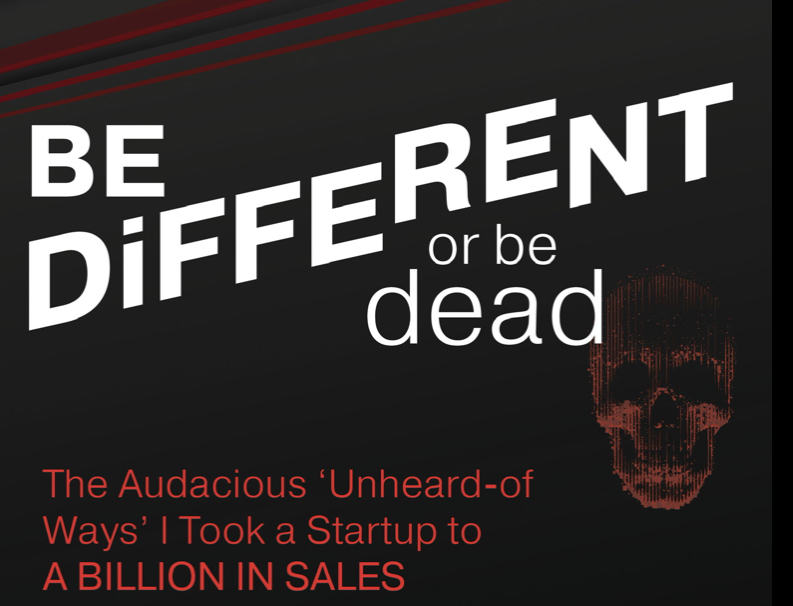
Check out my BE DiFFERENT or be dead Book Series
‘Audacious’ is my latest…
- Posted 12.4.22 at 04:32 pm by Roy Osing
- Permalink
November 28, 2022
My top 5 tips to make a successful entrepreneur

My top 5 tips to make a successful entrepreneur.
The mortality rate for new businesses is extremely high—chances are you won’t make it—and you absolutely must avoid these 5 mistakes if your new brave idea is to survive and thrive.
1. DON’T EVER move forward with an idea that is not different from your competition. — Ultimate success will be determined by staking a unique claim in the market that clearly distances you from everyone out there.
If your idea is the same as, or similar to something already out there, it will be invisible. It won’t attract attention and no one will buy it.
If you can’t come up with an idea that is different from someone else’s, STOP!
2. DON’T EVER move forward if you don’t clearly identify who the potential customers are for your new idea. — Winning is all about targeting your idea to very specific groups of people and giving them a reason to buy from you.
It’s not about flogging your idea to the masses and hoping it will stick to some of them.
If you can’t define your potential customers, STOP!
3. DON’T EVER move forward unless you have people around you with strong marketing and customer service backgrounds. — Ultimately, the success of your idea will depend on go-to-market effectiveness. Better have people on board who have experience in serving customers and providing value-based solutions to people.
Technology and finance expertise are needed as well, but in a supportive role. People responsible for customers must be your anchor.
If you can’t put together a team of people with customer experience, STOP! until you find them.
4. DON’T EVER rely on cool technology to sell itself. — It’s not about a product or service. It’s about how your idea makes a difference to people’s lives or business.
People don’t buy technology, they buy what the technology creates for them. Happiness. Joy. Pleasure. Solution to a problem. Make it easy.
If you’re not looking for a way to deliver happiness, STOP!
5. DON’T EVER start chasing new applications for your technology. — Stay focussed on the one you feel will capture the imagination of your potential customers. After you’ve proven your idea works there, then consider other applications.
Chasing numerous applications at once will distract you and stop you from making progress.
You burn energy cycles and money dealing with potential opportunities proposed by associates and colleagues in businesses who would like a piece of your action.
These 5 mistakes can kill your startup; avoid them at all cost.
Cheers,
Roy
40+ Podcast Shows I’ve done that unpack my work.
Check out my BE DiFFERENT or be dead Book Series
‘Audacious’ is my latest…
- Posted 11.28.22 at 05:48 am by Roy Osing
- Permalink
November 21, 2022
How the competitive herd runs and why it will destroy you

How the competitive herd runs and why it will destroy you.
Competition, regardless of the industry, is increasing with blazing speed. Fuelled by disruptions caused by the internet and hard-technology innovation, the number of competitors entering ANY space is increasing at a breathless rate.
You would think that in the face of relentless competitive pressure, organizations would get more proficient at carving out a differentiated position in their market. Creating a Value Proposition that is crystal clear and unique.
But, it is not happening. In fact the opposite is occurring.
Un-differentiation is the norm.
Business is infatuated with copying.
Best in Class and Best of Breed are targets for comparison.
Benchmarking is the key driver of ‘innovation’.
Follow the Leader is played with the belief that somehow a Stand-Out competitive claim will evolve. It just does not happen.
Products and Services end up on most organizations’ infatuation list. Me-too capabilities are promulgated in the market with the hope and prayer that a miracle will happen and THEIR solution will end up being the winner.
Product features and benefits are stressed as the panacea to the customer’s wants, desires and cravings.
Mass markets are catered to, driven by a one-size-fits-all marketing mentality.
Product corners are rounded, believing that incremental changes will make the product appeal to more people. Problem is, this strategy results in the product appealing to no one.
Businesses rush to offer lower prices than their competition. Everyone is in this game to a degree. It seems to be all about a race to the bottom on price for The Herd.
The Bottom line… The world is burning with a growing competitive flame yet organizations are NOT very good at establishing a clear, relevant and unique claim that clearly distinguishes them from their competitors; that makes them Stand-Out from everyone else.
The solution?
Build your business around my Strategic Game Plan process and use The ONLY Statement to carve out your unique position in the markets you choose to serve.
Cheers,
Roy
40+ Podcast Shows I’ve done that unpack my work.
Check out my BE DiFFERENT or be dead Book Series
‘Audacious’ is my latest…
- Posted 11.21.22 at 03:17 am by Roy Osing
- Permalink
November 14, 2022
11 easy ways to be different in ways people care about

11 easy ways to be different in ways people care about.
Being different is NOT about being different for the sake of being different.
Before talking about what being different IS, I need to clarify what being different is NOT, because there are misconceptions that must be dealt with.
▪️Being different is NOT about self expression—‘Who you are’—rather it’s about CHOOSING to express yourself in a unique and different way in order to accomplish a task or meet a challenge.
▪️Being different is NOT about your DNA—what you were born with—rather it’s about what you choose to do with the gifts given to you.
▪️️Being different is NOT about ‘doing your own thing’; rather doing what’s required in a unique way, in a one-of-a-kind way, in a way that ONLY you do.
▪️And, being different is NOT about ‘following your own direction’; rather choosing a direction that creates value for people in a way no one else does.
What is being different?
Being different is being truly unique in the way you improve the performance of your organization, advance your career and enhance your life.
Being different IS about standing out in a compelling and relevant way that people CARE about.
Applying your skills and competencies in a way that is relevant within a context—frame of reference—given to you. You’re given a problem to solve, and you look for a different way to solve the problem.
There is no formula for being different in a way that matters to people; every person must find their own way.
But the one prerequisite is that you have to WANT to take a different journey. You have to WANT to make a difference in a one-of-a-kind way. And you have to be prepared to absorb the pain—and push forward—you’ll feel along the way as you struggle to step away from the crowd and repel the forces and people that want you to conform with the common herd.
Tools I used to BE DiFFERENT
#1. Remind yourself. — Look at every challenge you’re facing through a ‘BE DiFFERENT Lens’. Ask yourself “How can I do this differently?”.
You will be amazed at how this simple tactic opens up your mind to atypical ways of doing things; after a while, stepping out becomes second nature.
#2. Create, don’t copy — Purge benchmarking from your tool kit.
Being different is about creating something unique (new), and you can’t do that when you’re in the copying mode.
Here’s a secret on how you CAN use copying to be different…
Copy them and morph, change, revise a ‘best in class’ idea into a breakaway idea that is something truly unique that people CARE about.
#3. Ditch the Manual. — Throw the manual away on the traditional ‘normal’—theoretically based—ways of addressing specific types of challenges.
If you use a textbook approach to solving a problem, you’re simply increasing the ‘sameness herd’ by one person.
And you’re perpetuating the inherent problems with the prescribed methods (academics don’t always get it right because they’ve rarely built a competitive business TO A $BILLION in annual sales.)
How I threw away the book on defining competitive advantage
Literally every organization uses traditional methods to define their competitive advantage and produce such CLAPTRAP competitive advantage statements as
“We are better…”; “We are the best…”; “We are the market leader…”; “We are number one…”; “We are the most…”
Examples:
“Canada’s largest and most reliable 5G network”
“XXX offers the best coffee and espresso drinks for consumers who want premium ingredients and perfection every time.”
“We work hard every day to make XXX the world’s most respected service brand.”
These statements deal more with what the organizations produce, rather than declare their uniqueness, and they are at best aspirational.
They can’t be proven and don’t answer the question “Why should I do business with you and not your competitors?”
To address the deficiencies in this rote approach, I created The ONLY Statement to address the issue.
“We are the ONLY ones who…”
“Roy Osing is the ONLY author, entrepreneur and executive leader who delivers practical and proven ‘Audacious Unheard-of Ways’ (no one else talks about ‘Audacious Unheard-of Ways’) to build high performing businesses and successful careers.” Proof point: I took a startup to A BILLION IN SALES.
So, consider standard methods as a base for your work, but always be looking for ways to BREAKAWAY from them and create a unique more meaningful solution.
#4. SURPRISE ‘em. — Ask yourself “What would surprise people in the way I solved a problem or delivered what was expected of me?”
Sure, be guided by standards to produce a standard solution but take the extra step to look for the SURPRISE Factor. Do simple things; it doesn’t have to be complicated.
I created a ‘Cleanse the Inside’ program to reduce internal bureaucracy and delete the policies that customers hated. The two specific projects that surprised and captured the imagination and curiosity of people who had fun with them were:
Kill Dumb Rules and Cut the CRAP.
#5. Have a theme. — I was obsessed with finding new ways to enhance the performance of my organization, and I used EXECUTION as my guide to BE DiFFERENT.
I was constantly looking for different ways to improve the execution of our strategic game plan… to Take a Startup TO A BILLION IN SALES.
Elements of my different approach included:
— ‘Head West’ Plan. Abbreviating the front end planning process and enhancing back end execution.
— Line of Sight Leadership.
— Established the Strategy Hawk role to oversee and own the execution of our strategy.
I stayed clear of looking for different ways of THINKING, and looked for different ways of DOING.

#6. Try. Try. Try. — Be a ‘trier’. Try—and fail—more than the next person. You need a ‘tries funnel’, loaded with opportunities to be different.
#7. Be imperfect fast. — Don’t look for perfection. IF you are obsessed with finding the perfect solution (which doesn’t exist anyway) you don’t DO anything.
The desire to be perfect keeps people from getting stuff done. And it’s doing stuff that earns you the reward for being different.
#8. Look at your toes. — Take a short term view to be different. “How can I solve this problem differently NOW so improved results will be realized NOW?”
Being different in the moment has power for you and those around you. You will realize very few benefits of being different if your energy is spent on looking for uniqueness 5 years from now.
For example, my Strategic Game Plan process has a 24-month planning horizon as opposed to the traditional 5-year planning period.
What can I do differently TODAY to improve outcomes is always my drive to kick performance to another level.
#9. Oppose the flow. — Be contrarian minded. Observe where the herd’s going—based on conventional thinking—and take the opposite approach. Do a 180 to the way everyone else is doing it.
These are a couple of examples of my ‘go against the flow’ tactics:
— Do-it-yourself strategic micromanagement. Putting the leader’s—my—‘fingerprints’ on key strategic activities that have a critical impact on the performance of the organization. I got personally involved with architecting the customer engagement process to ensure there was no ambiguity in what was required to create memorable customer experiences.
— Hiring for Goosebumps as the way to recruit people who ‘liked humans’.
#10. Inject practical juices. — Redefine a commonly accepted approach with ‘a practical eye’. Looking at principles and common beliefs and practices through a practical lens. What outcomes do the standard methods expect will result? Do they produce expected outcomes?
“My objective is to inject some ‘practical juice’ into the standard way of thinking to actually deliver better performance and outcomes.”
One example of how I put my practical twist on a common practice is leadership, and in particular, servant leadership which has this common definition:
“Servant leadership is a leadership style and philosophy whereby an individual interacts with others—either in a management or fellow employee capacity—to achieve authority rather than power.”
I chose to look at how this common view of servant leadership could be morphed into something that had more of a direct impact on the results of my organization which was related to how effectively our strategy was being EXECUTED.
I created a new leadership concept, Leadership by Serving Around—LBSA—designed to help people do their jobs more effectively, thereby enhancing the execution of our strategy.
My key practical elements of LBSA are:
— Wandering around asking people “How can I help?”
— It’s a personal question, not an organizational one.
— LBSA is NOT a style of leadership, it’s a strategic move targeted at determining what’s preventing people from executing the game plan of the organization — it’s a means to THAT end.
— It’s a ‘Cleanse-the-Inside’ of the organization process to enable people to do their jobs easier and more effectively and to eliminate barriers—‘Dumb Rules—to customer satisfaction.
A key LBSA question I ask is “What’s preventing you from saying ‘Yes’ to customers?
#11. Find a do-it mentor. — Cast aside the traditional mentor with a string of 9 letters behind their name recognizing their academic achievement, and find a stable of MBA’s—Masters in Business Achievement, people who have a distinguished track record of leading teams to unheard of levels of performance.
As I’ve said before, the context for being different is adding value and performing at breathtaking levels of performance. Mentors who have consistently done this are your target.
Some of my favorite examples of being different:
▪️The Grateful Dead
▪️Lady Gaga
▪️The Heart Attack Grill
Remember, being different isn’t about what you were born with; it’s about using the gifts you’ve been given to achieve remarkable things that benefit others.
Cheers,
Roy
40+ Podcast Shows I’ve done that unpack my work.
Check out my BE DiFFERENT or be dead Book Series
‘Audacious’ is my latest…
- Posted 11.14.22 at 05:09 am by Roy Osing
- Permalink