



Roy's Blog: November 2022
November 7, 2022
How audacious marketers create amazing experiences for people
An experience is rarely one-dimensional.
It virtually never consists of a single element. That’s why a single product or service can’t deliver. It’s narrow; provides only a slice of benefits.
Experiences are multi-dimensional; they are a manifestation of a person’s holistic reality.
Every person’s life is complicated; it can’t be explained by a single variable.
“Who is Roy?” can’t be answered without considering his total life; work, family, friends, recreation, political ideals, personal network and so on.
If you don’t treat a person as a holistic entity, you won’t be open to the full array of ‘Secrets’ that will unlock the experiences they crave and hunger for.
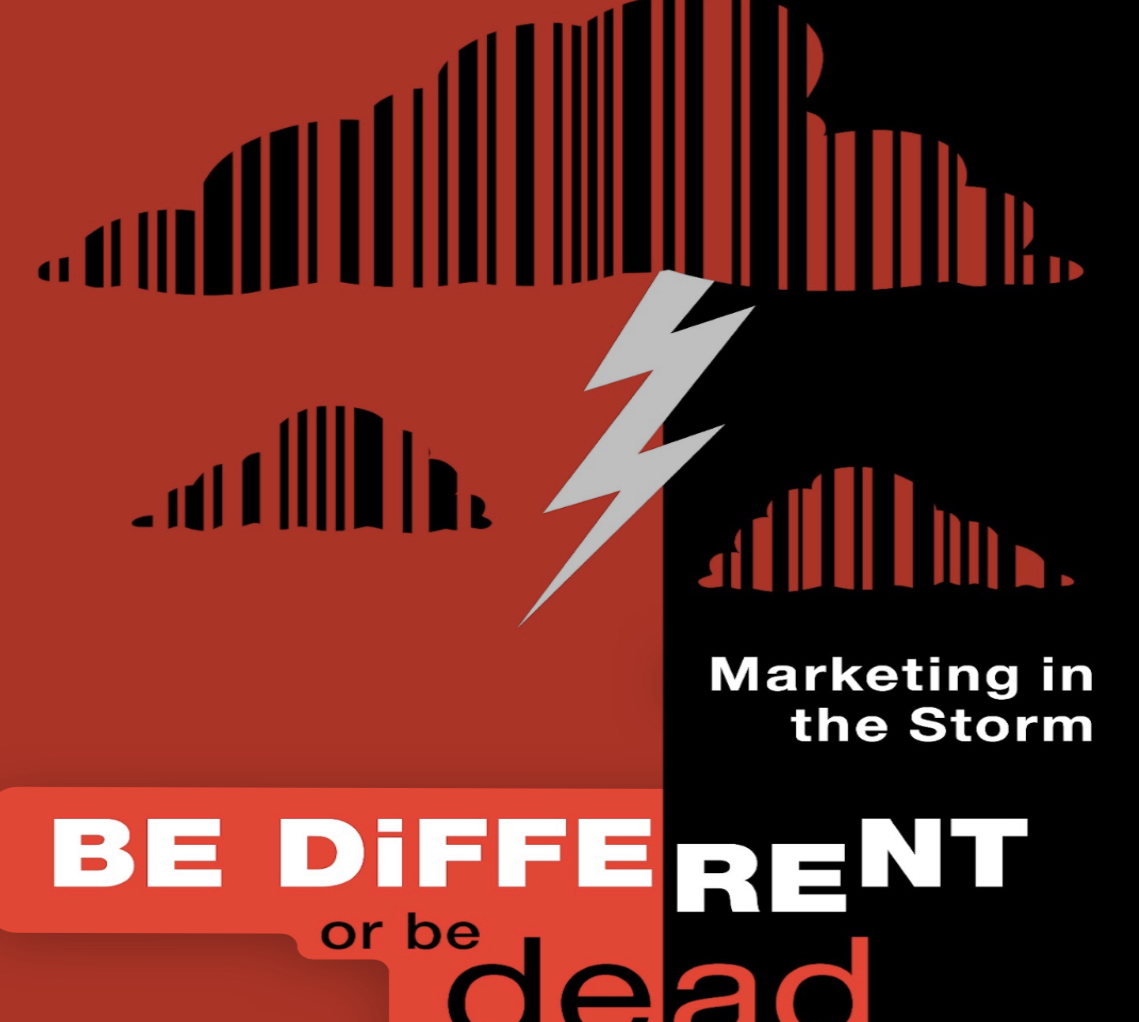
That’s why the ’Experience Manager’ position is so important in Storm Marketing. They operate above the product cloud.
THEY are accountable to define the robust profile of a person; the bank of Secrets and Cravings they possess.
Are you concerned about your customer’s total life or only a small single slice of it?
Think about it:
▪️Do you have a holistic lens to determine what a customer covets?
▪️Are you in the Secret discovery business or not?
▪️Are you still possessed by the notion that product benefits describe what will make someone happy?
▪️What do you know about the lives of the people that do business with you? What does your holistic check list look like?
▪️If you have Experience Managers, nice; if not, WHY NOT?
Cheers,
Roy
40+ Podcast Shows I’ve done that unpack my work.
Check out my BE DiFFERENT or be dead Book Series
‘Audacious’ is my latest…
- Posted 11.7.22 at 05:31 am by Roy Osing
- Permalink
October 31, 2022
Why competitive advantage, as taught by most ‘experts’, is usually (mostly) wrong
How to declare a competitive advantage, as taught by most ‘experts’, is usually—mostly—wrong.
This article is typical of how people are taught to create a competitive advantage for their business.
“Crafting Your Statement — Your statement of competitive advantage has four components: your name, your company, a statement about a problem in your market, and how you and your product solve that problem.
Essentially, it is a 30-second statement explaining what differentiates your company in the marketplace.”
This author teaches us that if we have a solution to a problem, it—our solution—defines our competitive advantage. And in the last sentence it concludes that this four component statement “…differentiates your company in the marketplace.”
BOOM. PROBLEM SOLVED. EASY-PEASY.
WRONG.
This approach is not only an oversimplification, it’s misleading.It DOESN’T establish competitive advantage in any way, shape or form.
And, unfortunately, the approach is not an isolated example of how businesses are being coached on how to define what makes their organization unique and special among their competitors.
And I would say 99.9% of the ‘experts’ out there promulgate the same type of gibberish.
If I come up with a solution to the distracted driving problem does that automatically mean my solution gives me a competitive advantage?
“YES”, the previous ‘experts’ would say.
“NO”, Roy says it’s gibberish.
All it means is that you figured out ONE solution among many to the distracted driving problem. Your solution doesn’t give you ANY advantage, for example, unless it’s unique in some way compared to what other solutions are out there.
Where is the notion of solution comparison to the competition in the gibberish? It is MIA. Not mentioned. Not important apparently.
Look, the gibberish is helpful to a point. It correctly advises that you must find a solution to a problem that someone has if you want to have a chance for success.
Find out what’s keeping people awake at night and find a solution to their dilemma and help them rest.
That’s a good start. But it’s not the end which the gibberish implies.
You need to determine HOW to make your solution DiFFERENT from everyone else’s solution in a way people care about if your solution is to ‘have legs’ in the market.
So, let’s transform the gibberish advice into something meaningful and relevant.
“Crafting Your Statement — Your statement of competitive advantage has four components: your name, your company, a statement about a problem in your market, and how you and your product solve that problem in a way no one else in the market does.
Essentially, it is a 30-second statement explaining what differentiates your company in the marketplace.”
Your takeaway from a guy who took an early stage internet company to A BILLION IN SALES — create solutions that standout and are unique among the competitive hordes if you want to be honest with yourself that you really DO have a competitive advantage.
Ignore the gibberish.
Develop The ONLY Statement for your solution.
“Our solution (brand it, like ‘Distracted Driving Resolved’) is the ONLY real solution to the distracted driving problem killing the lives of millions of children, parents, grandparents and friends each year.”
Cheers,
Roy
40+ Podcast Shows I’ve done that unpack my work.
Check out my BE DiFFERENT or be dead Book Series
‘Audacious’ is my latest…
- Posted 10.31.22 at 05:16 am by Roy Osing
- Permalink
October 24, 2022
Why DEIB will never likely produce a competitive advantage

Why DEIB will never likely produce a competitive advantage.
DEIB - Diversity, Equity, Inclusion, and Belonging.
I was asked on the GEMS podcast if I felt that organizations who effectively implemented DEIB programs would gain a competitive advantage in the marketplace by doing so.
It’s a very interesting question today when many organizations are pushing to be relevant in terms of their commitment to diversity, equity, inclusion and belonging.
Here’s my take on what DEIB involves:
Diversity — The organization values and strives for a mix of ethnic, gender, sexual orientation, age and life experience among its employee group.
Inclusion — The organization values, accepts—not just tolerates—and celebrates differences among employees.
Equity — The organization provides various levels of support and assistance to employees depending on their specific needs or abilities.
Belonging — The organization creates an environment where people within the organization have positive relationships. I suspect that sense of belonging goes up when the organization succeeds in being recognized for its diversity, inclusion and equity values.
The question is, notwithstanding that DEIB seems to be the template organizations are trying to implement these days, does being a ‘DEIB Practitioner’ organization create a strategic advantage for the organization adopting the practices to be the DEIB best in class?
Put another way, do the values ascribed to DEIB have a strong enough pull with customers to have them choose one organization over its competition, and generate revenue growth for its practitioner?
I think not.
It’s not that DEIB values are not important. They are in terms of describing what ‘the inside’ of an organization should look like as a mirror of societal challenges and changing personal values.
It’s just that I don’t believe they are overwhelmingly compelling and relevant to a consumer’s choice when it comes to deciding who to do business with.
Advocates state that DIEB values will stimulate innovation and sustainable growth that would otherwise not occur.
I don’t know. I’m not there.
It’s always seemed to me as a leader that the job is to get the best people available to execute the organization’s strategic game plan.
If DEIB is the most effective way to get there, ok.
But it becomes a means to an end not an end itself, and the education system needs to produce the skills employers need.
DEIB speaks to aspirations and organizational values rather than competitive advantage.
Product fit, price, the service experience and technology, for example, are among the elements that typically find a more influential role to play and take a higher priority in purchase decisions rather than whether the company salutes DEIB.
(As a side note, I see many employers aspire to be the one who checks all the DEIB boxes, but relatively few actually successfully put them into practice.)
Furthermore, as more and more organizations move to a DEIB culture, it won’t represent a difference among them to cite as a reason consumers should do business with any one of them.
If everyone’s doing DEIB, how’s an organization getting an advantage by putting the values forward as reasons to buy from them and not others?
The DEIB herd confers no advantage on any member of the herd.
The final test of whether or not DEIB values contribute to the competitive advantage of an organization is to look at how these values fit within the customer facing—marketing, sales and service—imperatives of their strategic game plan.
If, for example, you’re going to target your scarce resources on the boat dealers in Laval Quebec, Canada, you need to know whether DEIB expression is a mandatory purchase criteria for those dealers.
I suspect it’s not, but you would need to confirm it one way or another.
The internal capabilities an organization chooses to develop—like DEIB—should be based on what is needed to execute its business plan including how it intends to compete and win the markets it intends to serve.
All other things being equal on the factors at play in choosing a supplier, if one company was DEIB-centric and another is not, the DEIB organization may very well get the business up for grabs.
Someone may decide that the two organizations under consideration are equal in every aspect, and decide to go with the DEIB company because at a higher level they believe in the intent of DEIB.
But all things are NOT always equal, so I doubt DEIB will likely ever be a determining factor in a consumer’s purchase decision.
DEIB is a commendable aspiration for any organization, but it’s not a tool to gain competitive advantage.
Cheers,
Roy
40+ Podcast Shows I’ve done that unpack my work.
Check out my BE DiFFERENT or be dead Book Series
‘Audacious’ is my latest…
- Posted 10.24.22 at 05:06 am by Roy Osing
- Permalink
October 17, 2022
3 audacious moves you can make when you don’t have a business plan

3 Audacious moves you can make when you don’t have a business plan.
Some organizations don’t have a Business Plan to follow.
They’ve simply decided for whatever reason not to devote the time to develop one. Some business leaders say they don’t have the time to do the work and others say it’s too expensive.
Whatever the reason, their business is left rudderless.
Of course, I try to encourage every business to create strategic context—my Strategic Game Plan—for themselves to steer their ship; to determine the actions they take to achieve their goals and attain superlative performance levels.
But if you’re determined NOT to invest the minimal time and resources to build your strategic game plan, there are some simple things you can do to enhance the performance of your business.
There are a number of ’Out-of-context Moves’ that will help you build your business. They were incredibly successful for me and will definitely work for you.
#1. Focus on the customer experience.
It’s a proven fact that people don’t repeatedly buy on the basis of a product, they are loyal buyers because of how they feel—the experience—when they engage with the organization and make the purchase.
I deal with a particular retailer not necessarily because they have a unique product line (in reality most retailers in a given space all provide the same thing); rather I deal with them because I FEEL GOOD when I engage with them.
Think about yourself in the ‘experience’ business not the product business if you want a consistently high level of performance.
Product suppliers are a dime a dozen and flogging products won’t make you special.
Everyone flogs products; few are amazing experience creators so play in that space.
To get started, define how you want your customers to feel when they engage with you and pick 3 behaviours you need to consistently demonstrate to invoke these feelings.
Practise with your staff and make sure they are clear on the outcomes expected.
#2. Recruit ‘human being lovers’.
If you don’t provide epic customer service you’re simply not in the game. If your customers don’t like the experience they have when they engage with you, they are less likely to do business with you (and they tell all their friends and family how shoddy your service is).
And the key ingredient of a memorable service experience is the individual engaging with and taking care of the customer.
If the care provided is thoughtful, kind, respectful and empathetic, the service experience for the customer takes their breath away. But if the experience is impersonal, cold, rude, discourteous, disrespectful and indifferent, the customer is frustrated and annoyed and has no desire to ever engage with you again.
Hiring people who ‘give a damn’ about others is the right thing to do regardless of your business plan.
So, make a point of hiring people who have the innate desire to serve others. Make this requirement THE most important consideration when hiring someone. You can always teach them the business and specific skills they need in your particular line of work, but you can’t teach them to ‘love’ others.
You can teach them to ‘grin’ and ‘have a smile in their voice’, but you can’t teach them respect and empathy.
Breakaway from the traditional way of recruiting people and hire for goosebumps.
#3. Draft your ONLY Statement.
Determining how your business is different from your competition (in a way your customers care about) is critical to business performance.
The usual way organizations do this is by using meaningless (to the customer) CLAPTRAP expressions like ‘We are better’, ‘We are the best’ and ‘We are the leader’ to define how they are different from others.
But they’re not helpful in answering the question ‘Why should I do business with you as opposed to your competitors?’. Who defines what ‘best’ is? How can you prove that you’re ‘better’?
The truth is, using CLAPTRAP to try and differentiate yourself from others is narcissistic; it’s YOUR view of yourself as opposed to the objective proven facts that customers tell you about why they chose you over your competitors.
My solution to CLAPTRAP is to use my ONLY Statement as the simple way to declare how your business is different.
‘We are the ONLY ones who…” is the killer way to define your uniqueness.’
ONLY is always a draft, so don’t be concerned to get it 100% right (because you never will).
Draft your ONLY based on how you uniquely deliver the value your customers expect from you.
Test it with them (does it address what they really care about, and is it true?), start using it and revise it on the run as you learn how it’s working.
The bottom line: business plan or not, these three actions will establish your business as a contender for superlative performance and the rewards that go with it.
Cheers,
Roy
40+ Podcast Shows I’ve done that unpack my work.
Check out my BE DiFFERENT or be dead Book Series
‘Audacious’ is my latest…
- Posted 10.17.22 at 05:39 am by Roy Osing
- Permalink