



Roy's Blog: Marketing
October 18, 2021
Why a business plan for ‘cults’ can be an amazing success

Source: Pexels
Why a business plan for ‘cults’ can be an amazing success.
There are a plethora of opinions on how to build a business plan, and I have written numerous pieces on my unheard-of Strategic Game Plan process which is unique and cannot be found elsewhere.
In fact I’ve dedicated one of my books to the topic and explained why a planning methodology geared to execution is critical for any organization to consistently achieve a high level of performance.
A practical element of my business planning process is to carefully choose the customer segments you decide to target and serve.
The fascinating criteria I advocate is quite simple: choose those customer segments that have the latent potential to deliver your growth goal.
The choice you make is absolutely critical to the plan’s success.
If the wrong customer segment is chosen, the organization’s resources are wasted and its growth goals are not realized.
And if a mass market is the choice, the same end result happens.
In fact in this scenario, the organization’s marketing message and resources are spread thinly across the entire market hoping for enough ‘hits’ to justify the investments made.
Flogging a value proposition to everyone is not likely to be very successful as the range of appeal is too broad to generate sufficient market momentum to deliver required sales.
So what’s the solution? How does an organization choose the right customers to serve?
One approach that should be given much more attention involves exploring the opportunities presented by polarization: examining clusters of people who are clustered at the extreme right end of the bell curve around a particular value set.
For example, if the value set to be explored were ‘concern for the environment’, a polarized view might be the belief that carbon dioxide emissions will destroy the earth’s atmosphere in 24 months.
Polarized groups—cult movements—are not only unique and distinct from the crowd in some way, their differences are quantum and order of magnitude in nature rather than incrementally distinct.
They are groups of individuals who have an obsession with, fixation on, mania for, passion for, idolization of, and reverence for an idea, thing or cause, for example, such as:
— the environment
— black lives matter
— LGBTQ
— #MeToo
— anti- globalization
— feminism
— veganism
— indigenous rights
People in these segments choose to express themselves in a way that others don’t.
I’m not referring to extremist right wing religious cults, but rather groups of people who share a passionately held view around a particular cause or movement and who express their opinions within acceptable societal and legal limits.
These polarized clusters of people represent relatively narrow slices—slivers—in the market that can have demand characteristics worthy of study.
They may represent a significant source of economic opportunity for the business because their beliefs are precise, well defined and the cluster is growing in number as an expression of society’s changing views.
And, if the business can use ideologies and beliefs to attract cult interest and cult member passion to engage them, perhaps relationships can be established and sales made.
We should start thinking about finding ‘cults’—who have excessive admiration for a particular thing—that express desires and cravings at the poles of the demand curve.
ME! segments are different from the mass crowd; cults are REALLY different.
The challenge, of course, is to find a cult or two whose members represent good potential for you to chase.
Here are five steps you can take to see if a cult has a future in your business plan.
#1. Keep your eyes open for trends
Cults typically follow social trends, so stay alert to the issues of the day because they could lead to the formation of a cult.
For example, there are many climate change cults—The Extinction Rebellion is one—that have been formed over the past few years which could represent a growth opportunity for some businesses because, for example, the cult is growing in membership and you have a solution that would easily allow them to collaborate among themselves very easily.
As a way of getting traction on this activity, assign someone to a cult follower role to identify, track and evaluate them as they are discovered and evolve.
#2. Talk to existing cult leaders
This is a good way to not only get a better understanding of cult values, but also to get insights on what the profile of the cult member looks like.
Even if a particular cult isn’t on your radar, it’s worthwhile engaging with a leader to deepen your understanding of cult dynamics which will provide ideas on how to engage with its members and form relationships with them.
#3. Check traditional and social media
Media headlines are a good source to explore which movements are currently attracting the most attention and therefore might be an attractive target for your organization.
And check out the nature of the conversation on social media to get a feel for the main themes of the conversation—the ‘triggers’—which would provide a window on not only what’s important to the cult members, but also whether your organization would even want to be associated with their cause.
This information is critical in terms of what it might take to successfully market your products, services and solutions to them.
#4. Pick a cult that seems to be a fit for you and give it a try
First of all, you’ll never know if a cult target will work for you until you give it a go.
I don’t think many (if any) organizations actually study cults to determine if they possess any potential so you would be breaking new ground here.
If trailblazing appeals to you, experimenting around the cult phenom is for you.
There are, however, a few considerations that you might use in selecting a high potential cult to chase:
— what does your current business plan say in terms of the customers you’re looking for? Is there some similarity between your current marketing efforts and the potential cult you could target?
— do a bit of back-of-the-envelope calculating in terms of the sales potential. Is there a good growth prospect if things work out for this cult?
— what are the possibilities of partnering with the cult to explore longer term mutual benefits?
— how divergent are the cult’s values from any element of yours? Although improbable, it might just be possible to find a hint of commonality with what the cult stands for and what your organization values. Any common denominator could help to define a workable marketing platform.
#5. Use experience and results to attract another
If your experiment works out, you may want to use it to attract the interest of other cults; you might be The ONLY organization that looks to social movements for joint opportunities.
So, track the results of your ’cult try’ in detail so you can use them in negotiating other arrangements if and when the time comes.
Social movements house untapped opportunities to grow your business and gain a competitive advantage as others are unlikely to pursue a similar strategy.
Exploiting customer groups at the edges of the demand curve—beyond ME!—can be risky, but can also be rewarding.
BE DiFFERENT.
You’ll never know until you give it a try.
Cheers,
Roy
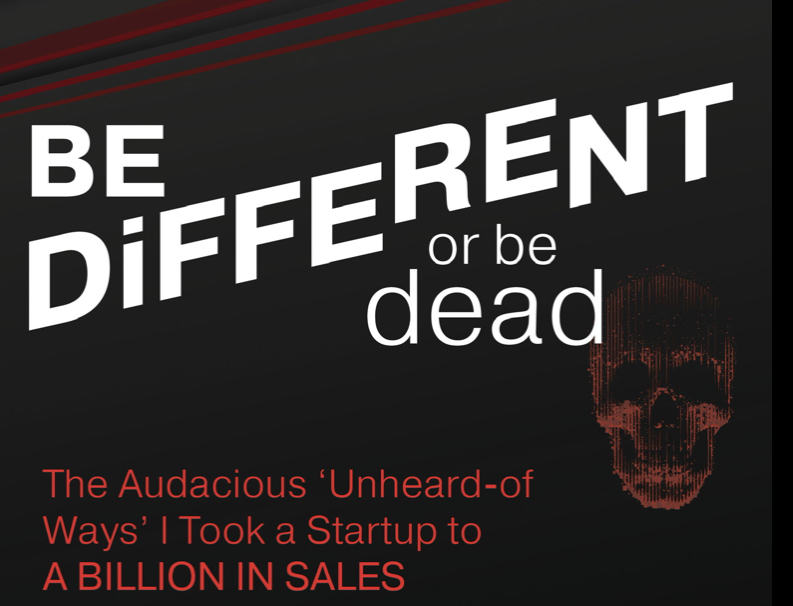
Check out my BE DiFFERENT or be dead Book Series
‘Audacious’ is my latest…
- Posted 10.18.21 at 05:17 am by Roy Osing
- Permalink
June 28, 2021
Why customer loyalty is not determined by what the organization sells

Source: Unsplash
Why customer loyalty is not determined by what the organization sells.
Why do people buy from one organization over and over again?
Is it because they:
▪️‘love’ the business?
▪️love their commitment to sustainability and the environment?
▪️love the way they support the communities in which they operate?
▪️love the products and services they offer?
▪️deliver consistent high levels of financial return to investors?
In a generic sense, the question really is: “Are customers loyal to an organization because of what they deliver — i.e. output related— or because of the way they deliver it — i.e. process related?
Output or process: which is the determinant of customer loyalty?
I don’t see much differentiation among businesses in terms of what they produce. If you’re in the communications business, you’re going to have internet and home phone service in your product portfolio.
If you’re in the financial business you’re likely to offer essentially the same financial products such as basic savings, retirement savings, and education savings accounts as well as other products such as term deposits and investment vehicles.
I’ve written much about the fact that even though competition is fierce and growing relentlessly in global markets, differences among competitors that are both meaningful and compelling to customers are shrinking and are becoming less and less obvious.
Increasing competition is ironically resulting in less meaningful differences among combatants.
It’s a surprising result.
You would think that as competitive forces escalate, a business would get better at creating a sustainable competitive advantage in the markets they compete in.
But they’re not. My observation is that every participant basically looks the same and they all exist to produce something for the masses, using price to attempt to separate themselves from the crowded mob around them.
And generally, production-oriented, mass motivated and price focused organizations tend not to be a huge loyalty magnet; customers come and go based on short term satisfaction.
Sustainable loyalty actually has little to do with what is produced by a business; rather it is a process-based phenomenon with people as the nucleus.
People buy when they’re happy; when the engagement they have with an organization ‘feels good’ and they feel their cravings are being addressed.
And warm feelings are not likely to be continuously produced by a product or service which turns into old or used eventually when the lustre of ‘the new’ wears off.
These are the process and people things that, in my experience, create warm experiences for people and make them coming back:
1. Easy-to-do-business-with processes
There are two principles that are critical in terms of having ‘customer friendly’ processes.
First, build systems to enable customers to engage with the organization the way they want rather than force them to comply with processes designed with company efficiency as the main design criteria;
What percentage of customers that use a company’s website are ever asked if they like the navigation and buying experience? How many of them are asked to pass judgment on the artificial intelligence technologies used?
I doubt it ever happens.
Organizations build systems with scale and productivity in mind not with customer satisfaction as a key driving factor.
Furthermore, they serve as a factory to the ‘normal’ masses who are content to comply with whatever business processes they use and not the outlier ‘weird’ ones who require special handling — a group by the way growing larger and more powerful everyday and sometime soon will eclipse ‘the normal ones’.
Second, ensure that internal rules and policies serve the same customer purpose: to enable not restrict, to ‘say yes’ not ‘say no’, to empower not control and to please not disappoint.
Ever heard of a company asking their customers to participate in a panel to evaluate whether or not the policies of the company made any sense to customers? Whether they made it easy to engage with the company? Whether they were understandable or just plain dumb?
Unfortunately, I’ve never seen an organization enlightened enough to take such a risk and welcome their customers in to help manage their business.
2. People who like to serve
The majority of warm feelings that customers experience are induced by human beings. Technology might impress you, but people can delight you, blow you away, mesmerize you, dazzle you, surprise you, shock you and astonish you — all symptoms of loyalty building.
So it follows that organizations need to hire the type of person who can cause these types of feelings to exude from other people. Yes, they have to be intellectually competent to qualify for a customer server role, but beyond that they must possess the innate hunger to care for another person and be driven to satisfy whatever craving the customer has at the moment.
Most businesses aspire to provide memorable experiences for their customers, but the quality of the engagement process doesn’t back up the claim. Their customer contact repair folks may be great at troubleshooting an internet problem sitting in a call Center in the Philippines, but the engagement moment with the customer falls short of being warm and caring. It’s often frustrating, cold and harsh.
It’s absolutely true that delighting a customer time and time again will deepen the affection the customer has for the organization and will lead to sustaining loyalty. The catch though is to have the type of ’human being lovers’ in place to pull it off.
Let me crystallize the loyalty takeaways for you:
— Customer loyalty has more to do with HOW you conduct your business than it has to do with what your business produces.
— Loyalty is created when business processes are created in the image of making it easy for the customer to do business with an organization.
— Loyalty grows from customer affection which is earned by having caring customer servers who are the natural architects of warm moments customers experience.
Businesses don’t create customer loyalty; processes and people do.
Cheers,
Roy
Check out my BE DiFFERENT or be dead Book Series
- Posted 6.28.21 at 01:45 am by Roy Osing
- Permalink
May 17, 2021
Why marketers should try to make people emotional rather than buy products

Source: Pexels
Why marketers should try to make people emotional rather than buy products.
Marketers should refocus their attention to building solutions for the heart; customer offers that stir their feelings and emotions.
We live in a product flogging world.
Products are pushed at us. Technology rains down on us through mass communications.
What businesses supply (as opposed to what we want) is jammed down our throats with the hope that we will bite-and-buy what they offer.
People buy what they want, desire and crave, not what they need
People buy on the basis of what they yearn, crave and ache for; to achieve happiness in a world with pressure and stress on their lives.
Product flogging is intrusive and completely out of sync with this reality, and is a recipe to fail.
Happiness is driven by what we experience rather than what we consume in material goods. Fond memories of a family vacation are long-lasting. The new car is fun for a while but soon feels no different than just the one we just traded in.
This is a game-changer for product floggers. Rather than push features, technology and price, the challenge is to create broad-based appeals to the full spectrum of feelings that an individual has.
The marketer’s goal is to illicit a warm feeling rather than to satisfy a need
The marketer’s objective in this sense is to elicit a positive emotional response from the customer, rather than satisfy a consumer need.
“When people were asked to recall their most significant material purchase and their most significant experiential purchase over the past five years, they reported the experiential purchase brought them more joy and enduring satisfaction, and it was clearly ‘money well spent’ compared with the material purchase,” wrote Thomas Gilovich, Professor of Psychology, Cornell University in Determinants of Happiness.
Furthermore, experiences create more happiness than material goods because they are a personal expression of what we desire. They belong to us alone and no one else.
People will forget what you said, people will forget what you did, but people will never forget how you made them feel — Maya Angelou
The payback is long-term customer loyalty; the better they feel, the longer they stay.
These 3 steps will get you started.
1. Establish the ‘Experience Creator’ position in marketing to augment in the standard product management role.
These are the experience packagers; the folks that integrate, brand and price the value elements necessary to deliver the complete experience that customers covet.
This position is a synthesizer who brings together the appropriate combination of the organization’s products and services to create an emotional response that bonds the customer’s loyalty.
2. Include feelings as a key element of marketing and customer research. What experience would make someone happy, special and fulfilled? What does the person crave?
Develop feelings objectives for the offer you bring to market. What feeling do you intend to cause by the offer: contentment, trust, joy,...? If you’re serious about stirring emotion then you need to have a target that embodies the marketing intent.
3. Measure the emotions evoked by the experience packages you create; “How did it make you feel?” not just “Did it do what we said it would and does it meet your needs?”
Memo to marketers: forsake your flogging ways and start creating personal experiences for your customers.
The world is full of floggers.
If you want to make a difference and stand-out from the flogging herd let experiences guide you that produce an emotional response that keeps a customer with you forever.
Cheers,
Roy
Check out my BE DiFFERENT or be dead Book Series
- Posted 5.17.21 at 05:08 am by Roy Osing
- Permalink
May 3, 2021
Why great brands are not made by the organization’s leaders

Source: Pexels
Why great brands are not made by the organization’s leaders.
I’ve sat in board meetings as the EVP of marketing listening to board members pronounce their views on the company’s brand and how it should change to meet changing market conditions.
From the 21st floor, they declare what brand position best serves the organization in terms of the current business plan and the environment as they see it.
Yes, board members should have influence on brand positioning, as should people further down the line in marketing, advertising and public relations — not to mention a plethora of others in the organization who want to join the brand party because it’s fun to be involved.
But let’s be clear: the brand work done by these folks is at best aspirational and bears little resemblance to the impact felt by the brand when implemented and experienced by customers and other stakeholders.
The brand developed by marketing, for example, represents the value proposition that they want communicated in order to meet the marketing objectives involving competitive differentiation and customer value considerations.
Whether it’s declared by the board or marketing, it’s a paper brand position at this stage — a brave brand only.
Because at the end of the day, if an organization can’t deliver on its brand promise, the promise is useless and and is seen as a lie by all who witness it.
The brand stays in the ‘dream’ stage until it’s edited, filtered and tested by all of the practical, operational factors that impact the brand’s efficacy.
In my experience, these are the factors that either reinforce the brand dream or kill it.
▪️The frontline of the organization who engage with demanding customers day-in and day-out with aggressive competitors must believe the brand promise.
They must feel that they can deliver on the promise 24X7, because if they don’t believe, the dream dies.
▪️Operating processes that impact the way customers engage with the organization must support the brand promise. If, for example, the brand promises a friendly future but the internal policies make it cumbersome and difficult for customers to transact with the organization, the promise and delivery collide and the brand lie is borne over and over again. And the dream dies.
▪️Internal rules and policies affecting the customer experience must be in harmony with the brand promise. If the brand promises amazing customer experiences but internal rules force the customer through hoops they don’t like, customers are pissed off, they tell their friends what horrific service is being delivered and the dream dies.
▪️Frontline people must have the personal attitude, life experience and competence to deliver the brand promise day-in and day-out. Rude and uncaring treatment of a customer renders an organization as self-serving and narcissistic with utter disregard for the needs and wants of the people they serve. And the dream dies.
▪️The organization must be cleansed if the grunge and CRAP that gets in the way of employees delivering the brand promise. If frontline people are constantly fighting unnecessary internal roadblocks that get in the way of delivering what customers crave, again, the customer experience suffers and once loyal customers leave for a more friendly environment. And the dream dies.
▪️Frontline emotion and proclivity to serve others must be a huge component in the engagement process if the organization is to maximize the value of the customer experience, and this requires that people with a high EQ - emotional quotient - are recruited into frontline positions. If frontliners don’t illicit goosebumps during the interview process then the wrong person is being hired. And the dream dies.
▪️There are many organizations that decide to rebrand themselves without addressing the alignment factors discussed in the previous points — and nothing changes. They create a new identity with a flashy new logo and tag line but the essence of the organization carries on the way it always has. For these organizations, leadership seems to believe that the new logo will miraculously change their performance, but it doesn’t.
They overhaul their web sites with a new look and feel. Advertising messages change stressing an aspect of the organization they feel is now important and nothing changes.
The same operations problems persist; the same employee morale issues remain and competitive vulnerabilities continue despite the fact that how the organization is visually presented to the market has been morphed into something different. And the dream dies.
You can put lipstick on a pig, but it’s still a pig.
A brand begins as a dream, conjured up by people intent on finding the best solution to the market challenge they face in a crazy changing environment. And it stays as a dream until leadership creates the infrastructure — the support systems — that makes the brand real.
If they’re not up to the task, the dream dies.
Cheers,
Roy
Check out my BE DiFFERENT or be dead Book Series
- Posted 5.3.21 at 04:36 am by Roy Osing
- Permalink