



Roy's Blog: Marketing
March 19, 2022
Proven easy ways to integrate TikTok into your video marketing strategy

Source: Unsplash
Looking for the secret sauce guaranteed to boost your company’s video marketing strategy?
TikTok may be exactly what you’re looking for. This worldwide phenomenon originally soared in popularity with younger audience members and is now amassing even more users in older demographics thanks to the hours of entertainment it promises.
What does this mean for you as a business owner? Frankly, it means you need to be on it and figure out how to show up and show off. While having a presence on TikTok can be beneficial to nearly any business in any market, it’s an especially strategic move for those targeting females ages 16 to 39 as this demographic makes up the majority of app users.
Here are some ways you can integrate TikTok into your video marketing strategy right away.
What You Can Expect
Before you start investing time, energy, and money into your TikTok marketing, you may be wondering what you can expect to get in return. Is this even worth the effort?
Well, how would you like to see the following:
● Better connection between your business and online communities.
● Increased Brand Awareness.
● More engagement with your products and services.
● Improved conversions for advertisements.
If those sound like something you’d be interested in seeing for your business, let’s move along and find out how you can achieve them thanks to the help of TikTok.
Getting started with TikTok
If you’re entirely new to the app, you’ll need to first set up a TikTok business account so you’ll have access to analytics, insights, editing tools, and other metrics that will help you gauge the effectiveness of your efforts. Next, take a look around the app and familiarize yourself with its features while starting to build your presence.
Take notice of trending topics, hashtags, and content with high views. What do you notice about them? Why are people engaging with it? By taking note of these observations, you’ll be better prepared when it comes time to make your own content.
Finally, start engaging with other brands and the TikTok community. This is the kind of app that works best when you’re actively communicating with others instead of just sitting back and watching.
‘Like’ videos, subscribe to users, even post comments. These small acts of engagement are all part of your TikTok strategy so spend some time building your presence.
Get your toes wet
Now that you’ve taken the time to observe other users, it’s time to get your toes wet and create some of your first content. Don’t worry, this is the fun part! Play around with the filters TikTok offers and don’t take yourself too seriously! TikTok is universally entertaining because it showcases authenticity so just be real and get to creating.
Keys to success
As with any form of marketing, especially in the social media world, the first key to success is to be consistent. Set a schedule for posting content and try your best to keep it. Even if you’re just putting out a short clip, it’s better than being inactive.
Let your audience peek behind the curtain and see the “real” you with behind-the-scenes content and interviews. Post something silly like a TikTok challenge. Or, create a how-to video for one of your products.
Key point: post often.
The BIG goal
When it comes to TikTok, the Holy Grail is being featured on someone’s ‘For You’ page. This content is curated for users with AI and is based on their past views and interactions.
Getting your content on this feed will boost your interactions as more and more users like and comment on your video. Once your post gets in the flow, your content can live in perpetuity and your new followers will be as organic as they come.
Top ways to use TikTok for business
Now that you understand more about TikTok, let’s look at the top three ways your business can use it to your advantage. It’s not all about posting content, believe it or not!
#1. Post TikTok videos — Now, we said it’s not ALL about posting content but that doesn’t mean doing so isn’t the best way to utilize TikTok. Finding ways to creatively engage your audience through videos is crucial to your TikTok success.
Your posts need to be fun, authentic, engaging, and consistent. Think about what your followers want to see and find a way to give it to them.
#2. Team up with influencers — Before you give us a huge eye roll, hear us out. Influencers have gotten a bad rep in the media but they can actually be hugely beneficial to your business.
How? Imagine the biggest influencers on TikTok posting raving reviews about your product or service. What do you think their followers are going to do? Finding the right influencers to partner with can be a game-changer for a business!
#3. Run TikTok ads — This wouldn’t be a marketing blog if we didn’t talk about paid advertising, right? TikTok advertising is one of the best places to spend your marketing dollars and it currently gives you five different ways to do so:
▪️In-Feed Ads: These ads are posted on the user’s ‘For You’ page and from there can be shared, liked, and commented on. With an engaging Call to Action, your ad can give a huge boost to your revenue.
▪️Top-View Ads: As TikTok says, these ads are ‘top of feed, top of mind.’ While they’re also featured on the FYP, these ads present your brand first on someone’s news feed.
▪️Brand Takeovers: These short ads appear when a user first opens their app before they even get to their news feed.
▪️Branded Hashtags: This option can be a part of your influencer strategy and is a fast and easy way to increase engagement.
▪️Branded Effects: The most creative option, your company can create a branded filter or effect that users can create their own content with.
Time is TikTok-ing
Forgive the pun but the truth remains: it’s time to get your business on TikTok and start boosting your video marketing strategy by utilizing this insanely popular app.
Remember, the key is having fun with your content so followers will engage with it and share, share, share! What will you create first?
— Torrey Tayenaka is the co-founder and CEO at Sparkhouse, a corporate video production agency. He is often asked to contribute expertise in publications like Entrepreneur, Single Grain and Forbes.
Sparkhouse is known for transforming video marketing and advertising into real conversations.Rather than hitting the consumer over the head with blatant ads, Sparkhouse creates interesting, entertaining and useful videos that enrich the lives of his clients’ customers.
In addition to Sparkhouse, Torrey has also founded the companies Eva Smart Shower, Litehouse & Forge54.

- Posted 3.19.22 at 06:17 am by Roy Osing
- Permalink
December 26, 2021
7 proven ways to make your marketing stunning and unbeatable

Source: Pexels
7 proven ways to make your marketing stunning and unbeatable.
Marketing is practiced in the same way by most organizations; typically marketers adopt efficiency tools to perform the detailed tasks of their profession. They are infatuated with the minutiae of their world.
There are, for example, keyword research tools such as Ubersuggest, site usage tools such as Hotjar, email marketing tools like Active Campaign and many many more.
Today, there are so many tools available that overwhelmed marketers have a difficult time choosing one that best fits their particular circumstances.
But the real problem is that with everyone searching for the toolset that will make them more efficient at performing marketing tasks, the specific strategic actions that will enable them to stand out in the crowd are often overlooked and given a low priority. In some organizations they are ignored.
Efficiency is a laudable goal, but what organizations need from marketing are strategic tools; tools that will make them different from every else and give them a strategic advantage in the marketplace.
Marketing is not a tactical resource, it’s a strategic one.
These are the actions that different marketers take to add strategic value to their organization and make their marketing efforts stunning and unbeatable.
#1. They don’t care about new customers
They treat existing loyal customers as the lifeline of the business. They choose to reward loyalty with special deals and promotions before offering them as an incentive for people to leave their current supplier.
‘Deals for loyalty’ is the mantra that drives the offer development process and additional revenue is generated by creating programs for current customers as opposed to adding new customers.
#2. They bring service in
They introduce service elements into the marketing value proposition mix, realizing that if the right service umbrella doesn’t overshadow the specific product being offered, there is no positive outcome.
If someone can’t easily get their solution with care and attention, they won’t buy or stay.
And they differentiate various levels of service to reflect the value of various customer groups. For example, a dedicated ‘Chairman’s Club’ 1-800 line is provided exclusively for those customers who are top spenders.
#3. They ignore technology
They are agnostic to technology; they focus on the value and benefits the technology delivers rather than on the technology itself.
Current marketing is infatuated with gee-wiz technology and uses it to declare a competitive advantage.
So, for example, a communications company mistakenly assumes it is unique among their competitors if they use 5G technology yet the technology is available (and eventually will be used by) everyone in the business.
Unmatchable marketing, on the other hand, positions their organization as unique in how they employ technology to solve customer problems or enhance their quality of life.
#4. They covet ‘The ONLY’
They ask the question,’Why should I do business with you and not your competitors?’ guide them in developing the competitive strategy of their organization.
They avoid using ‘better’, ‘the best’ and ‘number 1’ to declare their competitive position; rather they use the ONLY statement — ‘We are the ONLY ones that…’ — to express their uniqueness and state why they should be chosen over their competition.
#5. They are ‘always on’
They are constantly learning what customers desire every time they touch the organization, whether it’s a personal contact or a visit to a website.
They are not enamored with traditional market research studies as the way to discover what people want and desire; they use a learning streaming approach that gathers relevant information on the customer every time they engage with the organization.
The smallest detail may be the most important in terms of providing the right solution, and unmatchable marketers don’t want to miss the opportunity to get it.
#6. They love ‘secrets’
They are obsessed with discovering the innermost secrets that customers hide: they aren’t really all that interested in the needs they give up freely.
Most organizations try to determine what their customers NEED and use their data to drive the marketing process. Unmatchable marketing, on the other hand, tries to get ‘under the covers’ and discover what their customers crave and lust for as the engine for what is offered to them.
If every marketing team is looking for needs, no one will stand out; they all have the same information. If they have secrets though, they will be unique and will have the opportunity to stand out from all others.
#7. They like trying
Experimentation through market trials is the beacon they use for what will really work; studies and rigorous analysis take a second seat to real market experience.
Old school marketers do exhaustive studies on the potential for a product or service and if the results are positive they go to market.
Unmatchable marketers, on the other hand, do abbreviated studies and conduct extensive trials with real customers and then move to a full market launch based on trial results and customer feedback.
The unbeatable marketers’ scorecard has ‘the number of tries’ as a key performance measure; the more tries, the better the performance. They trust what they learn from the customer experience not from what study and analysis concludes.
Unbeatable marketing is needed for organizations to win in these unpredictable and pandemic times; staying with old school ways unfortunately guarantees mediocrity, herd membership and anonymity.
Cheers,
Roy
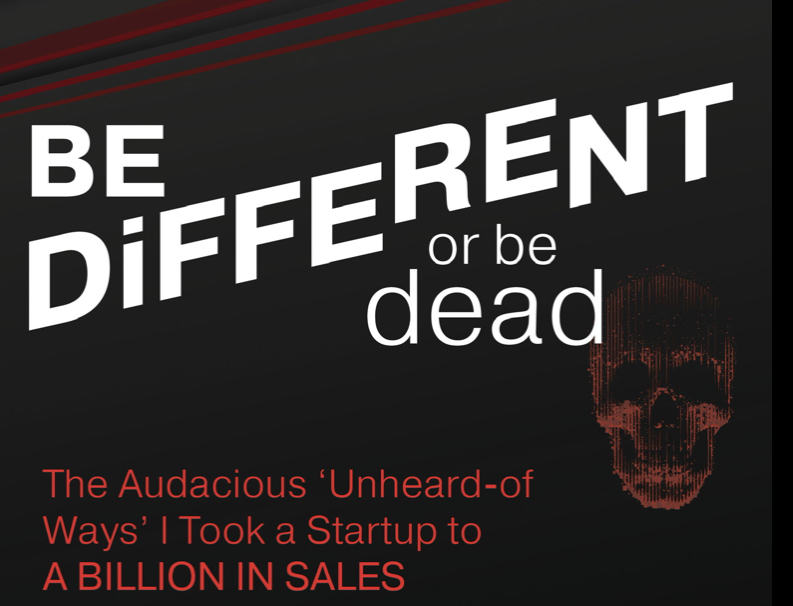
Check out my BE DiFFERENT or be dead Book Series
‘Audacious’ is my latest…
- Posted 12.26.21 at 07:33 am by Roy Osing
- Permalink
November 27, 2021
5 surprising reasons product packaging can be a competitive advantage for your business

5 surprising reasons product packaging can be a competitive advantage for your business.
There’s more to product packaging than meets the eye. It plays a huge role in influencing customer decisions more than you might imagine. Packaging communicates lots of things. For example, ingredients, company values, what all the product can do, how to use it, etc.
Many marketing experts go so far as to say that packaging is just as important as the actual product itself. It’s integral to overall marketing and brand communication.
In this post, we look at ways in which smart and flexible product packaging can give you a competitive edge over others.
#1. Packaging encourages informed buying decisions
Whether browsing through the market isles or a website catalog, it’s likely that a first-time consumer would have little to no information about what your product has to offer. Especially in the case of offline shopping, customers have no time to do research.
They will count on the packaging to know what the product is all about. Based on the information supplied on the package, they will arrive at a buying decision.
Always make sure that your packaging includes the following information:
● List of ingredients
● Usage instructions
● Nutrition information
● Product benefits
● Product description
● Company name, logo, and contact information
● Any disclaimers and/or warnings
Make sure that the font and colors are concise, scannable, and quick to understand. All the necessary information should be easily accessible to encourage buying decisions. Things like how the product will help and why it’s the best should all be very clear.
#2. Packaging with colour can sway consumer purchase habits
If you understand colour theory and the psychology of colors, you’ll know that the human brain reacts differently to different colors. That’s why picking the right color for product packaging parlays nicely into using human psychology to secure a competitive advantage.
For example, white colors generally translate to simplicity, panache, sophistication, purity, and safety. At the same time, using too many colors generally signifies a lack of sophistication. Brighter colors like pink and red are mostly used in kids’ products.
Other shades like blue can convey different meanings. A lighter blue is associated with playfulness while darker tones like navy blue carry professional meaning. Blue and Green are the most used colors in packaging worldwide. However, it doesn’t make them automatically right for your brand.
So, study the nature of your product, target demographics, and accordingly pick the right color scheme.
#3. Packaging differentiates your brand from others
For any type of product, there are thousands of contenders vying for customer attention on a typical market aisle. With such tough competition, it’s generally the packaging that grabs customer attention. To make sure a customer reaches for your product, your packaging and color scheme must be unique. It must stand out from your competitors.
For instance, Cannon Blast, one of the recent products by Captain Morgan, comes in a rather quirky packaging. The battle is shaped like a cannonball. Not only is the design relevant to the product, but it’s also unique and eye-catching.
#4. Packaging indicates product quality
The quality of the packaging is a direct indicator of product quality. This is particularly true for food-related products. Therefore, unique packaging is not only a way to differentiate yourself, it’s also a way to communicate value.
You’re telling customers how much thought and consideration you’ve put. It shows you to take your products seriously. In a nutshell, quality packaging doesn’t just protect the product, it protects the brand as well.
#5. Packaging is an opportunity for promotion
Packaging is just another avenue for you to express yourself and promote your company. By using typography, color schemes, taglines, logo, and mascot; you can strengthen your branding game.
A brand name has stronger recall value and uniformity. It’s important that what you promote/advertise and the design are one and the same. Also, while uniformity and consistency are important, adjusting the color schemes is a great way to keep up with changing trends.
Experimenting with packaging and advertising is a great way to see if sales go up or down. It can also be a great opportunity for offering product promotions like BOGO—buy one get one free—offers.
Product packaging is one of the most underrated and powerful marketing tools for brands. It can do a lot more than you asked for. So, be sure to invest a lot of time in your brand packaging.
— Alice MacKenzie is a content writer and publisher at SigmaQ which provides packaging and displays to create memorable experiences with your brand. She writes on different categories based on packaging by providing a variety of tips and solutions for their business. Her mission is to create sustainable solutions for lasting business that empower the packaging industry.

- Posted 11.27.21 at 06:43 am by Roy Osing
- Permalink
November 1, 2021
6 effective barriers to prevent your customers from leaving you

Source: Pexels
6 effective barriers to prevent your customers from leaving you.
Why is there so much talk about the competition?
How to build a competitive strategy, tips for analyzing your competition, how to attain a cost leadership position against your competitors and how to out-sell your competitors pervade the thinking of most business people.
The underlying strategic intent is to build barriers to competitive entry; erect a massive wall to prevent the hordes from entering your markets and taking your customers.
You have little real control over what they do. If they want to launch a new product, reduce their prices, introduce a new disruptive technology or enter one of your markets to compete with you, they will. And (unless you intend to fight their actions on legal, regulatory or ant-competitive grounds), you will have no choice but to deal with the challenges their actions pose.
All you can do is try to anticipate their actions and go on the offensive, or respond to them defensively when they happen.
Rather than devote copious amounts of resources, time and energy to issues we have little control over, we should focus on what we have SOME degree of control over.
Rather than build barriers to competitive entry, we should be concentrating on building barriers to customer exit.
This you DO have a degree of control over; you stand a better chance of creating the outcome you want than basing your actions on what your competition does.
Spend your time making it extremely difficult for your customers to leave given a choice they might be offered by a competitor.
Barrier to exit profile
What do barriers to customer exit look like?
#1. Relationships
The emphasis is on building relationships and creating personalized experiences for customers as opposed to pushing products and services at them with a one size fits all mentality.
What customers personally need is given priority over what the common needs of the broader mass market appear to be.
In addition, attention shifts to concentrate more on how people feel when they are engaged with the organization and not solely on the right product or service fit.
#2. Chat
Every manager and executive ‘makes the call’—yes, a phone call!—to customers on a frequent basis to ensure they are being served with relevant and compelling solutions.
It’s an opportunity for the organization to get critiqued on their performance as well as receive suggestions for improvement.
The bottom line is the customer feels valued and respected and are less likely to be enamoured and attracted by a competitor’s value proposition.
#3. Deals
Special offers and price promotions are proactively offered to loyal customers; they are not used solely as a tool to attract new customers as is more often the case in most organizations.
The marketing and sales roles are to be proactive with the customer and present these opportunities before that are made available to the broader base.
People are more loyal when they feel that they are special; getting the deal first will go a long way to shutting the ‘bad guys’ out.
#4. Retention
Customer retention outranks new customer acquisition in terms of priority; the key success factor on the organization’s balanced scorecard is the rate of customer attrition.
It’s always incredibly satisfying to attract a new customer especially when it’s the result of a win from a competitor.
Teams love winning a competitive battle; it’s what makes their juices flow.
The issue is, however, that making your organization irresistible so that customers don’t want to leave can’t be done effectively when there is a strong push to get new customers.
The priority must be on retaining the existing customer base and trust that they will refer you and spread your word to others who will come over to your side — your loyal customers will drive new customers to you.
#5. Policies
The policy system of the organization is built to serve customers not control them. Dumb rules are eliminated in favour of those that facilitate customer engagement.
No one is likely to stay loyal to an organization that is difficult to business with; internal rules that put customers through hoops and policies that make no sense other than to control what customers do as opposed to enable them to get their needs and wants satisfied.
Every employee in an organization has a critical role to be an advocate for the customer and find and fix the internal roadblocks—rules and policies—that annoy customers and make the engagement experience negative for the customer.
And given the inertia that presides in most organizations, to make meaningful change that favours the customer, everyone must take on an advocate role to fight their internal bureaucracy and stand up for the rights of the customer.
#6. Screwups
A HUGE barrier—ironically—to customers leaving is what you do when a mistake has been made and the customer has been screwed over.
Most organizations spend all their time on how to prevent mistakes from occurring (and that’s ok) but few if any have a strategy in place to deal with the situation when prevention goes awry and a colossal blunder happens (and it will).
The fact of the matter is that service blunders that are handled right actually enhance customer loyalty because of the ’impress’ factor.
If an organization responds to a service OOPS! in a way that surprises the customer and dazzles them, they WILL be impressed and they WILL think of the organization in a more positive way (compared to the blunder never happening in the first place).
Impress = Fix the blunder fast + surprise the customer with what they DON’T expect.
Build a barrier to customers leaving by admitting you’ll commit a blunder from time to time and have a plan to recover in an astonishing way when you do.
Going to war with the competition and focusing relentlessly on them may get the adrenalin flowing, but it does so at the expense of your loyalists who have been committed to you in the past and who need you to continue to give them good reasons to stay.
Cheers,
Roy
Check out my BE DiFFERENT or be dead Book Series
‘Audacious’ is my latest…
- Posted 11.1.21 at 03:25 am by Roy Osing
- Permalink