



Roy's Blog: August 2022
August 22, 2022
Why a startup must stand apart from others to be successful

Source: Pexels
So, you have created a great idea that you believe will capture the hearts and minds and, hopefully the pocket books of people.
You have laboured for months and maybe years making sure your product or service concept works; the technology is sound and consistently stable.
You have now arrived at the point where you need to morph your idea into a business. More specifically your challenge is to turn your innovative idea into a thriving economic engine. So how do you do it?
My mantra: If you’re not different you’re dead (or soon will be); if you can’t provide unique reasons to attract business then your startup idea will never get off the ground.
The number one consideration for anyone looking to start a business is that your idea has to be unique in some way or it can be morphed into a unique state. As I said above, you can have a great technology idea, but unless a BE DiFFERENT mindset is applied, you may never have a great business.
The starting point: develop business plan —my strategic game plan—based on answering three questions:
- HOW BIG do you want to be?
- WHO do you want to SERVE?
- HOW will you compete and WIN?
Declare your financial or market goals first. Second, select target customers that have the potential to deliver to your financial expectations. Third, create a differentiated market approach that will beat your competitors. Your game plan can be created in 3 days; you can start executing it on the fourth!
The essential component of the HOW to WIN part of the strategy is the need to create the ONLY statement for your business; this is the essence of your strategy to beat your competitors in the trenches. The challenge is simple to explain but challenging to complete:
‘We are the only ones that…..’
This is the ultimate manifestation of a real differentiation strategy and you should look in every nook and cranny in your business for this edge.
Figure it out with your team and then test it with prospective customers. Make sure it is real, compelling and believable and that you are not mesmerized by your own thoughts of grandeur.
Your strategic game plan must be set in place first; all action plans, tactics and activities are driven from it.
The bottom line for you entrepreneurs out there is that if you cannot define your business in relevant terms to your target customers (i.e. you will deliver something that is a high priority to them) and if you cannot explain in clear concise terms how your offering is DiFFERENT from the other alternatives available then STOP.
Continue to work on your idea until you meet the ONLY criteria. You will reap the rewards later.
If you want a guide to your efforts, work with my BE DiFFERENT quiz.
Use the practises in the quiz to build your business in a different way.
Cheers,
Roy
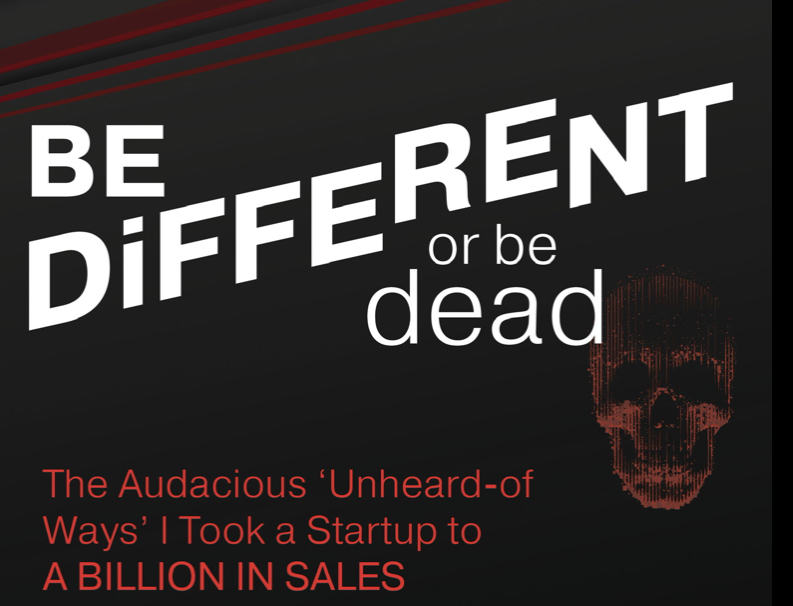
Check out my BE DiFFERENT or be dead Book Series
‘Audacious’ is my latest…
- Posted 8.22.22 at 06:56 am by Roy Osing
- Permalink
August 1, 2022
7 proven ways to easily achieve operational excellence

Source: Unsplash
7 proven ways to easily achieve operational excellence.
What is operational excellence?
It’s usually defined by many such things as:
▪️Increased training and number of employees with key skills.
▪️Greater employee engagement.
▪️Reduced employee turnover.
▪️Enhanced accountability by individual team members.
▪️Improvement in cross-department cooperation.
▪️Higher employee satisfaction scores.
▪️Improved productivity.
And the list goes on to literally cover every operational tactic that organizations grapple with improving without providing a context and framework for deciding on the KEY tactics that, if successfully employed, will really drive operational EXCELLENCE rather than average operations.
It’s not that other operational tactics aren’t important, it’s that not all are of the SAME importance.
And for me, those that were critical to successfully implementing the strategic game plan of the organization ranked at the top of the tactical list.
My experience in leading businesses to achieve remarkable levels of performance has taught me that operational excellence is defined by how effectively the strategy of the organization is executed.
The organization’s operating model must be strategically relevant with operational efficiency running second.
It must drive strategic gains BEFORE efficiency improvements. It must seek efficiency only after it achieves strategic relevance.
These are 7 operational tactics I focused on to take a startup TO A BILLION IN SALES.
#1. The Strategic Game Plan (SGP) — The anchor for an operational plan is the strategy for the organization. It provides the overall context that drives the focus of every operational element.
Operations priorities must be led by the SGP otherwise dysfunction sets in.
If you can’t relate an operational activity to the SGP, question why you’re doing it.
#2. Line of sight — ‘Line of sight’ translation of the SGP is the tool I used to ensure that every operational function was directly in sync with the strategy of the organization.
The question is “What does the SGP specifically mean to (customer contact, recruitment, billing…)?
What activities, processes and systems for example need to be added in order to execute the SGP and what needs to be dropped because they are no longer related to the strategy?
Direct line of sight for every person in the organization translates into pristine strategy execution; unclear foggy notions of what the strategy means, on the other hand, results in dysfunction and little progress.
#3. A clean inside — Removing obstacles—Cutting the CRAP—that gets in the way of people doing their jobs is fundamental to a smooth and effective operations environment.
Administrative grunge must be eliminated and the policies and rules—dumb rules—that make no sense to cusomers must follow suit, or at least be changed to be as acceptable as they can.
As long as ‘the inside’ is needlessly complicated and messy, people get frustrated, they can’t do their job well and execution suffers with them.
#4. Serving leaders — Effective operations requires a leadership culture that has leaders in the workplace constantly asking people “How can I help?”.
This Leadership by Serving Around approach is critical to understanding what needs to change—point #3 above—to enhance how well the strategy of the organization is being executed.
#5. Strategy Hawk — Every strategy needs an owner—the Strategy Hawk—responsible to see that the strategy gets implemented in the way it is intended.
The Strategy Hawk is the ONE person who lives and dies by the success of the strategy which usually depends on a strong operational plan.
The Hawk’s role:
▪️constantly is ‘in the face’ of people in the organization keeping strategy execution alive.
▪️questions everything being done for strategic relevance.
▪️advises the CEO on what’s working and what’s not.
▪️hold regular operational review meetings to track progress on strategy execution.
#6. Goosebump recruits — Operational excellence requires the right people in the right positions as determined by the strategy.
And given that every strategy must include an element dealing with building customer loyalty, this means that people with a natural inclination to serve and care for other people must be the target of the recruitment process.
You can’t train people to like people.
You need to find them and hire them, and the process I use is simple: you ask the potential recruit to ‘tell you a story’ that would prove they ‘loved people’ and if their answer was rich and passionate enough to give you goosebumps you hire them straight away and teach them the other parts of the role they are aspiring to fulfil.
#7. A frontline culture — Cultural values that focus on supporting the frontline are a requisite to having an operational plan that is awesome at strategy execution.
Rather than thinking of them as low ranking, low skilled people ‘at the bottom’ of the organization chart, a frontline culture organization views them as the ‘objects of affection’, holding everyone accountable to discover how to make their jobs easier and to enable their effectiveness.
Any claim of operational brilliance without a ’living for the frontline’ organizational attitude is hollow and disingenuous at the very least.
Operational excellence isn’t an aspiration.
It’s the result of doing the hard operations work required to advance the organization’s strategy.
It’s a strategic concept not one that merely bundles together the populist notions of the day on operational effectiveness.
Cheers,
Roy
Check out my BE DiFFERENT or be dead Book Series
‘Audacious’ is my latest…
- Posted 8.1.22 at 05:44 am by Roy Osing
- Permalink
July 18, 2022
11 simple proven ways to grow your small business

Source: Unsplash
11 simple proven ways to grow your small business.
The Audacious Unheard-of Ways I Took a Startup TO A BILLION IN SALES are not applicable to large businesses, they are also relevant to small businesses.
Here’s what one small business owner says:
”Every concept Roy touches on in ‘Audacious Unheard-of Ways’ can be used in small business. This is about a personal journey to success. Roy teaches you not just how to focus but where to focus, how to cut the CRAP, that there is greater value in looking ahead then behind, and how to build respect and get results with your staff in his Bear Pit sessions. And the list goes on. If you are a small business owner and you really want to differentiate yourself to achieve better results Roy tells you how. Ask yourself, do you want to be DIFFERENT or be dead?” — Daniel Boisvert, A DiFFERENT Entrepreneur and Notary Public, Delta Canada
In my experience, these 11 Moves will put your small business on an growth trajectory that will leave you speechless:
#1. Strategy — Get your strategy done FIRST!
Don’t start chase tactics until you have created your strategic context. My Strategic Game Plan—‘Head West’ planning method—will get you there by asking 3 simple questions:
✔️ HOW BIG do you want to be?
✔️ WHO do you want to SERVE?
✔️ HOW do you intend to COMPETE and WIN?
#2. Competitive advantage — Create the ONLY Statement.
Declare a clear separation between your business and your competition using my ONLY Statement—“We are the ONLY ones who…”
Avoid CLAPTRAP and ASPIRATIONS in your competitive claim — BETTER, BEST, #1, LEADER, PREMIUM, MOST COMPELLING, MOST RELIABLE, GREAT TASTING etc.
They are aspirations at best and offer little to define how your small business is different from others.
Examples of unhelpful claims
“Canada’s largest and most reliable 5G network.”
“(XXX) offers the best coffee and espresso drinks for consumers who want premium ingredients and perfection every time.”
“We work hard every day to make (XXX) the world’s most respected service brand.”
“We’re in business to save our home planet.”
“To inspire humanity – both in the air and on the ground.”
ONLY examples
“St John Ambulance is the ONLY First Aid Advocate that provides safety solutions anywhere, anytime.”
“Roy is the ONLY coach and advisor who offers The ONLY Statement as a practical and proven tool to create a competitive advantage for organizations and individuals.”
Rules for ONLY
▪️The ONLY Statement must speak to the experiences and value you create for people—WHAT THEY CARE ABOUT—not the products or services you want to push.
▪️Keep it BRIEF. It’s a sound bite not a narrative. If it consumes a page it isn’t a viable claim.
▪️Talk to the specific customer group—the WHO— you are targeting, not the market in general.
▪️TEST your ONLY statement with customers and employees to ensure it is relevant and true. Tweak it based on what you learn.
▪️Consider your ONLY statement a DRAFT. Revise it ‘on-the-run’ based on changing circumstances.
#3. Cravings — Discover what your customers ‘CRAVE’.
Competing on the basis of what people NEED, unfortunately, is not always a winning strategy. There are too many competitors in this space and people tend to be price sensitive.
’CRAVINGS’ is a category beyond NEEDS. It refers to what people desire, want or wish for as opposed to the basic thing they need to sustain their lives. Of course, the needs category continues to expand as new products, services and technologies continue to proliferate.
And, as THE major benefit, the CRAVINGS business has fewer competitors and is less price sensitive which means margins are higher.
#4. Feelings — Focus on the CUSTOMER EXPERIENCE.
Don’t do like everyone else and focus on how cheap your prices are. People will soon forget about what they paid for a product or service, but they will NEVER forget about the experience they had when they bought it.
Develop your service strategy as the way of deciding on the level of service you want to deliver.
#5. Loyalty — Focus on rewarding your EXISTING LOYAL CUSTOMERS.
Avoid the common mistake of putting most of your energy into acquiring new customers by offering them special promotional deals and other ‘goodies’ you don’t make available to the customers who have supported you for many years.
You can grow your business by getting current customers to refer you to others.
#6. Policies. — Simplify and ‘kill’ your internal rules and policies—DUMB RULES— that annoy your customers and threaten their loyalty.
#7. Stop doing stuff! — Eliminate projects and activities—CRAP—no longer relevant to your strategy.
#8. Frontline people. — Stay in touch constantly with the employees—FRONTLINERS—who deal directly with your customers, and get their input on what’s working and what’s not.
#9. Don’t delegate. — Micromanage the activities critical to the execution of your strategy. These actions—for example architecting what the ‘customer moment’ looks like—should never be delegated to anyone. They’re the role and responsibility of the leader.
#10. Hiring. — Recruit people who have the innate desire and ability to ‘take care’ of humans. You can’t deliver memorable customer experiences with employees who don’t ‘like” people.
Hire for GOOSEBUMPS.
#11. Strategy execution. — Ensure every employee understands their specific role in executing your strategy—LINE OF SIGHT LEADERSHIP.
Every employee needs to understand what new things they have to take on, new behaviours they have to learn and adopt, and what old things they need to give up.
Amazing business performance happens when all the simple actions are taken to ‘light fires’ in people and deliver pristine strategy execution.
If you follow these 11 Audacious Ways, you’ll be surprised how well you can sleep at night!
Cheers,
Roy
Check out my BE DiFFERENT or be dead Book Series
‘Audacious’ is my latest…
- Posted 7.18.22 at 03:04 am by Roy Osing
- Permalink
July 11, 2022
Holacracy has some serious problems. Here are 9 practical reasons why

While holacracy may be a really cool concept to some, it has some serious problems.
I was asked on Zoe Routh’s recent podcast show what my views were of holacracy as a way to manage a company.
Holacracy is a system for managing a company where there are no assigned roles and “employees have the flexibility to take on various tasks and move between teams freely”.
The organizational structure of a holacracy is rather flat, with there being little hierarchy.
Holacracy replaces the conventional management hierarchy with a new structure.
In holacracy, instead of operating top-down, power is distributed throughout the organization – giving individuals and teams freedom “while staying aligned to the organization’s purpose”.
It encourages individual team members to take initiative and give them a process in which their concerns or ideas can be addressed.
Proponents of holacracy argue that…
“it empowers team members to freely contribute ideas much like in an idea meritocracy. It is possible because employees from all levels are autonomous and are given the freedom to discuss ideas they believe will benefit the organization.”
Holacracy is a system that removes traditional managerial hierarchies “allowing employees to self-organize to complete work” in a way that increases productivity, fosters innovation and “empowers anyone in the company with the ability to make decisions that push the company forward”.
What I like about holacracy.
▪️Movement of people among teams can enhance employee experience and personal development.
▪️Empowering people can speed up the decision making process.
▪️Flat organization structures typically improve the strategy execution process with the removal of layers in the organization structure.
What my concerns are.
▪️ The concept looks good on paper but the challenge is how to OPERATIONALIZE the concept without reducing organizational effectiveness and performance.
▪️ The most appropriate structure for an organization should follow this process:
— What is the Strategic Game Plan?
— What are the fundamental processes to use to deliver the Game Plan?
— What organizational structure is best suited to the processes defined?
The structure chosen must be the most effective one to deliver the organization’s STRATEGY; structure shouldn’t be chosen for any other reason.
You simply can’t “empower anyone in the company with the ability to make decisions that push the company forward.”
In my world that’s a crazy notion :(
️ ▪️ Staying ALIGNED with the organization’s purpose is a major issue with holacracy; defining the ‘box’ for the teams to play in.
Rather than allowing employees to do their own thing, effective alignment between what people do and what the organization’s strategy says requires Line of Sight leadership to prevent dysfunction and to ensure the strategy for the organization effectively executed.
▪️ FOCUS. It’s all very well to have a structure that encourages new ideas but this has the potential for people to ’chase stuff’ —the possible many—rather than stick to the priorities—the critical few— inherent in executing the organization’s strategy.
▪️ EMPLOYEE ENGAGEMENT. To maintain executional focus, some employee’s new ideas will not receive attention which would damage the purpose of self directed teams.
▪️ Teams will COMPETE with themselves which is another version of internal SILO competition which can create dysfunction and loss of focus on strategy execution.
▪️ Teams have people with varying degrees of skills, competencies and experience. Decisions made by inexperienced teams could jeopardize the overall PERFORMANCE of the organization.
▪️ The delegation of traditional leadership responsibilities to numbers of teams has the potential of negatively impacting strategic leadership roles.
It could be a slippery slope to the ABDICATION of what leaders are there to do: create a high performing organization that executes its strategy brilliantly!
▪️Holacracy can be too INTERNALLY FOCUSED, impacting customer service. For this reason, Zappos has backed away (quietly).
Zappos executive John Bunch, who co-led the rollout of holacracy, has explained that the company, famous for its exceptional customer service, encountered some “big challenges” in its business metrics and sought to redirect employees’ focus back to the customer (an oft-cited criticism of holacracy is that it is too internally focused).
Like many gee-whiz organizational ideas, the holacracy notion marches to its own drummer rather than being an effective and helpful tool to execute strategy and build performance.
Organization structure should serve strategy and process. Period.
Cheers,
Roy
Check out my BE DiFFERENT or be dead Book Series
‘Audacious’ is my latest…
- Posted 7.11.22 at 04:12 am by Roy Osing
- Permalink