



Roy's Blog: June 2022
June 13, 2022
Why aspirations should never be used to define your competitive advantage

Source: Unsplash
Why aspirations should never be used to define your competitive advantage.
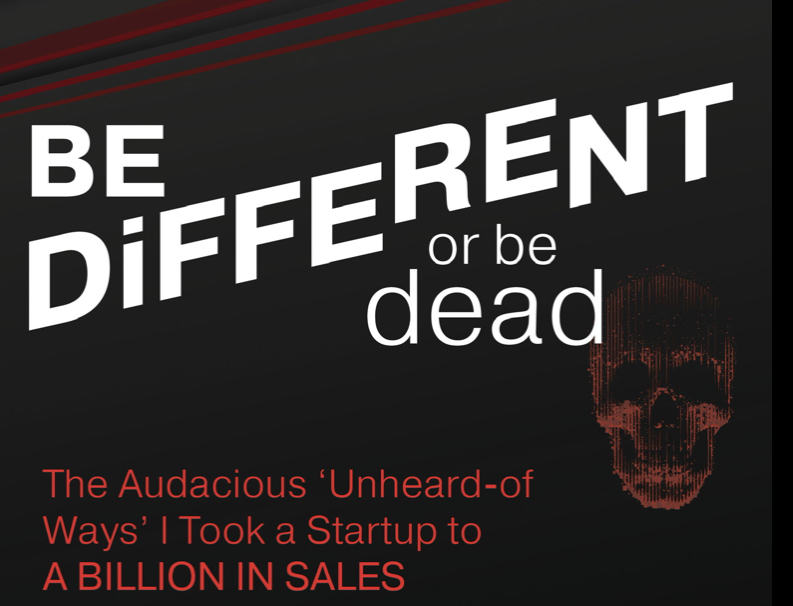
BE DiFFERENT or be dead has one simple message: if you’re not different in a way your customers CARE about, you’re dead (or soon will be).
You will neither be relevant nor special compared to your competitors and therefore your target customers will have no reason to buy from you… and they won’t… and your business will ‘die’.
It’s just a matter of time.
It’s interesting to me that despite the intensity of competition and the power of consumers these days, organizations have progressed very little in terms of being able to define what makes them unique—their competitive advantage.
CLAPTRAP dominates
Businesses continue to use CLAPTRAP works like ‘better’, ‘best’, ‘number 1’, ‘premium’, ‘great tasting’, ‘most’ and ‘leader’ in trying to define what makes them different from their competitors, but they offer no real clarity or value to a person wanting to select a supplier.
Here’s a couple of examples:
▪️”(Coffee retailer) offers the best coffee and espresso drinks for consumers who want premium ingredients and perfection every time.”
▪️“We work hard every day to make (credit card supplier) the world’s most respected service brand.”
ASPIRATIONS contaminate
As well, they constantly defer to using ASPIRATIONS to ineffectively try to carve out and communicate their unmatchable traits.
And so, we are exposed to declarations like:
▪️“We’re in business to save our home planet.”
▪️“To inspire humanity - both in the air and on the ground.”
▪️“To accelerate the world’s transition to sustainable energy.”
▪️“To build the web’s most convenient, secure, cost-effective payment solution.”
These are intent-based statements; they don’t depict who you are at this moment.
I don’t care what you INTEND to do. Tell me how you’re different from all the other members in the herd.
These aspiration-based statements may work with employees to give them a sense of purpose in terms of the values the organization intends to live by, but they are utterly useless ‘on the outside’ speaking to potential customers and trying to convince them how you are different from your competition and hence why you are the logical supplier of choice.
How does “We’re in business to save our home planet.” help a mother searching for the right bedroom furniture for her newborn child choose the company making this statement?
Even if sustainability is something the mother believes in, I suspect there are other more relevant and compelling requirements to consider in making her purchase decision.
‘Saving the planet’ may be a nice (undefinable) vision—wish—to aspire to, but it really doesn’t define who you are in the competitive landscape (I suspect there are many organizations out there that all believe that saving the planet is something they believe in as well).
An effective (and honest) competitive advantage claim needs to address the customer group you’ve chosen to serve and it needs to respond to what they CARE ABOUT in a compelling manner. And, of course, it needs to be measurable (and ideas on how you would measure ‘save the planet’?
The ONLY Statement
The competitive advantage tool I created as president of an early stage internet organization that we took to A BILLION IN SALES, was The ONLY Statement: “We are the ONLY ones that…” is ONLY’s form.
Here’s a good example:
“We are the ONLY team that provides integrated safety solutions that go beyond the needs of our customers ANYTIME, ANYWHERE. We are committed to growing our customer’s business. We ONLY serve safety.”
Where are aspirations useful?
If you’re wanting to be inspirational, the place for aspirations is ‘on the inside’ of the organization where you can use these ‘helium-filled’ statements as tools to explain the broader values—vision and mission—the organization has (very often the views of the executive and owners).
I look at these types of statements as feel-good ‘sensitivity triggers’; the issues of the day that the organization leans towards. And there is no shortage of challenges for organizations to identify with, ranging from the environment to inclusion and rights and freedoms.
These are internal perspectives, however, that address the question “What narrative-of-the-day do we want to be identified with?”, and not “How do we intend to compete and win” in the market?
Altruism has no place in declaring your competitive advantage.
Aspirations are useful guides in making certain types of decisions like:
▪️Organizations to target annual ongoing donations to.
▪️Events to sponsor.
▪️Communities to offer your employees for volunteer services.
But keep them away from your pitch to people about why they should choose YOU over the 10 other companies competing in the same space with you.
Cheers,
Roy
Check out my BE DiFFERENT or be dead Book Series
‘Audacious’ is my latest…
- Posted 6.13.22 at 03:53 am by Roy Osing
- Permalink
June 6, 2022
What really is a servant leader and how to be a different one

Source: Unsplash
What really is servant leadership and how to be a different one.
Servant Leadership is a topic that has attracted much attention over the past several years, and seems to be ‘the new black’ in the leadership narrative.
I’m concerned, however, that the notion is being pushed as another ‘flavour of the month’ promulgated by self-prescribed academic leadership experts with little or no demonstrated leadership experience in delivering superlative results.
From Google:
“Servant leadership is a leadership style and philosophy whereby an individual interacts with others—either in a management or fellow employee capacity—to achieve authority rather than power.”
As a leader, the end game of serving is NOT about achieving authority; the reason you decide to serve rather than command others or exert your hierarchical power in the organization is NOT because it’s a more effective way to achieve authority over others.
There have been other versions of leadership offered in the past that offered an alternative to command-and-control leadership.
Tom Peters talked about ‘Management by Wandering Around’—MBWA—as a way to get leaders closer to employees doing the work, with the objective of getting leaders out of their offices and making them more aware of the issues going on in the workplace.
I’ve always held the view that, even though it was a significant improvement over the traditional approach to leadership, MBWA simply didn’t go far enough. It was a good tactic to get leaders out in the workplace and exposed to the everyday realities employees faced, but it lacked clarity of purpose and focus to make it an effective instrument to enhance company performance.
I took it further by breaking away from the common notion of MBWA and creating a completely new—and audacious—leadership approach which I dubbed Leadership by SERVING Around—LBSA.
The purpose of LBSA is to increase the effectiveness of executing the Strategic Game Plan of the organization.
My purpose in practicing LBSA is very clear: it’s to improve the EXECUTION of the organization’s Strategic Game Plan.
LBSA is NOT a leadership ‘style’ designed for the leader to gain more authority; it’s a means to enable employees to perform their functions more effectively and, in so doing, take EXECUTION to a higher level.
”How can I help?” defines LBSA.
The fundamental ingredient in LBSA is the question “How can I help?”.
LBSA is not, as espoused by the ‘wandering around’ method, to observe what’s going on in the workplace and to spot dysfunction which requires intervention and eventual remediation.
LBSA is a PERSONAL ACT, not an organizational one; the leader is asking how they can PERSONALLY help the individual they are engaging with at the moment.
It’s a STRATEGIC MOVE targeted at determining what’s preventing people from executing the business plan of the organization.
LBSA is a ’CLEANSE-THE-INSIDE’ tactic to eliminate the internal barriers—rules, policies, procedures—that get in the way of employees doing their jobs effectively in executing the business plan of the organization and in delivering amazing service experiences to customers.
I ask “What’s preventing you from ‘saying Yes’ to our customers?” and “What’s preventing you from doing your job more easily and effectively?”
And, it’s an opportunity to practice FINGERPRINT LEADERSHIP Coaching allowing the leader to personally coach employees in the appropriate behaviour to pristine execution of the business plan.
Serving leaders don’t serve because they want an easier way to assume authority and they don’t serve because it’s being promoted by the so-called leadership experts as a new style.
They serve because it drives EXECUTION and lifts the performance of the organization.
Cheers,
Roy
Check out my BE DiFFERENT or be dead Book Series
‘Audacious’ is my latest…
- Posted 6.6.22 at 05:42 am by Roy Osing
- Permalink
May 30, 2022
Why ‘Audacious Unheard-of Ways’, Roy’s new book, is a winner

Source: Pexels
Roy’s new book ‘Audacious Unheard-of Ways’, is available May 31, 2022, and here’s why it’s is a winner.
What is it that sets you or your business offering apart?
Most companies don’t really have an answer!
As well, most people also don’t know what their secret sauce is either.
My good friend and marketing guru, Roy Osing has now written his seventh book in his ‘BE DiFFERENT or Be Dead’ Book Series, titled ‘The Audacious Unheard-of Ways I Took a Startup to a Billion in Sales’, and I was fortunate enough to be able to read his book prior to going to press.
Basically his book is talking about being different from the breed. What is your company’s uniqueness?
It’s about knowing HOW BIG you want your company to be and who you want to have as clients.
What do you have that’s impressive and what were your accomplishments?
Roy says: ’What you know doesn’t matter, it’s what you have done that matters.’
Makes sense!
The questions in his book are refreshing. Questions like: “What kind of leader are you?” As simple as the question is, do you have an answer?
Let’s pretend that you are in the middle of a very important potential new client pitch, and the final question is: “So, what sets you apart from the other agencies?”
You better have your secret sauce answer; an answer that solves their problem or issue.
Companies hire people and agencies to solve problems and you better show and prove to them that you can solve their problem better than anyone else.
Roy’s latest ‘Audacious Unheard-of Ways’ book gives real insight into the value differentiators for you, your company and its culture.
Fortunately you don’t have to wait any longer to get your hands on Roy’s book and explore his ‘Audacious Ways’ to be successful, including “What is your ONLY Statement?”
Roy’s book is an absolutely must read for anyone looking for practical and proven ways to skyrocket their performance and be astonishingly successful.
— Frank Palmer is Chairman of Palmer Stamnes DDB, Vancouver, Canada and one of the most accomplished advertising executives in the world.

- Posted 5.30.22 at 06:00 am by Roy Osing
- Permalink
May 23, 2022
This is why 6/10 is an awesome personal score

Source: Unsplash
If you achieved a 6/10 on your performance appraisal at work would you be happy? Would others view your mark as a sign of success? Would you declare what you did during the year to be an amazing achievement?
I doubt that 60% would send you to lofty heights emotionally. Rather it would probably suggest that you are buried somewhere in the pack of averageness and that you are under performing.
That’s a shame.
Why is it that we view incredibility as a 9 or 10 and not a 6?
Many performance appraisal systems are loosey-goosey
We’ve all been victims of a soft loosy-goosey performance evaluation system that quite frankly exists in most organizations.
These systems are based on theoretical notions like:
— performance goals need to be “realistic “.
— really tough objectives will demotivate individuals and they will shut down.
— the objective of any performance management process should be to get a normal distribution of evaluations around the mean; there should be as many above-mean ratings as there are below-mean ones.
The truth is that in most performance management systems, goals are set at too low a level and performance ratings are inflated; it is relatively easy to achieve a 7/10 or higher in most organizations — this means that rather than results being evenly distributed around the mean performance rating, they are skewed to the right.
So, when someone gets a 6, they certainly don’t view themselves as over achieving, yet their performance could be above average or better if the performance system were not dysfunctional. Furthermore people who find themselves in this situation become demotivated and unsatisfied with their job.
And, if you’re a 9 in a system where everyone knows the success criteria for exceeding and excelling performers is watered down, your achievement is met with ‘ho-hum’ rather than excitement and celebration. Again, a demotivating event when it should be one of ebullience.
If the challenge is tough, a 6 should be accepted as reflecting a worthwhile achievement; it should be cherished.
I recall a situation in my company where the CEO declared that there were too many exceeding and exceptional performers as judged by the HR performance evaluation process.
“How can we have so many apparent stars when our corporate performance is below our expectations?” he asked.
His view was that there was a disconnect between how we judged people and the performance in the company that was achieved.
Group assessment is a great equalizer
He changed the system. He stated that there would be no more than 10% of managers/leaders who could be in the exceeding/excelling category and that there would be peer group assessment of the proposed ratings for every manager.
The way it worked was that every manager would present the performance ratings for each of their direct reports to a group of peers, where they would have to defend why they were giving a particular rating knowing that only 10% of the overall group of direct reports could be rated as exceeding or excelling.
So if I proposed to rate one of my direct reports exceeding job expectations at an 8 rating, I had to give evidence that supported my view.
My peers then had the opportunity to challenge my rating based on how they saw my direct report and how they viewed my report in comparison to their own.
Debates raged on and the process eventually resulted in the desired distribution of performance ratings. In fact we were instructed to continue with these group evaluations until the CEO’s objective was achieved.
Managers who were initially rated an 8 or 9 were lowered to a 6, 7 or lower and some were actually raised from the meeting job expectations level to exceeding performance.
What happened then was truly remarkable although it took time to achieve.
After a few years of going through the peer group evaluation process, people began to look at 6’s — or 5’s for that matter — differently.
They began to be (correctly) viewed as worthy measures of challenging performance. It took some doing to get a 6 was a familiar topic of conversation around performance evaluation time.
A ‘6’ became a ‘9’
A 6 became a worthy achievement because goals were set to be challenging to achieve, and overrating of performance was all but extinguished.
So if you’re in HR, encourage management to set challenging, unreasonable objectives for their people and introduce a peer ratings adjudication process to ensure that ratings better reflect performance.
If you’re stuck in an organization where the culture is such that 6’s are disparaged, it’s a sure sign that performance evaluations are overly inflated and people are over rated for the work they’re doing.
Find a culture where 6’s are cherished and you’ll know that leadership sets tough challenging goals and expects overachieving performance as the norm.
Cheers,
Roy
Check out my BE DiFFERENT or be dead Book Series
‘Audacious’ is my latest…
- Posted 5.23.22 at 02:16 am by Roy Osing
- Permalink