



Roy's Blog: Sales
January 3, 2022
Why new dauntless sales methods should replace the old tired ones

Source: Unsplash
Why new dauntless sales methods are necessary to replace the old ones.
Everyone knows what sales is, right? After all every one of us is exposed to the selling process almost every day of our lives so we must understand what it is and how it works.
The traditional role of sales is focussed on ‘the transaction’, the exchange of a product or service for money.
And within this context, the challenge for any salesperson is to get more efficient at making a successful transaction.
Old tired sales methods
So traditional sales teaching is populated by such topics as:
- The cold call.
- Funnel management.
- Conflict resolution.
- Client resistance.
- Competitor analysis
- Time management.
- Sales metrics.
- Closing the deal.
- Forecasting.
- Product knowledge.
All of these topics are intended to enable the sales person to ‘push’ as many products as they can from inventory into the hands of the client and make the sales process more efficient—selling the maximum number of products in the shortest time possible.
The issue with the traditional sales model is that if we are teaching every sales person these same ‘micro-selling techniques’, what distinguishes one salesperson from the other? What makes one particular sales person special enough that the client decides to buy from them over and over?
The way it’s done today is that the masters of micro-selling consistently achieve their quota—they sell the most—and they are given a large pay bonus and most likely a free trip to some exotic place as their award for being the ‘Salesperson of the Year’.
In today’s world, the standout salesperson is recognized by their organization as the one who consistently sells the most.
That’s how they distinguish themselves—they push the most FROM the organization TO the client.
This traditional view of ‘What makes a great salesperson’ is not only short sighted—the focus on annual sales adds limited long term value—it’s narcissistic—the organization rewards itself and often to a great extent leaves the client out of the equation.
The traditional view of sales needs to be replaced with more of a client-centric approach. The historical product-centric paradigm of sales worked when technology was ‘primitive’, when clients’ needs were relatively simple and when competition was not so fierce.
Back then, clients were happy to get their basic needs met and were ok with having the product as the main focus of the sales engagement process.
But not any more.
Today, clients are barraged with salespeople representing a myriad of companies all claiming to be ‘client saviours’ offering the lowest prices and the best quality products.
Who does the client believe with all this noise?
Well, I can tell you that the sales rep who has been the cream of the crop by mastering micro-selling techniques doesn’t stand a chance in this world because clients see their behaviour for exactly what it is: self-serving, egotistical, insincere, dishonest and no different that the person who pitched their proposition to them a few minutes ago.
Today, clients are looking for a salesperson who is consumed with finding out what the CLIENT needs, wants, desires and craves and who is prepared to invest their time to discover them.
If you’re not selected by the client to serve them, what good are all the micro-selling tools you learned?
Right.
Client-centered sales isn’t about products and services; it’s about communicating a sales proposition to the client that is unique and different from the competition.
“I got top marks in Conflict Resolution” doesn’t get you much if the client is faced with giving their $MILLION business opportunity to 1 of 5 hungry competitors all hungry for their business.
Competitive context is missing
What’s missing is the competitive context within which micro-sales methods can be meaningfully practised. It’s the framework, if you will, that defines how the competitive game will be played and hence how the sales process must be designed in order to win sales.
Competitive context, the way I think about it, is the declaration of what your organization does to beat the competition and secure the customer.
In practical terms, my method of declaring competitive context for any organization is to create ’The ONLY Statement’ that defines why someone should buy from you and not the other guy. addresses the need for organizations to be specific in terms of what makes them special in a field of competitors.
The ONLY Statement is a declaration of what you uniquely do to serve what your targeted clients need want and desire, and is expressed like this:
‘We are the ONLY ones that…’
Here are two examples of ONLY Statements I helped clients create for their organizations:
▪️“We are the ONLY team that provides integrated safety solutions that go beyond the needs of our customers ANYTIME, ANYWHERE. We are committed to growing our customer’s business. We ONLY serve safety.”
▪️“We provide the ONLY solution that permanently stops people from depositing biohazard contaminants through manhole covers.”
Sales organizations need to press executive leadership to create The ONLY Statement that sales can use, or if that’s not possible for whatever reason, sales should create ONLY for themselves to use.
‘We are the only sales team that…’ would be an extremely useful way to move from products to a client-centric approach.
It would force thinking around what really matters to their clients—their wants and needs—and how sales intends to deliver them.
ONLY-selling methods
Depending on the client wants and desires sales intends to respond to, ONLY-selling techniques include topics such as:
- ’Secret’ gathering.
- Client intimacy.
- Being a strategic force.
- Losing the sale.
- The old sales model is dead.
- The new sales roles.
- Caring sales.
- Discovering client ‘leaners’.
- Why you should stop selling.
- Sales listening skills.
- The Sales Report Card.
Sales efficiency in a product-push context is short sighted and doesn’t add any sustainable value for organizations.
Strategic sales in a competitive ONLY-context is the only real way to survive and thrive in the long run.
Start teaching ONLY-selling ways now.
Cheers,
Roy
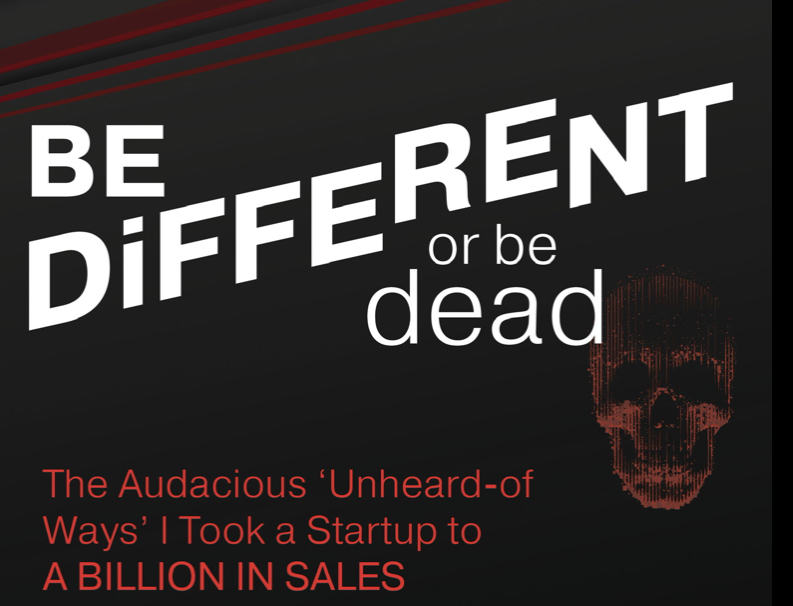
Check out my BE DiFFERENT or be dead Book Series
‘Audacious’ is my latest…
- Posted 1.3.22 at 04:13 am by Roy Osing
- Permalink
November 8, 2021
How the best salespeople find customers who are leaning their way

Source: Pexels
How the best salespeople find customers who are leaning their way.
What’s a ‘leaner’?
It’s a prospect that’s leaning your way after having heard your ’un-sales’ pitch over a rather lengthy engagement period.
And it’s a prospect that, once they fall your way, will never have to be sold again.
They’re all in with you and the organization you represent. They believe you and they trust you. They are convinced that you will forever look after their best interests. They treat you as family, that’s how strong the bond is between them and you.
And as a result they believe you when you tell them that you need a new solution to a persistent problem they have. They believe you when you say a significant new investment in your product will deliver an order of magnitude increase in productivity.
They’re on cruise control with you in the driver’s seat (at least until you do something stupid that destroys all the currency you’ve built up with them).
How does this happen? How do you as a salesperson spot a leaner and secure them as advocates?
1. Look for the cream
You need a high potential leaner because the time and effort you devote to them must have a big potential payback if it’s to make any sense at all.
Work with your marketing colleagues to develop a list of leaner candidates; those targets—The WHO—with the potential to generate substantial additional revenue for the organization.
Start with a list of 10 high potential leaders; don’t try and boil the ocean by having a list longer than you can reasonably manage.
2. Hunt for the fox
This is where you need good detective work to identify the person in each top 10 organization you should be paying attention to.
The fox is the one who will be making the buying decisions and who will decide whether you get the business or not, so be sure they are the right person in the client’s organization you should be dealing with.
It’s important that you don’t spray your efforts among many people in the target organization; focus on the fox to ensure your efforts are justly rewarded.
3. Discover what they crave
The innermost desires of people - what they crave - are powerful influencing agents, far stronger than what they ‘need’ so you need to put in the time to find them.
Fox cravings are essential beacons that will allow the salesperson to make inroads quickly to establish credibility and trust with the leaner.
Everyone else will be generally looking for client needs which are basic and quite frankly boring client requirements—inventory, communication, CRM, and financial systems for example. These relate to basic operational matters rather than the specific wants and desires of the fox, which could be completely different.
They may have a specific problem, on the other hand, that they want solved to make their life easier and more pleasant in performing their immediate role. If you can discover what this craving is, you will differentiate yourself from the hungry sales pack and be in the best position to capture their affection.
4. Know their strategy better than they do
To be successful with any business client, you have to understand their business plan at a granular level to really appreciate the problems and opportunities available to you.
So, take the time to study their plan and to translate it in terms of what it means to the fox and their operations.
Generally foxes are too busy running their operations and don’t spend the time determining how they specifically relate to the overall strategic game plan of the organization, so if you help them develop the critical few priorities they should be concentrating on to make the greatest strategic impact, you will be ‘a friend for life’ and earn their loyalty.
5. The devil’s in the details
People are generally impressed with someone who can remember details, particularly about them and the issues they face and to capture their attention and have them lean in your direction requires that you are concerned with more than their ‘big picture’.
Pay attention to the micro matters surrounding the fox. Make copious notes on ‘pinch points’ that define their reality so you can study them and come up with potential solutions.
First, the fact that you are paying attention to the small stuff and second, that you are offering viable solutions will make you that special salesperson who gets more learners than anyone else.
6. Keep your promises
Strong relationships are moulded by placing more emphasis on the fox as a person than on the organization as a whole.
Loyalty isn’t commanded from a business, it’s earned from the way an individual inside the organization is treated and served.
And at the most fundamental level, it’s about keeping promises. How do you rate as a promise-keeper? When you promise your fox to do something, do you always deliver as promised? Or do you keep some and make others?
Or, so you even know what your promise-keeping performance is? You need to keep track of the promises you make and the promises you keep. Make it a daily discipline and ask your fox for feedback on how well you are doing.
Looking for and capturing a leaner isn’t rocket science; it’s about doing the no-nonsense little things that make a big difference.
You won’t find leaner-gathering tactics in a classic sales textbook, they’re learned from ‘in the trenches’ real life experience.
Cheers,
Roy
Check out my BE DiFFERENT or be dead Book Series
‘Audacious’ is my latest…
- Posted 11.8.21 at 05:06 am by Roy Osing
- Permalink
September 6, 2021
8 easy ways to build a successful sales team that CARES about people

Source: Pexels
8 easy ways to build a successful sales team that CARES about people.
Sales organizations are often challenged to be successful.
They craft a strategically brilliant sales plan that would make the pundits proud. It’s replete with industry and competitive analysis, internal strengths, weaknesses and a set of objectives that are time bound with accountabilities assigned.
Then they launch their plan but are disappointed in the results they achieve; they are unable to deliver the results they expect.
And they wonder why they aren’t successful.
But reason is right in front of them.
Success isn’t about the efficacy of the strategy; great plans have been know to fail and mediocre plans have earned amazing success.
The execution competencies of an organization separate those that achieve the results they intend from those that underperform.
The care factor
And those that standout in the ability to consistently execute have one thing in common: they all have a huge ‘care factor’ in their culture. They understand that people caring about people is a critical ingredient to consistently deliver superlative results.
Care about customers and they return the favour by buying what you have to sell. And they do it repetitiously. And they tell others.
Care about your sales warriors and they not only individually produce tremendous results, they also work together across the organization to deliver what customers want when they want it.
Effective organizational processes require seamless handoffs, or ‘touch points’ in order to flawlessly deliver products and services to their customers.
Three are facilitated when people respect and care for the roles and responsibilities of others.
What do sales organizations with a high care factor look like?
▪️they have caring as a critical component of their stated values; “We care about others” in some manner is explicitly stated.
▪️their sales strategy is consistent with caring. Their plan is based on serving customers intimately in order to create memorable experiences for them because they know it will result in sales.
And their sales approach is to discover what their clients care about as opposed to only focusing on what they need.
Caring must be measured
▪️they measure caring outside and inside. Every client and sales employee survey includes questions on caring and the extent to which employees practice the value.
▪️they have a recruitment process that looks for the caring attribute — it goes well beyond whether a person has demonstrated sales skills.
You can’t teach people how to care; they either have the innate drive to do it or they don’t. They are born with the gene to honestly serve. The human resource effort in sales is geared to discover people with this gene.
▪️their sales leaders care and they show it relentlessly. Caring starts from the top; it’s what leaders do to build higher levels of employee engagement.
And they make it visible to everyone.
▪️in addition to specific product sales targets, they include caring in their performance and compensation plan and build in specific objectives to measure it.
The basis of measurement is perception; do customers and employees THINK sales people act in a caring manner; do they think they care?
Sales caregiver stories are told
▪️their employee communication is overwhelming with stories of sales caregivers — when have you EVER heard ‘caregiver’ linked to sales? — and what they’ve done to live the caring values.
What is talked about is what culture is all about. If the airwaves are consumed with caring stories, what conclusion do people reach?
▪️they consider caring to as the essence of their competitive advantage. You can’t build anything if you don’t care, ergo growing a business requires a strong human feeling element exercised particularly through sales, as being a critical customer facing team.
Some might consider caring soft, unnecessary and perhaps a bit weird to consider as a critical element to shape the culture of sales. After all, the prime purpose is to push products and services and make a sale, right?
These folks don’t get it.
They don’t get that mind-blowing sales performance that results in a competitive advantage for the organization is the result of individuals working closely together for a common cause.
And that only happens if there is a caring culture at play.
Cheers,
Roy
Check out my BE DiFFERENT or be dead Book Series
‘Audacious’ is my latest…
- Posted 9.6.21 at 01:06 am by Roy Osing
- Permalink
March 15, 2021
7 practical and proven ways to improve sales performance

Source: Unsplash
7 practical and proven ways to improve sales performance.
Although sales is a critical function in any organization, they are often viewed to be lower in importance than other functions. And one of the most serious challenges to improve sales performance I had as a sales leader was to build their currency inside the organization as well as ‘on the outside’.
In order to improve sales performance we need to treat them differently.
▪️ Their strategic role must be clearly defined in terms of the specific role they have in executing the business plan of the organization.
▪️ The value they are expected to deliver to the customer must be carefully crafted to align with their strategic role.
▪️ The behaviours they are expected to exhibit day-in and day-out must be designed to deliver targeted results.
We need to hold sales accountable to deliver.
Strategic goals must be integrated into their performance plans and their compensation. If Sales don’t get paid to behave a certain way, they won’t do it.
To improve sales performance, action must be taken in these areas:
1. Human compassion
Sales must apply the same amount of emphasis on their customers as humans as they do on the products, services and technology they deliver.
Salespeople tend to get infatuated with what they are flogging and pay less attention to the needs, wants and desires of the people they are supposed to serve.
Product and technical knowledge overpower the need for salespeople to be empathetic and caring to their customer base.
2. Product myopia
As a corollary to the first point, the ‘hard stuff’ of the products they offer overshadows the need to build long term relationships with their customers.
In fact the sales compensation plan for most organizations encourage short term product flogging to generate immediate sales revenue at the expense of asking sales to spend the time necessary to gain a person’s trust and remain a customer over the long term.
3. Problem solving
Sales time in any customer engagement is sucked up more by the salesperson explaining why the customer should buy what they’re selling as opposed to the salesperson trying to understand what critical problems the customer must solve.
It’s the classic sales ‘push’ mentality and approach rather than a customer ‘pull’ process of using problems to lead and direct the sales process.
The salesperson has what they think is a good solution — their product — and their challenge is to try and convince their customer they have a need for it; that it solves an undefined problem. Hardly a relationship building behaviour is it?
4. Follow-up
Salespeople see their job as selling; they don’t generally get very excited about doing the other work that’s necessary to support the sales process.
They see it as taking time away from doing what’s necessary to achieve their quota and bonus.
Following up on specific things like whether the solution implementation went ok, promised information on product features or an answer to a billing query don’t rate high on their priority list even though they are very important to the customer.
It’s the mundane little things that are important to a customer and can decide on whether or not they continue to spend their money on an organization or not. Sales needs to pay way more attention to this ‘trivia’ and not hand it off to some administration help.
5. Customer advocacy
Mistakes are commonplace in any organization, but what separates the great ones from the average ones is how they respond when things go wrong.
And the key to brilliant recovery is how well the salesperson advocates for the customer that’s on the receiving end of the screw-up. What needs to happen is for the salesperson to ‘stand up’ for and defend the rights of their customer ‘on the inside’ to functions like marketing, billing, product fulfillment, repair service: any department whose responsibilities have played a part in the OOPS!
Sales needs to take leadership to promote and implement the ‘Customer Charter of Rights’ in their organization; they have a long way to go to be able to say their customer is their most important asset.
6. Secret gathering
Because of the product focus they have, sales continues to be features-and-benefits oriented in terms of what goes down during the customer transaction.
At best, they look for a potential product application; it’s a narrow view of what the customer requirements are. And let’s not forget, they are paid to sell stuff not learn what the customer is all about in a holistic sense.
What is needed is a sales approach that seeks to understand the customer in a broad holistic sense, and where the information gathering probes to learn what no one else knows about them — their secrets.
7. Service recovery
There is an insufficient commitment by sales to actively participate in the internal recovery process when service screw ups are inadvertently made. They believe that fixing mistakes is someone else’s job and they relinquish their involvement to someone else.
Sales performance is critical to any organization, and there are some simple, proven ways to improve it.
Cheers,
Roy
Check out my my BE DiFFERENT or be dead book series
- Posted 3.15.21 at 06:00 am by Roy Osing
- Permalink