




Roy's Blog: Leadership
August 2, 2021
5 simple ways to ‘bond’ with a person and why it’s better than employee engagement

Source: Unsplash
5 simple ways to ‘bond’ with a person and why it’s better than employee engagement.
First of all a leader can’t bond with a crowd. You can influence the crowd and you can get them collecting leaning your way as supporters.
But it’s virtually impossible to bond with individuals who are in a crowd; they share a common denominator which is exercised along with everyone around them.
This is why I have difficulty with company employee engagement programs created by human resource professionals.
These programs generally are designed to address the employee population at large with little regard for the unique engagement needs of specific individuals.
Analysts conclude what the ‘average employee’ (no such thing though) needs to be thoroughly engaged around the organization’s goals and strategies; they build a program around their conclusions and lay it on the masses.
These general programs do positively impact some people, but miss the mark with others.
Employee engagement nirvana is much more than simply engaging people; it’s more about bonding with them in a way that not only gets their support for corporate goals, it does so by arousing their passion.
Rather than more passive support, the bonded employee looks for ways to implement the organization’s strategy and, with “fire in their belly”, advocates the same level of commitment to other employees.
Personal bonding is employee engagement on steroids.
My experience shows that bonding is a personal act that takes place between two people one-on-one. It’s the only way to unleash the passion and emotional energy in people.
I learned these 5 ways to do it.
1. Find influencers in the workplace
You need to be strategic in how you launch your bonding effort. Wandering into the workplace and randomly starting the process with anyone you bump in to has its limitations in terms of the final result; it means you will most likely have to touch each person in order to make a difference.
The process that worked for me was to begin by targeting the influencers in specific teams; people who were listened to and viewed as thought leaders by their peers.
Influencers are respected and followed by others when they support a new cause, and if you can bond with them, they will likely be able to convince their colleagues to join them in your journey.
2. Be with them where they work
Bonding doesn’t happen when you beckon people to come to you for a conversation; you must show up where they do their thing everyday.
The leader’s presence has a number of benefits: it shows they care enough to learn what is going on throughout the organization, it provides the opportunity for them to listen to what needs to be improved, and it empowers employees to voice their views.
The old mantra was ‘managing by wandering around’; the new school is leading by ’serving around’ where the key question leaders ask is “How can I help?”. A one-on-one conversation on what can be done to make someone’s job easier and more rewarding is the magic bonding agent.
3. Explain in detail their role in implementing the organization’s strategy
Bonding isn’t about making a BFF. The leader’s job is to engage employees to fulfill their organization’s destiny.
And the only way it can happen is if each person clearly understands what they need to do to deliver the declared strategic goals — the things they need to continue to do and the things they need to do differently.
If they don’t have a clear line of sight to the objectives the organization is trying to achieve, typically inconsistency and dysfunction set in (as individuals decide themselves the action that needs to be taken), and little progress is made.
4. Treat them as individuals
It’s a trite expression: no two individuals are the same, but it’s amazing how often company programs are developed with the ‘average’ employee in mind. The most common employee need is used to create a program rather than customizing it to reflect the special wants of the individual.
A good example is employee recognition programs where recognition events and rewards are standardized for everyone. Everyone attends a common event where their efforts are applauded and they are all provided with the standard token of appreciation.
Bonding with a person means that first you have to accept them as unique and special in some way and THEN discover what specific motivation and incentive will influence them to support company goals.
It’s much more difficult to personalize your bonding pitch for each person, but the success rate, compared to a one-size-fits-all approach, is far higher.
5. Provide the tools they need
This is the most basic need of every employee; if they don’t have the tools to do their job, they are constantly fighting an uphill battle to deliver the results expected of them. And yet, many organizations are unwilling to make the investment required to make it easier for people to do their jobs.
“They don’t need a tablet”, “We can’t afford to give everyone that high end calibration tool” are the kind of statements that extract bonding value in an organization.
People see leadership’s desire to increase employee engagement and the unwillingness to help them do their job as conflicting and disingenuous. Don’t micro analyze the payback on investing in your employees basic job needs; provide what they say they need and watch the bonding magic.
Bonding is an emotional connection that produces a incredibly powerful motivation to serve the organization.
Expunge the term ‘employee engagement’ from your lexicon and replace it with ‘personal bonding’ (only if you want folks to follow you to the ends of the earth).
Cheers,
Roy
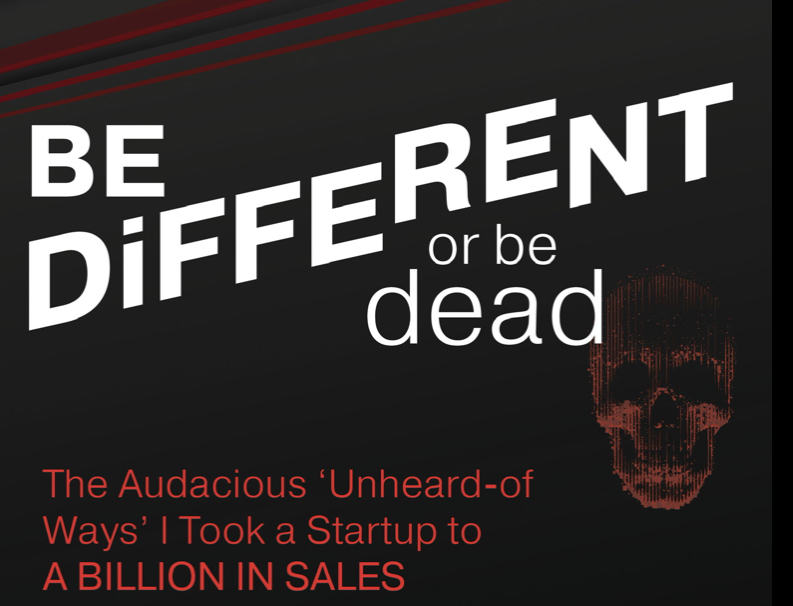
Check out my BE DiFFERENT or be dead Book Series
‘Audacious’ is my latest…
- Posted 8.2.21 at 01:49 am by Roy Osing
- Permalink
July 26, 2021
10 simple ways to find out if you’re an amazing standout leader

Source: Unsplash
10 simple ways to find out if you’re an amazing standout leader
How do you see yourself as a leader?
Do you think that you’re well on your way to becoming one who stands apart from the rest?
Here are 10 roles which, based on my 4+ decades of leadership experience, point to the ones who are actually serious about becoming a standout leader.
If you ‘AGREE’ that you regularly perform 6 or more of the Standout leader roles described, then you are a serious Standout contender; anything less and you still have a way to go to reach your goal, so focus your efforts and build an action plan to change your ways.
Let’s begin.
1. The customer moment
The Standout leader takes personal ownership of architecting the customer moment; the ‘picture’ of what it looks like to serve customers in a way that takes their breath away.
This work is done by the Standout leader alone and is never delegated to anyone else in the organization.
The detailed strokes of service — the behaviours expected of every employee when they are engaging with a customer — can only be described by the one who owns the vision for service. And this extends to the look, feel and functionality of the online experience as well and personal contact moments.
The Standout leader is the artist who paints a vivid picture of what a ‘dazzling’ customer moment looks like for all to see.
As a leader, are you actively engaged with designing the customer moment in your organization? If your role doesn’t include direct customer contact, you can still be involved by looking at how your staff treats your internal customers.
2. Serving around
The Standout leader is a master at Leadership by Serving Around— LBSA—the next generation of leadership. LBSA is a leadership imperative to help people have meaningful and rewarding careers and to build an organization to stand apart from their competitors and achieve remarkable levels of performance.
The Standout leader purposefully goes through the workplace with a strategic purpose, looking for serving moments or opportunities to help someone perform their job more effectively.
Managers ask: “What’s going on?”; Serving Leaders ask: “What can I do to help you?”
The Serving leader’s agenda is to offer personal help to employees, recognizing that if someone’s individual problems are solved, performance enhancement follows. If you take care of the person, performance takes care of itself.
How much time do you spend out of your office among your teams? Do you have regular LBSA time on your calendar?
3. The one and ONLY
The Standout leader is possessed to answer the question posed by discerning customers: “Why should I do business with your organization and not your competition?” It is the killer question that decides whether or not you have a ‘special sauce’ that makes you different and a winner.
Most competitive claims rely on overused clap-trap to position themselves against their competitors. They use words like ‘better’, ‘best’, ‘number one’ and ‘market leader’ which have little value in declaring their competitive advantage. Claims that employ these types of words are merely vague aspirations that most don’t believe.
The Standout leader, on the other hand, uses ’The ONLY statement’ to define their organization’s uniqueness and shout out their competitive advantage.
‘We are the only ones that….’
This is the claim they use to cut through the usual claptrap and make it clear why they should be chosen among their competitors.
How does your organization state its competitive advantage? Is it clap-trap, or does it harbour the ONLY notion? How can you help add ONLY-thinking in your business planning process?
Are you a binary thinker when it comes to expressing how you or your business is different from others?
4. 360 feedback
The Standout leader is always looking for feedback on their performance and on ways to improve it.
360 feedback is not new, but it is one of the most effective methods of assessing how someone performs their current responsibilities and what they need to do to improve for future opportunities.
360 feedback provides performance assessment from not only someone’s boss, but also from their peers and others in the organization they interact with on a regular basis (including frontline managers who rely on support to serve customers.)
The Standout leader uses 360 feedback to ensure they are actively practising their serving leadership role.
Do you use 360 feedback as a way to hone your skills or do you just care about what your boss says?
5. Line of sight
One of the biggest issues in any organization is the lack of congruence between what its strategy says and what people do on a day-to-day basis. The strategy says one thing and not only do people do another, they all do different things out of sync with the strategy, with inconsistency and dysfunction resulting.
This is a failure of leadership who place more focus on perfecting the business plan rather than on how it will be executed.
The Standout leader knows that superlative performance depends on strategy execution, and their priority is to translate the strategy into what it means to each function and person involved in delivering it.
They focus on ensuring that each employee has a direct line of sight to the strategy from their position, and that they understand what they specifically need to do to contribute to its implementation.
Do you translate the organization’s priorities to each one of your team members in specific terms so they clearly understand what actions they need to take to execute its business plan?
6. The Strategy Hawk
The Standout leader personally owns the execution of the strategic game plan of the organization. Generally, since many functions share in the responsibility to execute the plan, it rests with the collective executive team.
But that’s not good enough; it needs a specific owner. It needs single finger accountability to ensure that the job gets done.
Shared responsibility, however noble, is simply not up to the task.
The Standout leader puts their hand up and wants to be the voice for execution—the Strategy Hawk—in the organization to ride herd on execution. To monitor progress. To kick ass when things are not proceeding as planned.
The Strategy Hawk has an abundance of currency in the organization, who is tenacious and has a high tolerance for ‘pain’.
The Standout leader is the voice of execution.
Do you jump into the implementation process or are you content to stay at the intellectual planning stage?
7. Frontline management
The Standout leader makes room in their busy schedule to interview potential frontline managers because effective strategy execution depends on the performance of the frontline and their managers are key to making it happen.
How else can the leader be sure that customer moments in particular are being handled the right way by frontline staff? If frontline managers don’t get it, their frontline employees won’t get it either.
My personal approach was to have heavy involvement in interviewing when I started the process and gradually reduce the amount of time I dedicated to this work over time after I was satisfied that my managers learned
how I wanted the interviews handled.
The Standout leader takes personal ownership in ensuring the right people are put into frontline positions.
Do you get involved in ‘skip level’ interviews for junior level positions in your organization?
8. Goosebumps
The Standout leader is on a mission to recruit people who are born to serve others and one way to tell if a prospect candidate fulfils this criteria is to find out if they leave you with goosebumps when they tell their story in answer to the challenge:
“Tell me a story that will prove to me that you ‘love’ other people.”
If they are the real deal, their story is rich with detail and the threads that bind the story together emphasize the importance of connecting with people on an emotional level; their authenticity pours out with every word. The unauthentic ones’ stories lack any passionate element; they were ushered out the door.
The amazing storytellers found their way into higher level positions in the customer service organization to provide the leadership necessary to sustain this strategy that was extremely effective in gaining and maintaining a competitive advantage for our organization.
The Standout leader, driven to achieve a service strategy based on remarkable and memorable customer experiences, hires the ‘People Lover’ who leaves them with goosebumps.
Do you probe the emotional side of people when you interview them, or do you just focus on their academic pedigree and the projects they’ve completed?
9. Planning
A standout leader believes that ‘heading slightly west’ is a valid strategy despite the fact that the experts try to get them to believe that if they follow the precise process ascribed by the planning pundits they will create the “perfect” plan.
They determine an imprecise view of the direction that should be taken, and make modifications ’on the run’ based on what is learned through execution.
In addition, they believe that the more tries made, the greater the likelihood of success. Their mindset is that if they get lucky and hit a home run on the first try, GREAT! but never count on it.
The odds of getting it right the first time are too low given the uncertainty and unpredictability of the markets we serve.
The Standout leader believes that iterating oneself to a successful end state by making more tries than the rest of the crowd is the only viable planning model in a turbulent world.
Do you push for the perfect solution when you are given a challenge?
10. Benchmarking
The Standout leader knows that benchmarking best in class won’t make an organization special and differentiate it from its competition.
They understand that copying has no strategic value in moving an organization to a position in the marketplace that ONLY they occupy.
“What are our competitors doing?” is often asked when organizations are thinking about reinventing their business plan but this benchmarking process adds zero space between them and their competitors.
Furthermore the Standout leader knows that benchmarking is the enemy of innovation; you’re a copycat, you’re not an innovator.
Benchmarking does little or nothing to stimulate innovation and creativity which are critical values that organizations want in today’s world of uncertainty and constant change.
The Standout leader’s end game is for their organization to be remarkable, an objective which isn’t a strategy on the radar of most, and that this is achieved by being different than everyone else not by copying them.
When given a project to do, is your first instinct to research how others have done it and to follow their lead?
There you have it.
How well did you do? Whatever your result, the good news is you’re focused on the right attributes that will make you a great leader who stands apart from everyone else.
Congratulations!
Cheers,
Roy
Check out my BE DiFFERENT or be dead Book Series
- Posted 7.26.21 at 01:16 am by Roy Osing
- Permalink
July 19, 2021
Why the ‘Internal Report Card’ will get you the most amazing teamwork

Source: Unsplash
Creating highly proficient teams is a challenge for most leaders who recognize that unless synchronicity among work groups is systematically established in the organization, performance and results suffer.
I’ve looked at teamwork from a number of angles in past blog articles and suggested a number of ways to improve the effectiveness of people working in solidarity towards a single purpose.
These are a few sound bites:
Strategy — ensure everyone understands the strategic game plan of the organization for without shared understanding of where the organization wants to go, harmonious activity with needed results simply don’t happen.
Line of sight — establish a direct line of sight between the strategy and every function in the organization; if every person doesn’t act in accordance with the specific outcomes expected of them dysfunction results as divergent outcomes throughout the organization are produced.
Translation — leadership must take on a translator role to break the organization’s objectives down for everyone; if individuals are left to figure out what the strategic intent means to them, more erratic behaviour occurs and inconsistent performance results.
Cross-functional measures — since systems and processes across the organization among departments typically produce results (as opposed to a ‘vertical’ process operating in a single function producing the final good or service the customer receives), metrics must be introduced that measure the effectiveness of cross functional activities.
Handoff improvement — internal customer-supplier relationships must be improved to eliminate inefficient and mistake-ridden handoffs, because eventually these fumbles damage ‘real’ external customer dissatisfaction with waning market performance.
If you can make internal handoffs seamless on ‘the inside’, amazing service is delivered on ‘the outside’.
I would like to pivot off the last point because I believe there are substantial improvements to teamwork that stem from the fact that inside an organization, people—internal suppliers—deliver results for other people—internal customers and if somehow those connections could be made more seamless and effective, overall teamwork and performance would follow suit.
Internal quality
Organizations rarely set up a system to measure ‘internal quality’; the value of what internal suppliers deliver to their internal customers.
For example, sales expects marketing to develop a training program for a new product but marketing is not held accountable for the result they deliver.
— Was the training program delivered when it was promised?
— Did it cover all the elements that sales expected?
— Did it provide a unique value proposition that sales could use in competitive selling encounters?
— Did it include selling aids the salesperson can use in front of the customer?
The few organizations that do systematically measure internal customer-supplier transactions, rely on internally generated statistics; data on such topics as:
— delivery times.
— % defects.
— amount of rework required to remediate defects.
This type of internal quality measurement system is a good first step but it needs to go further if the desired outcome is high performing teams that consistently deliver expected results.
Perception measurement
The measurement system needs to be expanded to include perception measures, how the internal customer ‘feels’ about the service provided by the internal supplier.
— How does sales feel about the quality of the training program marketing delivered to them?
— Did it meet their expectations?
— Did it fall below what they expected?
— Did it go beyond what they expected?
These are subjective qualitative measures, but they are so important in helping improve team performance because if someone feels the service they were delivered is below what they expected, it’s their reality.
In a way, it really doesn’t matter if the internal stats say that there were a mere 2% defects (and it’s somehow ok to screw up 2% of the time) if the internal customer feels the service they were delivered doesn’t measure up to what they expected.
Perception is the reality. It really doesn’t matter what the data says.
Internal Report Card
The simple way of getting perception measurement going is to introduce the ‘Internal Report Card’, where an internal customer gives their internal supplier a report card rating on the service they provided.
Here’s how to do it.
1. The internal supplier asks each of their internal customers what handful of service elements—no more than 6—are critically important to them.
2. The internal service elements are discussed and mutually agreed upon between customer and supplier.
The sales Report Card on marketing, for example, could have these internal service elements:
▪️New products are introduced in a timely manner to keep sales competitive.
▪️Product prices are acceptable to our customers.
▪️Marketing staff are responsive to our concerns. They connect with us regularly and act on the help we need from them.
▪️Product training programs are valuable and help us stand out among our competitors.
▪️Advertising and customer communications programs give us the ‘air cover’ support we need in the marketplace to give us a competitive advantage.
▪️We have sufficient input to product sales forecasts produced by marketing.
3. Every month or at some other agreed-upon interval, marketing asks sales to complete the report card using the classic ‘A’ for amazing service; ‘B’ for good service; ‘C’ for average service and ‘D’ for below average service.
In the report card, sufficient room should be provided for comments on why a particular rating has been given. This is extremely important as it points the service supplier in the right direction to improve.
4. Sales posts their report card results for the marketing team and develops an improvement plan to deal with problem areas. This normally follows a ‘whining and snivelling’ period for marketers to go to their cave and get over the results those unreasonable sales people gave them!
5. Marketing meets with sales to discuss their improvement plan and gets their sign-off that their intended action plan will address the shortfalls sales identified and will continue to build on the marketing strengths that were identified.
6. Sales share the results with their teams and openly support the efforts taken by marketing to improve teamwork.
Reverse Internal Report Card
So what does sales do if marketing doesn’t initiate the report card process? Let’s face it, marketing may not want or care to know how sales feels about the service they provide to them.
This is where the Reverse Report Card comes into play. If marketing won’t ask for input, sales can give it to them regardless.
Consider it an unsolicited sales report on how well marketing supports the sales effort.
If your internal supplier doesn’t care to initiate the report card process with you, do it to them.
This is achieved by sales architecting their own report card and sending it to their marketing colleagues. And hopefully (after the shock wears off) it will encourage marketing to take the initiative to begin the formal process by asking for details behind the Report Card, what the results mean and what they need to do differently to improve sales’ perception of marketing support.
The simplest ideas are often the most effective. As kids our Moms encouraged us to reach for A’s as a measure of our learning competence; let’s now use this tool to build height effective teams in our organizations.
If you’re interested in establishing a Report Card process among your teams, connect with me. I would be pleased to help in any way I can.
Cheers,
Roy
Check out my BE DiFFERENT or be dead Book Series
And ‘Audacious’ is coming soon…
- Posted 7.19.21 at 01:52 am by Roy Osing
- Permalink
June 28, 2021
Why customer loyalty is not determined by what the organization sells

Source: Unsplash
Why customer loyalty is not determined by what the organization sells.
Why do people buy from one organization over and over again?
Is it because they:
▪️‘love’ the business?
▪️love their commitment to sustainability and the environment?
▪️love the way they support the communities in which they operate?
▪️love the products and services they offer?
▪️deliver consistent high levels of financial return to investors?
In a generic sense, the question really is: “Are customers loyal to an organization because of what they deliver — i.e. output related— or because of the way they deliver it — i.e. process related?
Output or process: which is the determinant of customer loyalty?
I don’t see much differentiation among businesses in terms of what they produce. If you’re in the communications business, you’re going to have internet and home phone service in your product portfolio.
If you’re in the financial business you’re likely to offer essentially the same financial products such as basic savings, retirement savings, and education savings accounts as well as other products such as term deposits and investment vehicles.
I’ve written much about the fact that even though competition is fierce and growing relentlessly in global markets, differences among competitors that are both meaningful and compelling to customers are shrinking and are becoming less and less obvious.
Increasing competition is ironically resulting in less meaningful differences among combatants.
It’s a surprising result.
You would think that as competitive forces escalate, a business would get better at creating a sustainable competitive advantage in the markets they compete in.
But they’re not. My observation is that every participant basically looks the same and they all exist to produce something for the masses, using price to attempt to separate themselves from the crowded mob around them.
And generally, production-oriented, mass motivated and price focused organizations tend not to be a huge loyalty magnet; customers come and go based on short term satisfaction.
Sustainable loyalty actually has little to do with what is produced by a business; rather it is a process-based phenomenon with people as the nucleus.
People buy when they’re happy; when the engagement they have with an organization ‘feels good’ and they feel their cravings are being addressed.
And warm feelings are not likely to be continuously produced by a product or service which turns into old or used eventually when the lustre of ‘the new’ wears off.
These are the process and people things that, in my experience, create warm experiences for people and make them coming back:
1. Easy-to-do-business-with processes
There are two principles that are critical in terms of having ‘customer friendly’ processes.
First, build systems to enable customers to engage with the organization the way they want rather than force them to comply with processes designed with company efficiency as the main design criteria;
What percentage of customers that use a company’s website are ever asked if they like the navigation and buying experience? How many of them are asked to pass judgment on the artificial intelligence technologies used?
I doubt it ever happens.
Organizations build systems with scale and productivity in mind not with customer satisfaction as a key driving factor.
Furthermore, they serve as a factory to the ‘normal’ masses who are content to comply with whatever business processes they use and not the outlier ‘weird’ ones who require special handling — a group by the way growing larger and more powerful everyday and sometime soon will eclipse ‘the normal ones’.
Second, ensure that internal rules and policies serve the same customer purpose: to enable not restrict, to ‘say yes’ not ‘say no’, to empower not control and to please not disappoint.
Ever heard of a company asking their customers to participate in a panel to evaluate whether or not the policies of the company made any sense to customers? Whether they made it easy to engage with the company? Whether they were understandable or just plain dumb?
Unfortunately, I’ve never seen an organization enlightened enough to take such a risk and welcome their customers in to help manage their business.
2. People who like to serve
The majority of warm feelings that customers experience are induced by human beings. Technology might impress you, but people can delight you, blow you away, mesmerize you, dazzle you, surprise you, shock you and astonish you — all symptoms of loyalty building.
So it follows that organizations need to hire the type of person who can cause these types of feelings to exude from other people. Yes, they have to be intellectually competent to qualify for a customer server role, but beyond that they must possess the innate hunger to care for another person and be driven to satisfy whatever craving the customer has at the moment.
Most businesses aspire to provide memorable experiences for their customers, but the quality of the engagement process doesn’t back up the claim. Their customer contact repair folks may be great at troubleshooting an internet problem sitting in a call Center in the Philippines, but the engagement moment with the customer falls short of being warm and caring. It’s often frustrating, cold and harsh.
It’s absolutely true that delighting a customer time and time again will deepen the affection the customer has for the organization and will lead to sustaining loyalty. The catch though is to have the type of ’human being lovers’ in place to pull it off.
Let me crystallize the loyalty takeaways for you:
— Customer loyalty has more to do with HOW you conduct your business than it has to do with what your business produces.
— Loyalty is created when business processes are created in the image of making it easy for the customer to do business with an organization.
— Loyalty grows from customer affection which is earned by having caring customer servers who are the natural architects of warm moments customers experience.
Businesses don’t create customer loyalty; processes and people do.
Cheers,
Roy
Check out my BE DiFFERENT or be dead Book Series
- Posted 6.28.21 at 01:45 am by Roy Osing
- Permalink




