



Roy's Blog: Leadership
February 14, 2022
Why successful startup leaders are out-of-step with others

Source: Unsplash
Why successful startup leaders are out-of-step with others.
What is the prerequisite for a successful startup leader?
Is there one particular characteristic or attribute a person has that makes them more likely to succeed in the startup world than other individuals who also have a new idea they want to take to market?
Is it based on education? Is it based on how many degrees they have? Not at all. The fact is there are many individuals who have impressive academic credentials who fail at launching new businesses.
They walk away from university with an MBA, for example, with a chest full of case studies that they have mastered and land on an idea they think will change the world and bring them untold wealth. They get some funding and launch their startup. They apply everything they’ve learned at school. And they fail.
Why is that?
My experience has taught me that successful entrepreneurs are not made on the back of an academic pedigree; they need much more than a good education to take a brave idea that they have and turn it into an overwhelming market success.
Education helps but it doesn’t determine success.
An education should be looked upon as a required entry to the entrepreneur profession; without it, it’s a tough journey to succeed but with it there are no guarantees; you can still fail.
The secret, in my view, to at least having a decent shot at startup success is leaning away from the habits we learn from school.
We enter the unpredictable, uncertain and chaotic post-educational environment with our bags full of rote tools:
formulae.
— predictive models.
— business principles.
— economic theories.
— case studies.
— best practice methodologies.
— risk analysis techniques.
We are taught to believe that these tools will make the difference between a successful new idea and one that must be abandoned at some point.
The problem with the rote bag is that it’s contents aren’t particularly useful in a pandemic-like world where survival and success depends on a set of skills, competencies and knowledge that is different than what’s in our bag.
In addition, if everyone is practicing rote, it’s practically impossible for any single person to stand out and be noticed in the rote-practicing crowd.
The rote bag tools make you in-step with everyone else; what you need is to be out-of-step.
The best practice tool as I’ve said in my view is particularly egregious in terms of how it constrains one’s ability to be creative and separate themselves from those around them.
I’ve seen it happen before. The new CEO is faced with many launch challenges and turns to Google for suggestions on what to do.
The search results on their query returns a litany of approaches used by others around the world; the CEO picks one to copy because they believe it will work in their particular circumstances.
Copying best practices is a popular tactic used by not just startup leaders; most everyone uses it because it’s easy. But it does nothing to promote the innovation and creativity required for startups to succeed.
Copying forces the startup to be in-step with the crowd and is a formula to define it as common when it needs to be exceptional to succeed.
The startup leader needs to be out-of-step with the crowd.
I have seen success follow out-of-step people; those who reject crowd thinking and find best practices repugnant.
People who are constantly asking themselves ‘How can I do this differently than everyone else?’ People who look for weird, off-the-wall methods and outcomes as an expression of their individuality.
Out-of-step people make the world an interesting place to be and they make excellent startup leaders. And they are rewarded by achieving the recognition and reward they deserve.
My message to each of you intending to lead a startup: everyday when you get out of bed; decide that you will do something — some little thing — that is different than the in-step crowd.
If you make ’different thinking’ part of your daily routine eventually it will become part of your persona and will begin to govern the outcomes you deliver.
And success will follow. I guarantee it.
Cheers,
Roy
Check out my BE DiFFERENT or be dead Book Series
‘Audacious’ is my latest…

- Posted 2.14.22 at 04:30 am by Roy Osing
- Permalink
January 10, 2022
How process-focused leaders are relentless at delivering great results

Source: Unsplash
How process-focused leaders are relentless at delivering great results.
As I’ve said many times before, standout brilliant leaders think more about execution than the contents of the plan itself.
They spend endless hours and days figuring out how the organization’s business plan can be flawlessly implemented.
They believe execution precision is a key competitive advantage, whereas most other organizations focus on getting their strategy ‘perfect’ and run out of gas when it comes time to determine their execution fundamentals.
They are the Strategy Hawk in the organization who lives and dies by how the strategy is progressed and how results are achieved.
Process thinkers
One trait that these execution leaders possess rarely gets attention is their process-thinking ability.
Audacious leaders are extremely competent process thinkers.
Why is process thinking important?
Because results are always produced by people working horizontally ACROSS the organization rather than vertically within it.
Marketing may create an unbelievable small business value package solution, but if it’s not presented to the target customer in the right way OR if there’s no inventory OR if it’s not delivered seamlessly, OR if it doesn’t work as promised, sales targets are missed and the package dies on the vine.
So, if you’re the VP Marketing, you might be tempted to judge your worth in terms of the creative products your team comes up with or the added features that add value to your current product line.
But if you’re serious about the performance of the organization and not just marketing, you must consider the complete go-to-market performance of marketing’s work as a fundamental part of your role.
Silos don’t deliver stuff to customers, cross functional teams do.
Process-thinking leaders are exceptional at performing these tasks:
#1. Process definition — They define the one or two key processes in the organization that determine the sales success of their products and services.
The idea is to define the processes that hold the key to delivering a product to market and therefore are critical for revenue generation.
#2. Process ownership — They assume ownership of the key processes they’ve defined, filling a void that exists in every organization.
Who owns the product delivery process in an organization? Who is that single person who should be held accountable for the process outcome and overall performance?
The truth of the matter is that in most organizations—I can’t think of ONE exception—a process is never owned by a single function because it involves employees of several separate functions.
The process-thinking leader steps up to take ownership of the processes critical to their performance.
As VP marketing, I assumed the Owner role of the installation process for one of our data services because the process was essential to my revenue line and because there were performance issues with getting the service to our customers quickly and seamlessly.
No one else wanted the messy task so my executive colleagues were happy to let me take on the work to assemble a high quality team representing every piece of the process puzzle.
#3. Process mapping — They map out these processes to clearly understand how the current process works with particular emphasis on the number of hand-offs and on the complexity of the work that is performed in each node in the process.
In the marketing case, for example, the VP might define the product configuration process—preparing the software for the small business product—as key to sales, and HOW configuration is presently done and what the work looks like in terms of its complexity.
Mapping is a revealing piece of work, because it shows the potential break points where things could go terribly wrong and negatively impact go-to-market performance in terms of time and quality.
Too many nodes—handoffs—in the process impacts product delivery time to the customer, and complicated work at various nodes could cause work errors.
#4. Process re-engineering — They take the lead in making the processes they define more effective—producing exactly what is required— and efficient—supplying it when the customer wants it.
Process-thinking leaders micromanage the processes that matter to them; they assume the responsibility to do so.
They transform ‘as-is’ process maps into ‘new state’ processes by simplifying the process—reducing the number of hand-off points—and the work done at each process node.
And these re-engineering leaders are different from others who have been schooled in the science of process management. They engage their customers in the design of the new process, believing that the optimum system is one that enables customer engagement not controls it.
#5. Objectives and measurement — They set end-to-end objectives for each process they manage in terms of time and result.
The delivery process for our small business package, for example, might be tagged with the objective of having the product in the customer’s hands 24 hours after the order has been placed.
In addition, an objective is set for each component of the process—order received, order passed to configuration team, configuration done, delivery team advised—adding up to the overall 24 hour objective which has been ‘approved’ by the customer.
Finally, measurement systems are designed and put in place for the Owner’s constant scrutiny and follow up.
Takeaways
Leaders who are truly dedicated to strategy execution need to own the key processes that influence their results.
They need to step up and assume the responsibility even though the process owner function is not formally part of their job description—the VP marketing, for example, doesn’t have product delivery process ownership anywhere in the document that defines their role in the organization.
Yet if the leader wants better results, they have to get involved and follow the 5 simple steps I’ve outlined in this piece.
Own the process—engage the customer—design a new one—measure the hell out of it—keep tweaking it—watch your performance soar.
Cheers,
Roy
Check out my BE DiFFERENT or be dead Book Series
‘Audacious’ is my latest…
- Posted 1.10.22 at 04:05 am by Roy Osing
- Permalink
November 13, 2021
3 necessary actions business owners should take to deal with a scandal

Source: Pexels
3 necessary actions business owners should take to deal with a scandal.
The potential for scandal has always been a concern for business owners. However, this is somewhat more pronounced in the contemporary commercial landscape.
The tools of our digital age have not only made information more readily available for consumers to scrutinize, but social media has made problems more shareable. Information about a scandal in your business can spread around the world in seconds.
It’s important to handle a scandal swiftly and correctly. An unaddressed controversy can haunt your business. But it can be challenging to know how best to go about this.
Let’s explore a few ways you can best approach handling a scandal.
#1. Prioritize transparency
Among the most common mistakes businesses make following a scandal, is to desperately try to minimize it. This could involve attempts at a full cover-up or perhaps delivering messaging to suggest the impact of the scandal is not as serious as it is in reality.
However, whatever the nature of the scandal, it is vital that your first step is to be honest. While the event itself may be embarrassing, full transparency is the only way to meaningfully rebuild trust with your consumers, staff, and the community.
This begins with clear communication. Make a straightforward announcement across all your channels — this should include your social media accounts and website, as well as traditional platforms.
Be open about what the initial knowledge is about the problem and the effect it may have. Importantly, you then need to set expectations for further communications. This could be setting timelines for any further investigations that need to occur or the progression of mitigating actions.
If there are any elements of the unknown, be clear about this and establish how you’ll approach information gathering. Give your staff, consumers, and the public confidence that you are keeping them in the loop.
Along with your communications, you need to put in place access to key materials to support greater transparency and could prevent future similar scandals.
A good example here is the problems that can occur when a private party or business is suddenly in receipt of a large amount of wealth.
It can be easy to make mistakes revolving around the treatment of these funds, particularly in meeting the relevant tax obligations and protecting stakeholders’ assets.
Following a mismanagement scandal, it can be helpful to make resources about the true financial status and actions of the company available to relevant stakeholders.
Provide yearly reports to the public. Businesses are often hesitant to share this kind of information, but it can do wonders for establishing trust.
#2. Adjust your practices
Successfully handling a scandal isn’t about paying lip service to culpability or placating disappointed stakeholders. You can’t just hold out until the worst of the situation has passed and then put your efforts into marketing your way back into prominence.
Contemporary consumers and employees expect to see real and lasting change from businesses following this kind of setback. Understanding and implementing these adjustments is an area where you should be focusing your efforts.
Look inwardly at your company’s culture and ethics. While individual actions may have been directly to blame for a scandal, it is often an ineffective or weak set of core company values that gives such behavior space to breed and thrive.
By examining your approach to your business ethics and being willing to adjust you have a route to affecting meaningful cultural change. This not only manages the current scandal but also lays the groundwork for preventing them in the future.
It can be helpful to engage with a professional that specializes in business ethics so your company can gain greater clarity on how employee interactions, fair treatment, and corporate social responsibility should factor into operations.
Whether they’re an external consultant or a new member of leadership, their insights into designing and implementing ethical frameworks can be instrumental in your recovery. Importantly, their insights should be treated not just as an immediate solution.
You need to work with them to make sure changes are sustainable over the course of years and design periodic assessments to gauge efficacy.
#3. Be accountable
Perhaps above all else, it is vital you fully accept responsibility for the scandal as a business owner. No matter what kind of leadership style you favor for your business, at the end of the day all business owners share a single trait.
You hold ultimate responsibility for the actions of your company and employees. You need to treat a scandal within your organization as though you as a business leader have caused it personally.
To start to recover from the problem, consumers want to see you’re being accountable for the controversial behavior.
Take your lumps with gratitude. Accept that the fallout of this issue isn’t just something your company could have been damaged by. It has also given you the tools and impetus to make it better. Seek out meaningful ways you can make reparations (205) to those who may have been injured or otherwise negatively impacted by the events.
An important part of addressing a scandal is to consider it from the mindset of the customer or employee affected. Seek to understand what they need from your company in order to be indemnified for their losses or address their trauma. Part of your recovery is helping them recover.
Even once you’ve addressed the immediate impact of the scandal, you have to remember that accountability should be an ongoing practice.
Establish an open dialogue with your consumers and staff members. Invite them to reach out if they feel you or the company is not upholding its ethical standards. This shows that you accept the faults of your past and appreciate their role in helping you be better in the future.
Conclusion
Unfortunately, experiencing a scandal is a reality for many businesses and it can be a damaging influence. It’s important to understand that handling these issues is about making genuine efforts.
This includes being transparent in your communications, adopting meaningful change, and establishing a culture of accountability. It’s not easy to get past a scandal, but when you do the work you can not just move on from the problem but come back stronger.
— Jori Hamilton is an experienced writer residing in the Pacific Northwest U.S. She covers a wide range of topics but takes a particular interest in covering topics related to wellness and mental health. To learn more about Jori, you can follow her on Twitter and LinkedIn.

- Posted 11.13.21 at 04:43 am by Roy Osing
- Permalink
September 27, 2021
20 really simple human traits of an amazing leader

Source: Pexels
20 really simple human traits of an amazing leader.
A brilliant leader is made of simple stuff really; here are some of the things they do to make them unmatchable among others.
They:
1. Create discontinuity in their organization to expose opportunities for competitive advantage and growth.
2. Make getting employee input their #1 priority everyday.
3. Are intolerant of being the same as others in the marketplace.
4. Are at ease with uncertainty; they see it as a major source of innovation.
5. Inspire people to get out of their comfort zone and make mistakes.
6. Learn voraciously and contunuously.
7. Practice the art of ‘constructive emulation’ — building on someone else’s idea to make it even better.
8. Are not incremental thinkers; they are always looking for breakthrough change.
9. Are rarely charismatic; their appeal to others comes from their honesty and integrity.
10. Are customer addicts and model this behavior to the rest of the organization.
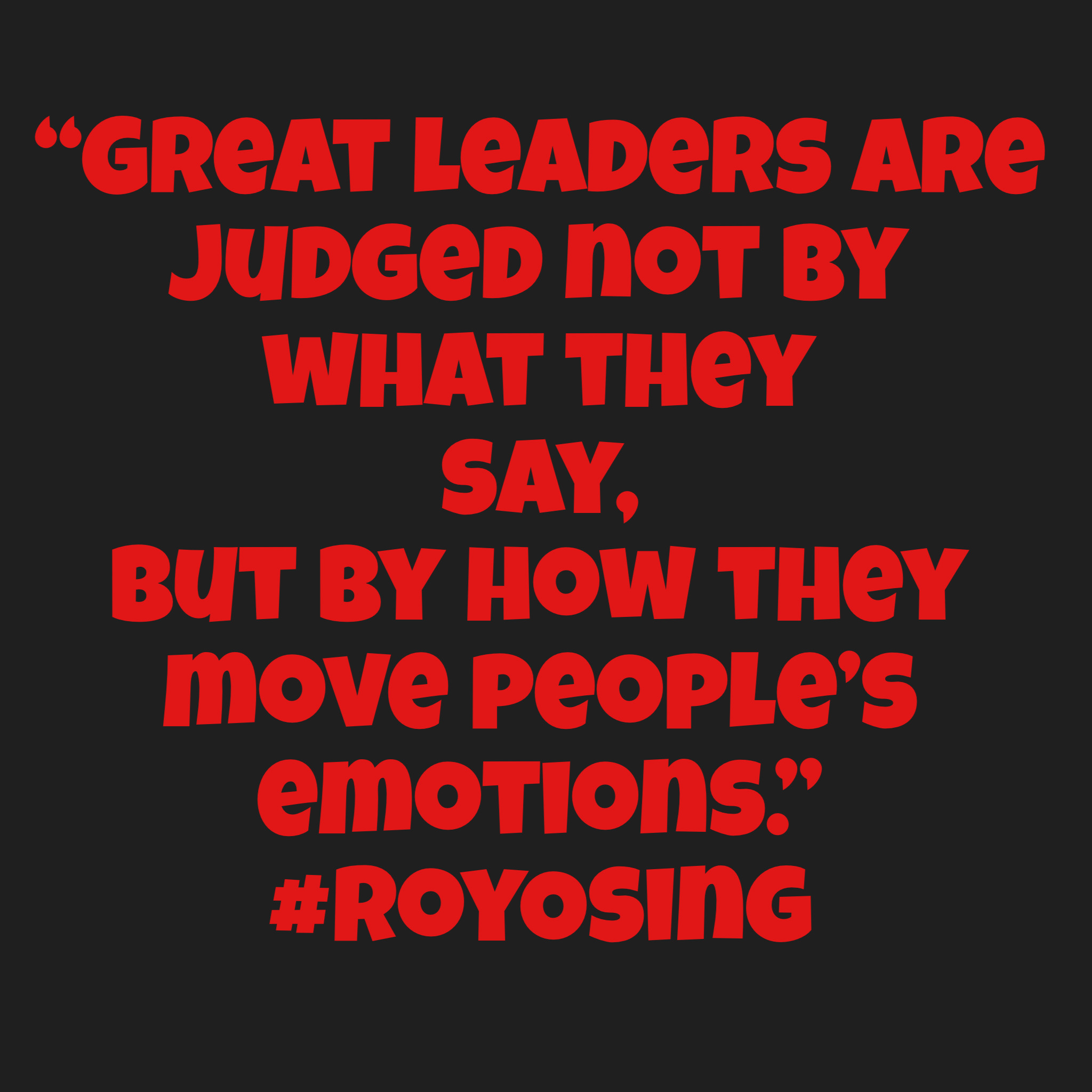
11. Serve people not command them to action.
12. Are consummate story-tellers, breathing life into the organization’s strategy by providing examples of successful execution.
13. ‘Bash barriers’ and remove obstacles to progress on the inside to make it easier for people to get their job done.
14. Constantly and passionately communicate the organization’s vision and strategy to capture the hearts as well as the minds of people.
15. Ask “How can I help?” rather than order people to ‘do this’!
16. Give hope to people in times of chaotic change.
17. Are obsessed with making tries as the route to innovation and creativity.
18. Are mindless about executing the business plan of the organization.
19. Make decisions with incomplete and imperfect information.
20. Are good at anticipating future trends and events, but are great at responding to the random and the unexpected.
If you can check-off all twenty, consider yourself an amazingly brilliant stand-out leader.
If you can honestly say that you exhibit half of these leadership dimensions you are well ahead of 99% of other leaders in business.
Well done and now focus your work on the remaining 50%.
Cheers,
Roy
Check out my BE DiFFERENT or be dead Book Series
- Posted 9.27.21 at 06:15 am by Roy Osing
- Permalink