



Roy's Blog: Entrepreneurs
February 22, 2021
5 proven reasons benchmarking won’t give you a competitive advantage

Source: Pexels
5 proven reasons benchmarking won’t give you a competitive advantage.
Benchmarking is viewed as a necessary process for most organizations as they do their business planning. There are benchmarking consultant experts and courses you can take to learn how to benchmark proficiently and gain the maximum benefit.
In my view, benchmarking is a simple concept as is its process:
▪️Identify the organization that excels in some aspect of your operations that you believe requires improvement — customer service, business planning, customer engagement, sales management, accounts receivable, advertising planning and so on;
▪️Map (understand deeply) their system or process to understand exactly how they perform the operation;
▪️Define the actions you must take to incorporate their operating system into your operation with the objective of replicating their level of efficiency.
Benchmarking might help you improve your operations efficiency but it won’t make you stand-out from your competition.
Benchmarking can be problematic on several levels:
1. Benchmarking is nothing more than copying someone else’s ideas
It’s ‘sucking up’ to an organization or individual recognized (by someone presumed to be the thought leader) to be the best at performing a particular function and is therefore the organization you should aspire to be.
It doesn’t make you special. It may help you improve your position in the crowd of hungry competitors by being more efficient at something, but it won’t help you stand out from them by being more relevant or unique.
Copying is the enemy of being different. The maximum benefit you can achieve by copying is best in class levels of performance which may return better operating results than previously obtained but unless you vault beyond these levels true differentiation won’t happen.
2. Benchmarking won’t make you unique in any way
The herd is a place where organizations go to blend in with others; to conform with what others do and to lose the DNA attributes that make them special.
Even if you are the ‘best of breed’ you’re still in the herd. It’s just that you execute a process better than any other herd member; you’re still rubbing shoulders with your sameness brethren.
And because you’re tagged ‘the best’, you have no motivation to break away from the herd; you find consolation in it.
The world is becoming a home for best practice addicts and as a result it’s boring and benign.
3. Benchmarking makes you conform
Benchmarking results in conformance; it sucks any unique thinking you may have out of your system and replaces it with the need to capitulate to the leader of the herd.
Rather than look for a unique solution to your problem, you look for another herd member that has put in the work to create a solution that works for them and you assume you can boilerplate it and it will work for you.
When you copy someone or something, you relegate — subordinate — yourself to them. You roll over, put your ‘paws in the air’ and subsume yourself to the leadership of someone else. Looking up when you’re lying on the ground isn’t a very liberating place to be.
4. Benchmarking won’t make you special and differentiate you from your competitors
It has no strategic value in moving the organization to a position in the marketplace that ONLY you occupy.
“What are our competitors doing?” is often asked when organizations are thinking about improving how they conduct business, and the benchmarking process ensues — adding zero space between them and their competitors.
And, of course, if you’re chasing another organization, you’re adding nothing to the kitbag of things that make you ‘special’ in the eyes of your customers and encouraging them to spread your word to others and attract new business.
If you copy someone, all you do is lower the bar.
5. Benchmarking prevents you from trying new things
If you’re a copycat, you’re not an innovator. Benchmarking does little or nothing to stimulate innovation and creativity which seem to be values organizations covet in today’s world of uncertainty and constant change.
In fact benchmarking kills real innovation because it has performance improvement using the standard of another as its end game as opposed to revolutionary changes that determine new strategic outcomes.
We need to get our thinking straight.
Few organizations today stand out, which is sad; few are deemed to be really special by their customers.
Being remarkable isn’t a strategy on the radar of most, or if it is, it’s an elusive goal because leaders allow people to use traditional tools — like benchmarking best of class — to do their jobs.
Uniqueness, remarkability and being special come from being different than your competitors, not copying what they and others do, even if they perform certain functions more efficiently than you do.
We need to change our ways and stick copying where it belongs.
Let’s:
— Start thinking about being different than best in class, not copying best of breed.
— Covet being ‘different than breed’, not best of breed.
— Think about doing what others are not doing, not looking to other’s successes.
— Go in the opposite direction that others are going, not following in their footsteps.
— Define best in class to be the highest bar to be different from, not emulate.
— Purge boilerplates from our toolbox and break new ground (and maybe be the author of a new boilerplate).
Copying is the enemy of being special and remarkable.
And as leaders, let’s change the conversation in our organizations; purging the notion of benchmarking and copying as ways of achieving strategic progress by asking these types of questions of our teams:
▪️”What can we do to be different from the crowd of competitors?”;
▪️“How does what you’re proposing make us stand out from the competition and be special to our customers?”.
▪️“What crazy ‘insane’ thing is a different business to ours doing and how can we use the basics of the idea to morph it into a special idea for us?”
Benchmarking is absolutely the wrong thing to do when the end game for most organizations seems to be uniqueness and remarkability, but there are ways to ‘bend the curve’ and go in the right direction.
Start the change now, though, because time is not your friend.
Cheers,
Roy
Check out my BE DiFFERENT or be dead book series
- Posted 2.22.21 at 05:26 am by Roy Osing
- Permalink
February 15, 2021
How ‘feet-on-the-street’ sales can be way better than online sales

Source: Pexels
How ‘feet-on-the-street’ sales can be way better than online sales.
Online sales is beating offline sales; here’s how ‘feet on the street’ can get their mojo back.
The traditional role of offline sales is pushing the profession closer to extinction
It’s interesting to observe the evolution of sales over the past several years.
Technology affecting the online marketing and sales function has evolved at a blistering pace over the past 5 years.
Artificial Intelligence and web personalization tools allow organizations to track what individuals have researched and purchased and to present them with an array of buying options during their subsequent browsing sessions, and much more.
All under the guise of improving the customer online experience by making the suggested choice more relevant based on their past behaviour.
I personally find the experience anything but pleasant. Irrelevant ads pop up when I’m browsing and despite the claim from marketers that the digital tools they use are improving the customer experience, I find the process intrusive, annoying and frustrating. My reading experience is diminished with advertisers disrupting me with totally irrelevant product offers.
Notwithstanding the fact that the objective of enhancing the online customer experience is being met with varying degrees of success, this aspect of online sales is ahead of its offline cousin by an order of magnitude.
The online salesperson is nothing more than an algorithm devoid of emotion and ego; the offline one has all those constraints.
How can offline sales morph to what online sales is trying to achieve?
It’s all about context. Online sales is trying to improve the customer experience, and be more effective in anticipating products and services an individual might be interested in buying, so why doesn’t the offline sales world attempt the same?
I know offline sales aspire to build deep meaningful relationships with customers, but when you look at what motivates them it’s hard to believe.
My observation is that offline sales remains in the doldrums, holding on to its traditional role, motivated by:
— improving conversion rates.
— managing the sales funnel more effectively.
— get the sale.
— keeping the pressure on and don’t let the person say ‘no’.
— getting (and staying in) the faces of potential buyers.
— terminating the customer meeting if it looks like no sale is in the offing.
— pushing the product and make it fit what the customer wants.
— improving how to make a cold call.
— achieving quota.
— outperforming colleagues.
— winning the annual sales contest.
— earning salesperson of the year award.
With these motivating factors, it’s not believable when they say that relationships matter; their behaviour speaks otherwise. And certainly, without a strong relationship-building bias, the ability to anticipate customer purchasing behaviour is restricted.
So, what’s the solution? How can offline sales be better than their algorithmic online sales cousin?
We need to redefine the function as ‘un-sales’ and describe it as the folks that don’t sell; taking the focus off selling and putting it on building relationships. And change the way sales is compensated.
To get started, here are the rules for offline sales that must be put in place to build better relationships and experiences with the customer.
1. Pay people for relationships — If sales aren’t paid to exhibit the behaviours necessary to build relationships and create better experiences for their ‘target’ they won’t do it. Period.
So if leadership aspires to get closer to their customers but don’t put in place the infrastructure to enable it, nothing progressive will happen and the aspiration becomes an unfulfilled dream. And online sales keeps winning.
2. Stress (and micromanage) the conversation — Relationships and experiences get better when conversations between people are ingratiating and serve the needs of both parties.
Get rid of the one-way sales pitch. Make offliners the best listeners on the planet. Set a performance rule that the customer must occupy 80% of the conversation airtime. Have ego purging classes; strip dysfunctional ego-drive that prevents a productive two-way conversation (or remove the salesperson who can’t comply).
Make note-taking a compulsory part of the sales kit bag; it’s a vital element of giving someone a relevant, meaningful experience. No act shows that the salesperson cares about what the other person is saying than committing what is heard to paper. The act implies that one has been heard and that follow up is promised along with further action.
3. Find human insights — For the offline salesperson, behind every productive conversation (defined as a deeper relationship and a pleasant experience) is an objective; a specific intended outcome.
And for offline sales, the endgame of every customer engagement is to discover an insight on the other person that is useful in feeding the buying process. Further, if the insight is a rare find that no one else — i.e. the competition — knows, it’s a strategic gem that has the potential to achieve and maintain strategic advantage of the organization.
Knowledge is strategic power, and the offline salesperson is key in the process of learning what people desire and converting this knowledge into economic benefits for the firm.
4. Develop a serving culture — amazing long term relationships and memories can only be created by offline salespeople who like putting the needs of others before their own; they like serving people.
There are serving salespeople out there but in my experience they are rare because of the traditional role sales played and because of past hiring practices that reflected traditional sales values. Servants weren’t coveted; those with aggressive, pushy, and domineering attributes were given the priority.
As a start, how about devoting equal time to product and serving training? Teach the offliners what serving (to gather strategic insights) ‘looks like’ and why it’s critical to the future of the organization.
And, as an aside, if a serving culture were successfully created, offline sales would forever outpace online sales which depend on algorithms and predictive models produced by people who know the digital tool world, not people.
5. Follow up. Follow up. Follow up — Perhaps this might be viewed as a small thing, but it’s HUGE in terms of influencing experiences and relationships. If someone promises you something and you don’t hear from them for 2 weeks, how do you feel and what’s your conclusion? Most people would conclude that they lied to you and they really don’t care about your needs.
This is the one activity offline sales has the advantage. Yes, Amazon can inform us of the status of our delivery but it doesn’t fulfill any other follow up function. For example they don’t enquire on how we liked the purchase (relying on us to advise them if we were dissatisfied) and other more qualitative aspects of the buying process. Humans, only humans, do this the way it needs to be done.
6. Advocate for the customer — Wage battle for the customer inside your company.
There is nothing worse for a customer than having to battle the bureaucracy of an organization when they need something or when something has gone wrong and their expectations haven’t been met.
They are literally on their own to fight the rules and policies and other restrictions that make the experience extremely unpleasant and in many cases annoying.
The salesperson needs to put themselves on the line among their peers and bosses on the inside to represent the best interests of their customer.
Online sales cannot do this; only offline sales can. And it’s critically important to an experience and relationship. When a customer has an issue with their order and they have to deal with the ‘inside world’ of an organization, they feel alone. The offline salesperson can be their advocate to take the pain and suffering away; the organization is rewarded with loyalty and referrals.
Online selling has captured center stage because of the plethora of new digital tools available. But they have limitations that can only be remedied by offline sales.
The successful sales organization will learn how to balance online vs offline to optimize the strategic benefits of both channels.
Cheers,
Roy
Check out my BE DiFFERENT or be dead book series
- Posted 2.15.21 at 06:55 am by Roy Osing
- Permalink
February 5, 2021
8 simple ways you can improve your marketing muscle

Source: Pexels
8 simple ways you can improve your marketing muscle.
There are organizations that emphasize the role of marketing in their business plan. They are proficient at marketing who they are and what value they create.
They exhibit marketing effectiveness.
They have marketing muscle.
There are others, on the other hand, who struggle to get their message across and are not contenders.
Building marketing muscle isn’t just the job of the marketing department; the entire organization must take on the responsibility and work in harmony to deliver it.
Muscle-building routine
▪️Consistently WOW! your customers — Delivering awesome customer service is fundamental to building muscle; it’s the basic platform you need to build a strong sustaining brand. If you don’t serve your customers in an exemplary way (or at least have plans to), ignore the rest of this article.
▪️Lead with innovation — Be the first ones to do something creative and “out there”. Yes, it’s risky to try something new, but if you try often enough you will have the winners that add dimension to your brand.
▪️Surprise your market — Do something that people don’t expect. Muscle builders pulse surprises from time to time, creating buzz and attracting a great deal of attention.
And they don’t surprise just anybody; “delight tactics” are aimed at their loyal customers. Check out Richard Branson to see how it is done.
▪️Earn the customer’s business everyday — Don’t feel entitled to it just because you have it. This is all about never taking the customer for granted; assuming that since you already have them, you don’t have to do much to keep them.
This is a fatal mistake! Investing in deepening your relationship with a customer and earning their trust will not only keep them spending with you, it will also motivate them to “spread your word” to others.
▪️Integrate yourself in your community — People want to do business with organizations that care about the communities they are in; that give back in some meaningful way.
Muscle is built with a HUGE dose of humanity, and social investing is an effective way of allowing your softer side to be seen. And target community investments to programs aligned with your strategic plan; avoid trying to support every cause out there.
▪️Adopt customer learning as a core competency — Learn about your customers as a continuous process rather than a periodic task.
Customer needs, wants and desires change and it is critical to keep up. Muscle strength grows proportionately with how knowledgeable you are about who your customer is and what their top priorities are.
▪️Have fun! — It’s amazing how impactful it is to shed the business formality thing and show an informal playful persona from time to time. Casual language, humour and making fun of yourself are ways to show your customers “it ain’t all about the bottom line”.
▪️Think “ME” — Shift your thinking from mass production to personalized value creation. Narrow your focus to create solutions for small groups of customers rather than trying to come up with one size that fits all (which doesn’t work anyway).
Keep in mind that muscle form isn’t developed overnight; it can take years of blood, sweat and tears before the market sees you as a contender.
However, there is no time like the present to get on with it.
Define your muscle building program.
Start executing.
Don’t look back.
Cheers,
Roy
Check out my BE DiFFERENT or be dead Book Series
- Posted 2.5.21 at 10:48 am by Roy Osing
- Permalink
February 5, 2021
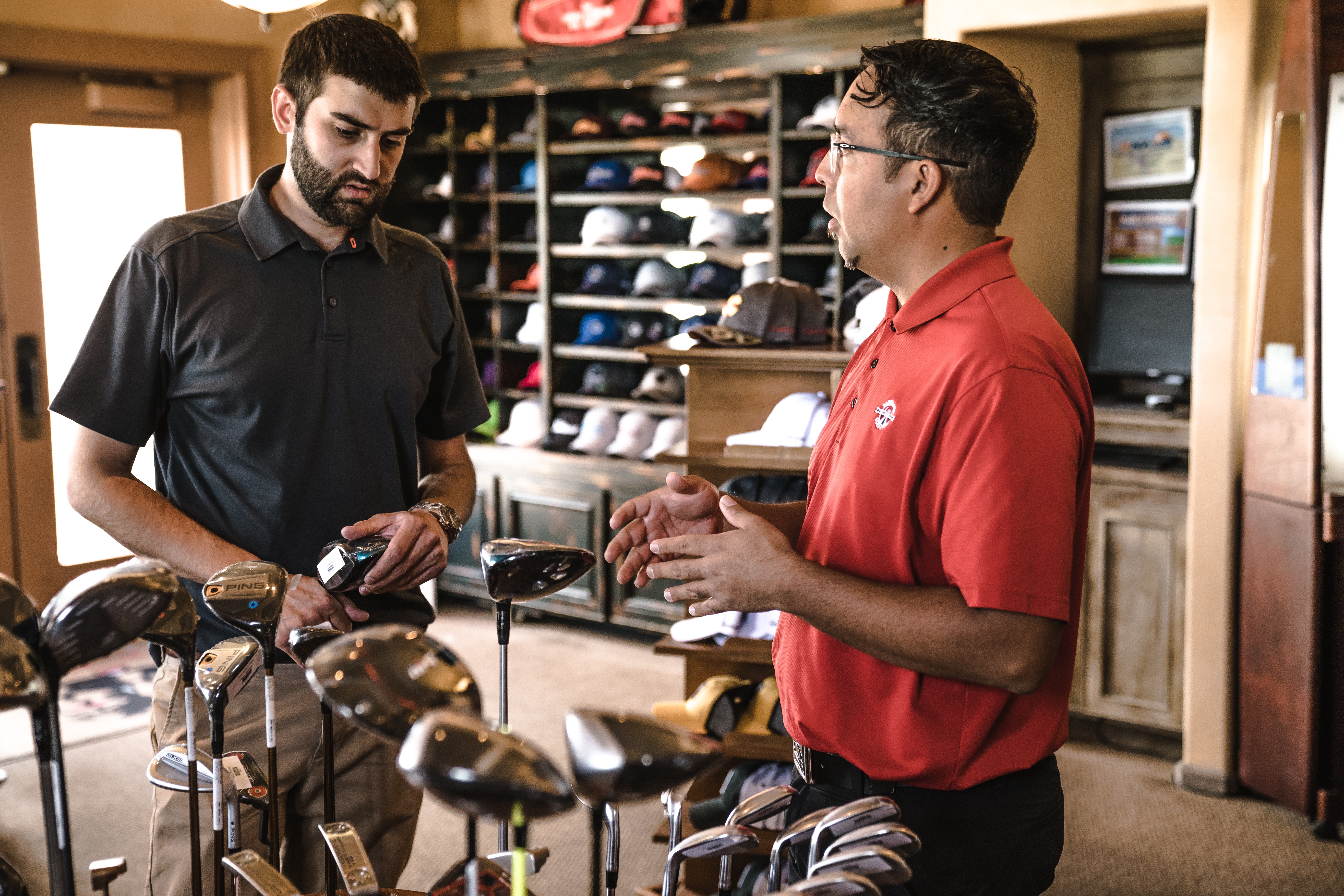
3 simple ways to give the most brilliant customer service
Source: Pexels
3 simple ways to give the most brilliant customer service.
If you want your customer service to excel, here are 3 essentials.
Essential #1 - set your strategic context to serve customers rather than ‘service’ them.
To provide brilliant customer service, your business plan must give it the priority.
We ’service’ cars and computers but we serve people. The notion of being ‘serviced’ is quite frankly repugnant to me.
Servicing people focuses on inflicting the rules and processes of the organization on the customer. Some analyst in the organization decides that the most efficient way to fulfill a customer’s request and control cost is to do it a certain way. Whether the customer wants to participate in the process is irrelevant.
Serving, on the other hand, requires that systems, rules and procedures are designed to satisfy the service experience expected by the customer.
It may be more cost efficient to outsource your call centre to some distant place in the world where english is not the mother tongue, but if a conversation with one of these reps infuriates your customer, what have you gained?
Too many organizations take this inside-out view of customer service where the needs of the organization are pushed on people.
What is needed is an outside-in perspective where the customer drives how they are served.
Essential #2 - deliver your core service flawlessly 24X7. Core service is the essence of your business; what people get from you. WiFi that works, good food, clean hotel rooms and planes that take-off and land every time are examples of core service.
If you deliver your core service consistently as promised customers will rate you average because they expect your core service to work as promised. On the other hand, failure to deliver satisfactory core service will earn you a fail and your brand suffers as the stories of your shortcomings spread far and wide.
Essential #3 - create dazzling service experiences around your core service. This is the WOW! that surprises people; giving them what they DON’T expect.
Dazzling experiences drive customer loyalty but only if your core service is delivered flawlessly
How to dazzle?
▪️Recruit people that “love” fellow humans and possess the innate ability to serve them.
▪️Create rules, procedures and systems that enable friendly and user friendly transactions.
▪️Turn OOPS! into WOW! by recovering from mistakes and service blunders in a way that surprises and delights the customer.
Don’t expect results over night; serving people in a stand-out manner is a journey.
But start it. Now!
Cheers,
Roy
Check out my BE DiFFERENT or be dead Book Series
- Posted 2.5.21 at 06:40 am by Roy Osing
- Permalink