



Roy's Blog: Customer Service
November 15, 2021
Is it possible that COVID is actually improving customer service?

Source: Unsplash
Is it possible that COVID is actually improving customer service?
I’ve seen it, actually seen it. And it’s quite incredible to witness.
Customer service seems to be changing and COVID could be a significant driver for what I hope is a permanent metamorphosis.
Desperation is an amazing motivator, and COVID exposed it as most businesses fight for their survival.
COVID has definitely forced businesses to act out of desperation to save themselves.
Lockdowns, capacity restrictions and vaccine requirements have all reduced the volume of business available.
And as organizations looked for ways to morph their business into something sustainable, one thing became remarkably clear: returning customers and customer referrals were desperately critical to their survival.
It’s amazing to me that this sudden realization hit business owners between the eyes, because it’s always been the case—it’s not a new concept. It shows, however, that in ‘normal’ times businesses are tempted to take their customers for granted and assume their loyalty can be counted on to deliver healthy financial returns.
When the wind blows even a turkey can fly.
COVID changed all that. The natural ‘winds’ of a relatively stable customer base and healthy economy had all but died, and businesses were collapsing with revenues in free fall.
That’s when many of them woke up and realized in an act of desperation that serving their customers in a more positive way was the way to stay alive.
For me, it’s incredibly perverse to characterize providing caring customer service as a ‘desperate act’, but for many businesses I think it actually was.
Up to the pandemic, businesses in general could be relatively successful by providing less than desirable—shabby—service and then COVID shocked them into realizing that better service was needed to survive the maelstrom they faced.
Brilliant customer service isn’t about a single act—the silver bullet—but is rather a number of small compelling acts practised consistently everyday.
Since the onset of COVID, I’ve noticed many businesses make these small moves and nudge their service levels just a wee bit higher:
#1. Tone of service
People seem to be more friendly. Everyone seems to have a common sense of purpose so it’s more natural for customer service employees to be kind and have empathy for the customer in front of them.
The conversation is more caring with a friendly tone that is rare when people share little or nothing in common.
#2. Flexibility
There is more of a willingness on the part of businesses to be more open to accommodate someone’s request for something special that doesn’t fit within the rules and policies of the business.
A special pick up arrangement, booth location at a restaurant or timing for a dinner reservation are now handled with more of the customer’s wants in mind rather than conforming to the organization’s standard procedures.
#3. The apology
I’ve noticed that ”I’m sorry” is used a lot in conversation when customers don’t get what they’ve been promised.
Rather than almost a dismissive attitude on the part of the business when they’ve screwed one of their customers over, COVID seems to have introduced a much softer business approach with their willingness to accept some responsibility when things go wrong and to engage with the customer in finding a mutually satisfactory resolution.
#4. Speed
The pandemic business is driven to increase product or service turnover, moving whatever inventory they have to the hands of the buyer as quickly as possible. It’s how sales can be maintained.
The result is that customers are able to get what they want perhaps a bit quicker—notwithstanding the supply chain issues faced by businesses today to get the inventory they need—than previously experienced.
#5. Quality
There is a strong need for a business to ‘do it right the first time’ when it comes to delivering a product or service to their customer.
Any mistake made by the business in meeting the customer’s expectations results in rework and added costs (which they can Ill afford) that go with fixing the mistake, so there’s a strong motivation to avoid repetitive work to get it right.
Customers obviously benefit under these conditions; they get what they want, when they want it.
#6. Technology
To reduce personal contact as much as possible, many businesses have gone to using texting as the communication tool to engage with their customers.
During a recent stay—maintaining social distancing or course—at Marriott’s Lagoons in Kauai, we were asked to text whatever in room service we need and a bag was hanging on our door knob in 15 minutes. Awesome!
They called it their Assistance at your fingertips service. It was friendly (with the tasteful and fun use of emoji’s), responsive and safe. I think it’s a brilliant blueprint for others to follow for the hospitality in-room services application.
Finally…
I’m not saying that businesses are now delivering great customer service because of COVID. Businesses have a long way to go in my view to raise their service game beyond, in some cases, mediocrity and achieve a level of brilliance that is acknowledged as such by the people they serve.
What I AM saying, however, is that COVID just may have sensitized businesses to take care of their customers a little better, and maybe—just maybe—it will be looked back upon as a point of inflection that foreshadowed real change in the way customer service is delivered.
Or maybe it’s just wishful thinking on my part.
Cheers,
Roy
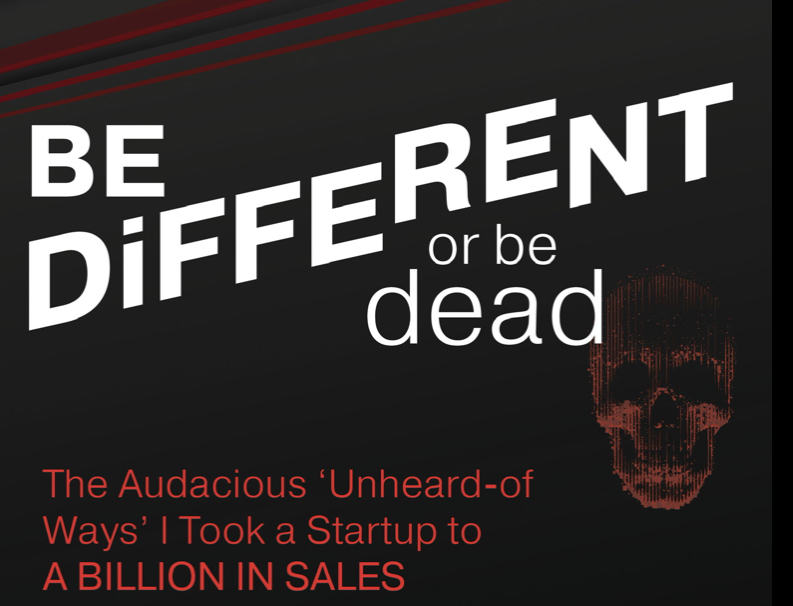
Check out my BE DiFFERENT or be dead Book Series
‘Audacious’ is my latest…
- Posted 11.15.21 at 03:47 am by Roy Osing
- Permalink
October 25, 2021
Why your customer service must absolutely NOT move to a higher level

Source: Pexels
Why your customer service must absolutely NOT move to a higher level.
There’s one good reason you shouldn’t consider revamping your service strategy with the objective of taking your service to the next higher level.
It assumes you are consistently delivering your service promise today, and that is generally a false assumption.
This is my assessment of how organizations are delivering customer service today:
1. Good intentions — Rhetoric and false declarations rule the customer service airwaves.
Every organization aspires to provide amazing customer service experiences for their customers, that they want to exceed their expectations. They declare that serving their customers in an exemplary manner is their number one priority and they claim that they are delivering it.
2. Call centers — Call centers continue to proliferate around the world. Organizations are outsourcing their call centers more than ever before with lowest cost as the main criteria for determining which outsourcer gets their business.
Call wait times are skyrocketing with customers often waiting an hour or so to speak to a service representative.
3. Stupid rules — Customers continue to be frustrated with the Rules, procedures and policies organizations impose on them.
Internal rules and policies today are generally used to control the customer engagement process rather than to enable it.
4. The run-around — Silo teams within organizations result in customers being passed around when they are trying to get their issue resolved. ‘Let me transfer you to the right department to handle your concern’ pervades customer conversations with the customer having to repeat their ‘story’ several times before getting any action.
5. The push upstairs — Escalation of customer complaints is alive and well these days with frontline employees having to get their supervisor’s approval to deviate from established procedure and ‘say yes’ to what the customer wants. Customers wait for ‘the boss’ to decide on their request and they get angry with the way they are treated.
6. Human dislike — There continues to be many customer facing employees that really don’t like dealing with customers. Rudeness, indifference, unresponsiveness, and indifference are still practiced widely in almost all organizations.
Employees with no innate desire to serve others continue to be placed into customer service positions.
7. Attention to ME! — Organizations, for the most part, still treat all customers the same notwithstanding their claims of providing ’personalized service’.
Service continues to be delivered in a one-size-fits-all fashion with little or no room for the unique needs and wants of any particular person.
Mass market thinking continues to dominate customer service thinking.
8. Screwups — Recovery from service mistakes remains abysmal in most organizations. Most are stuck in trying to fix the mistake (many with no apology) and are nowhere close to understanding how to turn the service OOPS! into a loyalty-building WOW! event.
9. Technology interference— Humans available to help customers are a dying breed as most organizations are trying to adopt new AI technologies such as Chatbots to handle customer queries and resolve their concerns.
The Chat function has been introduced to many websites and is a valuable resource as long as there is a service employee there to engage in the chat. Unfortunately, as with the Call Center challenge, the lack of human availability aggravates the good intentions of trying to make it easier for customers to engage with the organization.
10. Customer trust — The customer is generally not given the benefit of the doubt when they have a problem or complaint and the needs of the organization are put in the driver’s seat. In many cases organizations believe that customers try to ‘manipulate the system’ for their own benefit and don’t engage with an open mind to listen to the customer’s story.
My perspective
Most organizations lauding the great level of customer service they provide actually believe their own advertising.
They think that since they declare their intention to ‘blow the customer away’ with breathtaking service, it happens.
In my experience leading customer service organizations, amazing service doesn’t ‘just happen’ because of an aspiration to do so. There is, for the most part, an overwhelming chasm in organizations between what is intended and what is actually happening in the level of customer service being provided today.
What’s the next level of customer service?
There is no ‘next level’.
The words and music must go together.
Organizations need to bear down and deliver on their existing customer service promises before trying to move to a ‘higher level’ of service.
They need to display a consistency (as rated by their customers) that proves they are keeping their current level of service promises before planning to move on to anything that might be described as a higher level.
They should focus on:
▪️Building a customer service strategy that defines exactly what level of service they intend to provide and the implementation tactics to achieve it with accountabilities assigned to leadership.
▪️Defining a service strategy element that deals with how the organization intends to recover from mistakes that screw customers over. This element is essential to successfully deal with the loyalty in play when things go awry and the customer is left pissed off.
Figure out exactly how to fix mistakes fast (systems, processes and empowerment) and what the SURPRISE! element looks like.
Service recovery = fix the OOPS! within 24 hours and SURPRISE! the customer with something they don’t expect.
▪️Treating customer service as an investment with resources required and payback expected. Expunge the idea that customer service is a cost to be managed (controlled) and adopt the philosophy that customer service is an investment in customer loyalty.
▪️Maintaining control of the resources used to deliver customer service; insourcing the critical front end contact functions not outsourcing them.
▪️Recruiting people that like taking care of others. Amazing customer service rides on the backs of people who instinctively know how to deal with humans so hire as many as you can and pay them well. Treat them as being on the top tier of the organization structure rather than buried in it at the lower levels.
▪️Supporting frontline employees and frontline leaders to enable them to perform their role of delighting customers. Removing internal barriers, providing needed training and rewarding them for their performance are all critical in the service delivery chain.
▪️Carefully balancing the use of technology with people to perform service functions. There are appropriate functions that can effectively be done by technology and there are others that require a caring, understanding human. Don’t mix and match them to manage costs - you’ll fail.
Maybe, just maybe, if work is applied to the promise then we’ll earn the right someday to define what the next level of derive looks like.
But for now, organizations need to do the hard work to actually keep their ‘mind-blowing service’ promise.
Cheers,
Roy
Check out my BE DiFFERENT or be dead Book Series
‘Audacious’ is my latest…
- Posted 10.25.21 at 05:22 am by Roy Osing
- Permalink
October 2, 2021
4 proven steps to create a brilliant customer experience strategy

4 proven steps to create a brilliant customer experience strategy
The secret to providing consistently fantastic customer service is a sound customer experience strategy. In a thriving competitive market, extraordinary customer service can be a strong differentiator, especially when you’re competing with seemingly similar products, quality, and price points.
Your customer experience strategy can influence your brand perception, i.e., how your audience feels about your brand and how they tell others about it. Data shows that 43% of buyers ditch a brand for poor customer experience, so it pays to make your customers feel special by offering personalized services.
That’s why the first step in developing a customer experience strategy is to gather as much data as you can about your customers. You can find all the steps in the infographic below from GetVoip.
A detailed customer experience strategy can be instrumental in keeping your customer service efforts consistent and coherent across different departments. When customers are happy, you can retain them for life. Companies with extraordinary customer service have seen a 25% to 95% increase in profits just by a 5% increase in customer retention.
The customer should be the front and center of your customer experience strategy. The success of the strategy, however, depends on customer-centric company culture. From the top management to the customer-facing personnel, everyone should be on the same page to serve the customers the best. Only then the important (and tough) decisions can be made and implemented.
Once you implement the strategy, you will find many ways to make your customers feel valued. So, go ahead and start making your customer experience strategy to ensure greater success for your company.
— Reuben Yonatan is the founder of GetVoIP, a global comparison resource for business technology buyers. Yonatan works with companies to meet the needs of their business communication stacks.


- Posted 10.2.21 at 02:08 am by Roy Osing
- Permalink
June 14, 2021
10 questions to find out if you’re really customer focused

Source: Unsplash
I’ll bet if I asked you if your organization has some level of being customer focused as a part of your business plan, you’d say “Of course”.
And you wouldn’t be alone.
Most, if not every company espouses the importance of providing their customers with awe-inspiring service; it’s generally a fundamental element of their overall strategy.
The issue for me is that even though ‘being customer focused’ is proclaimed as a leadership priority, when you look closely at the actions taken by employees to serve customers, there’s a big gap between the aspiration and reality.
The claim is simply that, an empty aspiration with no substance to support it.
So, let’s have some fun with this.
Here are 10 questions which, based on my 4+ decades of leadership experience involving customer service, point to the ones who are actually serious about delighting customers as opposed to those who like to talk about it but not do the hard work to deliver it.
If you answer ‘YES’ to 6 or more of the questions then you are serious about creating memories for the people you serve; if you answer ‘YES’ to less than half of the questions your words are outpacing your actions and you’re fooling yourself that you care about your customers.
Ok, so let’s begin. And be honest because you’re only hurting yourself if you falsify your responses.
▪️Do you have a formal customer service strategy in your organization?
▪️Does the compensation plan for executive leaders include a customer service component that accounts for at least 25% of their annual bonus?
▪️Do you formally measure how customers feel about the service experience they’ve had with you?
▪️Do you have a recognition and reward system that regularly honours ‘service heros’, employees who have gone above and beyond to serve a customer in an exemplary way?
▪️Do you measure how well internal customers are served by their internal suppliers recognizing that if internal customers are not served well, it is unlikely that real customers won’t be served well either?
▪️Do you have a specific program to eliminate the dumb rules in your organization that are constantly annoying your customers?
▪️Are your salespeople measured on how effective they are at discovering the secrets of their customers?
▪️Does marketing have a ’ME’ philosophy to create personalized value packages for your customers as opposed to a product flogging mentality?
▪️Is your customer service call center managed to enhance the customer experience as its primary responsibility with cost management taking a lesser role?
▪️Does your organization have a specific recovery strategy when a service mistake has been made and a customer is screwed over?
There you have it. Being customer focussed is more than a helium-filled slogan. It requires synchronization of every last part of the organization to work in harmony to achieve that goal.
How well did you do? Good or bad, I hope you stay on the path of doing a better job of taking care of the people who give you their hard earned money every day.
Cheers
Roy
Check out my BE DiFFERENT or be dead Book Series
- Posted 6.14.21 at 05:52 am by Roy Osing
- Permalink