



Roy's Blog: Customer Service
October 10, 2022
Why the best way to grow your business is to ‘say yes’

‘Saying YES!’ is a great growth strategy.
Not much attention is given in business plans to how policy and rule systems can be used to foster growth.
Rules, policies and procedures are, in most organizations, tools used as internal control mechanisms to put boundaries on what people can do and what they can’t do — rules for performance planning, rules governing productivity targets, rules on decision making to minimize risk, rules for time reporting, rules for hours of work and rules for how the organization engages with its customers.
In addition to satisfying these internal requirements, rules and policies need to be looked at as tools for enabling the behaviours necessary to successfully execute the organization’s strategic intent — particularly when it comes to making it easy for customers to get their needs met.
As any consumer is aware, sometimes it’s extremely frustrating dealing with some organizations to the point where we are so annoyed we just move on.
For proof, just look behind most negative customer experiences in an organization and you will most likely find a rule, policy or procedure that has infuriated a customer because it stopped them from getting what they want.
And what do infuriated customers do? They tell all of their friends and family about your rotten customer service and look for another organization to do business with.
Any way you look at it, an infuriated customer doesn’t serve the strategy of an organization and it’s growth imperatives.
Narcissism makes you smaller — A complicated, bureaucratic and customer unfriendly system of rules carries with it a narcissistic brand; an organization that cares only for itself.
Lack of an external facing rule system communicates that you really don’t care about the customer experience; that you really are more concerned about meeting internal efficiency targets than you are about creating exceptional and memorable experiences for people — definitely not a good thing to tell a highly competitive market where customer choice and buying power is greater than ever.
Rules, policies and procedures should serve the customer; not the internal auditors.
They should empower and liberate customers to do what they want in a way that is agreeable to them and not as a mechanism to control them.
The time has come to look at the rule system as a driver of growth where the end game is to make it so easy for people to do business with us that they keep coming back again and again (and give us their money) and tell their friends and family how amazing we are (and they give us their money).
A policy should be looked at as a tool of strategy; if it enables the customer to fulfil their dreams then it’s a good one.
Policies and procedures should be conceived with the objective of creating memorable moments for people. If someone doesn’t say “WOW!” after having just experienced the wait time in your call center queue, then your process is flawed (you’ve probably outsourced it to some remote place in the world and you’ve given cost a higher priority than speed of answer) and you need to fix it fast.
If your customer doesn’t say “BRILLIANT!” after trying to return your product, your return policy doesn’t cut it and it needs to be changed.
Here are a few of the amazing things that will happen if you ‘say yes’ and use your rules and policies to deliver memorable moments.
Growth — revenue will grow as a result of liberated customers who can buy from you in a free-and-easy way. They like the moments they have with you; they buy more and they refer you to friends who do the same.
Furthermore customer retention rates increase; customer loyalty provides more stability to the revenue line.
Productivity — the effectiveness of your frontline is improved. Rather than having to spend copious amounts of their time with customers trying to explain and enforce dumb rules that make no sense to them and that they refuse to comply with, frontline employees can spend their time enabling customers to complete their transactions. Revenue per frontline contact goes up.
Employee engagement — frontline job satisfaction and engagement with the goals of the organization increase as the anxiety and stress of dealing with unhappy customers is reduced. Amazing things happen when you are allowed to comply with what the customer wants rather than constantly trying to get them to accept an internal policy that the customer refuses to accept.
An employee who is empowered to ‘say YES!’ is the most effective growth engine an organization can have.
Customer service results — the customer experience metric in the overall results of the organization improves dramatically as the rules of the organization now please the customer as opposed to annoying them beyond belief.
If a customer sees that the organization is trying to bend over backward to satisfy their needs, they are not only pleased, but they are very willing to provide service accolades when the service measurement dudes call.
Market share — customer loyalty increases as a result of the more memorable moments; saying yes over and over again creates strategic value which is measured in the share of the market your organization holds. Say NO! too often and watch your market position plummet.
Competitive advantage — the organization distinguishes itself from its competitors who continue to treat rules as vehicles to control behaviour.
In fact rather than being viewed as narcissistic and inward focussed, the ‘say yes’ organization becomes the benchmark for others who want to improve their customer service — their way becomes best in class.
In order to start ‘saying yes’ focus on finding out what the main policy pinch points are in the organization, like the top 10 policies that make your customers go postal on a regular basis.
And engage your customers in a conversation on the topic; they will have no difficulty telling you which rules are unreasonable, dumb and just outright stupid. And they will love you for asking!
But beware of the momentum managers in your organization who want to stay with the ‘say NO!’ philosophy of rule setting. The people who will try and argue that dumb policies are necessary because of some regulation or law preventing them from being changed.
Challenge every claim like this; you will find — as I did when I launched a Dumb Rules Program in my organization — that there are, indeed, some policies that can’t be changed. But I assure you that you will discover more policies that can be changed than can’t so doing the work will pay off handsomely.
And hold your managers accountable for killing the stupid policies you uncover; put it in their performance plan to show them that cleansing the internal environment of policies that suck from a customer’s perspective is the highest priority.
Cheers,
Roy
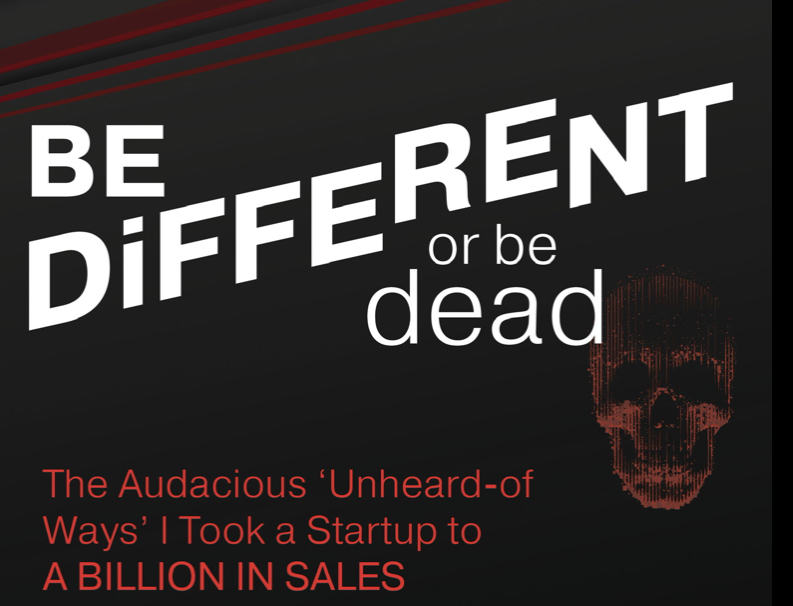
Check out my BE DiFFERENT or be dead Book Series
‘Audacious’ is my latest…
- Posted 10.10.22 at 06:52 am by Roy Osing
- Permalink
June 27, 2022
Why Nasr is absolutely amazing at creating experiences for people that last forever

Source: Unsplash
Why Nasr is absolutely amazing at creating experiences for people that last forever.
Petra, Jordan.
Nasr, our tour guide, who took us through breathtaking Petra had it right. And it was so natural for him to say it. And to do it.
He was able to turn a tour of Petra, one of the 7 Wonders of the World (given the honor in 2007) into an experience my wife and I will never forget.
And one that we will likely talk about for many years to come.
His concluding comments to us came from his heart: “My job as a guide is to create memories”.
Like Baboo in Mumbai, he went on to ask: “Please tell your friends about my country”.
And that’s what I’m doing.
Can you imaging if every one of your frontline customer contact employees saw their job to create a memory for every customer they ‘touched’?
The truth of the matter is that people will soon forget the price they paid for your product or service but they will NEVER forget the experience they received when they bought it.
Do you think it would lift your business to new levels? Do you think it would deepen customer loyalty to you?
In Nasr’s case, he personally understood that unless he was successful creating memories, people wouldn’t visit his country.
And he desperately wanted people to see the country he loves so much (it was refreshing to hear him speak of Jordan in emotional loving terms).
The problem is that employees in our businesses don’t have the same compelling driver or sense of urgency to create memories for customers.
They don’t understand its critical strategic importance to organizational success and survival
And it’s not their fault.
It’s a failure of leadership.
You get what you ask for. You get what you pay for.
Ask for memories to be created by your people. Make it a critical element of their role and compensation plan.
Hire people who innately know how to do it, because not everyone can. And don’t rely on training to teach people to do it. Memory creators are born with the gift.
We need a Nasr to lead our organizations out of the common, boring, invisible, unremarkable, unimaginative, stale herd.
We need many of them.
PS. If you have a chance to visit Jordan, do it. It’s safe and full of charming people.
There Nasr, it worked. I told your story.
Cheers,
Roy
Check out my BE DiFFERENT or be dead Book Series
‘Audacious’ is my latest…
- Posted 6.27.22 at 06:09 am by Roy Osing
- Permalink
March 14, 2022
How your customer service can be made mistake proof

Source: Unsplash
How your customer service can be made mistake proof.
Successful organizations figure out how to make their customer service OOPS! resistant.
They’re mindlessly focused on how they handle mistakes. It’s all very well to talk about doing it right the first time and providing seamless transactions, but it’s a pipe dream.
The reality is that mistakes will always happen in organizations regardless of the good intentions to ensure they don’t happen. Mistakes cannot be mitigated. The chances of them occurring can be reduced but they can’t be completely eradicated.
Mistakes are a way of life in modern organizations. Humans are not perfect not are they predictable. Technology has its glitches. And systems break down.
So in a marketplace replete with mistake-making, how does an organization gain a competitive advantage over the other mistake-makers?
Do they try and make fewer of them in which case their competitive claim might be ‘Buy from us because we make fewer mistakes than our competitors’?
Or do they go back to the first principles of Quality Management and claim that they are the only ones who deliver what customers expect error-free every time?
No. The only way to gain an advantage in a mistake-riddled world is to pursue two tactics simultaneously:
1. OOPS!-proof the organization as best you can to prevent mistakes from occurring, and
2. Build a recovery strategy to action when #1 doesn’t work and an OOPS! occurs.
OOPS!-proofing
OOPS!-proofing your organization means creating the infrastructure and environment that reduces (not eliminates) the chances of mistakes occurring.
Here’s a checklist:
▪️Examine your rule and policy architecture. Do the rules and policies you have enable easy customer transactions or do they get in the way because customers refuse to follow them (because they think they’re dumb).
▪️Check your culture and values. What comes first: quarterly earnings or amazing experiences? Does your organization put the customer on a pedestal and subordinate everyone in it to creating memorable experiences for them?
Do you have a value that specifically says ‘We exist to provide memories for our customers every time they touch us’?
▪️Ask customers to help design systems, processes and procedures that affect them. An OOPS! is less likely to happen if a customer is doing business with you in a way they helped architect.
▪️Spend more money on training your frontline people. If they know more, they will fail less.
▪️Remove the grunge that gets in the way of employees doing their job. Fighting unnecessary internal resistance gets in the way of focusing on taking care of the customer which causes sh** to happen.
OOPS! reaction
Even if you’ve OOPS!-proofed your organization as best you can to minimize the chances of mistakes happening, they will happen. That’s just the way it is.
So with that reality in mind, the OOPS!-proofer prepares themselves to recover when the mistake is in their face.
Their business plan has a specific strategy to be the best mistake fixer in the market, and there’s good rationale for taking this position.
Brilliant recovery is a customer loyalty builder; customers are more impressed with how the mistake is fixed than being upset about the mistake being made in the first place.
What does brilliant recovery look like? The ‘formula’ for OOPS! recovery is quite simple:
Recovery = Fix the mistake fast and surprise the OOPS! victim with something they don’t expect.
Studies have shown that customer positivity—and loyalty—towards an organization that has screwed them over actually increases after a successful recovery compared to how they felt toward the organization before the OOPS! happened (which is a function of the cumulative experiences they’ve had with the organization to date).
Furthermore, they show that recovery must be achieved within 24 hours of the OOPS! event to have a positive impact. If you haven’t recovered in 24 hours, the opportunity is lost and perhaps the customer with it.
The proper OOPS! recovery is a business loyalty builder and yet few organizations plan for it.
How does one build an OOPS! recovery plan?
Here are a few plan-building steps to consider:
#1.Work on your culture — Most cultures encourage mistake avoidance; mistakes result in added cost because of the rework involved in making things right.
The OOPS!-recovery artist knows that the special sauce is not trying to eliminate mistakes, it’s about having a strategy in place to do the right things for the customer when the blooper happens.
The serious ones have a value statement that goes something like this:
“We will do our best to prevent making a customer OOPS! but when we do, recovery will be our #1 priority.”
#2. Measure your recovery effectiveness — After recovery, ask the customer how you did. You can use all the internal metrics at your disposal, but in the final analysis it’s about how the customer felt about your actions.
Perception is reality, so take action from their feelings regardless if your own tracking says you did an ok job.
#3. Empower people — Speed requires a flat organization structure devoid of the need to escalate action for approval.
OOPS! recovery success is inversely related to bureaucracy: the more bureaucracy involved in making decisions, the longer it takes to take action and the recovery window closes. And you’ve lost the opportunity the screwup presented.
So if you’re serious, you have to empower people to do things to recover without the need to ask anyone for approval (the recovery plan will of course have guidelines to follow but that’s all they are - guidelines).
This is where leaders must step up and declare that they trust that people will do the right thing for both the customer and the organization, and that in recovery mode the organization structure is virtually flat and that an all-out assault on the OOPS! is to be supported by everyone who touches it.
#4. Provide superlative support to the frontline — Frontline people are lynchpins in the OOPS! chain, from when things go bad until recovery is complete.
If frontline people are not supported by authority to command the rest of the organization into action with the tools they need, your recovery plan goes south. Make sure your plan has the investments with the necessary leadership trust to give you a fighting chance to win every OOPS! event.
To make your organization OOPS! resistant, do the best you can to avoid making a blunder (which people expect you to do) but make sure you add the special ingredient—‘recovery sauce’—to recover memorably when you do.
Cheers,
Roy
Check out my BE DiFFERENT or be dead Book Series
‘Audacious’ is my latest…
- Posted 3.14.22 at 06:10 am by Roy Osing
- Permalink
December 6, 2021
Why customers should be allowed to make your rules and policies

Source: Unsplash
Why customers should be allowed to make your rules and policies.
Most organizations have, as part of their business plan. a customer service strategy to create delightful experiences for their customers.
But unfortunately the bold declaration of intent to blow customers away with exemplary service is as far as it goes because organizations quickly move away from their great service aspiration and design a rule system with policies and procedures intended to impose order and control on the customer engagement process.
Credit policies. Accounting procedures. Collections rules. Sales processes. Complaint policies. Order procedures.
Customer Service manuals generally are replete with instructions on how to deal with virtually anything to do with a customer.
In fact most rules in an organization one way or another impact the customer.
And for the most part they are meant to control them. To make them behave a certain way that produces a favorable outcome for the company usually in terms of keeping costs down and imposing a standard way of doing business that applies to everyone.
Rules are meant to control the customer transaction.
What if we took a different perspective and created rules to enable the transaction; to allow the customer to engage with the organization the way they want?
Terms that make their experience with us enjoyable and stress free?
There is a huge contradiction when organizations say they are in the business of creating memorable experiences for customers yet construct rules and policies that do exactly the opposite.
It’s time for leadership to be bold and let the customer provide input to the process of architecting the rules. Let the customer control their own destiny with you.
Enable them; serve them.
How about asking a group of your fans to critique your policies and suggest changes?
What not? Are we afraid what they will say? Afraid they will point out the stupidity of some of them?
Open up.
Allow your fans to control you. They do anyway, so why not make it official?
Cheers,
Roy
Check out my BE DiFFERENT or be dead Book Series
‘Audacious’ is my latest…
- Posted 12.6.21 at 05:26 am by Roy Osing
- Permalink