



Roy's Blog: Business Success
January 24, 2022
What is the best way to state your competitive advantage?

Source: Pexels
What is the best way to state your competitive advantage?
Perhaps you’ve got an incredible product portfolio built on an amazing technology platform and believe that the potential for revenue growth is staring you in the face.
The truth of the matter, however, is that if you can’t answer this question, your growth intentions will never be realized.
“Why should I do business with you and not your competition?” is the killer question faced by every organization.
In today’s noisy world with every organization shouting out why they should be chosen, the marketer needs to determine how to get their products, services and solutions noticed in the milieu. They need a competitive claim that is unique and stands apart from your competitors.
Unfortunately, however, competitive claims made by organizations today lack creativity, imagination and truth.
Copying pervades — I would give most organizations today a less than satisfactory rating in terms of how well they address this challenge.
The tendency of most is to go on a copying rampage where the priority is on replicating in some way what someone else is doing in terms of products, services, pricing, distribution and brand positioning. Other players are benchmarked on some capability and the copycat strategy unfolds.
Even a fast follower is a copycat; they just do it faster!
Copying doesn’t create uniqueness and differences; it proliferates sameness.
It dilutes any marginal differences among organizations that might exist and renders them all as look-alikes. And it lowers the bar for each competitor to achieve.
The usual clap trap — Most differentiation statements advocated by organizations and intended to convince us involve words like ‘best’, ‘number one’, ‘leader’, ‘fastest growing’, ‘most’ and ‘highest quality’ to assert their distinguishable characteristics vis-a-vis their competition.
These are common statements which add little to clarifying the clutter:
- We have the best sales team in the business;
- Our people strive to deliver the highest level of client service at all times;
- We offer the highest quality products;
- We have the most knowledgeable salespeople;
- We have been in business for over 30 years;
- We rank number one in client satisfaction;
- We are the preeminent sales organization in North America.
Unfortunately, these declarations add little understanding to help people select a company to do business with.
How exactly does having knowledgeable employees make an organization the right choice given a number of alternatives to choose from who will all claim the same thing? And who decided that an organization has the best customer service, and why should I believe them?
And why should I be impressed with any organization that ‘strives’ to deliver great service — I won’t give anyone my business who claims their special sauce is that they try hard.
These statements are confusing and have little credibility with their audience. They are generally vague and aspirational without proven substance.
A credible competitive claim needs to be simple and specific in terms of how an organization is different from the competitive herd.
It needs to address a high priority customer need (claiming to be unique on something a customer doesn’t care about isn’t productive) and it needs to be true (failing to consistently deliver will drive a customer elsewhere).
Most competitive claims rely on overused clap-trap to position themselves against their competitors
In response to the need for clarity in competitive claims, I created what I call ‘The ONLY Statement’ as the practical way to do it.
‘We are the only ones that….’ is the claim that will cut through the clutter and make it clear why you should be chosen among your competitors.
“We provide the ONLY permanent solution that prevents biohazard contaminants (such as used syringes) and all other debris from entering manholes.”
What Jerry said
Jerry Garcia, leader of the former legendary rock band The Grateful Dead, nailed it: “You don’t want merely to be the best of the best. You want to be the only ones who do what you do.”

ONLY dispels the clap trap; here’s why:
Confidence — ONLY is bold; some might say arrogant. It’s audacious in the claim to be the one that owns a particular space and is prepared to show all to prove it.
This confident face of the organization, in and of itself, raises curiosity to find out what it’s all about. It’s not without its risks but well worth stepping out of your comfort area to say it.
Simplicity — ONLY is a simple expression which uses simple language. The low fog factor invites eyes to gaze on and process the thought articulated in it rather than struggle through what it means which is the case with the usual clap trap.
Clean form — ONLY relies on a binary view; the claim is either true or false. It exists or it doesn’t. It makes it very easy for the reader to assess both its relevance and its truth.
Emotional appeal — ONLY is built around what is relevant to the customer’s the organization has chosen to serve — what their target customer group cares about — therefore these specific people are warmed up to the competitive claim being made.
“We are the ONLY team that provides safety solutions anywhere, anytime that go beyond what customers ask to help build their business.”
This statement speaks volumes to those who could be in need on a moment’s notice and it reassures them that resources will be available to help them should the need arise.
Revealing shape — ONLY provides detail and clarity around what the solution does, to make it easy for the potential buyer to make an informed decision. It has the cutting edges and lines of specificity that attract followers.
“Unlike other distracted driving solutions that allow drivers to use their smartphone when driving, eBrake is the ONLY one that automatically locks a driver’s phone when motion is detected, but grants passengers unrestricted use.”
Proof — ONLY is easily measured by asking the frontline and customers whether the claim is true or not; the measurement process is simple.
In addition, the researcher can look up and compare other organizations and what they offer as a competitive claim and reach their own conclusions on ONLY’s efficacy.
Distinctiveness — ONLY is different. There is no other similar proven method of creating a claim of competitive advantage offered by strategy advisors in the consulting community.
It has a track record of success with many organizations I have had the pleasure of working with. No other advisor, consultant, academic or strategy pundit has a tool in their kitbag like ONLY but Roy — I am the ONLY one.
ONLY is a sound bite that punches above its weight. It’s small in frame and carries enormous impact.

Rules for ONLY — ONLY isn’t sexy through serendipity; it achieves sexiness by rigorously adhering to a set of rules to create it; here they are:
▪️ONLY must speak to the experiences and value you create for people not the products or services you want to push; it needs to be highly relevant and address the priorities that customers have expressed.
People want to buy things that help create memorable experiences for themselves or produce benefits that solve problems they have.
If an organization can craft their ONLY to address an overwhelming craving or desire their target customer has, a sustainable competitive advantage for the organization is within their grasp.
▪️Keep it brief. ONLY is a sound bite. It’s a nano-statement that shouldn’t require you to take a second breath. If it’s a narrative that consumes a page it’s not a viable claim.
▪️ONLY must talk to the specific customer group you are targeting and not the market in general. It’s really important that ONLY be as specific as possible which comes from addressing identifiable customers; market communication dilutes the claim which renders it incomprehensible and ineffective. Talk to customers rather than markets if you want your message to be acted on.
▪️Test your ONLY with customers and employees; it must be relevant — it satisfies a compelling want or desire customers have — and true — the organization delivers the capabilities promised by ONLY consistently day-in and day-out.
Claiming you are the ONLY one at something that your target customers don’t believe is deadly. They will tell everyone that you’re lying and that doesn’t turn out well.
▪️Consider your ONLY a draft. The reality is you won’t get it completely right the first time, so take your almost-there result and start working with it with your customer segments. Refine it as you go.
And stay alert for a response by a competitor who may suddenly come awake when they see your move.if this happens you may very well have to go back to the drawing board and make some changes.
“We are the ONLY First Aid Advocate that provides safety solutions anywhere, anytime.”
ONLY is a war-rallying-cry of sorts for your employees; it should get their juices flowing. It defines the hill you are claiming and dares the competition to climb it.
Your employees have to feel what it says and be able (with the help of the serving leader) to define exactly what it requires each and every one of them to do in order to deliver on it.
ONLY beats ‘best’; ONLY beats ‘#1’; ONLY beats ‘the leader in…’; ONLY is the clear winner if you want a sustainable competitive advantage.
Cheers,
Roy
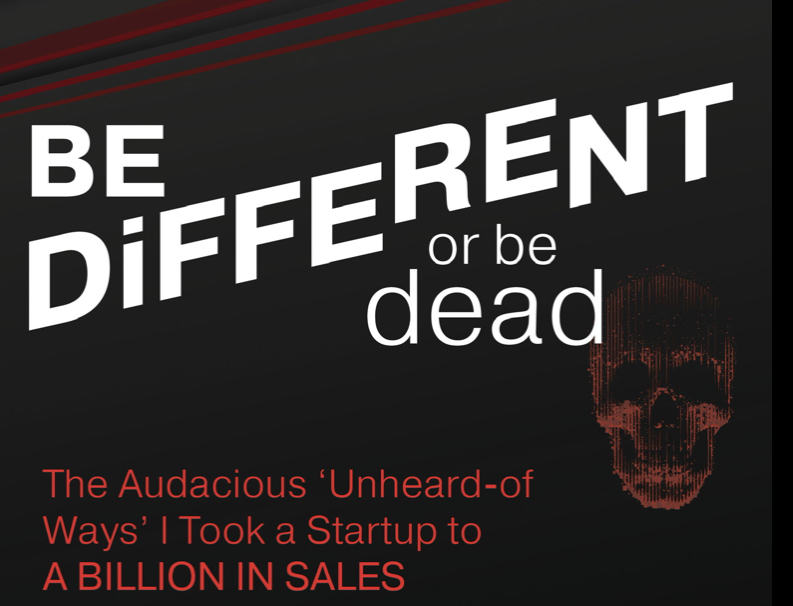
Check out my BE DiFFERENT or be dead Book Series
‘Audacious’ is my latest…
- Posted 1.24.22 at 01:10 am by Roy Osing
- Permalink
January 17, 2022
Why your business tools might be useless and how to find the right ones

Source: Unsplash
Why your business tools might be useless and how to find the right ones.
Why are organizations infatuated with tools and have less regard for context?
Why do ‘experts’ push efficiency rather than strategic solutions?
Why is there a push to have best in class methods irrespective of business plan direction?
Numerous tools are available in business, including:
— Sales funnel management.
— Business planning SWOT analysis.
— AI technology applications.
— Predictive modeling.
— Psychology profiling.
— Email and social media applications.
— Recruitment software apps.
— Employee productivity tracking.
And on and on it goes.
Mypoic tools are available for literally everything we do in business.
I’m not suggesting that the right toolset for a business is inappropriate; it’s extremely important to be as efficient as possible in conducting business operations in order to keep costs as low as possible.
What I AM saying, however, is that in my experience there is often a void between the tools being used and their larger purpose—what higher level strategic purpose are they serving.
Organizations declare their strategy with programs aimed at achieving it, but in reality most disciplines within it continue to do things the way they always have, looking for ways to be more productive.
Marketing, for example, continues to implement competitive win-back and new customer acquisition programs using tools to be more effective at it, even though the business strategy says that retaining existing loyal customers should be the focus.
People seem to have difficulty thinking (and acting) at a strategic level, aligning their actions to what the strategy says rather than performing their specific discipline more efficiently — they are much more comfortable taking action that is prescribed by a formula or algorithm.
The AI pundits tell us how to use the technology in customer service and marketing settings and we go ahead and implement it with the supplier-designed functionality regardless of the organization’s strategy for marketing and service delivery.
And the marketing analysts implement the new digital ad presentation tools as offered by the experts without understanding how ‘push advertising’ even fits in the overall marketing and customer communications plan.
People rarely ‘look up’ to see why they should be doing the micro stuff. They’re more comfortable implementing the preachings of others in their trade.
It’s impossible to pivot from micro-tool users to being guided by strategy overnight, but these 5 steps will help you start the shift to make the micro matter.
#1. Pick a champion
Since the use of tools is across the organization, you need a Champion to own and lead the pivot on behalf of the CEO (YES! this work demands the chief executive’s fingerprints on it if it is to succeed).
The Champion’s credentials:
— They must be the expert—strategy-savvy—on the organization’s strategy at the most intimate level.
— They must hold a high level of currency—trust and respect—with employees.
— They must be truth seekers not consensus builders.
— They must be audacious in their approach to the task. This is not a job for thin skinned people.
— They must have a high pain tolerance (to withstand the pressure to bend to self interest people in the organization who want to continue to use their micro toolset regardless of whether it fits with strategy).
The following actions are the responsibility of the Champion whose compensation should be tied to the results achieved.
#2. Understand the strategy
The Champion must ensure that every unit leader in the organization clearly understands the strategy at a detailed level and what it means in their area of responsibility. If the strategy, for example, is to retain high value customers, leaders must translate this strategic imperative into actions they must take in their particular area of responsibility—sales, marketing, customer service and so on.
This is typically where the breakdown occurs between strategy and tactics. People follow best practices in their discipline rather than shape the appropriate ones by the intended strategic direction.
This step is arduous and that’s why most organizations don’t do it. It requires hours and hours of work analyzing the business plan and debating the key actions required to consistently execute it.
Those that don’t do the work pay the price later on by getting little strategic payback on the micro toolset being used by employees.
#3. Audit the micro
Audit the micro tools being used through the organization. Determine what functions they perform and the degree of fit each has with the strategic imperatives of the organization.
To what degree does a specific tool—CRM for example— fit the overall strategy? Does the tool’s functionality deliver the strategic benefits sought or does it merely conform to industry standards for the CRM application?
The assessment has to be detailed and tough, not cursory and gentle.
If the tool doesn’t have at least a 75% fit with your strategy, drop it ‘below the line’ of tools that should be retained because they’re not delivering sufficient strategic benefits to warrant keeping them.
#4. Modify/delete the micro
For the tools ‘above the line’, keep tools with above an 80% strategy fit and for those in the 75-80% range, see if they can be modified to yield more strategic benefits.
It may be that with a tweak here and a tweak there, their utility improves and it’s worth the investment to do the work.
Again, be brutal on tools you think can be tweaked because tweaking costs could yield nothing in return.
Any tool that falls below a 75% fit must be killed. Stop using the tools that aren’t critical to the strategy and reassign their costs to greater purpose work.
Develop a decommissioning plan for these strategically unproductive assets and get rid of them; try and make it a seamless exit.
What do you do with the functionality eliminated?
Find another more strategic way to achieve the intended outcome. You can’t have it both ways: delete the unproductive AND keep the dysfunctional activity.
Either deliver the tool functionality in a strategic way or delete it.
#5. Hold leaders accountable
Notwithstanding that the Toolset Champion is the overall owner of the initiative, each individual leader in the organization must be held accountable for strategically aligning tools with strategy in their area of responsibility.
So make it matter by revising the organization’s Performance Management and Compensation Plan to include this responsibility in the annual performance evaluation process.
And publicize those who excel at mining out tools that serve no strategic purpose.
Organizations have limited resources to take on new initiatives, and this is an excellent way to recover costs that can feed innovation without having to add expense.
Cheers,
Roy
Check out my BE DiFFERENT or be dead Book Series
‘Audacious’ is my latest…
- Posted 1.17.22 at 05:58 am by Roy Osing
- Permalink
December 13, 2021
How employees can be perfectly aligned with business goals

Source: Unsplash
How employees can be perfectly aligned with business goals.
A very common business problem is that employees don’t act in accordance with the strategy of the organization. The strategy says one thing, and employees do another. Strategic reviews show that the strategic intent of the organization is not working and dysfunction weaves its way among team members.
Generally there are two reasons for the dysfunction: one, you don’t have the skills need expertise necessary in people to execute your strategy, and two, even if people are skilled, they don’t know what should be doing specifically in their job to implement the strategy.
So, how do you develop employee teams to take the actions that the strategy requires?
It all starts with strategic context.
Without clarity around the strategy of the organization, it’s virtually impossible to define what behaviours are necessary for people to exhibit on a daily basis, as well as the skills and competencies required to consistently execute it.
Your strategic intent must be dissected and exposed so employee skills and competencies can be define and employees know how to behave.
There is no such thing as ‘good’ alignment or ‘close’ alignment.
Alignment either exists or it doesn’t and therefore the due diligence that must be applied to the process must be extremely disciplined and precise — ‘close enuf’ doesn’t work.
The following process worked for me. It produced a succinct People Plan for the business that was directly linked to business objectives, and had people all marching in step.
#1. Create a People Plan
First, the strategic game plan of the organization must contain a detailed ‘people plan’ with people objectives that define what talent is required to successfully execute the game plan.
Most strategies contain some precision on marketing, sales and finance objectives; the same must be done for the human element of the organization.
#2. Engage the CPO
The CPO— Chief People Officer— must be at the executive planning table.
A game plan that is developed without the fingerprints of the chief people leader will not produce the detailed direction required to align the human component of the organization to the desired strategic outcomes.
The primary role of the CPO is to decompose the strategic intent of the organization into what human elements are critical to achieving it.
The CPO is the translator that bridges the gap between the hill to be taken and the warriors needed to make it happen.
#3. Develop the People Plan in excruciating detail
It must be developed with sufficient granularity to answer these types of questions:
▪️What new competencies are required to achieve the new strategic goals defined in the game plan?
▪️What does the training and recruitment plan look like to acquire these new competencies? The timing of these actions must precisely parallel the strategy’s need for the new skills critical to deliver results within a specific timeframe.
▪️What existing competencies are no longer required?
▪️What training is needed to equip these people with the new skills required?
▪️What is the exit plan to move people out of the organization who are either incapable or unwilling to acquire new expertise?
This piece is extremely important. You can’t have people hanging out with yesterday’s competencies and expect that you will be able to meet the new realities of the business. Only two options are available: train the new or exit the old.
▪️How do the elements of the People Plan line up with strategic objectives? To get alignment. you have to demonstrate precisely how the outcome of each element of the plan serves a corresponding component of the business strategy.
For example which critical objectives of the business are satisfied by which of the new skills targeted to acquire? You need to be able to ‘see’ the link directly, otherwise you can’t claim there is alignment.
#4. Hold the CPO accountable
The CPO must be held accountable to present the People Plan back to the executive team that developed the organization’s game plan, and must PROVE that it is in alignment with the priorities of the strategy.
This must be treated as an inquisition of sorts, as the consequences of mis-alignment are serious — squandered resources and a dysfunctional culture.
Most organizations don’t apply this type of rigor to ensuring alignment, but complain of dysfunction.
You can’t have it both ways.
You will never have talent management in alignment with business objectives if you don’t put in the discipline and hard work necessary to achieve it.
Cheers
Roy
Check out my BE DiFFERENT or be dead Book Series
‘Audacious’ is my latest…
- Posted 12.13.21 at 04:08 am by Roy Osing
- Permalink
November 29, 2021
Why successful organizations are really good at doing boring things

Source: Unsplash
Successful organizations are amazing at doing boring things.
Much is written about organizational performance, and what it takes to consistently beat expectations and stand out from the crowd of hungry competitors; I’ve certainly been among those pundits who have offered proven and practical tactics based on my experience leading teams in various market environments.
A sample of these tactics in no particular order include:
— adopt a serving leadership culture.
— focus on execution rather than the efficacy of the plan.
— cast off traditional planning tools and build your strategic game plan by asking three simple questions.
— pay attention to the few critical ‘must do’ things that matter in moving your plan forward. Multitasking is deadly.
— target your efforts at the select group of customers (who have the potential to generate the revenue you need to meet your growth goals, and avoid spraying your solutions to the mass markets.
— get your strategy ‘just about right’ and don’t spend the time to try and get it perfect because you’ll never achieve it (a perfect anything is a myth).
— the key to successful implementation is the number of tries you make. The more tries, the more successful you’ll be.
— develop a ‘recovery strategy’ as part of your customer service vision. What you do when mistakes are made is critical to building customer loyalty.
— recruit people who ‘love’ humans and who enjoy serving and taking care of others. It’s the secret to building long lasting customer and employee relationships.
— kill the playbook in your organization that customers don’t want to abide by. It may serve your internal thirst for control but will only drive your customers who don’t want the hassle away.
— if you’re not different you’re dead (or soon will be). Sustainable performance can only be achieved if your organization creates relevant and compelling value for people in a way that no one else does. You need an ONLY statement to get you there.
All of the above approaches work. I’ve used them in startup businesses (internet), in growth businesses (data communications) and mature businesses (home and long distance telecommunications).
They represent my personal generic toolset to create long term value for an organization; one that I try to get others to use as well.
But there is another tool or tactic that I’ve used that does not automatically command the front page of the book on success.
I think it’s because most people looking for ‘how to’ ideas seem to be interested in learning about and trying complicated and theoretically-laden approaches promulgated by academicians and consultants who have never run a $1 BILLION a year business— I have —rather than simple approaches that may not be sexy but they work.
I’m a very simple person. And I have discovered that other people like simplicity.
Simple concepts are easily understood. Simple instructions are easily carried out. Simple rules are followed. Simple procedures produce few errors.
Simple— ‘boring’ —things create epic success.
Here are 5 boring things that incredibly successful organizations do.
1. They keep their promises
Their word is their bond whether it’s an employee committing to a customer or a colleague.
It’s boring. They do what they say they’ll do. Every time. All the time.
Nothing comes between a promise and delivery. Nothing.
It’s a cultural thing— a value —which drives the recruitment process: they look for people who have a demonstrated past of keeping promises to others.
“When’s the last time you broke a promise?” and “Why?” are top questions that are asked of every potential candidate.
2. They admit their mistakes and fix them fast
Regardless of where the fault lies, they take responsibility for things that go awry. They don’t admit fault when it’s not theirs to admit but they take responsibility to remediate whatever bad stuff has happened to one of their customers.
And it starts with saying sorry: “I’m really sorry this has happened but I’m going to take care of it for you (I promise).”
And it ends with the mishap being remedied FAST and with a little surprise added to delight the victim and bond them to the organization forever.
Mediocre organizations avoid embracing opportunities that mistakes present to them; amazing (boring) ones run toward them.
3. They talk to their customers
They are old school in the sense that they love talking to their customers; it’s in their DNA. Live conversations using the telephone!
And they align every part of their operations to this value. Every customer contact and service delivery function is architected to facilitate real time customer engagement.
Call centers are ‘care centers’, managed on how well they create memorable moments for people as opposed to how well they can maximize call throughput while minimizing cost.
It’s boring to be sure, but it carries a message that says we want to talk to you; to listen to you; to understand what you need and to serve you. Technology may be efficient but it can’t do that.
4. They invite their customers in to ‘shape’ how they operate
It’s not a very complicated concept to want to architect the inside of an organization to reflect the outside. It’s simple: vector the way you operate on the way customers want to be served.
It means designing systems and processes around how the customer wants to be engaged as opposed to forcing them to participate in a way they abhor.
And it also means defining the rule system of the organization around the whole concept of enablement: making it easy for people to do business with you as opposed to controlling their behaviour.
Boring organizations start out with a clean sheet of paper with no preconceived notions of how they should deliver their solutions to the market. Customer input determines what the operations topology looks like.
5. They are polite and respectful
Mindfulness of others is a key value that shapes how people behave both with customers and employees. Basic human skills like empathy, politeness and being respectful are ingrained into every employee. These skills are recruited, reinforced by leadership, recognized and rewarded to ensure they are present and accounted for in every person engagement that occurs every moment of every day.
And these skills are stressed among employees with the conviction that if they aren’t practised internally, they won’t be practised with customers, strategic partners, suppliers, investors and the media.
’Being nice’ is powerful in a world where it’s too easy to not be. It’s noticeable. It’s different. It’s your advantage if you want to be boring.
Being boring is a competitive advantage because everyone else seems to want to do cool and esoteric things the ‘experts’ say they should.
Success is a function of staying close to the ground and that’s a simple boring approach that breeds tremendous performance.
Cheers,
Roy
Check out my BE DiFFERENT or be dead Book Series
‘Audacious’ is my latest…
- Posted 11.29.21 at 02:06 am by Roy Osing
- Permalink