



Roy's Blog: Business Success
March 21, 2022
Why brands that don’t say how you’re different are useless

Source: Unsplash
Why brands that don’t say how you’re different are useless.
I recently did a podcast with Shannon Peel of BrandAPeel on the subject of branding, and it reminded me that there are shortfalls (with solutions) in the way branding is currently done that need to be covered once again.
I’ve written on the problems that I see with organizational mission statements and generally with relying on general aspirational statements of intent to define what people/organizations do and the value they create for others.
What Google says
If you Google ‘examples of brand statements’, this is the type of information you get.
“I help individuals reassess their life choices to discover their true paths to success.”
“I develop sustainable business models and marketing strategies to fuel small business growth.”
“I help manufacturing organizations improve their processes to reduce waste and grow profits.”
“Let’s build job free income.”
“Helping you build a big brand with your small business.”
“Chipotle provides premium, real ingredients for customers looking for delicious food that’s ethically sourced and freshly prepared. Chipotle’s dedication to cultivating a better world by cutting out GMOs and providing responsibly raised food sets them apart in the food industry.”
“Starbucks offers the best coffee and espresso drinks for consumers who want premium ingredients and perfection every time. Starbucks not only values every interaction, making each one unique, but the brand commits itself to the highest quality coffee in the world.”
“Disney provides unique entertainment for consumers seeking magical experiences and memories. Disney leads the competition by providing every aspect of related products and services to the world and appealing to people of all ages.”
What’s missing?
These statements address what the brand owner intends to deliver: entertainment, coffee, food ingredients, brands for small business, job free income, improved processes, business models, marketing strategies and ‘true paths to success’.
As a consumer, however, what these statements DON’T tell me is how each brand is different from their competition, and why I should buy their brand and not their competitor’s. My eyes glaze over when I read these claims because for most of them I could substitute their competitor’s name in each statement and they would be valid.
In other words these (and most other) brand statements focus on what the brand owner intends to produce with no comparison with the other choices available to the targeted consumer.
Disney’s reference to ‘leads the competition’ and Chipotle’s to ‘sets them apart in the food industry’ are modest competitive references but they are so vague they don’t offer any concrete and meaningful comparisons to their competitors.
In fact the use of terms like ‘premium real ingredients’, ‘best coffee’, and ‘highest quality’ I find to be high level aspirations that offer little clarity and an abundance of ‘fog’.
How do you create an effective brand?
There are two basic principles I’ve used to develop brand statements that resonate with customers and position the organization as compelling and unique among alternatives.
#1. Create a tight strategic fit for your brand
Your brand must be tightly bound to the Strategic Game Plan—SGP—of your organization, it cannot be allowed to ‘float free’ to be on its own.
You need to be able to ‘see’ the organization’s strategic intent when you assess their brand statement.
If you can’t interpret the strategy being pursued by the brand, it means the brand is too cloudy and vague; it lacks strategic relevance.
Successful brands have a direct ‘line of sight’ to the strategy of the organization.
My SGP process makes it easy to establish the strategic imperatives the brand must serve.
By answering three questions it’s done.
HOW BIG do you want to be? —
defines your growth objective for the ensuing 24 months.
WHO do you want to SERVE? — identifies the customer groups you intend to target to generate the revenue from the HOW BIG question.
HOW will you COMPETE and WIN? — defines your competitive value proposition.
Questions #2 and #3 are particularly useful in establishing strategic context for a brand. They not only define the target for the brand message—WHO to SERVE—they also describe how the competitive encounter will be played—HOW to WIN
My next point examines the importance of question #3–HOW to WIN—more closely.
#2. Declare the differences that define you
The second principle to follow to create an awesomely effective brand is define in the brand statement the difference between you and your competitors.
It’s interesting to me that most brand pundits ignore that people choose one organization or individual over another based on the differences between them, not by the absolute singular claims they make.
Declaring “I develop sustainable business models and marketing strategies to fuel small business growth.” may accurately describe what you do for small businesses, but it says nothing about how you are special or unique among your competitors and hence why I should pick you to help my small business and not any one of them.
An amazingly effective brand shouts out how you are different from everyone else.
Your unique qualities need to be woven into the brand statement, otherwise the recipient of it is left to their own devices to figure out why they should choose you out of the herd.
The ‘HOW will you COMPETE and WIN?’ question addresses this challenge unbelievably well because it involves the creation of ‘The ONLY Statement’ for your organization.
I invented The ONLY Statement precisely for the purpose of declaring how an organization—or an individual —was different from their closest competitors.
“We are the ONLY ones that…” declares what separates your organization from the crowd around you and hence why customers should choose you.
And, furthermore, it is the key to directing how your brand statement should be written in order to have a tight strategic fit.
So if your organization had an ONLY that read:
“ABC Ambulance is the ONLY First Aid Advocate that provides safety solutions anywhere, anytime.”, the brand statement possibilities are straightforward.
In the First Aid Advocate example, their brand statement could read:
”ABC Ambulance provides safety solutions anywhere they’re needed, whenever they’re needed, and we’re the only organization that does.”
Or, the brand statement could incorporate ONLY directly:
”ABC Ambulance is the ONLY First Aid Advocate that provides safety solutions anywhere, anytime.”
My last word
Brand statements are not just about YOU!
In a world where people have so much choice of who to do business with, who to hire for a particular job, which charity to give their donations to and which causes to support, your ‘ask’ of them must paint you as the ONLY choice.
If not, your declaration—brand— gets lost.
Cheers,
Roy
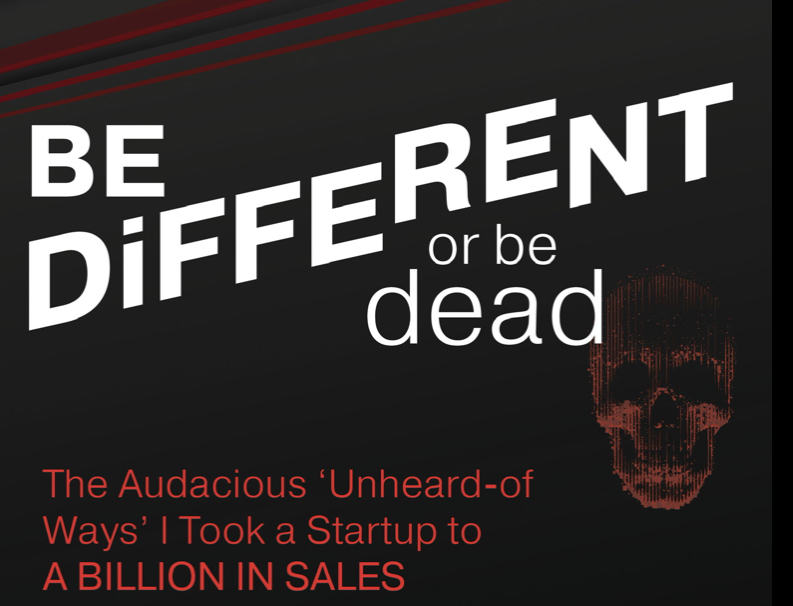
Check out my BE DiFFERENT or be dead Book Series
‘Audacious’ is my latest…
- Posted 3.21.22 at 06:00 am by Roy Osing
- Permalink
February 21, 2022
How an unexpected bomb that blows up in your face can be no biggie

Source: Unsplash
How an unexpected bomb that blows up in your face can be no biggie.
▪️A pandemic shuts your business down.
▪️You’ve just been told you’re fired.
▪️An unfiltered remark your friend makes completely blindsides you.
▪️A small business tax increase announced by the government immediately increases your operating costs and reduces your profits.
▪️An aggressive move made by your closest competitor jeopardizes your market position.
▪️you’ve just lost the best player on your team.
Something happens that is completely unexpected, and could never have been predicted.
And it’s not a minor incremental event; it’s a BIG! discontinuity.
How often does this happen in business or your personal life?
It’s normal
It seems that ‘I didn’t see that coming!’ is becoming the new normal in all aspects of our world these days.
In spite of the plethora of sophisticated planning, forecasting and prediction tools available to us, as well as the pumped up awareness we try to exercise in our personal life, stuff we didn’t see coming hits us more often than occurrences we have successfully predicted.
The challenge is to be able to deal with it the best way possible to mitigate any potential downside for us personally.
Here are some ‘deal with it’ actions to take to get through the pain of the unexpected:
#1. Accept it
Understand that the unexpected is now a common element of life and accept it, because if you still believe that your original plan in anything will turn out the way you’ve intended, you’re in trouble. If you don’t have the right frame, you have no chance of turning a surprise into a successful outcome.
You can’t be leaning away from chaotic possibilities; you need to be leaning into it in order to turn a potentially disastrous event into a positive one.
#2. Be wary of predictive tools
Realize the limitations of forecasting tools and don’t put too much reliance on them. Treat the predictive tools as part of your ‘this is what might happen’ thinking; a possibility and no more.
If you give the result produced by the common predictive toolset serious credence, you are vulnerable to the surprise attack.
#3. Develop spider senses
Developing your spider senses to be acutely aware of conditions that might spawn discontinuity is essential if a win is to be extracted from a hit. You need to be prepared for a hit and constantly be uncomfortable in your skin.
If you’re not looking for a possible disruption, you will likely miss it when — not if — it occurs.
If you’re comfortable in these times, you’re not prepared.
#4. Get a rhythm
Try to be more nimble in the face of the unexpected. Can you dance? Can you change your cadence and rhythm to act differently when the unexpected happens?
Generally you don’t have a month to decide what action to take; get used to real time responses that make use of the very best information you have available to you.
Be on your toes, dash, stay on your toes and dash again — the only planning process that will work for a world where constant body blows is the expected.
#5. Have tolerance
Tolerate the blindside as a reality we all face at some point in our lives. There’s no point trying to fight it; it’s a legitimate fact of life over which we have little or no control.
If we can accept the likelihood that a massive shift will likely occur, our openness places us in a good position to create a positive outcome from it.
Intolerance to the blindside and believing that it is unlikely is an unreasonable position to take and it results in being subsumed by it.
#6. Create perspective
Develop a perspective about these happenings. Is the unexpected event a big deal or a no biggie?
You need to be able to assess the importance of the zinger in the total scheme of things in order to decide how much emotional energy you should be expending on responding to it. Pouring your guts into an event with little of no import in your life doesn’t make any sense; it’s draining and counterproductive.
I used the simple 1 — 10 scale to assess whether I should be reacting to a body slam; anything over a ‘7’ got my attention and I was all over treating it serious and responding accordingly. Anything in the ‘5’ to ‘6’ range got mediocre attention; less than ‘5’ got a nod of acknowledgment and nothing more.
#7. Have a backup plan
Always have a contingency plan just in case. If the unpredicted affects a plan you put into action, you should have thought through a contingency in the event that it is thrown off course.
No plan or strategy ever turns out the way we originally thought it would so be prepared with an option that you can throw into place on a moment’s notice.
As part of your strategic planning process, ask ‘what if’ of your critical assumptions. What if your estimated sales fall short by 50%? What if your business is suddenly closed — COVID certainly wasn’t expected, was it?
What if you lose your anchor client for your new product? Assess every cataclysmic event that could impact your plan and have a response ready and waiting to implement.
#8. Take a deep breath
Pause, take a deep breath and think before you act. OMG! knee-jerk responses are dangerous and typically lose the long term perspective; they play out in the here and now and can prejudice the future.
So think about the event that just played out; look for reasons why it occurred; consult the contingencies you’ve developed and then act on the one you believe is appropriate given all things considered.
#9. Stop being naïve
Lose the naivety; bad stuff happens. You’ll only be surprised if you have a pollyanna attitude to believe that continuity of anything is possible.
Being in a state of comfort has its roots founded in the past, where the rate and degree of change — across social norms, technology, politics and markets — was much more modest than it is today.
Today, with its deadly unpredictability must be respected and honored if you are to survive.
Morph your expectations into believing that anything is possible and that how we deal with the unexpected is the most significant determinant of progress.
Be prepared or be done. When the storm comes, it’s critical to be ready with a survival kit and storm shelter to protect you.
‘I didn’t see that coming’ should be part of every school curriculum under survival skills, what you need to know about getting by in a world of unpredictability and change.
And it’s more than developing the ability to cope; it’s about taking the forces you didn’t ask for and using them to your advantage.
Don’t be a victim. Be prepared for incoming.
Cheers,
Roy
Check out my BE DiFFERENT or be dead Book Series
‘Audacious’ is my latest…
- Posted 2.21.22 at 04:18 am by Roy Osing
- Permalink
February 12, 2022
How to navigate tough startup business risks

Source: Pexels
How to navigate tough startup business risks.
Creating a startup can be a rewarding experience. You have the opportunity to start an enterprise on your own terms and truly innovate in your chosen field. But you must also accept that forming a startup is not without risk.
While few worthwhile pursuits are ever completely safe, the risks in forming a startup can certainly be a source of frustration. This means you need to become adept at navigating the risks in an agile and robust manner.
Let’s take a look at some of the aspects you should consider to address your startup business risks.
#1. Assess the risks
To best manage the toughest risks of a startup, you need to understand them from the earliest possible opportunity. The risks you face will vary depending on the type of business you’re running, which makes solid risk assessment vital. There will often be some basic common risks related to the location you’re operating in and the physical hazards of the work you perform. But you also need to identify which aspects of your unique combination of market targets, technological use, and even strategic approach can add to the difficulties.
As the leader of your organization, you can begin this process personally. It’s usually best to start with the planning stages, as it’s less overwhelming than when you’re in the midst of operations. Carefully analyze each element of your organization and business plan. Identify which challenges you face and be honest about the likelihood of the risk. This gives you a focus to put preventative measures in place.
It’s important to recognize that this risk assessment isn’t a one-and-done situation. Startup risks will evolve as your company grows and changes. Even individual projects you take on will have specific hazards. Build a solid set of assessment protocols to implement throughout the year and at intervals during projects. Make it a repeatable and reliable life cycle. Assess, plan, execute, assess again.
#2. Consider your people
The people interacting with your business can be both a source of risk and a solution to it. Their behavior and expertise impact your startup at all levels. No matter how much you think you have control of your company, you are reliant on people to succeed in your goals. As such, you need to focus on where people can make a difference in navigating risks.
This is easier to handle when you visualize the process. Stakeholder mapping provides clarification about the various groups of people who can impact your projects. This begins with analysis to identify who each stakeholder is and where they sit in the journey to your goals. Importantly, you can visually chart a course to highlight how each person influences risks along the way. Your analysis may include staff in your organization, investors you need to fund projects, even the general public’s positive or negative response to your services.
Following mapping, you need to consider your staff choices. These are the people who can have the best impact on helping you navigate all risks. Staff your organization not just for day-to-day running but also with those who have the skills to mitigate the risks you’ve identified. Indeed, seek out those professionals with the experience to provide you with greater insights into the risks of the tasks they’ll perform. These people will be invaluable in helping you to devise solutions and minimize future issues.
#3. Adopt the right tools
Automated tools have been prevalent for some time. But sophisticated artificial intelligence (AI) software using machine learning and data analysis to help companies make decisions is increasingly accessible to startups. These programs can be used to monitor your company processes, create more efficient practices, and even perform internal audits. All of which allows you to recognize and navigate risks before they become problematic.
You’ll also find remote work tools have a role to play in risk management. Keeping employees productive away from a central workplace can mitigate many of the physical hazards they’re exposed to. Robust project management software can also limit the potential for drop-offs in productivity.
Yet, it’s vital to remember that no matter what tech tools you use, you are likely to be vulnerable to cybersecurity risks. As such, your adoption needs to be matched with assessments for areas of security weakness in your network and the software itself. It’d be wise to work with cybersecurity experts to make sure you have the protection and training you need.
#4. Take your time
Finally, it’s important to consider how your ambitions can represent a risk to your startup. One report found 70% of tech startups failed as a result of premature scaling. There will be times you should ease the accelerator pedal a little, and you certainly shouldn’t rush into expansion.
Have a little patience. Remember, your business plan is more than just a document used to secure funding. When done well, it’s a well-researched resource that gives you a step-by-step journey through the first years of operations. This is an approach you need to keep taking. Always be researching the markets. Be cognizant of your financial resources and how investing in more staff or equipment will likely lead to greater returns. Taking some risks is important, but don’t take ill-informed risks.
Perhaps most importantly, take time to make sure you don’t burn out. One of the biggest risks as an entrepreneur is you’ll work yourself so hard your mental and physical health will suffer; in turn, your business will suffer. Think about your wellness throughout, as this is a key to any success you seek.
Conclusion
A new startup can be a great opportunity to introduce fresh ideas and innovations into the marketplace. But the chance for success is often tempered by some tough risks. It’s important to take the time to regularly assess the risks so you can make more informed decisions. Consider how your stakeholders and tech tools both offer challenges and solutions here. Remember not to recklessly rush into growth, as this is often a route to disaster. While there’s no innovation without risk, you must take a sensible approach to minimizing these hazards where possible.
— Jori Hamilton is an experienced writer residing in the Pacific Northwest U.S. She covers a wide range of topics but takes a particular interest in covering topics related to wellness and mental health. To learn more about Jori, you can follow her on Twitter and LinkedIn.

- Posted 2.12.22 at 07:00 am by Roy Osing
- Permalink
February 7, 2022
6 simple and proven ways to be seen and have a successful career

Source: Unsplash
6 simple and proven ways to be seen and successful.
What is the secret to both the organization that leads the market and the person who has a successful career?
What do they possess in common?
What do they pay attention to that others don’t?
For the aspiring career professional, do they have a special academic pedigree? A broad skill set? A deep personal network?
For the high performing organization, does it have significant financial resources? Highly skilled employees? A track record of consistent success?
All of these, of course, are contributing factors to success, but the highest common denominator is the ability for an organization or individual to be seen by people that matter.
Seen by customers. Seen by bosses. Seen by investors. Seen by recruiters.
If you’re not seen by those who influence whether you succeed, you’re not noticed; you are indistinguishable in the noise and clutter and won’t resonate with anyone.
If you’re not seen by those who control your fate, your chances of getting the job you want and launching a successful career are limited.
These six ways to be seen as you progress your career have been tested on the battlefield. They work.
#1. Pay attention to your ’target’; the person(s) you are trying to sell yourself to. Know them intimately – what they desire; what they covet.
Being seen begins with doing your homework. It doesn’t happen through serendipity.
#2. Determine 3 things you will do/deliver that will address the highest-priority requirements of your target.
Don’t try to boil the ocean. You can’t be all things to all people. Selecting a few things that really matter is critical. Focus on the essentials, and leave the other (relatively unimportant) needs to others.
#3. Deliver your stuff unconventionally. This is the most important step in being seen. If what you do/deliver is traditional, common and follows herd behaviour, you won’t be seen.
You will have no identity other than that of another one of those people/organizations who look alike and who have no creative bones in their bodies.
#4. Go in the opposite direction of everyone else. Again, if you are like the crowd, you will get engulfed by their momentum and blend in with them.
’Bite the dog’ and see what happens.
#5. Create your statement of uniqueness that governs everything you do and defines how you are different from the competitors you face for opportunities.
#6. Keep your eye on your competition; they will likely be watching you, if you are being seen, and will try to copy your approach.
When confronted by a copycat, you must create a new persona to deal with the desires of your target. Nothing lasts forever, so be prepared to change your approach on the run.
Success is a function of delivering what people desire in a way that is different than anyone else, because it’s the only way to be seen.
Cheers,
Roy
Check out my BE DiFFERENT or be dead Book Series
‘Audacious’ is my latest…
- Posted 2.7.22 at 05:06 am by Roy Osing
- Permalink