



Roy's Blog
July 12, 2021
Why being different is key to career and business success

Source: Pexels
Why being different is key to career and business success.
If you are not different from others in some meaningful way, you will likely achieve no more than 50% of your potential; you leave 50% of your net worth on the table.
This is what young professionals face today as they begin their journey to fulfill their career dreams and be successful.
There are more people looking for jobs than there are jobs.
And the people in the crowd approaching organizations for an opportunity look the same.
When being interviewed, members of the job hunting herd are literally indistinguishable from one another.
— They have a boilerplate CV they downloaded from the internet;
— They talk mostly about their academic credentials and the marks they earned;
— They exhibit a superficial understanding of the organization they are speaking to and the challenges it faces;
— They don’t ask meaningful penetrating questions about the company and the markets it serves;
— Their answers to interview questions rely more on what they’ve been taught in school rather than from a practical perspective;
— The conversation is replete with standard cliches: “My strength is dealing with people”; “I understand new technologies”; “My weakness is trying to do too much, or I’m impatient at times” and on it goes.
When they cannot demonstrate something unique about themselves, they unfortunately provide hiring organizations no compelling reason to pay attention to them over others and to consider them high for employment potential.
Some say that it is ok to possess skills and competencies similar to others; that there is a limit on how people can be different.
Not true! That’s like saying there is no way you can turn a commodity into a differentiated product and we all know that is absolute rubbish.
Products can be made to be special in a myriad of ways and all it takes is imagination and creativity to create something different and unmatched in the marketplace - ever heard of The Heart Attack Grill in Las Vegas?
It’s no different with people.
Each and every one of us can be distinct from every other person in some special way if we are motivated to discover our specialness.
The problem is we have never been led to think that being different was expected. Rather, ‘the system’ imposes on us conformance and compliance expectations and has brainwashed us to believe that fitting in was the only acceptable outcome.
The school system is all about grinding our students who have all mastered the same stuff in the same way.
Being different is not driven into young people; it’s frowned upon.
So the consequences of not being different are:
▪️first, young people have an extremely tough time getting a job and launching their career;
▪️organizations are robbed of the creativity they need to survive and thrive in our unpredictable and chaotic world.
Double jeopardy with very unfortunate outcomes.
Cheers,
Roy
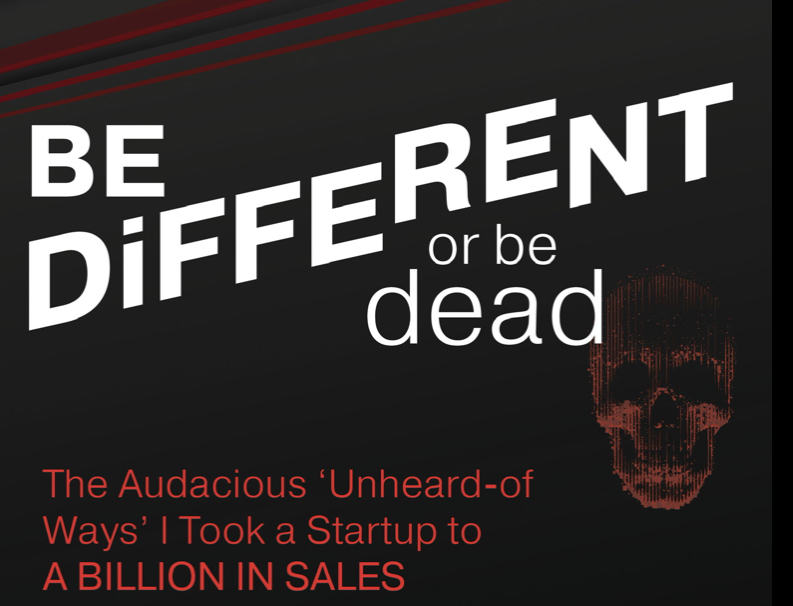
Check out my BE DiFFERENT or be dead Book Series
‘Audacious’ is coming soon…
- Posted 7.12.21 at 02:47 am by Roy Osing
- Permalink
July 5, 2021
8 proven ways to beat the competition for the job you want

Source: Unsplash
8 proven ways to beat the competition for the job you want.
There are more people out there today competing for scarce jobs; people competing for careers are more educated and the urgency to be successful is huge with the severe economic pressures facing everyone.
To win a job in this type of environment requires that you be the best at what you choose to do; that you be the topic of conversation; that you and only you deliver unique results that matter.
These 8 proven and practical actions will enable you to be unmatched in the crowd of people hungry for success in their career and you will handily beat the competition for the jobs you seek.
1. Be visible to others
If you’re not noticed, how can you be judged among your peers? Recognition for achieving results can only come when the career decision makers are aware of what you are doing and the value you are creating.
Manage your activity with this in mind. Don’t force it — like ‘Hey! Look at me!’ — but ensure that people know you and are able to compare you to your colleagues.
This will also get you top of the list of high potential people who should be given greater opportunities to prove their worth.
2. Be a niche player
Try and be a player in a strategic area where the need is greatest as opposed to trying to be a generalist who aspires to be all things to all people — you need to be focussed.
For example if your organization is suffering from the lack of marketing skills to differentiate itself from competitors (and you are a competent marketer), focus your brand building efforts there.
The people who win jobs are recognized as individuals who provide the unique leadership required to achieve strategic success. They focus their energy and use their competencies in the specific areas that will deliver superlative performance for their organization.
3. Be different than everyone around you
It always amazes me that everyone wants to copy what works for others.
When confronted with a problem to solve, it seems a natural tendency to consult best practices and employ the tactics and game plan that others have successfully implemented.
Whereas benchmarking what others do may result in improvements, it will never give you a strategic advantage over your competitors.
Successful job winners don’t copy; they set the standard that others aspire to achieve. And they do it by being different in some meaningful way that resonates with their audience.
4. Keep your promises
A simple thing really, but one that so often is missing in action when it comes to peoples’ integrity. It shouldn’t be an advantage to someone but it is; many are great with the words and rhetoric but fall short on the action and results.
Someone who has a strong brand around doing what they say will surpass those who rely on words alone to set them apart.
Winners don’t just aspire, they do.
5. Forget your degree
The truth is, the consistent job winners don’t come from being the most well educated; there are too many people that are likely to have degrees and marks better than yours. Furthermore academic credentials are not a reliable predictor of success.
In the real world success comes from achieving results faster than others — from being more nimble than the crowd.
Being the best at winning jobs is achieved by getting stuff done better than anyone else, not by outthinking them. You DO need a good knowledge foundation to even play the career game, but it’s the actions you take that make a difference.
6. Go beyond what is asked of you
Most of my career competitors did the minimum amount to meet the given objective.
My view was always to meet the minimum expectation and look for an opportunity to go beyond it; to create work that was more original and insightful than what others did. Sure, it took extra time to do it, but it was worth it in the long run.
Look for opportunities to:
▪️make your work broader and richer than expected by engaging more experts and opinion leaders in your analysis.
▪️provide a greater level of detail in your reports. Don’t just skim the surface; do a ‘deep dive’ into your material and provide the granularity your readers don’t expect.
▪️package your work differently than what others do; make your work compelling for your audience to study.
The required minimum satisfies expectations; going beyond what is asked of you will attract attention and make you unmatchable among your competitors.
7. Give ‘em what they don’t expect
Most people approach a problem they have been asked to solve in the same way. They do a SWOT analysis, set a goal and then develop a list of objectives to achieve it. This process is the pedantic way that your competitors will generally use to problem solve. It’s predictable and it’s boring.
Being the best person for a job opportunity requires breaking away from the way everyone else approaches a challenge and doing it in a way that surprises people.
If you can surprise people, they will remember you and what you’ve done.
Some simple ways of coming at this:
▪️ask someone who is affected by the problem how THEY would solve it. People closest to the problem often don’t get invited to help solve it; those looking in are surprised when they are.
▪️abbreviate the formal analysis; get to a solution fast, implement it and tweak it on the run. Spending most of your time to figure out how to implement a solution is almost never done; when you do you just might attract a “WOW!”
▪️go in the opposite direction implied by the traditional problem solving approach. Doing a 180 on how a problem is typically addressed is often a great inertia breaker and will attract attention.
8. Change the playing field
It’s all about context — the ‘bigger picture’ — and most people don’t think this way.
Push the narrative to a higher level than the issue on the table. For example, rather give an opinion on civic leadership ethics, raise the level of the conversation to discuss civic leadership accountability — a broader topic which includes ethics.
I am constantly asked my opinion, for example, on specific advertising campaigns, and personal brands, and I refuse to comment until I clearly understand the strategy that each intends to fulfil.
Unless you have strategic context, your views are merely personal biases and add little strategic value to the issues at hand.
The job winners avoid getting drawn into a debate on a narrow topic; they create a more holistic frame of reference and go there to present their views.
They don’t conform; they don’t comply; they don’t rely on their schooling and they don’t copy what others do.
They look for niche opportunities and rely on ‘doing it’ to achieve results that others are incapable of delivering.
Cheers
Roy
Check out my BE DiFFERENT or be dead Book Series
- Posted 7.5.21 at 01:41 am by Roy Osing
- Permalink
June 28, 2021
Why customer loyalty is not determined by what the organization sells

Source: Unsplash
Why customer loyalty is not determined by what the organization sells.
Why do people buy from one organization over and over again?
Is it because they:
▪️‘love’ the business?
▪️love their commitment to sustainability and the environment?
▪️love the way they support the communities in which they operate?
▪️love the products and services they offer?
▪️deliver consistent high levels of financial return to investors?
In a generic sense, the question really is: “Are customers loyal to an organization because of what they deliver — i.e. output related— or because of the way they deliver it — i.e. process related?
Output or process: which is the determinant of customer loyalty?
I don’t see much differentiation among businesses in terms of what they produce. If you’re in the communications business, you’re going to have internet and home phone service in your product portfolio.
If you’re in the financial business you’re likely to offer essentially the same financial products such as basic savings, retirement savings, and education savings accounts as well as other products such as term deposits and investment vehicles.
I’ve written much about the fact that even though competition is fierce and growing relentlessly in global markets, differences among competitors that are both meaningful and compelling to customers are shrinking and are becoming less and less obvious.
Increasing competition is ironically resulting in less meaningful differences among combatants.
It’s a surprising result.
You would think that as competitive forces escalate, a business would get better at creating a sustainable competitive advantage in the markets they compete in.
But they’re not. My observation is that every participant basically looks the same and they all exist to produce something for the masses, using price to attempt to separate themselves from the crowded mob around them.
And generally, production-oriented, mass motivated and price focused organizations tend not to be a huge loyalty magnet; customers come and go based on short term satisfaction.
Sustainable loyalty actually has little to do with what is produced by a business; rather it is a process-based phenomenon with people as the nucleus.
People buy when they’re happy; when the engagement they have with an organization ‘feels good’ and they feel their cravings are being addressed.
And warm feelings are not likely to be continuously produced by a product or service which turns into old or used eventually when the lustre of ‘the new’ wears off.
These are the process and people things that, in my experience, create warm experiences for people and make them coming back:
1. Easy-to-do-business-with processes
There are two principles that are critical in terms of having ‘customer friendly’ processes.
First, build systems to enable customers to engage with the organization the way they want rather than force them to comply with processes designed with company efficiency as the main design criteria;
What percentage of customers that use a company’s website are ever asked if they like the navigation and buying experience? How many of them are asked to pass judgment on the artificial intelligence technologies used?
I doubt it ever happens.
Organizations build systems with scale and productivity in mind not with customer satisfaction as a key driving factor.
Furthermore, they serve as a factory to the ‘normal’ masses who are content to comply with whatever business processes they use and not the outlier ‘weird’ ones who require special handling — a group by the way growing larger and more powerful everyday and sometime soon will eclipse ‘the normal ones’.
Second, ensure that internal rules and policies serve the same customer purpose: to enable not restrict, to ‘say yes’ not ‘say no’, to empower not control and to please not disappoint.
Ever heard of a company asking their customers to participate in a panel to evaluate whether or not the policies of the company made any sense to customers? Whether they made it easy to engage with the company? Whether they were understandable or just plain dumb?
Unfortunately, I’ve never seen an organization enlightened enough to take such a risk and welcome their customers in to help manage their business.
2. People who like to serve
The majority of warm feelings that customers experience are induced by human beings. Technology might impress you, but people can delight you, blow you away, mesmerize you, dazzle you, surprise you, shock you and astonish you — all symptoms of loyalty building.
So it follows that organizations need to hire the type of person who can cause these types of feelings to exude from other people. Yes, they have to be intellectually competent to qualify for a customer server role, but beyond that they must possess the innate hunger to care for another person and be driven to satisfy whatever craving the customer has at the moment.
Most businesses aspire to provide memorable experiences for their customers, but the quality of the engagement process doesn’t back up the claim. Their customer contact repair folks may be great at troubleshooting an internet problem sitting in a call Center in the Philippines, but the engagement moment with the customer falls short of being warm and caring. It’s often frustrating, cold and harsh.
It’s absolutely true that delighting a customer time and time again will deepen the affection the customer has for the organization and will lead to sustaining loyalty. The catch though is to have the type of ’human being lovers’ in place to pull it off.
Let me crystallize the loyalty takeaways for you:
— Customer loyalty has more to do with HOW you conduct your business than it has to do with what your business produces.
— Loyalty is created when business processes are created in the image of making it easy for the customer to do business with an organization.
— Loyalty grows from customer affection which is earned by having caring customer servers who are the natural architects of warm moments customers experience.
Businesses don’t create customer loyalty; processes and people do.
Cheers,
Roy
Check out my BE DiFFERENT or be dead Book Series
- Posted 6.28.21 at 01:45 am by Roy Osing
- Permalink
June 21, 2021
What is the best way to describe high performance?

Source: Unsplash
What is the best way to describe high performance?
When someone does a great job delivering results, how do you describe what they’ve done?
When the results of their efforts go beyond what is expected, what words do you use to capture the moment?
Performance appraisal is viewed as mainly an HR thing; a system developed by human resource professionals and used by organizations to rate how well an individual is fulfilling the role expected of them.
And in most cases the terms of reference — the context — for the evaluation is their position (job) description. Whatever is defined in the job description as key result areas gets appraised.
I’ve always had difficulty with the traditional appraisal system because it’s not particularly helpful identifying brilliant people who should be watched for the highest leadership opportunities.
Standard appraisal systems typically describe what the individual has achieved over the appraisal period — generally the previous year — then the appraisal moves from this narrative to choosing a performance category such as, for example, ‘excelling’, ‘exceeding’, ‘fully satisfactory’ and ‘unsatisfactory’ relative to the standards of their position as well as the specific objectives they were given.
A person given an ‘excelling’ rating will have demonstrated that they had consistently exceeded their role standards and delivered more on every objective given to them than was expected.
The problem is that the performance description is entirely based on the person and their accomplishments; it’s a very narrow perspective on their capabilities. By its very design, it provides little value in terms of comparing how this person performed relative to others.
The use of performance evaluation committees tries to provide a forum where individuals can be compared. I present the evaluations of my people to the committee and others do similarly and then we subjectively compare them to see if we can agree on who has demonstrated the better performance . Acrimonious debate always ensues over who the ‘winner’ is with no one wanting to admit another employee is better than their own.
And it’s this very perspective that is relevant when it comes to identifying the high potential people who should be in senior leadership positions.
It’s ALL about comparing people in terms of what they’ve achieved and the mark they leave on the organization.
To feed the need for leadership, a new performance dashboard is needed; one that moves away from excelling and exceeding performance to ‘stand out’, ‘unmatched’ and ‘incomparable’ performance
We need to identify people who stand heads and shoulders above everyone else; individuals who are the ONLY ones who do what they do. People who achieve results in a way that others don’t; who don’t rely on benchmarking and best practices as their guide.
THESE are the individuals who should be tagged for the future opportunities that come available and these 5 key results areas should be the anchors of how their performance is appraised.
Having a ‘go’
Incomparable performers try more than others. They understand that success rarely happens with a single shot but rather as a result of how many attempts they make at getting it right. So these people take risks and are a constant buzz of activity as they try this and try that, until they find the right formula.
There is no appraisal methodology that I know of that tracks and measures a person’s effectiveness in making tries, and yet it is a key ingredient that separates the amazing ones from the commoners.
Against the flow
Standout people look to go against the flow; they observe the most common approach others would likely employ and they go in the opposite direction and do a 180.
“What if we did the reverse?” is a question that pushes them against the momentum of the common solution and exposes opportunities others can’t see. They look at a best practise and ponder what would happen if it were turned on its head. They love inventing “outrageous” methods and concepts and apply them to their work.
The owner of The Heart Attack Grill in Las Vegas went totally against the flow when he decided to open a restaurant that offered ‘deathly’ food — the Triple Bypass Burger has 20,000 calories. Outrageous indeed!
A picture with words
The ONLY ones tell stories to bring their work to life and capture the imagination and support of those around them. They add emotional appeal to what they do. They know if others are only intellectually aligned with their work it’s insufficient to garner their unwavering support; they need to be emotionally hooked.
So they tell a story of what it would look like when their solution is implemented. For example, if it’s in customer service, marketing or sales, their story could describe the enhanced experience the customer will realize. There is no better way of defining the benefits of the solution being worked on than painting a picture of the outcome through a story.
Helpers
‘Unmatchables’ perform at nosebleed levels because they ask ‘How can I help?’ constantly, when engaging others to help resolve an issue
The only way teams can deliver is if they are able to do their work unencumbered by the internal grunge that typically gets in the way — policies, rules, procedures that are barriers to their progress.
Unmatchable performers make it their number one priority to cleanse the working environment of noise and clutter for their team mates, greasing the skids for people to deliver more than what is expected.
Looking through a different lens
‘Like-no-others’ look at opportunities in a way others don’t; they are constantly looking for different ways to achieve a task.
Every time they are presented with a challenge no matter how big or small, they ask themselves “How can I do this differently?”.
The need for these people to put their own twist on what they are doing pervades their thinking so that it is automatic; they don’t even think about it.
Let’s change the way we search for people who are truly remarkable; who are distinct from the common herd.
Measure how well individuals stand out from one another in performing their roles.
For it is this tribe we need leading our organizations.
Cheers
Roy
Check out my BE DiFFERENT or be dead Book Series
- Posted 6.21.21 at 01:00 am by Roy Osing
- Permalink