



Roy's Blog: November 2022
November 14, 2022
11 easy ways to be different in ways people care about

11 easy ways to be different in ways people care about.
Being different is NOT about being different for the sake of being different.
Before talking about what being different IS, I need to clarify what being different is NOT, because there are misconceptions that must be dealt with.
▪️Being different is NOT about self expression—‘Who you are’—rather it’s about CHOOSING to express yourself in a unique and different way in order to accomplish a task or meet a challenge.
▪️Being different is NOT about your DNA—what you were born with—rather it’s about what you choose to do with the gifts given to you.
▪️️Being different is NOT about ‘doing your own thing’; rather doing what’s required in a unique way, in a one-of-a-kind way, in a way that ONLY you do.
▪️And, being different is NOT about ‘following your own direction’; rather choosing a direction that creates value for people in a way no one else does.
What is being different?
Being different is being truly unique in the way you improve the performance of your organization, advance your career and enhance your life.
Being different IS about standing out in a compelling and relevant way that people CARE about.
Applying your skills and competencies in a way that is relevant within a context—frame of reference—given to you. You’re given a problem to solve, and you look for a different way to solve the problem.
There is no formula for being different in a way that matters to people; every person must find their own way.
But the one prerequisite is that you have to WANT to take a different journey. You have to WANT to make a difference in a one-of-a-kind way. And you have to be prepared to absorb the pain—and push forward—you’ll feel along the way as you struggle to step away from the crowd and repel the forces and people that want you to conform with the common herd.
Tools I used to BE DiFFERENT
#1. Remind yourself. — Look at every challenge you’re facing through a ‘BE DiFFERENT Lens’. Ask yourself “How can I do this differently?”.
You will be amazed at how this simple tactic opens up your mind to atypical ways of doing things; after a while, stepping out becomes second nature.
#2. Create, don’t copy — Purge benchmarking from your tool kit.
Being different is about creating something unique (new), and you can’t do that when you’re in the copying mode.
Here’s a secret on how you CAN use copying to be different…
Copy them and morph, change, revise a ‘best in class’ idea into a breakaway idea that is something truly unique that people CARE about.
#3. Ditch the Manual. — Throw the manual away on the traditional ‘normal’—theoretically based—ways of addressing specific types of challenges.
If you use a textbook approach to solving a problem, you’re simply increasing the ‘sameness herd’ by one person.
And you’re perpetuating the inherent problems with the prescribed methods (academics don’t always get it right because they’ve rarely built a competitive business TO A $BILLION in annual sales.)
How I threw away the book on defining competitive advantage
Literally every organization uses traditional methods to define their competitive advantage and produce such CLAPTRAP competitive advantage statements as
“We are better…”; “We are the best…”; “We are the market leader…”; “We are number one…”; “We are the most…”
Examples:
“Canada’s largest and most reliable 5G network”
“XXX offers the best coffee and espresso drinks for consumers who want premium ingredients and perfection every time.”
“We work hard every day to make XXX the world’s most respected service brand.”
These statements deal more with what the organizations produce, rather than declare their uniqueness, and they are at best aspirational.
They can’t be proven and don’t answer the question “Why should I do business with you and not your competitors?”
To address the deficiencies in this rote approach, I created The ONLY Statement to address the issue.
“We are the ONLY ones who…”
“Roy Osing is the ONLY author, entrepreneur and executive leader who delivers practical and proven ‘Audacious Unheard-of Ways’ (no one else talks about ‘Audacious Unheard-of Ways’) to build high performing businesses and successful careers.” Proof point: I took a startup to A BILLION IN SALES.
So, consider standard methods as a base for your work, but always be looking for ways to BREAKAWAY from them and create a unique more meaningful solution.
#4. SURPRISE ‘em. — Ask yourself “What would surprise people in the way I solved a problem or delivered what was expected of me?”
Sure, be guided by standards to produce a standard solution but take the extra step to look for the SURPRISE Factor. Do simple things; it doesn’t have to be complicated.
I created a ‘Cleanse the Inside’ program to reduce internal bureaucracy and delete the policies that customers hated. The two specific projects that surprised and captured the imagination and curiosity of people who had fun with them were:
Kill Dumb Rules and Cut the CRAP.
#5. Have a theme. — I was obsessed with finding new ways to enhance the performance of my organization, and I used EXECUTION as my guide to BE DiFFERENT.
I was constantly looking for different ways to improve the execution of our strategic game plan… to Take a Startup TO A BILLION IN SALES.
Elements of my different approach included:
— ‘Head West’ Plan. Abbreviating the front end planning process and enhancing back end execution.
— Line of Sight Leadership.
— Established the Strategy Hawk role to oversee and own the execution of our strategy.
I stayed clear of looking for different ways of THINKING, and looked for different ways of DOING.

#6. Try. Try. Try. — Be a ‘trier’. Try—and fail—more than the next person. You need a ‘tries funnel’, loaded with opportunities to be different.
#7. Be imperfect fast. — Don’t look for perfection. IF you are obsessed with finding the perfect solution (which doesn’t exist anyway) you don’t DO anything.
The desire to be perfect keeps people from getting stuff done. And it’s doing stuff that earns you the reward for being different.
#8. Look at your toes. — Take a short term view to be different. “How can I solve this problem differently NOW so improved results will be realized NOW?”
Being different in the moment has power for you and those around you. You will realize very few benefits of being different if your energy is spent on looking for uniqueness 5 years from now.
For example, my Strategic Game Plan process has a 24-month planning horizon as opposed to the traditional 5-year planning period.
What can I do differently TODAY to improve outcomes is always my drive to kick performance to another level.
#9. Oppose the flow. — Be contrarian minded. Observe where the herd’s going—based on conventional thinking—and take the opposite approach. Do a 180 to the way everyone else is doing it.
These are a couple of examples of my ‘go against the flow’ tactics:
— Do-it-yourself strategic micromanagement. Putting the leader’s—my—‘fingerprints’ on key strategic activities that have a critical impact on the performance of the organization. I got personally involved with architecting the customer engagement process to ensure there was no ambiguity in what was required to create memorable customer experiences.
— Hiring for Goosebumps as the way to recruit people who ‘liked humans’.
#10. Inject practical juices. — Redefine a commonly accepted approach with ‘a practical eye’. Looking at principles and common beliefs and practices through a practical lens. What outcomes do the standard methods expect will result? Do they produce expected outcomes?
“My objective is to inject some ‘practical juice’ into the standard way of thinking to actually deliver better performance and outcomes.”
One example of how I put my practical twist on a common practice is leadership, and in particular, servant leadership which has this common definition:
“Servant leadership is a leadership style and philosophy whereby an individual interacts with others—either in a management or fellow employee capacity—to achieve authority rather than power.”
I chose to look at how this common view of servant leadership could be morphed into something that had more of a direct impact on the results of my organization which was related to how effectively our strategy was being EXECUTED.
I created a new leadership concept, Leadership by Serving Around—LBSA—designed to help people do their jobs more effectively, thereby enhancing the execution of our strategy.
My key practical elements of LBSA are:
— Wandering around asking people “How can I help?”
— It’s a personal question, not an organizational one.
— LBSA is NOT a style of leadership, it’s a strategic move targeted at determining what’s preventing people from executing the game plan of the organization — it’s a means to THAT end.
— It’s a ‘Cleanse-the-Inside’ of the organization process to enable people to do their jobs easier and more effectively and to eliminate barriers—‘Dumb Rules—to customer satisfaction.
A key LBSA question I ask is “What’s preventing you from saying ‘Yes’ to customers?
#11. Find a do-it mentor. — Cast aside the traditional mentor with a string of 9 letters behind their name recognizing their academic achievement, and find a stable of MBA’s—Masters in Business Achievement, people who have a distinguished track record of leading teams to unheard of levels of performance.
As I’ve said before, the context for being different is adding value and performing at breathtaking levels of performance. Mentors who have consistently done this are your target.
Some of my favorite examples of being different:
▪️The Grateful Dead
▪️Lady Gaga
▪️The Heart Attack Grill
Remember, being different isn’t about what you were born with; it’s about using the gifts you’ve been given to achieve remarkable things that benefit others.
Cheers,
Roy
40+ Podcast Shows I’ve done that unpack my work.
Check out my BE DiFFERENT or be dead Book Series
‘Audacious’ is my latest…
- Posted 11.14.22 at 05:09 am by Roy Osing
- Permalink
November 7, 2022
How audacious marketers create amazing experiences for people
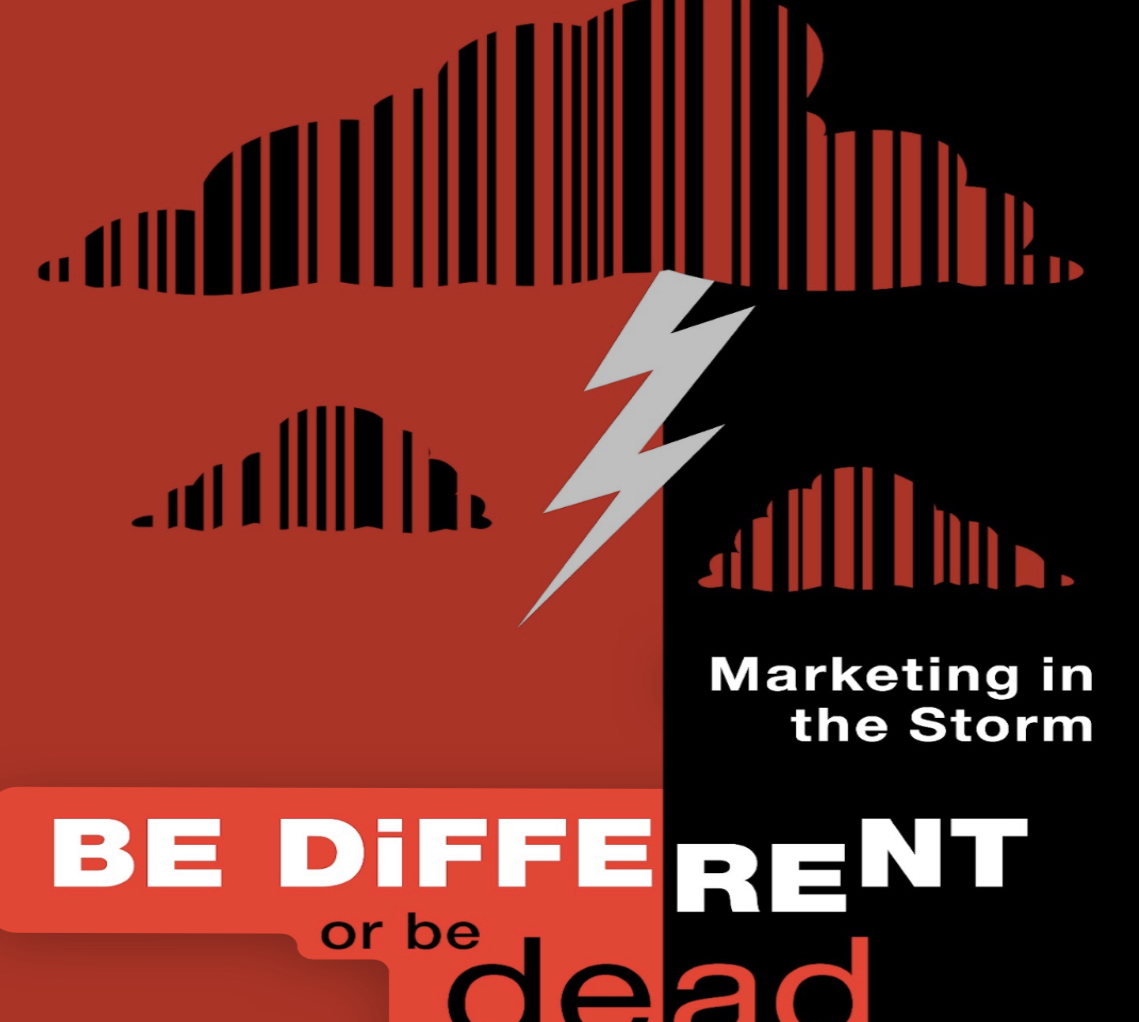
An experience is rarely one-dimensional.
It virtually never consists of a single element. That’s why a single product or service can’t deliver. It’s narrow; provides only a slice of benefits.
Experiences are multi-dimensional; they are a manifestation of a person’s holistic reality.
Every person’s life is complicated; it can’t be explained by a single variable.
“Who is Roy?” can’t be answered without considering his total life; work, family, friends, recreation, political ideals, personal network and so on.
If you don’t treat a person as a holistic entity, you won’t be open to the full array of ‘Secrets’ that will unlock the experiences they crave and hunger for.
That’s why the ’Experience Manager’ position is so important in Storm Marketing. They operate above the product cloud.
THEY are accountable to define the robust profile of a person; the bank of Secrets and Cravings they possess.
Are you concerned about your customer’s total life or only a small single slice of it?
Think about it:
▪️Do you have a holistic lens to determine what a customer covets?
▪️Are you in the Secret discovery business or not?
▪️Are you still possessed by the notion that product benefits describe what will make someone happy?
▪️What do you know about the lives of the people that do business with you? What does your holistic check list look like?
▪️If you have Experience Managers, nice; if not, WHY NOT?
Cheers,
Roy
40+ Podcast Shows I’ve done that unpack my work.
Check out my BE DiFFERENT or be dead Book Series
‘Audacious’ is my latest…
- Posted 11.7.22 at 05:31 am by Roy Osing
- Permalink
October 31, 2022
Why competitive advantage, as taught by most ‘experts’, is usually (mostly) wrong
How to declare a competitive advantage, as taught by most ‘experts’, is usually—mostly—wrong.
This article is typical of how people are taught to create a competitive advantage for their business.
“Crafting Your Statement — Your statement of competitive advantage has four components: your name, your company, a statement about a problem in your market, and how you and your product solve that problem.
Essentially, it is a 30-second statement explaining what differentiates your company in the marketplace.”
This author teaches us that if we have a solution to a problem, it—our solution—defines our competitive advantage. And in the last sentence it concludes that this four component statement “…differentiates your company in the marketplace.”
BOOM. PROBLEM SOLVED. EASY-PEASY.
WRONG.
This approach is not only an oversimplification, it’s misleading.It DOESN’T establish competitive advantage in any way, shape or form.
And, unfortunately, the approach is not an isolated example of how businesses are being coached on how to define what makes their organization unique and special among their competitors.
And I would say 99.9% of the ‘experts’ out there promulgate the same type of gibberish.
If I come up with a solution to the distracted driving problem does that automatically mean my solution gives me a competitive advantage?
“YES”, the previous ‘experts’ would say.
“NO”, Roy says it’s gibberish.
All it means is that you figured out ONE solution among many to the distracted driving problem. Your solution doesn’t give you ANY advantage, for example, unless it’s unique in some way compared to what other solutions are out there.
Where is the notion of solution comparison to the competition in the gibberish? It is MIA. Not mentioned. Not important apparently.
Look, the gibberish is helpful to a point. It correctly advises that you must find a solution to a problem that someone has if you want to have a chance for success.
Find out what’s keeping people awake at night and find a solution to their dilemma and help them rest.
That’s a good start. But it’s not the end which the gibberish implies.
You need to determine HOW to make your solution DiFFERENT from everyone else’s solution in a way people care about if your solution is to ‘have legs’ in the market.
So, let’s transform the gibberish advice into something meaningful and relevant.
“Crafting Your Statement — Your statement of competitive advantage has four components: your name, your company, a statement about a problem in your market, and how you and your product solve that problem in a way no one else in the market does.
Essentially, it is a 30-second statement explaining what differentiates your company in the marketplace.”
Your takeaway from a guy who took an early stage internet company to A BILLION IN SALES — create solutions that standout and are unique among the competitive hordes if you want to be honest with yourself that you really DO have a competitive advantage.
Ignore the gibberish.
Develop The ONLY Statement for your solution.
“Our solution (brand it, like ‘Distracted Driving Resolved’) is the ONLY real solution to the distracted driving problem killing the lives of millions of children, parents, grandparents and friends each year.”
Cheers,
Roy
40+ Podcast Shows I’ve done that unpack my work.
Check out my BE DiFFERENT or be dead Book Series
‘Audacious’ is my latest…
- Posted 10.31.22 at 05:16 am by Roy Osing
- Permalink
October 24, 2022
Why DEIB will never likely produce a competitive advantage

Why DEIB will never likely produce a competitive advantage.
DEIB - Diversity, Equity, Inclusion, and Belonging.
I was asked on the GEMS podcast if I felt that organizations who effectively implemented DEIB programs would gain a competitive advantage in the marketplace by doing so.
It’s a very interesting question today when many organizations are pushing to be relevant in terms of their commitment to diversity, equity, inclusion and belonging.
Here’s my take on what DEIB involves:
Diversity — The organization values and strives for a mix of ethnic, gender, sexual orientation, age and life experience among its employee group.
Inclusion — The organization values, accepts—not just tolerates—and celebrates differences among employees.
Equity — The organization provides various levels of support and assistance to employees depending on their specific needs or abilities.
Belonging — The organization creates an environment where people within the organization have positive relationships. I suspect that sense of belonging goes up when the organization succeeds in being recognized for its diversity, inclusion and equity values.
The question is, notwithstanding that DEIB seems to be the template organizations are trying to implement these days, does being a ‘DEIB Practitioner’ organization create a strategic advantage for the organization adopting the practices to be the DEIB best in class?
Put another way, do the values ascribed to DEIB have a strong enough pull with customers to have them choose one organization over its competition, and generate revenue growth for its practitioner?
I think not.
It’s not that DEIB values are not important. They are in terms of describing what ‘the inside’ of an organization should look like as a mirror of societal challenges and changing personal values.
It’s just that I don’t believe they are overwhelmingly compelling and relevant to a consumer’s choice when it comes to deciding who to do business with.
Advocates state that DIEB values will stimulate innovation and sustainable growth that would otherwise not occur.
I don’t know. I’m not there.
It’s always seemed to me as a leader that the job is to get the best people available to execute the organization’s strategic game plan.
If DEIB is the most effective way to get there, ok.
But it becomes a means to an end not an end itself, and the education system needs to produce the skills employers need.
DEIB speaks to aspirations and organizational values rather than competitive advantage.
Product fit, price, the service experience and technology, for example, are among the elements that typically find a more influential role to play and take a higher priority in purchase decisions rather than whether the company salutes DEIB.
(As a side note, I see many employers aspire to be the one who checks all the DEIB boxes, but relatively few actually successfully put them into practice.)
Furthermore, as more and more organizations move to a DEIB culture, it won’t represent a difference among them to cite as a reason consumers should do business with any one of them.
If everyone’s doing DEIB, how’s an organization getting an advantage by putting the values forward as reasons to buy from them and not others?
The DEIB herd confers no advantage on any member of the herd.
The final test of whether or not DEIB values contribute to the competitive advantage of an organization is to look at how these values fit within the customer facing—marketing, sales and service—imperatives of their strategic game plan.
If, for example, you’re going to target your scarce resources on the boat dealers in Laval Quebec, Canada, you need to know whether DEIB expression is a mandatory purchase criteria for those dealers.
I suspect it’s not, but you would need to confirm it one way or another.
The internal capabilities an organization chooses to develop—like DEIB—should be based on what is needed to execute its business plan including how it intends to compete and win the markets it intends to serve.
All other things being equal on the factors at play in choosing a supplier, if one company was DEIB-centric and another is not, the DEIB organization may very well get the business up for grabs.
Someone may decide that the two organizations under consideration are equal in every aspect, and decide to go with the DEIB company because at a higher level they believe in the intent of DEIB.
But all things are NOT always equal, so I doubt DEIB will likely ever be a determining factor in a consumer’s purchase decision.
DEIB is a commendable aspiration for any organization, but it’s not a tool to gain competitive advantage.
Cheers,
Roy
40+ Podcast Shows I’ve done that unpack my work.
Check out my BE DiFFERENT or be dead Book Series
‘Audacious’ is my latest…
- Posted 10.24.22 at 05:06 am by Roy Osing
- Permalink