




Roy's Blog: Your Life
October 4, 2021
Post pandemic mentors: 5 ways to get the very best

Source: Unsplash
Post pandemic mentors: 5 ways to get the very best.
The COVID pandemic has caused unbelievable discontinuity into the world. Organizations have had to pivot to new business models, business supply costs have increased with consumers having to pay higher prices for goods and services and the norms for social interaction have changed substantially.
And for people in the hunt for a satisfying and rewarding career, things look a lot different.
Specifically, the process of finding a mentor requires a careful review because the pandemic is forcing a different approach to seeking a coach and advisor to help us continue to make wise career choices.
Here are 5 NEW steps you should take to find a mentor as you navigate your way through the pandemic.
1. Find a survivor leader
Find an organization that is surviving the pandemic chaos and figure out a way to get close to its leader.
These people house the secrets of staying alive when they have no control over the unexpected blows inflicted upon them. These astonishing leaders figured out how to harness the negative energy of the unexpected and turn it into a successful outcome for themselves.
These leaders are a gift to the young professional, for they have achieved what few others have in the environment that will define the future for any organization.
Their advice, help and guidance is invaluable to anyone looking to build a successful career in the face of this uncertainty.
And focus on the small businesses that are surviving—restaurants for example—to get the real visceral ‘in the moment’ actions they took to stay alive. The leaders of these businesses have zero cushion for failure (unlike larger organizations) and are therefore able to provide more meaningful tactical guidance.
2. Find a caregiver
Find an organization whose employees give amazing shoutouts to the managers in it for their care and empathy. Use social media to get a conversation going on the ‘stars’ who actually give a damn about their employees and who make a priority of caring about their comfort and well-being.
Caregivers are great sources of valuable counsel; their sensitivity and empathy is the essence of what they can offer a young professional aspiring an improved leadership role.
3. Find a ‘repeat offender’
Find an organization that tried a number of potential ways to beat the pandemic and eventually struck one that worked.
And look for the person—the repeat offender—who was at the heart of the failure process but persisted until they discovered a successful solution to their challenge for survival.
This is a mentor who is worth their weight in gold. Winning is all about the number of tries you make and the willingness to absorb the pain of momentary failure, so if you can find and get close to one of these amazing people you will reap the rewards over and over and over again.
4. Find an analyst
Find a ‘pandemic student’; someone who has analyzed and studied what it takes to survive the pandemic and befriend them.
It’s not that they will necessarily have the right survival solution for you, but they may have clues based on their studies as to what might work for you.
You’re not looking for the precise prescription for your malady, you want possibilities based on informed opinion; the analyst is such a person.
Cast your mentor net far and wide; you’ll be surprised with what you catch.
5. Find an outlier
Find an organization that basically threw out their business plan and decided to not just pivot, but to reinvent themselves and take a completely different direction.
It’s not easy spotting these organizations because most look for the incremental change—pivot—rather than the metamorphosis.
The influencers—outliers—that are behind such changes are home run mentors. They present dramatic possibilities to the young professional which serve as another perspective anyone looking to enhance their career should consider.
I’m a fan of looking for the upside when confronted with the downside; looking for the pony that created the crap one is buried in.
The pandemic is forcing all of us to look at things differently, to look for opportunities to not only survive but to thrive.
And opportunities abound when it comes to discovering a mentor who can help our careers and our lives.
Follow my 5 simple suggestions and you’ll be looking at your career competitors over your shoulder.
Cheers,
Roy
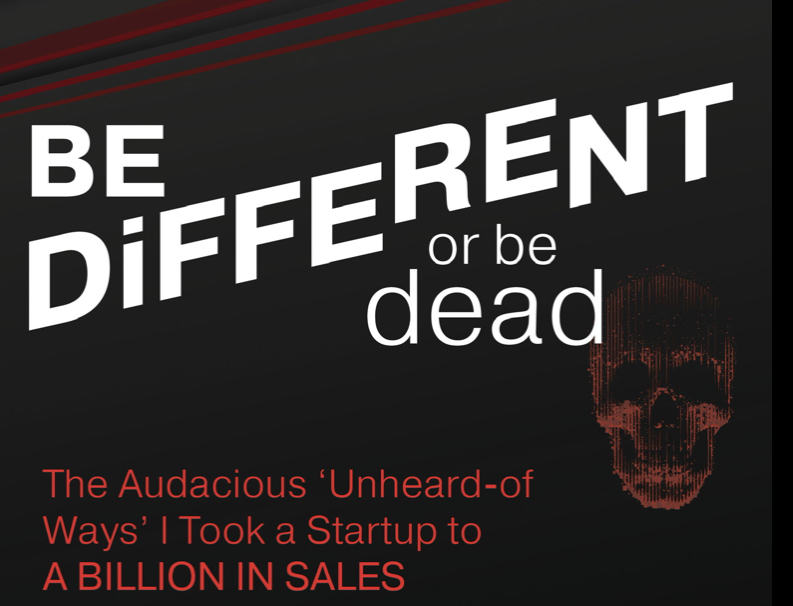
Check out my BE DiFFERENT or be dead Book Series
‘Audacious’ is my latest…
- Posted 10.4.21 at 03:37 am by Roy Osing
- Permalink
August 9, 2021
Why the most important reason for success is staying relevant

Source: Unsplash
Why the most important reason for success is staying relevant.
Why is relevance a key strategic concept; why does it matter?
Relevance drives the motivation of people and organizations; to be relevant is to be successful.
Irrelevance, on the other hand, is the state to be avoided because to be irrelevant is to be ignored by those you wish to be visible to and admired by. And being ignored is to not have a voice listened to or a place admired in the world.
Relevance in business
Successful businesses remain relevant to their customers and we can see vividly what happens when they’re not. They go out of business; they die.
Relevance is a dynamic state; it is a function of what’s going on in the the environment around you.
Irrelevance is not keeping pace with the changes impacting you; relevance is embracing them.
To maintain relevance in your business you need to skillfully manoeuvre your organization through the following set of dynamics:
— Customers’ needs change.
— New competition emerges.
— New technologies appear.
— Unexpected cataclysmic events happen.
— Regulations restrictions are imposed.
In the face of this variability, organizations must find their way if they are to remain relevant and survive.
I can’t offer any organization a prescription for survival under such circumstances; but what I can tell you for certain is that what worked for you yesterday is unlikely to work for you tomorrow.
But I can offer you my process that has been stress tested in the real world and will help you arrive at your own solution if you put in the work.
The process is pretty simple but if you do the work and trust it, you will figure out what you need to do.
The relevance question
Ask yourself ‘The Relevance Question’:
”Now that I find myself in this new reality, what do I have to do differently to stay relevant?”
Possible outcomes from asking the question:
1. Failure to ask the question and assume you can carry on in a business as usual way will most certainly doom you to failure; your organization will die.
2. Asking the question but choosing a solution that doesn’t work - maintaining an irrelevant condition - means it will take longer to recover and survive, but only if you keep asking the question and seeking more workable solutions.
3. Asking the question and landing on a workable solution right away is nirvana; relevance is immediately maintained and death avoided (until the next unexpected discontinuity hits you at which time you have to ask the question again).
The critical thing here is the mindset of understanding an organization must constantly test their relevance in the markets they serve and to have a process to do it.
Look at the business failures that have occurred and you will see irrelevance in action. Leaders either assumed what made them successful prior to their difficulty would continue to serve them well in new environments and didn’t ask the relevance question, or they asked the question and didn’t come up with a workable answer.
Regardless of the reason they failed.
Role of leadership
Leaders must take a more proactive role in assessing relevance without having to wait for a crisis to do it.
▪️ In formal business planning sessions, rather than just ask about product life cycles and where products fit, ask about where the organization is on the relevance cycle and discuss the strategy options they should adopt to maintain or increase their relevance;
▪️ Ensure the appropriate data gathering tools are in place to feed the discussion around this question. If you’re not continually probing where your organization is on the relevance scale — 10 = highly relevant; 0 = totally irrelevant — you can’t answer the question and hence won’t be able to take any meaningful action;
▪️ Ask the frontline about their opinion. They will be able to tell leaders where the major customer ‘pinch points’ that signal relevance issues are and how severe they are.
Leaders need signals that foreshadow irrelevance and the frontline are excellent sources for them. And they won’t sugar coat the truth like some managers might;
▪️ Conduct a relevance appraisal on each of your top competitors to see where they might be vulnerable. Integrate the results into your business planning process; take action to exploit any opportunities exposed by the analysis.
Maintaining relevance should be a success and survival competency of every organization and it should be an essential element of culture.
If you’re not relevant, you’re dead (or soon will be).
Cheers,
Roy
Check out my BE DiFFERENT or be dead Book Series
‘Audacious’ is my latest…
- Posted 8.9.21 at 02:35 am by Roy Osing
- Permalink
November 30, 2020
What is the best way to decide among so many options?

Source: Pexels
What is the best way to decide among so many options?
▪️You’re being inundated with information.
▪️You’ve got opinions from literally hundreds of people; there are too many ‘experts’ out there.
▪️You‘ve got too many choices; it’s like a restaurant menu with 15 pages.
▪️Theory seems to lead thought leadership; academics abound with their lofty advice.
▪️Those with the most lofty academic pedigrees seem to command credibility.
▪️Everyone seems to know what you should do.
All you want to do is make a decision that is right for you, but you can’t. There is just too much help; advice is ‘raining down’ on you — you have too many choices that you can make.
And as a result you’re stressed out, you’re stuck in the evaluation and consideration mode. You can’t move.
So what do you do when you are inundated with good intentions?
Here are a few suggestions based on what worked for me over too many years of sitting in the dark ‘under the mushroom’ while bits and bytes lay siege.
1. Get your priorities straight
You can’t evaluate the worth of someone else’s advice if you don’t know precisely (ok ‘sorta know’) what you want to do.
So sit down and define what you need; the specific objectives you want to achieve, and assess the advice out there with your needs as the context.
And try to define what you need in the short term rather than over a longer time horizon. The thing is, the long term never shows up if you can’t manoeuvre yourself through the short term. Long term results are achieved generally through sequential successes; there are simply no silver bullets you can rely on.
Do the hard work everyday. Get a nano-inch of progress everyday and the future will take care of itself.
2. Look for people who have similar backgrounds
You need to be able to relate to the person spewing advice at you, so take some time and research the advisors. Pick one who is the closest to you in terms of life experience, education goals and career aspirations.
Find someone who is relevant to you in the cloud of those who may have great credentials but are not on your wavelength.
3. Focus. Focus. Focus
Pick the top three things you need to sort out, not the total basket of goodies you face.
We all get sucked into ‘boiling the ocean’; believing that unless we solve each and every challenge we face, we are incomplete and will fall short of the perfect solution for ourselves.
The truth is that 80% of our problems come from 20% of the issues staring us in the eyes.
Roy’s Rule of 3: find 3 things that matter and conquer them; forget about the many other things that really don’t make a significant difference to your life.
So filter the volumes of information ‘raining down’ on you and pick 3 sources and study them; do your own due diligence on your discoveries to decide what is worthy of your attention and following.
The reality is that you simply don’t have enough time to chase every information source or piece of guidance anyways, so it’s critical to bear down on those few things that have a good chance of helping you achieve your goals.
4. Don’t rush
You didn’t reach your current state overnight so it’s ok to take whatever time you need to move forward.
I’m an advocate of ‘getting it just about right’ and then moving quickly to execution mode, and this applies to sifting through the barrage of data hitting us.
The thing is, though, try and be as thorough as you can in the briefest time available to you. If you need an extra week to assess the most appropriate course of action for you to take, then take it.
5. Track what you do
It’s important to understand what works for you and what doesn’t because your actual experience should inform subsequent actions you decide to take.
Your Plan A will not likely succeed; they rarely do. So it’s exceedingly important that you have data on your attempts to learn from and refine your next steps.
It’s great that there is a plethora of information at our disposal to help us make decisions, but there is a dark side that needs to be avoided.
The actions presented here when you have too many choices will help you navigate the information avalanche and find a nugget or two that will make the difference.
Cheers,
Roy
Check out my BE DiFFERENT or be dead Book Series
- Posted 11.30.20 at 05:45 am by Roy Osing
- Permalink
November 23, 2020
5 simple reasons why people can’t follow the rules during the pandemic

Source: Pexels
5 simple reasons why people can’t follow the rules during the pandemic.
I’m a fan of Dr. Bonnie Henry, BC’s top doctor. I admire her leadership skills, her amazing empathy and her unrelenting belief that if people are given the right information and it is adequately explained to them, they will do the right thing.
She delivers a regular message on the status of COVID-19 in the province, and I am struck by the types of media questions that are being asked of her and the human ‘frailties’ the questions reveal in terms of how people respond to a virus we knew nothing about when the pandemic was announced in March, and that we are forced to learn about ‘on the run’.
COVID-19 is an extreme example of a shocking unpredicted body blow that every element of our society is absorbing in various ways with various outcomes.
Some organizations are morphing how they do business to conform to the new physical distancing rules, school systems are reinventing themselves to employ both in-class and virtual teaching and individuals are having to adjust their personal lives to keep themselves and everyone around them safe in the ‘new normal’.
While organizations are pivoting to conduct themselves differently in the COVID world, individuals seem to be having a more difficult time adjusting; they are struggling to adapt with the pandemic reality and the personal changes that it demands.
They are exposing some fundamental human frailties that in normal times pose a challenge for change leaders in organizations wanting to change their strategic direction and pursue a different course. But in COVID times, these frailties, by my observation, are accentuated, thus imposing an even greater challenge.
I’ve observed 5 COVID-induced frailties that must be addressed by individuals and leaders now more than ever.
1. People need to be told what to do
In every private, public or political organization, there is a role for a directive style of leadership. For example, effective leaders, albeit with employee input, decide on the business plan of the organization; it’s not created by consensus. And when it’s hit with a competitive assault, the leader makes the call on what response best serves all stakeholders.
Ironically, in uncertain and stressful COVID times, people want more direction in their lives not less. Dr Bonnie doesn’t provide public orders for every sector, nor does she provide specific rules for every personal and family situation.
Dr. B provides general guidelines which she expects every person to apply to their own circumstance. She does not tell people what specifically to do.
People are having trouble with this approach. They want to be told what to do. They are willing to have less say in the practices and rules that are required to stem the transmission of the virus and demand more command-type direction from leadership even though leadership is in a similar position of not completely understanding the correct action to take. They are ok with giving up their rights to control their own personal outcome.
The frailty revealed — people don’t want to think for themselves in trying times; rather they are willing to put their trust in someone who, by virtue of the leadership position they hold, is perceived to have the all right answers.
This ‘delegation up’ mentality in times of uncertainty and stress is troublesome as it’s essentially an abdication of one’s responsibility to take as much ownership of issues affecting them as they can.
Leaders need to engage people now more than ever on the issues and encourage them to take control of their lives. Yes, provide the direction needed but encourage individuals to be more active in and expressive of their own needs in the decision making process.
2. People have difficulty dealing with vagueness
My observation is that most people struggle with translating concepts and principles into personal action; they’re not totally comfortable with thinking holistically and deriving what they specifically should do to support the general thought and direction given.
For example, people have trouble grasping what physical distancing means in a variety of settings where the number of people allowed is a function of the size of the space available.
For example, when Dr Bonnie says you can have a maximum of 50 people at a gathering except in a 500 square foot condo it has to be a fewer number, I can see people throw up their hands and say “Is it 50 or not? Make up your mind!” And they’re surprised when they get hit with a $2,000 fine for having a party with an elbow-to-elbow crowd.
“Viruses don’t pay attention to our wishes” — The Honorable Adrian Dix, BC Health Minister
The world is not precise and this virus certainly doesn’t follow any formula. We MUST get used to living and making decisions based on a general understanding of the issues and trying many things to see what works and what doesn’t.
The frailty revealed — people expect solid lines when there are none. They expect clear focus when it’s impossible. All of us must get used to living with moments of discomfort and determining the appropriate way forward with just a minimal amount of concrete facts.
In this type of environment, planning on the run is the only practical way of dealing with the imprecision that uncertainty brings.
3. People don’t like leaders changing their minds
Leaders declare a course of action based on the best information they have at the time; experience yields things that work well and things that don’t. And based on the results and learnings achieved, leaders pivot on their original plan and advocate a change in direction.
At the beginning of the pandemic, Dr Bonnie suggested that people should keep a minimum physical distance of 3 meters (6 feet) between themselves in order to minimize the risk of transmitting the virus; this was the medical opinion at the time.
As time marched on and more was learned about how COVID was transmitted in various environments, Dr Bonnie described circumstances where a 1 meter physical separation was ‘probably safe’. Of course the other factor considered in the physical distancing issue was the need to get our kids back to school with a hybrid learning model and new school room topologies.
People are frustrated over this apparent change of position. They see this as a lack of leadership competence and shout out “Why couldn’t you get it right the first time?”.
The frailty revealed — people expect leaders to declare a plan and stick to it. It takes most of us time to understand and support why we are going in a certain direction, and when that direction is changed we lose our anchor and have to go through the process of understanding and taking action on a new direction all over again.
The challenge is for people to accept that we live in a world of relentless and unpredictable change and that if we don’t move with it, we’re done.
4. People like ‘the stick’ more than ‘the carrot’
It’s not unusual in a Dr Bonnie update to hear some media person ask the question “Do you think we need to take tougher measures with people who are violating the rules rather than continuing with the current gentle approach of encouraging them to change?”
Dr Bonnie believes that people want to do the right thing and that what is needed is to provide the right information to the public and encourage the behaviour needed to reduce the transmission of the virus.
‘Be kind, be gentle and be safe’ is her mantra and it drives her decision-making in public health matters.
The frailty revealed — people believe that noncompliance should be dealt with by imposing punitive measures rather than trying to achieve the desired outcome by changing behaviour. For the leader in chaotic times this frailty demands a balance of behaviour-changing and enforcement actions.
5. People like to manipulate to justify their own behaviour
Most of us don’t like change. Period. It’s unsettling, risky and downright uncomfortable. And when we find ourselves thrust in a new environment our first impulse is to hold on to our old ways rather than willingly move to a different paradigm.
Dr Bonnie’s direction, when the number of infections is on the rise, is that we adopt a ‘same six’ approach to govern our social interactions. It’s pretty straightforward: try and engage only with the same six people in your bubble; the risk for transmitting the virus increases as you interact with different people.
The actual behaviour exhibited by people, however, tends to be mixed with some believing they need only keep their circle to six friends and relatives while others understand they need to pull back and only engage with the same six people.
Those in the non-change group (incorrectly) interpret the rule to mean that it’s ok to engage with six different people everyday because it serves their past social norm which they steadfastly want to hold on to.
The frailty revealed — people tend to be selective in what they hear in the rules they are asked to follow. They pick and choose those parts that fit their past behaviour pattern and practise them; they ignore the personal change implications that the new rule requires.
For the leader, this is a major issue if real change is required. They must anticipate that this frailty will be revealed and have a plan to deal with it. This often requires communicating in excruciating detail exactly what the new rule means and what it doesn’t mean; painting a picture for people to reduce the amount of ‘wiggle room’ they have to avoid making the changes necessary.
Human idiosyncrasies have always existed; they have always challenged any change movement whether it involves an organization changing its strategic direction or an individual making a new career choice.
COVID has magnified the whole adaptive process for us all, however, and we must find a way within ourselves to move to our new world if we are ever to see the light at the end…
Cheers,
Roy
Check out my BE DiFFERENT or be dead book series
- Posted 11.23.20 at 06:22 am by Roy Osing
- Permalink

