



Roy's Blog: Your Life
May 25, 2020
Why copying weird people is necessary for a winning career

Source: Unsplash
Why copying weird people is necessary for a winning career.
The world today revolves around benchmarking; determine who does something really well (as judged by the experts) — call them best in class — and copy them.
The objective of benchmarking: to improve some aspect of your organization or your life based on the experience of others.
In business, benchmarking has been useful in improving process related issue — billing, ordering, fulfilment, human resource methods and the like. In one’s personal life, benchmarking might help in matters such as physical fitness routines, yoga practices and school courses to take.
But at the end of the day, although benchmarking may result in productivity or efficiency improvements, it does little to help either the organization or individual stand out from the crowd.
If everyone copies best in class how can specialness ever be created? All you get is a crowd of bench-markers who all share something in common.
Creating something that is unique and unmatched by others can’t be done by copying anything or anyone. Strategic advantage can’t be achieved by doing what other organizations do; a unique persona cannot be created by copying how others conduct their lives.
The lure of benchmarking is that it’s relatively easy and generally humans like easy stuff. And we also like to fool ourselves into believing that what is easy to do will somehow make us special.
The truth is that copycats are not special; they are their own herd.
I know this sounds axiomatic, but uniqueness is not spawned by copying what other do. The source of innovation and creativity to stand out is the incessant — almost subconscious and involuntary — drive to do things differently than everyone else.
Here are some descriptors of individuals who spend their life trying to be the ONLY ones that do what they do: crazy, delirious, contrarian, edgy, weird, borderline, careless, risky, absurd, eccentric, freaky, funky, creepy and eerie.
The point is, highly creative people don’t attract standard adjectives explaining who they are and how they approach problem solving.
If you’re a normal person and want to be abnormal because it will help make you more creative, here are 5 things you can do.
Never benchmark anything again
You need to dispel the notion that is the antithesis of being different, and that is copying. This means never asking “What do they do?” as a means to doing something creative.
Copying is the straight jacket that will forever prevent you from coming up with something truly new and different.
Bury the copycat. Have a funeral for it and say goodbye.
If you can’t rid yourself of the copycat beast you will NEVER be capable of generating an original thought.
Try doing a 180
A simple way to deviate from what everyone else is doing is to ask: “What if I were to go in the opposite direction to common belief?”.
This essentially declares that whatever the crowd does you will do the opposite. If you start out with a contrarian view, you are at least able to moderate it to something less extreme — but still different.
The 180 starting point is critical to a creative mindset; without it, crowd forces will suck you in to their mediocre and commonness.
This is one of my favourite examples of going against the flow with an outrageous proposition for customers. I’m not advocating it, but it is one example of a thought process that bucks the trend.
In this scenario let “What if I were to go in the opposite direction?” guide your ways.
Hang around weirdos
Not everyone has the same take on stepping out of the crowd; creative people have their own fingerprint on an approach they find that separates them from those around them.
To find your BE DiFFERENT signature, venture out and discover people who live on the spectrum between “normal” and special; between people who are average and those who are unlike no other. They’re around us if only we pay attention.
If you’re going to benchmark anything, benchmark weird because I guarantee that in the process of following their ways you will discover a sliver of what they do that you can twist to make it your own.
Follow your feelings
The world operates more on feelings than ever before. People buy things on the basis of how they feel about a supplier and the engagement experience they have with them.
They actually expect the product to work the way the manual says; the actual product or service is a commodity where generally price separates competitors in the short run.
The reason to choose one supplier over another doesn’t depend on their product portfolio.
The only thing that differentiates competitors in the long run is their brand — the value they consistently provide which, in the case of major market leaders who perform consistently, is a feelings oriented attribute.
So use how people would feel as the main criteria for deciding whether one of your new ideas might work. Let your intuition trump your logic.
Do stuff with no end game in mind
Activity rather than purpose may be the best guide to follow.
The problem with having a specific destination in mind, is that you engage your logic to try and figure out how to reach it. And as we all know, once our left brain is engaged, it doesn’t like to consider a myriad of possibilities once it lands on its primary route to achieve the goal.
I was infatuated with The Inner Game of Tennis at one point in my past.
The premise offered by the author was that it is almost impossible to be a good tennis player if you allow your mind to control how you play the game.
Trying to return a ground stroke to your backhand has a high probability of not succeeding if you think “Rats, here comes another shot to my backhand! I know I’m going to screw it up!”
Well guess what? Your control side acknowledges your weakness and gets in the way of your body reacting to the shot and indeed your mind’s prediction comes true!
If you can unhook from your controlling left brain and let your body do what it is naturally equipped to do, your performance will improve immeasurably.
So, focus on the activity not the end game and follow your gut.
These 5 proven ways will help you be a member of the abnormal herd.
They will guide your ways to a highly successful career. Give ‘em a try. They worked for me!
Cheers,
Roy
Check out my BE DiFFERENT or be dead Book Series
- Posted 5.25.20 at 05:31 am by Roy Osing
- Permalink
May 9, 2020
How technology can both improve and hinder your sleep

How technology can both improve and hinder your sleep.
In a world as constantly connected to technology as ours, taking time away from our phones and laptops is harder than ever.
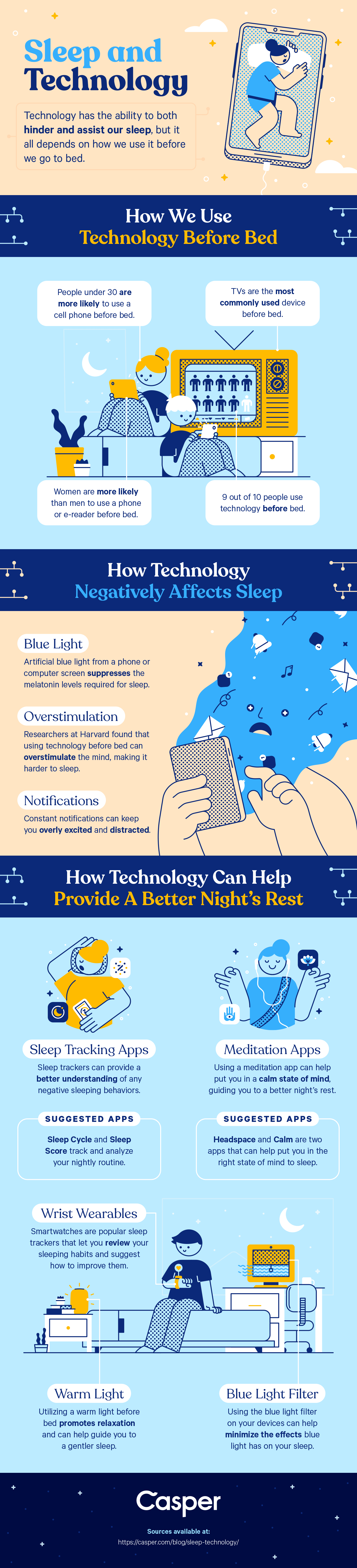
Many people spend time surfing the internet before falling asleep, but using technology too close to bed can have negative effects on your overall quality of sleep and can ultimately impact your long-term health.
However, it’s important to note that not all technology is bad. In fact, sleep and technology can actually work synergistically to improve your overall health.
Keep reading to learn about the impacts that technology can have on your sleeping patterns and how to use technology to your advantage to get the most out of your sleep.
Blue light
Blue light is the type of backlight used by most electronic devices, such as computers and smartphones. It is meant to keep you feeling focused, alert, and awake, but can be harmful to your sleep when used right before bedtime.
Although some blue light is naturally occurring from the sun, we see much greater amounts of it on a daily basis due to technology use. Blue light can affect your circadian rhythm and melatonin levels, leading to reduced quality of sleep and feeling restless at night.
However, it’s important to remember that blue light isn’t all bad—when used at the right time and place, blue light is actually extremely effective for helping you feel alert and awake.
To help remedy the effects of blue light, try using a pair of blue light filtering glasses or a night shift filter on your technology—it warms the coloring of your screen to help mitigate the negative effects of blue light on your circadian rhythm.
Alternatively, try stepping away from technology for two hours before bed and opt for reading a book before falling asleep instead.
Overstimulation
In a world constantly connected by the news, social media, and instant messaging, it can be hard to take a step away from our technology and focus on the present. In light of the current global pandemic, it’s especially hard not to be on our phones reading the news to stay updated.
However, for both your physical and mental health, it’s important to disconnect from technology for a bit each day. In a time where so many of us are experiencing higher levels of stress and anxiety, taking time away from technology and going for a run, doing calming yoga, or reading a book are all great ways to focus on your wellness and health—and help you feel calm and relaxed before bed.
It’s crucial to remember that not all technology is bad for your sleep schedule. Health tracker apps and wrist wearables are both great tech inventions that can help you record and analyze your sleeping patterns, so you can determine any issues and work to fix them moving forward.
Whether you are investing in a smart wrist wearable or a free health-tracking app, taking time to look at your sleep habits is something with an extremely high return on investment for your health.
In the current health crisis, it’s normal to be experiencing things like elevated levels of stress and difficulty sleeping. While taking a step away from technology can be difficult, it’s important to put your phone down for a while so you can relax and get in the right headspace to fall asleep.
Interested in learning more about how technology can affect your sleeping habits? Check out the graphic courtesy of Casper below.
— Sierra Skelly is a creative writer and content marketer from San Diego. She writes for clients in a variety of industries ranging from personal finance to travel.

- Posted 5.9.20 at 04:57 am by Roy Osing
- Permalink
February 17, 2020
5 simple ways to keep your cool

Source: Pexels
Everyone’s looking for ways to chill out these days in the face of increasing stress and chaotic unpredictable times.
“ Don’t worry about a thing, ‘Cause every little thing gonna be alright.” — Bob Marley, is the mantra that underscores the importance of not taking stuff too seriously.
I’ve never really been a person who has been obsessed with elimination of stress.
As an ok boomer I believed that pressure and stress was just an expected part of doing my job and living my life. In any event, I had no choice to deal with it alone, because my employer didn’t offer the stress management programs offered by some organizations today.
But for those of you who want to reduce the level of stress in your lives here are a few simple things that took me to a more chilled place even though I wasn’t looking for it.
Breathe in the moment
The pause is the most important piece of the chill-out puzzle; and it’s the most difficult to do.
You have to resist the impulse to react to and strike back at the stimulus that has you poised to be uncool.
It’s really as simple as literally stepping back and taking a big deep back breath. The breath itself will force you to pause because you will automatically focus on the breath rather than the stimulus that is pressing your button.
Try it. You’ll be surprised how it will help.
Stop chasing cars
Look at whatever you call your to-do list. How long is it? If it’s more than 5 items, it’s way too long and you are entering stress-out city.
The irony is that no one is good enough at multitasking to do an effective job at many tasks simultaneously and something has to give.
When you multitask, the quality of any single task is low and the stress is high. Yup, you’re busy but the cost is out of proportion to the performance achieved.
Get control of your stress levels by purging your activity list of the tasks that have lower payback. Focus on the critical few things that MUST get done and not the 20 things that COULD be done.
Chasing the art of the possible only pumps up your stress levels.
No two tasks create the same value. Find the 2 or 3 that are amazing value creators and do them well.
Worry about what you can control
I get it. Today there are many variables that affect us; the issues are plentiful and complex.
Climate change, the environment, economic growth, gender identity, minority rights, carbon reduction, housing costs, education costs, career expectations, transportation costs and job availability are but a few of the factors that plummet the minds of young folks these days.
And no wonder the cumulative affect of these causes stress.
The question I have is: “What can you personally do about these issues?” — I can hear an “ok boomer” out there already: “Just because I can’t make a significant impact personally on climate change, you’re saying I shouldn’t be concerned about it, right Roy?”.
No, that’s not what I’m saying. What I AM saying is that if you are really serious about reducing your stress you absolutely MUST reduce the stressors in your life.
And for me, stressing over what I actually influence in the short term was an effective way of reducing my stress levels (btw, getting stressed out over an issue with a decade-long time horizon — or longer — may stroke your ego, but it extracts it’s stress toll on you TODAY with serious results).
I just think that too many people take on too many issues. It’s nice to see but it takes a personal toll which I believe is unnecessary.
And btw millennials and gen Z’ers: why do you think you’re the only generations who are faced with a confluence of difficult issues? NEWSFLASH! You’re not; those who came before you had their own as will those who will come after you — can I hear another “ok boomer”?
You have nothing to lose — but stress. Try and focus on stuff you can influence; invest your emotional time on those issues and let the rest go by having opinions but minimize your emotional investment in them.
Segue to my next point…
Leave your ego at the door
My takeaway from conversations with many millennials is that they feel obligated to dive into the controversial issues of the day; that it’s their mandate to try and fix things that have been screwed up by the “ok boomers”.
And so we get the Extinction Rebellion promulgating a doomsday narrative because past generations have mismanaged the environment so badly.
Notwithstanding that the need for climate change remediation is real, I really think these activists want to strike fear in the heart of people; this stirs their juices and feeds their egos.
How else can you explain shutting down traffic in major cities in the world because they say carbon emissions have to be reduced to zero in two years or there will an armageddon-like disaster?
Of course it’s a bogus claim that science doesn’t support so why are they making the claim? Must be because they feel good getting heard and the media attention soothes their “ok extremist” ego.
Ego feeds that stress cycle because it pumps the adrenaline and the body gets ready (fight or flight).
Maintain ego equilibrium and your stress will be assuaged.
Stay the course
Stay with your cool regimen. It will be almost impossible at times to hold back and do the healthy thing, but be confident that if you “stay with the program” you will survive the cool boot camp for the long term.
Stress isn’t a new concept; it’s not something that strikes any one demographic or societal group more than any other. The stressors may be different but that’s about it.
How to deal with stressors hasn’t changed much over time. The stuff that worked for the boomer crowd will work for millennials and Z’ers because cool remedies address human behaviour at the most fundamental level.
It’s about breath not technology; focus not multitasking; selection not chasing and honesty & respect not ego.
Cheers,
Roy
Check out my BE DiFFERENT or be dead Book Series
- Posted 2.17.20 at 03:08 am by Roy Osing
- Permalink
December 9, 2019
5 urgent things you need to do for career success

Source: Unsplash
5 urgent things you need to do for career success.
Over my long career, I have seen so many really talented people fall short of their goal.
Engineers who graduated top of their class; MBA’s knowledgeable on more business theory than is needed and business grads who possess a more than good understanding of how organizations function.
The problem with many of these people is that they are too controlled by the left hemisphere of their brain — logic and reasoning dominates their decision making — which generally means they take too much time making a decision and their career languishes.
Sometimes you have to act with your gut quickly and be willing to take a risk; let uncertainty guide you as opposed to relying on the time consuming illusive precision that a traditional planed approach suggests.
These 5 NOW! actions will help you shed the inertia holding you back from glorious success.
1. Declare an outrageous goal
Declare your goal out loud without knowing how you will achieve it; the more outrageous it is the better.
I’m a firm believer that if you know how to achieve something there’s not much room for innovation; creative juices start to flow when you have to struggle and figure it out.
“I intend to be VP of marketing before I am 40 years old.” was the goal I declared at age 25 in a telecommunications monopoly organization dominated by engineers.
I didn’t have a clue how I was going to achieve it but I’m convinced that it guided me over the years in terms of the career decisions I made. At age 39 I was appointed as the youngest VP marketing the company ever had.
2. Take the job
Take a job rather than evaluate every opportunity in terms of the fit it has with your long term goal.
I have known many people who would not make a decision on a particular position that presented itself because they agonized over whether it was consistent with where they wanted to end up.
They pondered and they analyzed — and did nothing.
Every job has something you can benefit from regardless of your long term goal. Although my targeted destination was a marketing executive role, I took operations jobs to help create an execution context for my marketing ambitions.
After all, marketing exists to create value for the frontline of an organization and having rich experience in the daily operations of a business makes marketing efforts more relevant and effective.
3. Figure out what makes you special
Work on your personal ONLY statement, defining how you are different from your colleagues and others who may be the competition you will face in your career journey.
People who blend in with the crowd don’t make it because they don’t get noticed; they are part of the lowest common denominator seen to be the same as every other fish in the sea.
A unique personal brand helps cut through the clutter of a noisy and complicated environment.
It gets you noticed and it presents YOU with opportunities before others.
You get the first chances and will jettison you ahead of the pack.
”I’m am the ONLY one that…” will clearly distinguish you from the hordes of other people vying for limited opportunities.
Get rid of the copying mentality. Best practises and a boilerplate résumé will only solidify your position in the common herd.
4. Find your person
Someone you trust, have confidence in and will provide the kind of advice you believe in.
This is more than a traditional mentor who you might find at work in a position related to your audacious goal or someone in the business community who many people covet for advice because of their currency and experience.
You need more than a traditional mentor. You need someone who you have known for some time; someone who really knows you, how you think and knows what motivates you.
And someone who has a history of achieving results in a complicated and uncertain environment. They don’t have to be a superstar in a high position; they just need to have been in the trenches with an up close understanding of how to get things done in the real world.
My person was my Dad who had no formal graduate degree but had years of experience as an engineering supervisor in the mining business. He worked underground with miners in wet dingy environments laying track and drilling ore drifts where the unexpected was business as usual.
He knew how to get things done and provided a perspective to me I couldn’t get elsewhere.
5. Train to fail
Get your head around failure NOW. At the start of your journey you need to think about the possibility because it will definitely happen along the way. The chances of you succeeding without setbacks is ZERO.
What separates the successful ones from everyone else is the ability to come back from a body blow and make another move.
The corollary to this is that making mistakes FAST is an essential ingredient to the success formula.
At the end of the day, it’s the number of tries you make that determine your ultimate destiny.
”I’ve missed more than 9,000 shots in my career. I’ve lost almost 300 games. Twenty six times I’ve been trusted to take the game winning shot and missed.” — Michael Jordan on Success Through Failure
Immediacy is a critical factor for success.
Increasing your odds of success requires that you take action on day one of your journey; waiting is simply not an option.
Serendipity and luck may help you, but don’t count on it.
Cheers,
Roy
Check out my BE DiFFERENT or be dead Book Series
- Posted 12.9.19 at 04:50 am by Roy Osing
- Permalink