



Roy's Blog: December 2021
December 13, 2021
How employees can be perfectly aligned with business goals

Source: Unsplash
How employees can be perfectly aligned with business goals.
A very common business problem is that employees don’t act in accordance with the strategy of the organization. The strategy says one thing, and employees do another. Strategic reviews show that the strategic intent of the organization is not working and dysfunction weaves its way among team members.
Generally there are two reasons for the dysfunction: one, you don’t have the skills need expertise necessary in people to execute your strategy, and two, even if people are skilled, they don’t know what should be doing specifically in their job to implement the strategy.
So, how do you develop employee teams to take the actions that the strategy requires?
It all starts with strategic context.
Without clarity around the strategy of the organization, it’s virtually impossible to define what behaviours are necessary for people to exhibit on a daily basis, as well as the skills and competencies required to consistently execute it.
Your strategic intent must be dissected and exposed so employee skills and competencies can be define and employees know how to behave.
There is no such thing as ‘good’ alignment or ‘close’ alignment.
Alignment either exists or it doesn’t and therefore the due diligence that must be applied to the process must be extremely disciplined and precise — ‘close enuf’ doesn’t work.
The following process worked for me. It produced a succinct People Plan for the business that was directly linked to business objectives, and had people all marching in step.
#1. Create a People Plan
First, the strategic game plan of the organization must contain a detailed ‘people plan’ with people objectives that define what talent is required to successfully execute the game plan.
Most strategies contain some precision on marketing, sales and finance objectives; the same must be done for the human element of the organization.
#2. Engage the CPO
The CPO— Chief People Officer— must be at the executive planning table.
A game plan that is developed without the fingerprints of the chief people leader will not produce the detailed direction required to align the human component of the organization to the desired strategic outcomes.
The primary role of the CPO is to decompose the strategic intent of the organization into what human elements are critical to achieving it.
The CPO is the translator that bridges the gap between the hill to be taken and the warriors needed to make it happen.
#3. Develop the People Plan in excruciating detail
It must be developed with sufficient granularity to answer these types of questions:
▪️What new competencies are required to achieve the new strategic goals defined in the game plan?
▪️What does the training and recruitment plan look like to acquire these new competencies? The timing of these actions must precisely parallel the strategy’s need for the new skills critical to deliver results within a specific timeframe.
▪️What existing competencies are no longer required?
▪️What training is needed to equip these people with the new skills required?
▪️What is the exit plan to move people out of the organization who are either incapable or unwilling to acquire new expertise?
This piece is extremely important. You can’t have people hanging out with yesterday’s competencies and expect that you will be able to meet the new realities of the business. Only two options are available: train the new or exit the old.
▪️How do the elements of the People Plan line up with strategic objectives? To get alignment. you have to demonstrate precisely how the outcome of each element of the plan serves a corresponding component of the business strategy.
For example which critical objectives of the business are satisfied by which of the new skills targeted to acquire? You need to be able to ‘see’ the link directly, otherwise you can’t claim there is alignment.
#4. Hold the CPO accountable
The CPO must be held accountable to present the People Plan back to the executive team that developed the organization’s game plan, and must PROVE that it is in alignment with the priorities of the strategy.
This must be treated as an inquisition of sorts, as the consequences of mis-alignment are serious — squandered resources and a dysfunctional culture.
Most organizations don’t apply this type of rigor to ensuring alignment, but complain of dysfunction.
You can’t have it both ways.
You will never have talent management in alignment with business objectives if you don’t put in the discipline and hard work necessary to achieve it.
Cheers
Roy
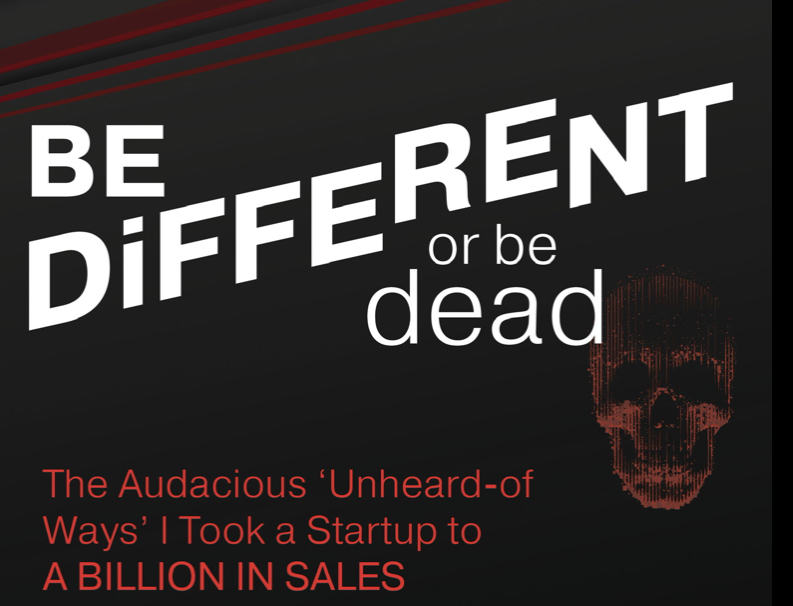
Check out my BE DiFFERENT or be dead Book Series
‘Audacious’ is my latest…
- Posted 12.13.21 at 04:08 am by Roy Osing
- Permalink
December 6, 2021
Why customers should be allowed to make your rules and policies

Source: Unsplash
Why customers should be allowed to make your rules and policies.
Most organizations have, as part of their business plan. a customer service strategy to create delightful experiences for their customers.
But unfortunately the bold declaration of intent to blow customers away with exemplary service is as far as it goes because organizations quickly move away from their great service aspiration and design a rule system with policies and procedures intended to impose order and control on the customer engagement process.
Credit policies. Accounting procedures. Collections rules. Sales processes. Complaint policies. Order procedures.
Customer Service manuals generally are replete with instructions on how to deal with virtually anything to do with a customer.
In fact most rules in an organization one way or another impact the customer.
And for the most part they are meant to control them. To make them behave a certain way that produces a favorable outcome for the company usually in terms of keeping costs down and imposing a standard way of doing business that applies to everyone.
Rules are meant to control the customer transaction.
What if we took a different perspective and created rules to enable the transaction; to allow the customer to engage with the organization the way they want?
Terms that make their experience with us enjoyable and stress free?
There is a huge contradiction when organizations say they are in the business of creating memorable experiences for customers yet construct rules and policies that do exactly the opposite.
It’s time for leadership to be bold and let the customer provide input to the process of architecting the rules. Let the customer control their own destiny with you.
Enable them; serve them.
How about asking a group of your fans to critique your policies and suggest changes?
What not? Are we afraid what they will say? Afraid they will point out the stupidity of some of them?
Open up.
Allow your fans to control you. They do anyway, so why not make it official?
Cheers,
Roy
Check out my BE DiFFERENT or be dead Book Series
‘Audacious’ is my latest…
- Posted 12.6.21 at 05:26 am by Roy Osing
- Permalink
November 29, 2021
Why successful organizations are really good at doing boring things

Source: Unsplash
Successful organizations are amazing at doing boring things.
Much is written about organizational performance, and what it takes to consistently beat expectations and stand out from the crowd of hungry competitors; I’ve certainly been among those pundits who have offered proven and practical tactics based on my experience leading teams in various market environments.
A sample of these tactics in no particular order include:
— adopt a serving leadership culture.
— focus on execution rather than the efficacy of the plan.
— cast off traditional planning tools and build your strategic game plan by asking three simple questions.
— pay attention to the few critical ‘must do’ things that matter in moving your plan forward. Multitasking is deadly.
— target your efforts at the select group of customers (who have the potential to generate the revenue you need to meet your growth goals, and avoid spraying your solutions to the mass markets.
— get your strategy ‘just about right’ and don’t spend the time to try and get it perfect because you’ll never achieve it (a perfect anything is a myth).
— the key to successful implementation is the number of tries you make. The more tries, the more successful you’ll be.
— develop a ‘recovery strategy’ as part of your customer service vision. What you do when mistakes are made is critical to building customer loyalty.
— recruit people who ‘love’ humans and who enjoy serving and taking care of others. It’s the secret to building long lasting customer and employee relationships.
— kill the playbook in your organization that customers don’t want to abide by. It may serve your internal thirst for control but will only drive your customers who don’t want the hassle away.
— if you’re not different you’re dead (or soon will be). Sustainable performance can only be achieved if your organization creates relevant and compelling value for people in a way that no one else does. You need an ONLY statement to get you there.
All of the above approaches work. I’ve used them in startup businesses (internet), in growth businesses (data communications) and mature businesses (home and long distance telecommunications).
They represent my personal generic toolset to create long term value for an organization; one that I try to get others to use as well.
But there is another tool or tactic that I’ve used that does not automatically command the front page of the book on success.
I think it’s because most people looking for ‘how to’ ideas seem to be interested in learning about and trying complicated and theoretically-laden approaches promulgated by academicians and consultants who have never run a $1 BILLION a year business— I have —rather than simple approaches that may not be sexy but they work.
I’m a very simple person. And I have discovered that other people like simplicity.
Simple concepts are easily understood. Simple instructions are easily carried out. Simple rules are followed. Simple procedures produce few errors.
Simple— ‘boring’ —things create epic success.
Here are 5 boring things that incredibly successful organizations do.
1. They keep their promises
Their word is their bond whether it’s an employee committing to a customer or a colleague.
It’s boring. They do what they say they’ll do. Every time. All the time.
Nothing comes between a promise and delivery. Nothing.
It’s a cultural thing— a value —which drives the recruitment process: they look for people who have a demonstrated past of keeping promises to others.
“When’s the last time you broke a promise?” and “Why?” are top questions that are asked of every potential candidate.
2. They admit their mistakes and fix them fast
Regardless of where the fault lies, they take responsibility for things that go awry. They don’t admit fault when it’s not theirs to admit but they take responsibility to remediate whatever bad stuff has happened to one of their customers.
And it starts with saying sorry: “I’m really sorry this has happened but I’m going to take care of it for you (I promise).”
And it ends with the mishap being remedied FAST and with a little surprise added to delight the victim and bond them to the organization forever.
Mediocre organizations avoid embracing opportunities that mistakes present to them; amazing (boring) ones run toward them.
3. They talk to their customers
They are old school in the sense that they love talking to their customers; it’s in their DNA. Live conversations using the telephone!
And they align every part of their operations to this value. Every customer contact and service delivery function is architected to facilitate real time customer engagement.
Call centers are ‘care centers’, managed on how well they create memorable moments for people as opposed to how well they can maximize call throughput while minimizing cost.
It’s boring to be sure, but it carries a message that says we want to talk to you; to listen to you; to understand what you need and to serve you. Technology may be efficient but it can’t do that.
4. They invite their customers in to ‘shape’ how they operate
It’s not a very complicated concept to want to architect the inside of an organization to reflect the outside. It’s simple: vector the way you operate on the way customers want to be served.
It means designing systems and processes around how the customer wants to be engaged as opposed to forcing them to participate in a way they abhor.
And it also means defining the rule system of the organization around the whole concept of enablement: making it easy for people to do business with you as opposed to controlling their behaviour.
Boring organizations start out with a clean sheet of paper with no preconceived notions of how they should deliver their solutions to the market. Customer input determines what the operations topology looks like.
5. They are polite and respectful
Mindfulness of others is a key value that shapes how people behave both with customers and employees. Basic human skills like empathy, politeness and being respectful are ingrained into every employee. These skills are recruited, reinforced by leadership, recognized and rewarded to ensure they are present and accounted for in every person engagement that occurs every moment of every day.
And these skills are stressed among employees with the conviction that if they aren’t practised internally, they won’t be practised with customers, strategic partners, suppliers, investors and the media.
’Being nice’ is powerful in a world where it’s too easy to not be. It’s noticeable. It’s different. It’s your advantage if you want to be boring.
Being boring is a competitive advantage because everyone else seems to want to do cool and esoteric things the ‘experts’ say they should.
Success is a function of staying close to the ground and that’s a simple boring approach that breeds tremendous performance.
Cheers,
Roy
Check out my BE DiFFERENT or be dead Book Series
‘Audacious’ is my latest…
- Posted 11.29.21 at 02:06 am by Roy Osing
- Permalink
November 27, 2021
5 surprising reasons product packaging can be a competitive advantage for your business

5 surprising reasons product packaging can be a competitive advantage for your business.
There’s more to product packaging than meets the eye. It plays a huge role in influencing customer decisions more than you might imagine. Packaging communicates lots of things. For example, ingredients, company values, what all the product can do, how to use it, etc.
Many marketing experts go so far as to say that packaging is just as important as the actual product itself. It’s integral to overall marketing and brand communication.
In this post, we look at ways in which smart and flexible product packaging can give you a competitive edge over others.
#1. Packaging encourages informed buying decisions
Whether browsing through the market isles or a website catalog, it’s likely that a first-time consumer would have little to no information about what your product has to offer. Especially in the case of offline shopping, customers have no time to do research.
They will count on the packaging to know what the product is all about. Based on the information supplied on the package, they will arrive at a buying decision.
Always make sure that your packaging includes the following information:
● List of ingredients
● Usage instructions
● Nutrition information
● Product benefits
● Product description
● Company name, logo, and contact information
● Any disclaimers and/or warnings
Make sure that the font and colors are concise, scannable, and quick to understand. All the necessary information should be easily accessible to encourage buying decisions. Things like how the product will help and why it’s the best should all be very clear.
#2. Packaging with colour can sway consumer purchase habits
If you understand colour theory and the psychology of colors, you’ll know that the human brain reacts differently to different colors. That’s why picking the right color for product packaging parlays nicely into using human psychology to secure a competitive advantage.
For example, white colors generally translate to simplicity, panache, sophistication, purity, and safety. At the same time, using too many colors generally signifies a lack of sophistication. Brighter colors like pink and red are mostly used in kids’ products.
Other shades like blue can convey different meanings. A lighter blue is associated with playfulness while darker tones like navy blue carry professional meaning. Blue and Green are the most used colors in packaging worldwide. However, it doesn’t make them automatically right for your brand.
So, study the nature of your product, target demographics, and accordingly pick the right color scheme.
#3. Packaging differentiates your brand from others
For any type of product, there are thousands of contenders vying for customer attention on a typical market aisle. With such tough competition, it’s generally the packaging that grabs customer attention. To make sure a customer reaches for your product, your packaging and color scheme must be unique. It must stand out from your competitors.
For instance, Cannon Blast, one of the recent products by Captain Morgan, comes in a rather quirky packaging. The battle is shaped like a cannonball. Not only is the design relevant to the product, but it’s also unique and eye-catching.
#4. Packaging indicates product quality
The quality of the packaging is a direct indicator of product quality. This is particularly true for food-related products. Therefore, unique packaging is not only a way to differentiate yourself, it’s also a way to communicate value.
You’re telling customers how much thought and consideration you’ve put. It shows you to take your products seriously. In a nutshell, quality packaging doesn’t just protect the product, it protects the brand as well.
#5. Packaging is an opportunity for promotion
Packaging is just another avenue for you to express yourself and promote your company. By using typography, color schemes, taglines, logo, and mascot; you can strengthen your branding game.
A brand name has stronger recall value and uniformity. It’s important that what you promote/advertise and the design are one and the same. Also, while uniformity and consistency are important, adjusting the color schemes is a great way to keep up with changing trends.
Experimenting with packaging and advertising is a great way to see if sales go up or down. It can also be a great opportunity for offering product promotions like BOGO—buy one get one free—offers.
Product packaging is one of the most underrated and powerful marketing tools for brands. It can do a lot more than you asked for. So, be sure to invest a lot of time in your brand packaging.
— Alice MacKenzie is a content writer and publisher at SigmaQ which provides packaging and displays to create memorable experiences with your brand. She writes on different categories based on packaging by providing a variety of tips and solutions for their business. Her mission is to create sustainable solutions for lasting business that empower the packaging industry.

- Posted 11.27.21 at 06:43 am by Roy Osing
- Permalink