



Roy's Blog: Entrepreneurs
September 23, 2021
How great leaders ‘nudge’ their organization to stay on course

Source: Pexels
How great leaders ‘nudge’ their organization to stay on course.
A one-liner that resonated with me from the movie ‘Waiting for the Barbarians’ was in answer to a question posed to The Magistrate on how he managed to keep his frontier outpost safe and ‘orderly’:
With a ‘nudge’ here and a nudge there I kept the world on its course.
My leadership belief exactly.
Effective and sensational leaders are really good ‘nudgers’; they are relentless and unyielding at moving their organizations forward—‘slightly west’—with constant prodding to keep it from slipping off the chosen path.
Nudgers understand that it’s not reality to have a business plan that is developed, dropped on the organization and left alone to ‘live its life’ successfully without help.
A misinformed leader announces their grand plan and expects everyone to understand and execute it precisely — it never happens.
The 5 key roles of the Nudger:
1. Key functions
Identify and prioritize the functions of the organization that deliver the key strategic imperatives of the business plan.
Not every department will have equal weight when it comes to their contribution to strategic goals; it’s important to identify and rank the prime contributors and pay an inordinate amount of attention to them and leave the balance alone.
This is a critical piece of work because it demands that Nudger knows the strategy at the most detailed and granular level in terms of what behaviour specifically is required to deliver the output that will allow the organization to achieve the intent of the business plan.
“Who are the key players and what do they have to consistently deliver”? is the question the Nudger answers.
The Nudger’s formula: if (this behaviour); then (this successful outcome).
2. Key processes
Since meaningful results are rarely produced by a single functional team in an organization, it is essential to identify and prioritize the key processes that are summoned to create strategic value.
These are processes that work across the organization and involve several separate functions. It could be the product fulfillment process, for example, involving the call center, inventory management, logistics and billing.
If one link in the chain breaks, the customer is certainly unhappy and might just leave for another supplier. The process must work every time it’s used to deliver.
Meaningful strategic results are produced by teams working together across—not down—the organization.
The Nudger typically looks more intently at the critical processes in the strategic value chain.
2. Influencers
It’s critical to identify the people in the organization who control the key functions and processes. These are the leaders without whom control and adherence to the organization’s strategy and direction will not happen.
These people need to be convinced of the new plan and be prepared to put their heart and soul into it.
They must be the ’warriors’ who will determine success or failure so the Nudger spends a copious amount of time getting them on board and securing their commitment.
3. Serving
Nudgers know that the high performance expected of the functional and process leaders can’t be achieved by a one-of meeting.
The Nudger must be in constant contact—serve around—with each leader, monitoring their progress and assessing whether or not they’re achieving the expected results.
And asking “How can I help?”. Nudgers ‘bash barriers’ getting in the way of people doing their job; if the inside grunge isn’t cleared, little progress is achieved and organizational dysfunction occurs.
4. Nudging ‘on the run’
A single nudge doesn’t do it; it won’t achieve miraculous success by putting the organization back on the right path when it deviates from its original game plan because of events encountered that were not envisioned when the plan was assembled.
In view of this constant barrage of unforseen body blows, successive nudges from dauntless leaders are required ‘on the run’ in order to mitigate the downside of these events and maintain a high performance course.
The Nudger is always online with strategy execution, aware of the progress being made and of the issues being confronted by employees, and taking corrective action ‘in the moment’.
Execution runs through the veins of the Nudger
5. Performance moments
Consistently high levels of performance need reinforcement of the behaviours that caused it, and this is where the Nudger adds stunning value.
The Nudger is always alert to catching someone in the act of committing a superlative deed, providing them the recognition they deserve and communicating it to everyone else in the organization. In addition, the Nudger used these moments as an opportunity to coach and mentor as appropriate.
The Nudger lives with employees who are critical in achieving the strategic intent of the organization. They are ambassadors and advocates of the frontline, and will do anything to support their needs.
‘Nudging’ is not a role that is discussed in leadership doctrine but in my experience it is a fundamental trait of outstanding and spectacular leaders.
How much nudging time do you spend as a leader?
Cheers,
Roy
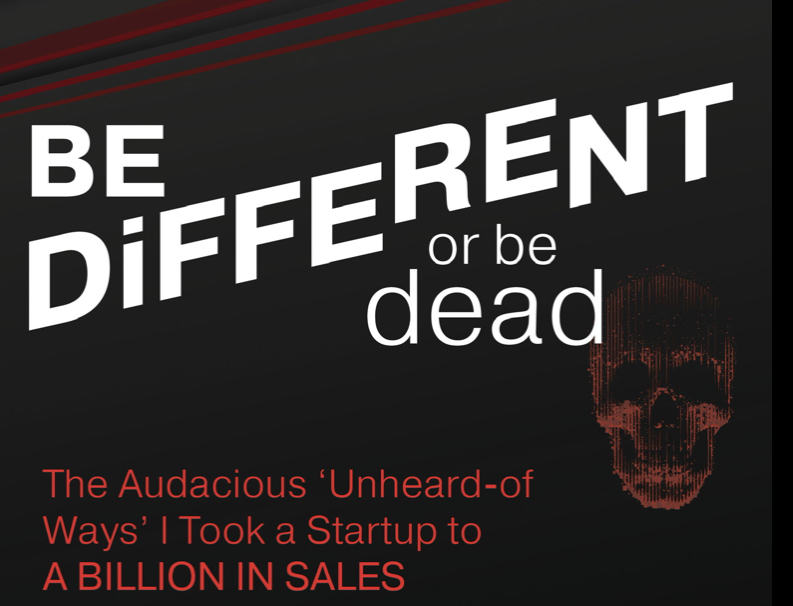
Check out my BE DiFFERENT or be dead Book Series
‘Audacious’ is my latest…
- Posted 9.23.21 at 06:35 am by Roy Osing
- Permalink
August 23, 2021
How your competitive advantage can be stated clearly and simply

Source: Unsplash
How your competitive advantage can be stated clearly and simply.
What’s your competitive advantage in the market?
What distinguishes your organization from your competition?
What sustaining differential advantage do you have?
All of these questions try to get at the answer to the question “Why should I do business with your company and not one of your competitors?”
Let’s look at some of the more common expressions used by businesses to explain what they believe to be the advantage they have over everyone else:
— we have the best technology.
— we provide the best customer service.
— we deliver amazing customer experiences.
— we will exceed your expectations.
— we have highly trained staff.
— we offer the lowest prices.
— we are the market leader in providing CRM solutions.
— we’ve been in business since 1950.
— we’re here for you, we’ve got your back.
— we offer customized solutions.
— our products are of the best quality.
— we offer fast, reliable same day service.
These types of competitive claims have limited value to separate one organization from another because most organizations claim the same thing. If you’re in the communications business, for example, most of your competitors claim they have the ‘best’ network, provide the ‘most complete’ product and service portfolio or offer the ‘most enjoyable ‘ customer experience.
Why do most organizations waste their breath and make these types of claims?
For one simple reason: they look at the types of things others are saying AND THEY COPY THEM! Can you imagine benchmarking another company when it comes to declaring competitive advantage? Absurd to say the least but it happens all the time.
Uniqueness, innovation and creativity are MIA in leadership fulfilling this incredibly vital role.
There are 3 reactions I have when I hear these types of statements:
1. What are you saying? — the devil’s in the details.
What exactly is meant by ‘exceeding expectations’ and ‘we’ve got your back’?
Unless someone understands the intent of the statement it’s merely stratospheric clap-trap; a helium-filled aspiration with no substance. It’s worthless.
Now, if a claim with this type of intent said something like “We will always try and say YES! to what you ask of us” I would sit up and take notice.
Or if it said “We will always do more for you than what you ask” I would have pretty good clarity on what behaviour to expect from the organization saying it.
And then break your claim down into even more detail for more clarity for your customers and your employees. When you declare that you will ‘say YES!’, give examples so people will get a picture of what is intended. If you’re in the restaurant business you might be willing to give your customers something they want that is not on your regular menu.
The point is, your competitive claim must be granular as opposed to aspirational if it is to have any real meaning at all.
2. So what and who cares? — the question of relevance.
There are tons of competitive claims that promulgate a benefit that few are looking for (but the company thinks is cool), and there’s nothing as abysmal as claiming you’re great at something your target customers don’t care about.
This is the classic factory supply-push approach used by far too many businesses that simply want to flog their products and services to the masses with no specific individual in mind, emphasizing the features they have and the technologies they use.
These organizations hope that enough people will buy what they’re flogging and that the size of the ‘average’ customer group that goes for their claim is large enough to make their moves profitable.
A radio station in Vancouver declared they are ‘the only ones who provide traffic and weather every ten minutes on the ones’ even though their competitor only provides traffic information. ‘On the ones’ may be true, but it’s irrelevant given the option their customers have.
In addition, most claims address the general market — and the ‘average person’ — so it’s likely that it will resonate with some people and miss the mark with others. Why? Because it’s a supply-based claim and not a demand-driven one.
Learning points: make sure your competitive claim is based on what your target customers crave (link) and not what you supply.
3. Prove it! — the challenge of truth.
This is where the proverbial ‘rubber meets the road’ on your competitive advantage claim: it must pass the burden of truth.
Who owns the truth? If you really have a winner, go ask your target customers whether they actually believe it. Do you consistently ‘say YES!’ when someone orders an item not on your menu? They will tell you!
In addition, take a look at your operational processes, measurement systems and accountabilities. Do you have the ops processes in place to deliver on your competitive claim?
Are measurements being done on the various components to ensure the right hand-offs and deliverables are achieved?
And have accountabilities been established with the key owners in the organization to make the delivery systems a priority? If delivering on your competitive claim isn’t in the performance plans of key executives, it’s unlikely it will be treated as a priority and get done.
The ONLY Statement is the way to solve the deficiencies of the current methods used to differentiate one business from another.
I’ve used it for years and have seen the incredible success businesses have had with it.
‘We are the ONLY business that …’ is the way to communicate specific value to your target customer group in a way that can be measured.
It’s hard work creating The ONLY Statement for your organization but it’s worth it if you really want to separate yourself from the boring herd.
Cheers,
Roy
Check out my BE DiFFERENT or be dead Book Series
‘Audacious’ is my latest…
- Posted 8.23.21 at 04:01 am by Roy Osing
- Permalink
July 26, 2021
10 simple ways to find out if you’re an amazing standout leader

Source: Unsplash
10 simple ways to find out if you’re an amazing standout leader
How do you see yourself as a leader?
Do you think that you’re well on your way to becoming one who stands apart from the rest?
Here are 10 roles which, based on my 4+ decades of leadership experience, point to the ones who are actually serious about becoming a standout leader.
If you ‘AGREE’ that you regularly perform 6 or more of the Standout leader roles described, then you are a serious Standout contender; anything less and you still have a way to go to reach your goal, so focus your efforts and build an action plan to change your ways.
Let’s begin.
1. The customer moment
The Standout leader takes personal ownership of architecting the customer moment; the ‘picture’ of what it looks like to serve customers in a way that takes their breath away.
This work is done by the Standout leader alone and is never delegated to anyone else in the organization.
The detailed strokes of service — the behaviours expected of every employee when they are engaging with a customer — can only be described by the one who owns the vision for service. And this extends to the look, feel and functionality of the online experience as well and personal contact moments.
The Standout leader is the artist who paints a vivid picture of what a ‘dazzling’ customer moment looks like for all to see.
As a leader, are you actively engaged with designing the customer moment in your organization? If your role doesn’t include direct customer contact, you can still be involved by looking at how your staff treats your internal customers.
2. Serving around
The Standout leader is a master at Leadership by Serving Around— LBSA—the next generation of leadership. LBSA is a leadership imperative to help people have meaningful and rewarding careers and to build an organization to stand apart from their competitors and achieve remarkable levels of performance.
The Standout leader purposefully goes through the workplace with a strategic purpose, looking for serving moments or opportunities to help someone perform their job more effectively.
Managers ask: “What’s going on?”; Serving Leaders ask: “What can I do to help you?”
The Serving leader’s agenda is to offer personal help to employees, recognizing that if someone’s individual problems are solved, performance enhancement follows. If you take care of the person, performance takes care of itself.
How much time do you spend out of your office among your teams? Do you have regular LBSA time on your calendar?
3. The one and ONLY
The Standout leader is possessed to answer the question posed by discerning customers: “Why should I do business with your organization and not your competition?” It is the killer question that decides whether or not you have a ‘special sauce’ that makes you different and a winner.
Most competitive claims rely on overused clap-trap to position themselves against their competitors. They use words like ‘better’, ‘best’, ‘number one’ and ‘market leader’ which have little value in declaring their competitive advantage. Claims that employ these types of words are merely vague aspirations that most don’t believe.
The Standout leader, on the other hand, uses ’The ONLY statement’ to define their organization’s uniqueness and shout out their competitive advantage.
‘We are the only ones that….’
This is the claim they use to cut through the usual claptrap and make it clear why they should be chosen among their competitors.
How does your organization state its competitive advantage? Is it clap-trap, or does it harbour the ONLY notion? How can you help add ONLY-thinking in your business planning process?
Are you a binary thinker when it comes to expressing how you or your business is different from others?
4. 360 feedback
The Standout leader is always looking for feedback on their performance and on ways to improve it.
360 feedback is not new, but it is one of the most effective methods of assessing how someone performs their current responsibilities and what they need to do to improve for future opportunities.
360 feedback provides performance assessment from not only someone’s boss, but also from their peers and others in the organization they interact with on a regular basis (including frontline managers who rely on support to serve customers.)
The Standout leader uses 360 feedback to ensure they are actively practising their serving leadership role.
Do you use 360 feedback as a way to hone your skills or do you just care about what your boss says?
5. Line of sight
One of the biggest issues in any organization is the lack of congruence between what its strategy says and what people do on a day-to-day basis. The strategy says one thing and not only do people do another, they all do different things out of sync with the strategy, with inconsistency and dysfunction resulting.
This is a failure of leadership who place more focus on perfecting the business plan rather than on how it will be executed.
The Standout leader knows that superlative performance depends on strategy execution, and their priority is to translate the strategy into what it means to each function and person involved in delivering it.
They focus on ensuring that each employee has a direct line of sight to the strategy from their position, and that they understand what they specifically need to do to contribute to its implementation.
Do you translate the organization’s priorities to each one of your team members in specific terms so they clearly understand what actions they need to take to execute its business plan?
6. The Strategy Hawk
The Standout leader personally owns the execution of the strategic game plan of the organization. Generally, since many functions share in the responsibility to execute the plan, it rests with the collective executive team.
But that’s not good enough; it needs a specific owner. It needs single finger accountability to ensure that the job gets done.
Shared responsibility, however noble, is simply not up to the task.
The Standout leader puts their hand up and wants to be the voice for execution—the Strategy Hawk—in the organization to ride herd on execution. To monitor progress. To kick ass when things are not proceeding as planned.
The Strategy Hawk has an abundance of currency in the organization, who is tenacious and has a high tolerance for ‘pain’.
The Standout leader is the voice of execution.
Do you jump into the implementation process or are you content to stay at the intellectual planning stage?
7. Frontline management
The Standout leader makes room in their busy schedule to interview potential frontline managers because effective strategy execution depends on the performance of the frontline and their managers are key to making it happen.
How else can the leader be sure that customer moments in particular are being handled the right way by frontline staff? If frontline managers don’t get it, their frontline employees won’t get it either.
My personal approach was to have heavy involvement in interviewing when I started the process and gradually reduce the amount of time I dedicated to this work over time after I was satisfied that my managers learned
how I wanted the interviews handled.
The Standout leader takes personal ownership in ensuring the right people are put into frontline positions.
Do you get involved in ‘skip level’ interviews for junior level positions in your organization?
8. Goosebumps
The Standout leader is on a mission to recruit people who are born to serve others and one way to tell if a prospect candidate fulfils this criteria is to find out if they leave you with goosebumps when they tell their story in answer to the challenge:
“Tell me a story that will prove to me that you ‘love’ other people.”
If they are the real deal, their story is rich with detail and the threads that bind the story together emphasize the importance of connecting with people on an emotional level; their authenticity pours out with every word. The unauthentic ones’ stories lack any passionate element; they were ushered out the door.
The amazing storytellers found their way into higher level positions in the customer service organization to provide the leadership necessary to sustain this strategy that was extremely effective in gaining and maintaining a competitive advantage for our organization.
The Standout leader, driven to achieve a service strategy based on remarkable and memorable customer experiences, hires the ‘People Lover’ who leaves them with goosebumps.
Do you probe the emotional side of people when you interview them, or do you just focus on their academic pedigree and the projects they’ve completed?
9. Planning
A standout leader believes that ‘heading slightly west’ is a valid strategy despite the fact that the experts try to get them to believe that if they follow the precise process ascribed by the planning pundits they will create the “perfect” plan.
They determine an imprecise view of the direction that should be taken, and make modifications ’on the run’ based on what is learned through execution.
In addition, they believe that the more tries made, the greater the likelihood of success. Their mindset is that if they get lucky and hit a home run on the first try, GREAT! but never count on it.
The odds of getting it right the first time are too low given the uncertainty and unpredictability of the markets we serve.
The Standout leader believes that iterating oneself to a successful end state by making more tries than the rest of the crowd is the only viable planning model in a turbulent world.
Do you push for the perfect solution when you are given a challenge?
10. Benchmarking
The Standout leader knows that benchmarking best in class won’t make an organization special and differentiate it from its competition.
They understand that copying has no strategic value in moving an organization to a position in the marketplace that ONLY they occupy.
“What are our competitors doing?” is often asked when organizations are thinking about reinventing their business plan but this benchmarking process adds zero space between them and their competitors.
Furthermore the Standout leader knows that benchmarking is the enemy of innovation; you’re a copycat, you’re not an innovator.
Benchmarking does little or nothing to stimulate innovation and creativity which are critical values that organizations want in today’s world of uncertainty and constant change.
The Standout leader’s end game is for their organization to be remarkable, an objective which isn’t a strategy on the radar of most, and that this is achieved by being different than everyone else not by copying them.
When given a project to do, is your first instinct to research how others have done it and to follow their lead?
There you have it.
How well did you do? Whatever your result, the good news is you’re focused on the right attributes that will make you a great leader who stands apart from everyone else.
Congratulations!
Cheers,
Roy
Check out my BE DiFFERENT or be dead Book Series
- Posted 7.26.21 at 01:16 am by Roy Osing
- Permalink
May 24, 2021
5 reasons a fresh start for people is an impossible dream

Source: Unsplash
There are 5 tenets to what people mean when they say they want to start fresh.
They want to:
▪️ lose yesterday and build a new tomorrow.
▪️ forget the pain of the past and seek future pleasure.
▪️ throw away the track record of yesterday and start over again with a clean piece of paper.
▪️ build new relationships to replace the old.
▪️ forget what was learned in the past in favour of acquiring new knowledge for their next chapter.
A fresh start seems to imply that the past offers little value as one considers building a new future.
And of course this thinking is a nonstarter; throwing the baby out with the bath water makes no sense at all, and it will never allow you to refresh yourself the way you want.
Regardless of the overwhelming desire to strike out on a new journey and rid yourself of what you don’t like about your present circumstances, there are pieces of your life up to now that have been amazing for you and should form an integral part of your future.
I think a fresh start should really be looked at as another start, building on what you’ve achieved so far to reach greater and more importantly different heights. It also implies that you want to make another try which is the right thing to do when you’re dissatisfied with your current state.
How do you start again to satisfy your craving for change and at the same time preserve your ‘specialness’ that made you who you are today?
Define your ‘west’ vision
What the hell do you mean by “I need a fresh start?”
Fresh starts don’t happen ‘in the moment’, they need at least a modicum of thinking about what you want to do — note that I’ve avoided the word ‘planning’ which I think would have scared many of you off 😊
Your fresh start vision doesn’t have to be crystal clear but it does have to be directional with enough clarity to inform the actions needed to make the fresh start happen.
So at this point, paint a picture of what your new future looks like in general terms.
Try not to be too granular in your new ‘I want’ a new start definition:
I want to travel the world.
I want to move to Europe.
I want a new career in marketing.
I want a new relationship.
I want to learn a new language.
I want to homeschool my kids.
Declarations like these define your ‘start again’ context and where you will devote your time and energy. If you don’t do this work, your attention will be scattered with the likelihood you will miss your refresh mark.
Inventory your likes and dislikes
A start again plan typically includes casting off things about you and your life that you don’t like to make room for the new exciting things you decide to do.
Taking a self inventory of what you like and dislike about yourself is where you begin this work.
So, you need to create two lists that are a ‘character bifurcation’ of how you see yourself, defining the unique special features you want to retain and build upon to be different and those you want to let go of.
Select 3 likes
Your new start up plans I’ll fail if you try and take on too much; if you try to build your new future on too many of the features you really like about yourself.
It gets too complicated to create a fresh beginning from 10 traits you don’t want to lose than it is to build from a handful, so think about focusing on the 3 traits you really like about yourself — your confidence, creativity and love of people for example — and that you believe will contribute the experience you will require as you begin to ‘head west’.
These 3 strengths will be the nucleus of the energy you will draw on to unfold your new tomorrow.
Define what you need
Even with your best likes, however, ‘head west’ beginnings will be deficient in the ingredients needed to achieve the new destination; there will always be a deficit that needs to be filled — it wouldn’t be a new start if you didn’t have to acquire something new.
Try to define one or two new things — nirvana would be only one — you need in addition to what you already have in your kitbag to start fresh.
Look for help
It’s quite normal to find a mentor to help us with our career, so why not find someone to help us morph our lives into something new and more exciting — a new start mentor.
A life change is normally a risky affair so find someone who has experience in navigating through the turbulence of leaving behind equity that has been hard fought for over one’s life and adopting a new course.
New start mentors don’t offer solutions, they provide a ‘boots on the ground’ view of what life change entails so you can make informed decisions.
By now you’re probably exhausted by the regimen I’ve prescribed to launch your new beginning; the process feels complicated, time consuming and tough work.
But it is a disciplined process; new starts rarely happen through serendipity, by falling in a bucket of sh*t and come out smelling like a rose.
If that’s what you’re hoping for, kiss your fresh start goodbye.
If you want a life makeover, be prepared to do the work.
Cheers,
Roy
Check out my BE DiFFERENT or be dead book series
- Posted 5.24.21 at 04:49 am by Roy Osing
- Permalink