



Roy's Blog
May 11, 2020
Hungry people do these 10 simple things to win

Source: Unsplash
Hungry people do these 10 simple things to win.
What separates the individual who has a rewarding career from those that merely show up for work every day and leave unsatisfied?
My experience shows that successful individuals are more hungry than their competitors; it’s as simple as that.
Certainly there are other factors at play that influence performance and success such as education level, practical experience, reliable mentors, and good old fashion luck, but I have seen that “being hungry” is the one single thing that stands out from all others.
In fact, many individuals manifest the common traits and capabilities of success yet don’t rise to the top of their game. I have seen highly educated people, for example, with a deep experience profile and excellent skill set fall short of their potential while others who possess less emerge to finish first.
Those “qualified” individuals who fell short lacked the desire to finish; they didn’t seize and apply the raw power of emotion to grab the opportunity presented to them and drive to capture it like no one else.
The hunger drive to succeed isn’t an intellectual matter; it’s a visceral one which is a fundamental part of who they are.
People don’t think about applying their hunger, they do it involuntarily just as you don’t have to tell your heart to beat.
This is the profile of “the hungry one”.
1. They’re the first one in
They are the first one to put their hand up and volunteer for a new project. They are driven to find a way of being part of new horizons rather than perpetuate the status quo. They want to be known for coveting uncharted waters.
2. They love change
They are always leaning in to conversations that address a different direction the organization should take. They are at ease with personally introducing the necessary discontinuities required to force current momentum to another path. They are a true change agent.
3. They don’t talk about the past
They talk about what needs to be done, not what yesterday achieved. They don’t suffer “custodians of the past” lightly. Dwelling on what worked yesterday frustrates them to no end. They see reflection on the past as an impediment to taking action and moving forward.
4. They are mindlessly focused
They are extremely focused on the critical few things that need to be done in order to achieve the end objective. They are not a fan of brainstorming and see it as only a way of defining what COULD be done as opposed to what MUST be done.
5. They never stop learning
They are voracious learners who pursue knowledge paths that are consistent with the new competencies the organization needs to adopt to perform at high levels. A shift from a monopoly business to a competitive one requires adopting marketing and customer service expertise; the hungry person acquires the knowledge and skills necessary.
6. They take risks
They are extremely proactive and never have to be told to do anything. When they see that something needs to be done that gather the expertise around them they need and they just do it. While others around them ask for permission, the hungry ones assume the inherent risks of taking action and are confident they can achieve positive results.
7. They execute first; plan second
They monitor execution relentlessly. They understand that the plan isn’t good enough to achieve results; rather flawless implementation is required. They are fanatics about ensuring that people assigned tasks complete them on time and on budget.
8. They have spider senses
They are restless, waiting to be on the move. They are anticipatory people who are always poised to act. Some might describe them as impatient and frustrated when they are hovering and waiting as opposed to acting. Their “spider senses” are alive to spot the opportunity to jump.
9. They have ridiculous goals
They have ’unrealistic’ career goals. They declare a bold audacious goal without any idea of how they will achieve it and they go for it. They trust that they will find a way to get to where they want to go.
10. They value what you’ve done not what you know
They are proud of their practical achievements and don’t dwell on what they have accomplished at school. In fact they rarely mention their intellectual strengths, but love to discuss a tough project they successfully implemented despite the roadblocks, barriers and impediments the organization threw in their way.
Successful people have competencies that go beyond the normal. They are based on the instinct to survive and win by standing out from those around them.
They don’t win by being the smartest.
They win by being the hungriest.
Cheers,
Roy
Check out my BE DiFFERENT or be dead Book Series
- Posted 5.11.20 at 05:31 am by Roy Osing
- Permalink
May 9, 2020
How technology can both improve and hinder your sleep
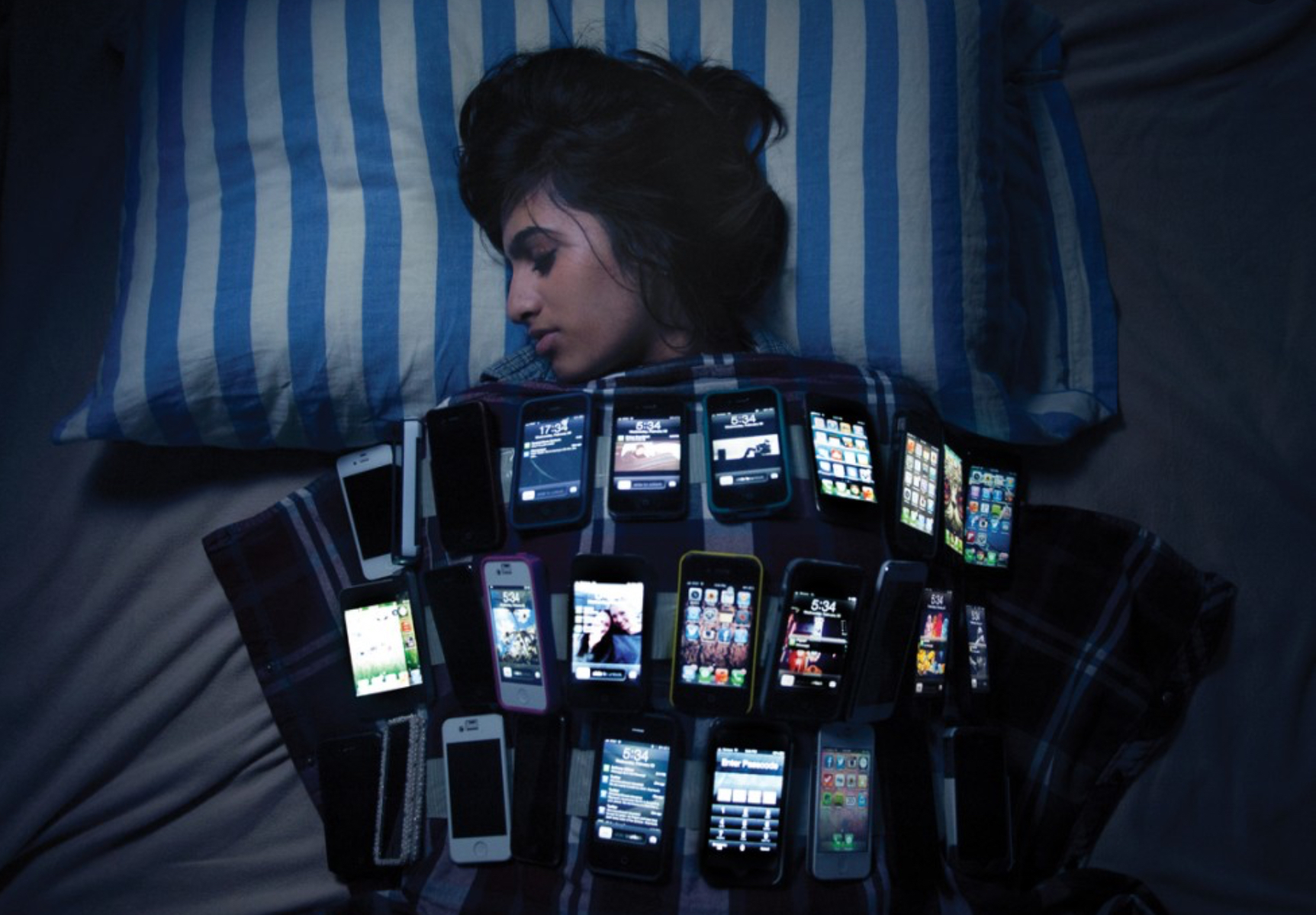
How technology can both improve and hinder your sleep.
In a world as constantly connected to technology as ours, taking time away from our phones and laptops is harder than ever.
Many people spend time surfing the internet before falling asleep, but using technology too close to bed can have negative effects on your overall quality of sleep and can ultimately impact your long-term health.
However, it’s important to note that not all technology is bad. In fact, sleep and technology can actually work synergistically to improve your overall health.
Keep reading to learn about the impacts that technology can have on your sleeping patterns and how to use technology to your advantage to get the most out of your sleep.
Blue light
Blue light is the type of backlight used by most electronic devices, such as computers and smartphones. It is meant to keep you feeling focused, alert, and awake, but can be harmful to your sleep when used right before bedtime.
Although some blue light is naturally occurring from the sun, we see much greater amounts of it on a daily basis due to technology use. Blue light can affect your circadian rhythm and melatonin levels, leading to reduced quality of sleep and feeling restless at night.
However, it’s important to remember that blue light isn’t all bad—when used at the right time and place, blue light is actually extremely effective for helping you feel alert and awake.
To help remedy the effects of blue light, try using a pair of blue light filtering glasses or a night shift filter on your technology—it warms the coloring of your screen to help mitigate the negative effects of blue light on your circadian rhythm.
Alternatively, try stepping away from technology for two hours before bed and opt for reading a book before falling asleep instead.
Overstimulation
In a world constantly connected by the news, social media, and instant messaging, it can be hard to take a step away from our technology and focus on the present. In light of the current global pandemic, it’s especially hard not to be on our phones reading the news to stay updated.
However, for both your physical and mental health, it’s important to disconnect from technology for a bit each day. In a time where so many of us are experiencing higher levels of stress and anxiety, taking time away from technology and going for a run, doing calming yoga, or reading a book are all great ways to focus on your wellness and health—and help you feel calm and relaxed before bed.
It’s crucial to remember that not all technology is bad for your sleep schedule. Health tracker apps and wrist wearables are both great tech inventions that can help you record and analyze your sleeping patterns, so you can determine any issues and work to fix them moving forward.
Whether you are investing in a smart wrist wearable or a free health-tracking app, taking time to look at your sleep habits is something with an extremely high return on investment for your health.
In the current health crisis, it’s normal to be experiencing things like elevated levels of stress and difficulty sleeping. While taking a step away from technology can be difficult, it’s important to put your phone down for a while so you can relax and get in the right headspace to fall asleep.
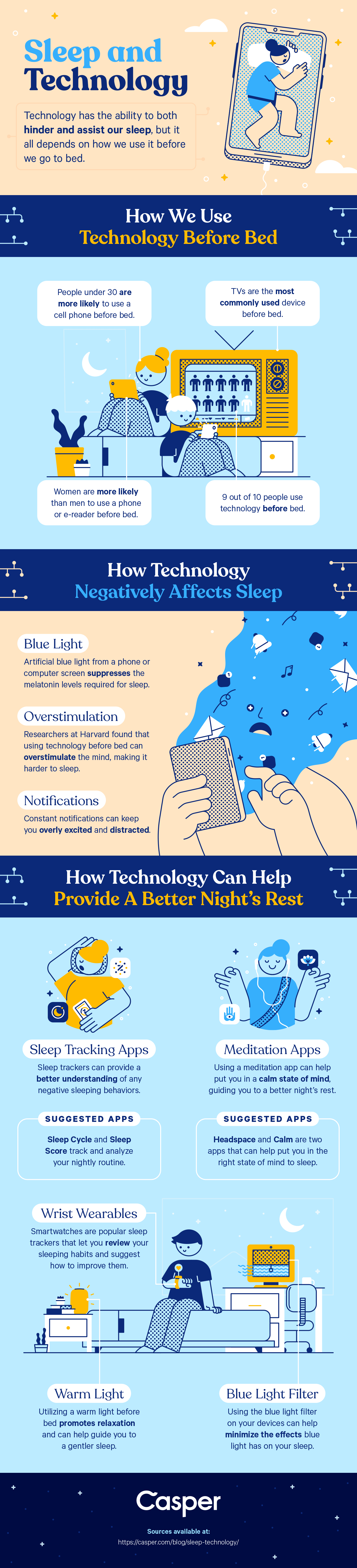
Interested in learning more about how technology can affect your sleeping habits? Check out the graphic courtesy of Casper below.
— Sierra Skelly is a creative writer and content marketer from San Diego. She writes for clients in a variety of industries ranging from personal finance to travel.

- Posted 5.9.20 at 04:57 am by Roy Osing
- Permalink
May 4, 2020
Customer service needs a major change for 4 simple reasons

Source: Unsplash
Customer service needs a major change for 4 simple reasons.
I’m really tired of hearing, reading and seeing claims organizations make about the customer service they provide.
They know if they don’t deliver great service, customers have many other options to consider. So they make outrageous declarations about the level of service they provide, and if they were all completely accurate our markets would be inundated by superlative service providers and customers who are blown away constantly.
But of course, this isn’t the case. In fact I’m inundated with complaints from people who are pissed off constantly with the service they receive from most of the organizations they deal with (I know there are exceptions, but most companies are challenged to make their service words and music actually line up).
Here’s why customer service needs a major do-over.
Because many policies are stupid
When a customer runs into an organization’s rule or policy they don’t understand or that doesn’t allow them to engage with the organization the way they want to, they freak out.
“I’m sorry we can’t sell you the T-shirt on the mannequin, it’s for display purposes only” pretty well describes the condition that drives customers crazy.
Or “You and your wife can’t be seated in a booth for your meal because booths are reserved for parties of four or more.” — BUT THERE’S NO ONE ELSE IN THE RESTAURANT!
The rules and policy systems in organizations need a major do-over.
Rules and policies in organizations are for the most part conceived to control customer engagement not to enable it. The auditors and folks in risk management define the process that satisfies internal concerns without regard for customer impacts.
Internal policies are a major “POF” in too many organizations and need a do-over to allow customers to transact with organizations in an easy manner; to empower THEM to define the rules of the game.
Because many service people don’t like humans
There are too many people in customer service jobs that shouldn’t be there because they don’t like dealing with humans.
You can spot them: they avoid eye contact, they try and move through you as fast as possible, they are borderline bullies and they could care less whether they satisfy you or not.
Recruitment practices need a major do-over.
Customer service should be treated as a priority in every organization and command the resources necessary to acquire the best, most caring people to work for their customers.
Why is it that the engineering function is paid more attention than customer service in terms of the quality of people hired? I’m not saying service is more important than engineering, but it’s at least as important.
What should you look for in recruiting new service people? Goosebumps.
Because cost trumps care
Leadership in most organizations view the service function as a cost to be controlled. For example, call centers are first consolidated and then outsourced to somewhere is the world where labour costs are low.
And they are managed to internal KPI’s such as call holding times — get the customer off the call as quickly as possible — without regard to call answer wait times at all. It seems leaders really don’t care that people wait 45 minutes to speak to a call center rep.
What’s important is that the costs of providing customer service are held in check.
The philosophy of running a service operation needs a do-over.
Customer service should be measured on how effective they are in creating memorable experiences for customers, not cost management. They should be viewed as a key driver of customer loyalty rather than a call processing cost reduction machine. There are very few examples of organizations that practice this philosophy, unfortunately, but one does exist.
Because service drives sales
As sales moves away from the product-flogging mentality to a focus on building strong relationships with clients, the importance of serving them in every way possible is on the rise. Clients are more likely to buy a product or service from a salesperson who listens well, takes the time to explore options, is always available and who is naturally empathetic with the client’s circumstances.
How the client feels about the sales engagement experience is rising to be the most critical element of their decision making process — whether they buy or walk.
The sales process needs a service do-over.
Serving a client in a caring way with the objective of creating a great experience for them should be a prime outcome of the sales engagement process because how clients FEEL about the sales experience determines whether they buy or not.
And the sales kit bag should be modified to include serving skills and methods in addition to traditional sales techniques.
For organizations aspiring to deliver unmatched customer service, they need to blow up the traditional sales model and be prepared to replace their operating model with a philosophy that places a priority on the service function.
Past service practices need to be replaced with new serving practices that focus on the experience created with a customer and the belief that a customer who is emotionally connected with an organization will buy — and continue to buy.
Cheers,
Roy
Check out my BE DiFFERENT or be dead Book Series
- Posted 5.4.20 at 05:45 am by Roy Osing
- Permalink
April 27, 2020
What surprising legacy will COVID will leave when it’s finally over?

Source: Pexels
What surprising legacy will COVID will leave when it’s finally over?
Every major event in the world plans to leave a sustaining legacy long after it concludes.
The 2010 Olympic Winter Games in Vancouver left the Sea-to-Sky highway from Vancouver to Whistler along with many other game’s venues which stand ten years later and will likely be a reminder decades from now of the one-in-a-lifetime experience some of us witnessed.
And Steve Jobs gave us the iPhone.
COVID-19 didn’t intend to leave a legacy, but the deadly virus will.
Here are six remnants of COVID that I believe (hope) will influence us as we move forward and will be indelibly etched in our society forever.
1. The frontline
COVID demands that either the frontline get the recognition it deserves or the human species better be prepared to encounter the armageddon.
In this crisis, frontline workers are finally getting the respect and adulation they rightly deserve.
I have been advocating the value the frontline contributes to organizations for decades, that they are the face of any enterprise and that they carry their brand at every customer contact moment.
Well, thanks to COVID, the world now recognizes the importance of frontline workers, but not to individual organizations, but to humanity.
Healthcare workers, truckers, first responders, food preparers and deliverers and elderly care home support staff have all been thrown into the spotlight because of the service they provide to others in the COVID crisis.
They are now given the gratitude they have earned for the professions they have. Without frontline workers doing their job selfishly, leaders of organizations and of countries simply can’t succeed. And with their undying unselfish efforts, either will COVID.
2. Technology
COVID has forever changed how we communicate with one another, and will fuel, I believe, greater use of technology generally.
“Let’s have a ZOOM meeting” is becoming part of our vocabulary just as “Google it” is. And the Boomers are discovering the fascination with FaceTiming or using Skype to see their grandchildren as the only way they can stay in touch.
I’m seeing a greater willingness for people generally to explore and learn new ways of doing day-to-day things with the help of technology; there is a greater motivation to “dip your toe” in new technology because of COVID and I believe it’s a tipping point for technology use, particularly among the older demographic.
In addition, the need to shop online will forever change our consumption habits. People who never shopped online now do, and those that did it before are now doing more of it.
Bricks and Mortar operating businesses under pressure from online buying before will be even under more pressure post-COVID. The pressure to meet online needs of people will never relent; because of COVID it will be the norm of customer behaviour.
3. Personal space
COVID demands that we NOT invade the personal space of others; that we refrain from contact closer than 2 meters or 6 feet in order to prevent the transmission of the virus. I believe that this fingerprint of the disease will in the future take on a deterministic role in how certain functions are performed.
Physical spacing will drive workplace layout and design and will also influence how herd demand in the airline and entertainment businesses for example will be met. Pressure will be applied to the economics of product and service topologies, but will force solutions that best balance the needs of safely separating people and delivering acceptable profit margins.
4. Innovation and creativity
COVID stimulated innovation and creativity, as organizations had to figure out how to adapt to the new rules governing social distancing; it wasn’t a theoretical exercise on how to enhance innovation in their business, it was a matter of survival. And many didn’t make it.
Small businesses shifted from an in-house dining model to a takeout one; larger companies, in the face of reduced demand for their normal products and services, shifted their resources to produce the tools for fighting the virus such as masks and ventilators.
5. Customer service
The COVID world reemphasized the critical importance of caring for others, and this has profound implications for getting back to business as unusual. My reader knows how passionate I am about serving leadership and customer service based on taking care of others. Well, COVID has brought the importance of these attributes in people out into full display.
Under the banner of “we are all in this together” and “show kindness to your fellow humans”, the need to subordinate one’s own needs to the needs of others assumes a top priority.
I hope this attitude carries forward as a critical COVID learning. I have been critical of organizations that are more in it for their shareholders and care less about their customers and employees.
Customer respect — as evidenced by their dumb rules and policies — has waned over the years and perhaps now we can get back to the basics of serving customers and delivering what they desire.
6. The environment
Efforts to contain COVID by lockdown and isolation have resulted in a dramatic reduction in carbon emissions and other pollutants that contaminate the environment.
After many weeks of these measures, parts of the world are able to literally “see” the results of cleaner air.
The Himalayas, for example, after 30 years can finally be seen from the Punjab region of India due to the significant reduction of air pollution.
This is likely to be a stimulus for more climate change action and support from the population generally where people can actually feel what it’s like to have a more contaminant-free environment.
Every legacy is created by something truly remarkable, be it in the form of a great persona or an event with a powerful impact that changes the future course dramatically.
COVID is such an event. It has the potential to leave a long lasting positive affect on all of us.
I hope we remember what it gave us and use it productively.
Cheers,
Roy
Check out my BE DiFFERENT or be dead Book Series
- Posted 4.27.20 at 04:55 am by Roy Osing
- Permalink