



Roy's Blog
April 25, 2020
3 simple steps to get the funding you need for your bold startup idea
3 simple steps to get the funding you need for your bold startup idea.
If you don’t have interested investors, your new idea will quickly die. There are some specific ways to get your small business funded and mistakes you need to avoid.
These three steps will get you the money you need to get your winning idea off the ground and make it a going concern.
Step #1. Understand the stages of startup fundraising
There are several stages of fundraising that should be understood.
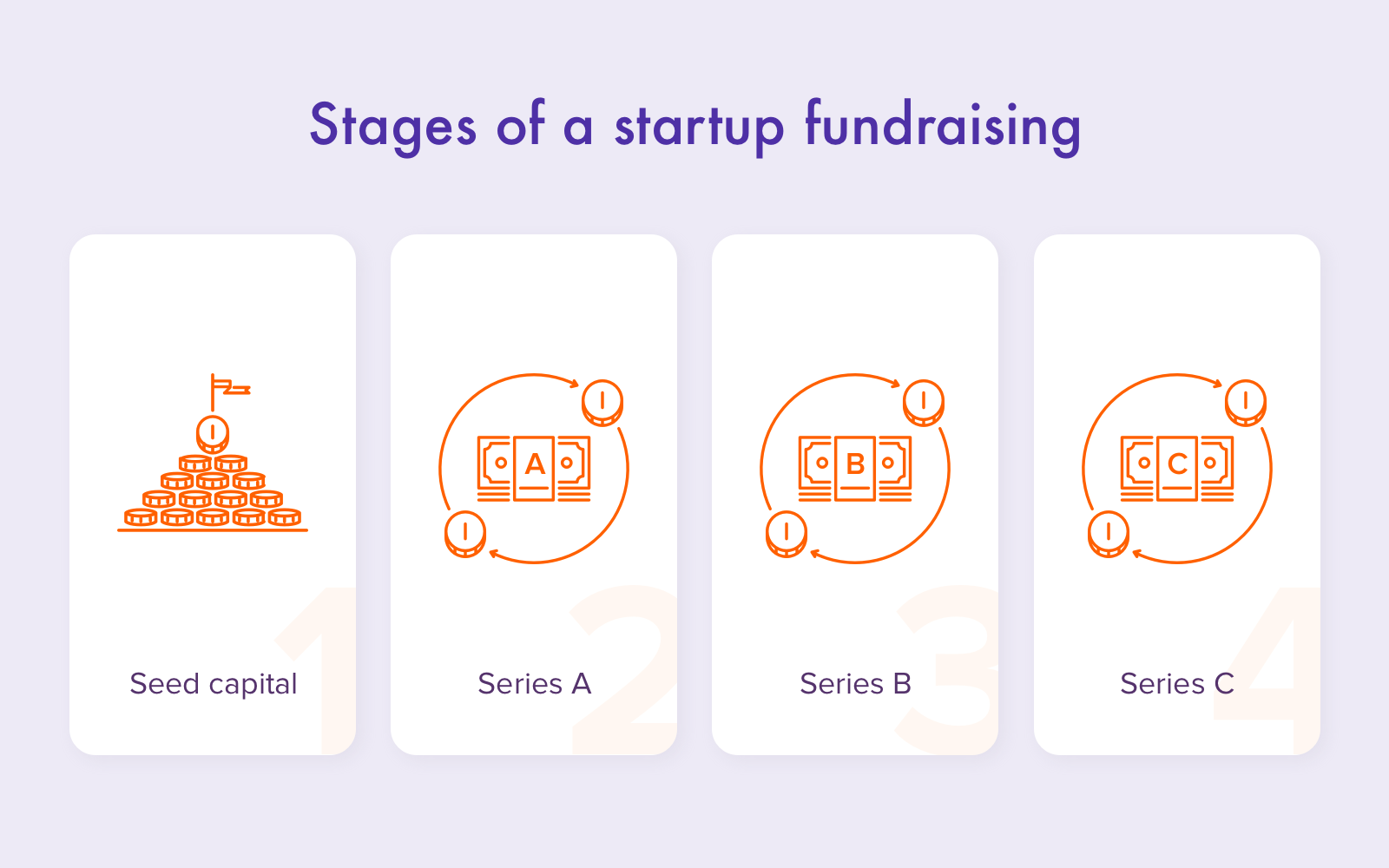
The first one is seed capital.
It represents the sum of money you have raised before going to the investment community. Simply saying, it’s a sum of your personal money you’re ready to spend on a startup.
‘Series A’ is funding you receive from your initial investors to launch your business; ‘Series B’ financing is normally required to show that your startup is able to be cash flow positive and ‘Series C’level financing is needed to underwrite future growth in your business.
Step #2. Choose the right fundraising strategy
There are various types of investors. Additionally, it’s possible to cooperate with different investors types during startup development.
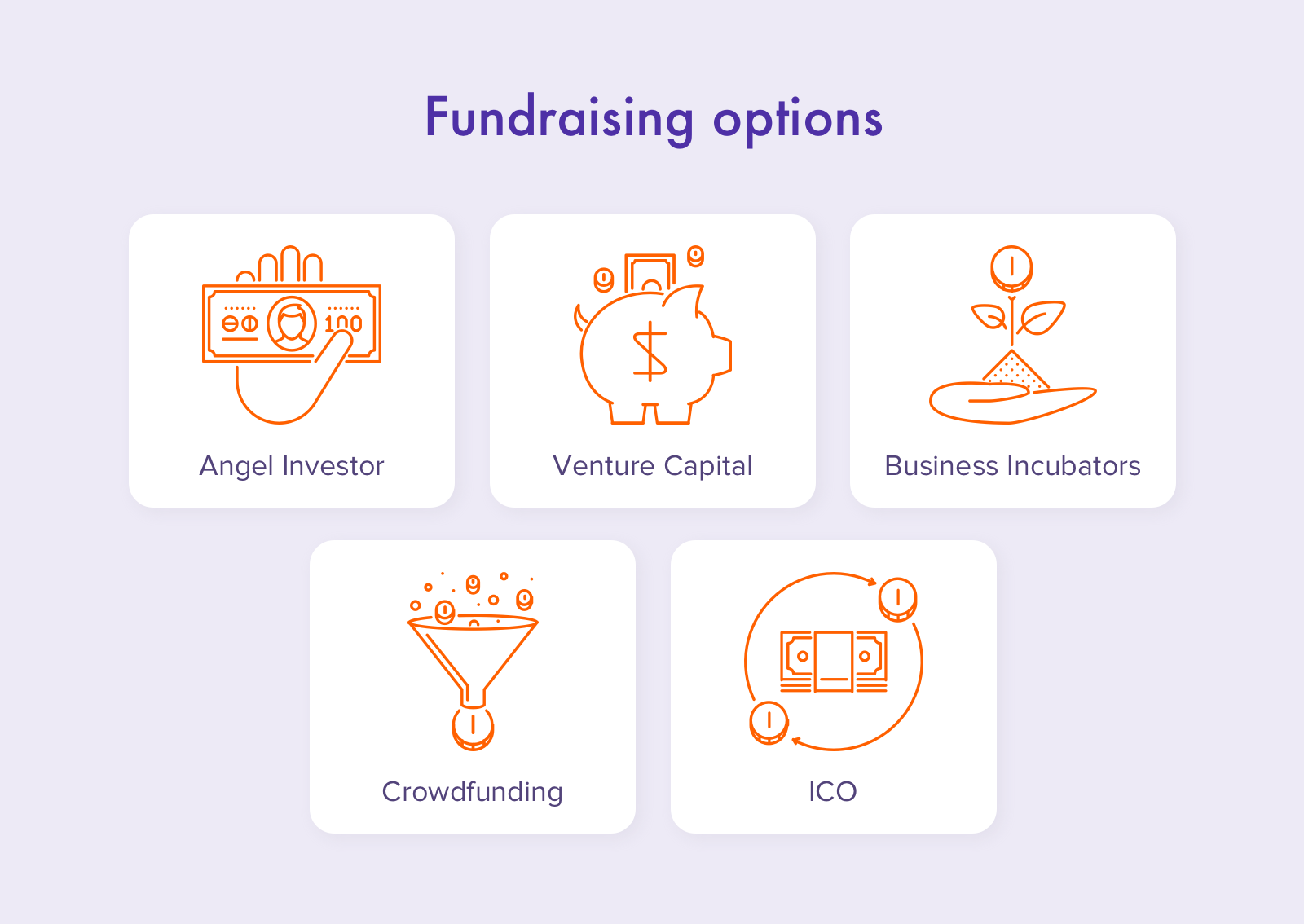
▪️Angel Investors — This category of investors usually stand for one person that wants to invest in your startup. It’s common to cooperate with them during seed capital or Series A. You can find the investors at the conferences related to your industry.
It’s also possible to find Angels online using such services as Angellist and Gust. They all work pretty much in the same manner, all trying to find promising project ideas and willing to help them start.
▪️Venture Capital — This type of investor normally includes enterprises or large companies that provide promising startups with money. These investors tend to be very demanding. To get investments from them, you need to assure them that there is little or no risk.
The only way to secure a Venture Capital investment is through multiple meetings with the companies’ representatives. The process can be extremely time consuming and arduous. to get their support and finances.
If you are unsuccessful in attracting a VC during the launch phase of your business, you may attract them after launch when they see you can be profitable.
▪️Business Incubators. These are organizations that help startups grow. For example, they offer seed capital for promising ideas. They also serve as mentors to newly minted CEO’s organizations by providing educational workshops and lectures as well as having successful business people engage with startup leaders.
Business Incubators exist all over the world, Y Combinator, for example, has worked with such popular startups as Airbnb, Dropbox, and others.
▪️Crowdfunding. These platforms collect donations from people. This way is perfect if your idea is connected to the charity. GoFundMe and KickStarter are the most popular platforms for crowdfunding. Also, it’s possible to use crowdfunding if you are ready to give some bonuses to your investors.
▪️Initial Coin Offering. This type is new for the investment field. An Initial Coin Offering (ICO) is the cryptocurrency industry’s equivalent to an Initial Public Offering (IPO). ICOs act as a way to raise funds, where a company looking to raise money to create a new coin, app, or service launches an ICO.
Step #3. Pitch your startup
To get investments, you need to describe your project. It’s required to persuade investors that there is minimum risk. To achieve this result, you need to prepare. There are many ways to express your new idea; these are two of them.
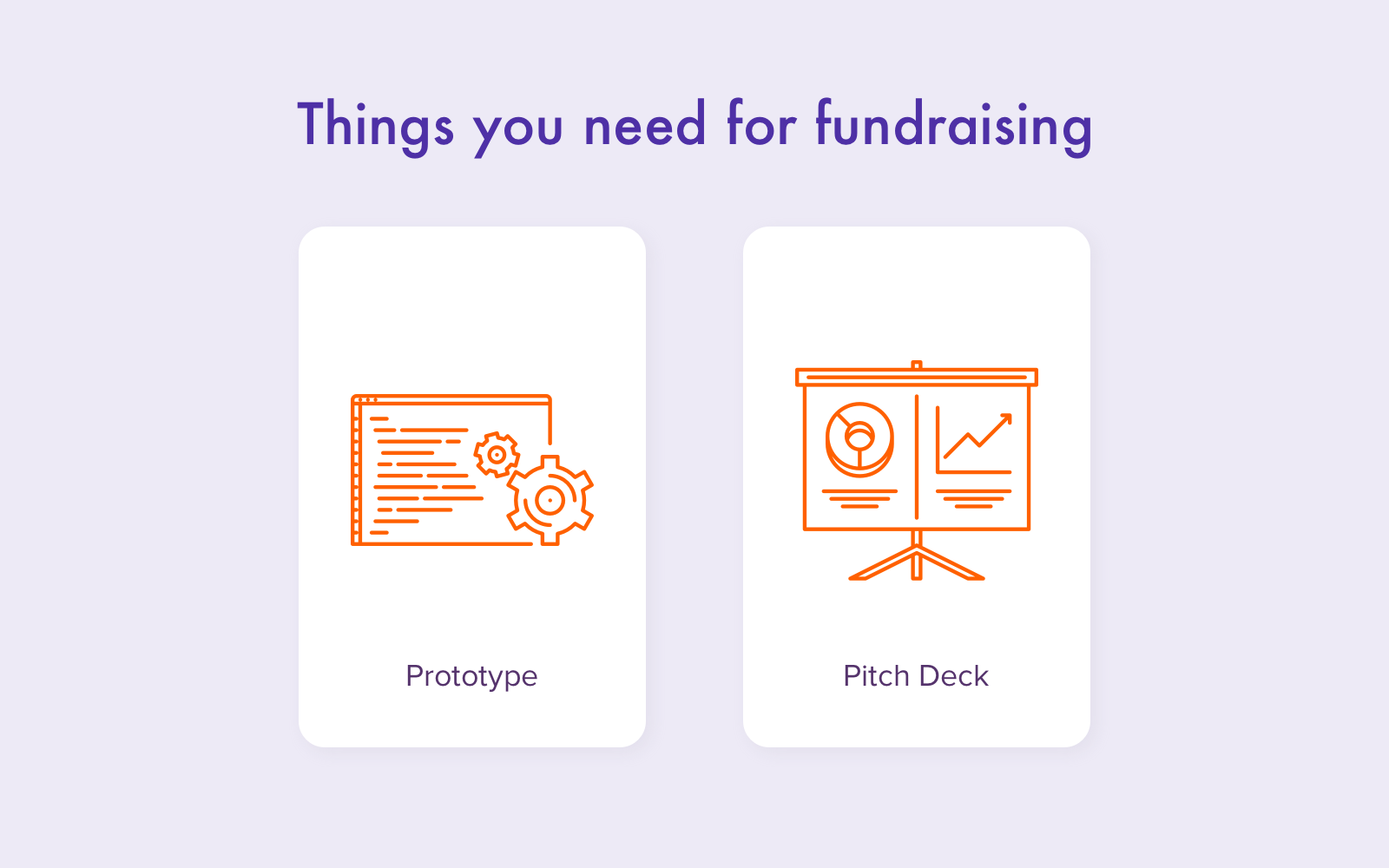
▪️Prototype — In the case of a software development solution you could present a workable prototype, allowing potential investors to see the main project idea and the detailed functionality through an MPV version of the app.
You could also present the design of your software solution which should be detailed enough to show that it is different than anything else they’ve seen before.
▪️Pitch deck — The Pitch Deck is basically the physical presentation of your startup idea. This presentation should contain data about expected revenue, marketing strategy, and more. There are many tools you can use to make a presentation including basic PowerPoint and Google Slides and more professional ones such as Figma.
Mistakes to avoid during startup fundraising
There are several reasons why investors reject certain investment opportunities.
▪️Obscure niche — your target market isn’t clearly defined. You need to define your intended niche and be able to show how your new idea meets customer needs better than anyone else competing in the same space.
▪️Copied idea — it’s obvious to the investor that you have copied someone else’s idea — and it’s one of the most common reasons why investors don’t provide funding. In order to attract an investor’s attention, your idea must not only be fresh in terms of solving an important problem in your niche, it also has to be unique and stand out from your competition.
▪️Inflexibility — you are unwilling to modify your idea in the face of valid feedback. Adhering to your original idea in the face of new input and valid criticism could take you out of the funding game.
Many successful startups have adopted a modified concept along the road to secure funding based on what they’ve learned from talking to potential customers and by observing the actions of potential competitors.
▪️Bad developers — your developers don’t deliver what they promised. Even if the project idea is excellent, bad developers can change the situation. For example, freelancers tend to not meet deadlines.
One of the most popular options is to outsource web development activities in an effort to get more reliable delivery of results, affordable prices and higher quality. Clutch is useful to study the reviews of various outsourcers.
▪️One founder — you have only one investor, and that is you! Startups with only one founder investor tend to be more risky for investors who generally prefer to see a number of people who have put up their money to support your idea. There’s comfort in crowd support so try and assemble an investor group before looking for additional financing.
Securing the funding you need for your startup can be time-consuming and complicated, and there are a number of pitfalls to avoid. But if you “do your work” as discussed here, your chances of success will improve significantly.
— Vitaly Kuprenko is a writer for Cleveroad. It’s a web and mobile app development company with headquarters in Ukraine. He enjoys writing about technology and digital marketing.

- Posted 4.25.20 at 04:11 am by Roy Osing
- Permalink
April 20, 2020
Why being second is absolutely the wrong position to have

Source: Pexels
Why being second is absolutely the wrong position to have.
Seriously, think about it.
When you’re second, you’re staring at a backside; I’ve never found it a pleasant view particularly when you consider what the unobstructed view looks like.
Without the backside staring you in the face you’re looking at wide open spaces, a landscape void of other humans; nothing but untampered dimensionless opportunity.
The backside placed before you is not only an obstruction, it’s the tissue that stands between you and your maximum potential.
I believe we should be encouraged to avoid the backside view, to go for the position that has an expansive view with no backsides in sight.
But the narrative out there today is exactly the opposite: “It’s not winning that’s important, it’s playing the game.” and “I don’t care if little Roy wins the game as long as he is having fun.” is the normal commentary that pervades the conversation when it comes to the notion of winning.
Some schools on sports day don’t want to hand out winning ribbons because it highlights the winners and says nothing about participation. “Everybody should get a ribbon” essentially communicates that you should be rewarded for just showing up.
What a shock when kids in these schools grow up and have to fight for a career among hungry competitors.
And some schools don’t hand out letter grades; rather they introduce a system that recognizes effort and not the result. So, if you put in a ton of effort you might get an “exceeding” rating; if you didn’t try that hard you may get an “improvement needed” one.
Trying is important but the ultimate measure of how effective one is at trying are the results that are delivered.
The fact is, that in the real adult world, where you stand in relation to others matters; it separates you from the other participants.
“I achieved a first class mark in economics” is more important to your life than “I tried hard and enjoyed the subject content.” Like it or not, that’s the way it is.
A job candidate would last about 30 seconds in front of me after uttering such nonsense. What I want to know is what they achieved, scholastically and organizationally not that they “tried real hard”.
Anytime I have been sucked into believing that coming second was ok it was rationalization behaviour at best
It was an attempt to make myself believe that looking at someone’s backside was acceptable.
The problem is that when I find myself accepting a posterior perspective there are some seriously destructive forces at play that can cause personal damage.
Motivation — My motivation to drive forward stops.
Why should I push myself to try and show my backside to the leader of “the race”? And as a result of this logic, I take my foot off the gas because I don’t believe there will be any consequences.
But there ARE consequences. I may not overtake the backside I’m staring at but at least I’m motivated to try which is completely different than accepting the inevitability of being second or third or fourth and being ok with it.
Survival and success in the world requires highly motivated individuals who will do whatever it takes to avoid a backside view.
Creativity — My creativity takes a rest.
Highly motivated people tap into their creative spirit naturally as their heart beats. If I’m driven to see the backside in my rear view mirror, I MUST solve the problem I’m looking at. I MUST look for an opportunity to get by it.
But if I’m ok with second position, I stop looking for a solution; I don’t need to be creative in the moment and I stop my creative juices from flowing.
Success demands creativity; the backside view stultifies it.
Competition — My competitors have an advantage.
Hungry competitors are always looking for an edge, and if they see that I’m complacent and have no motivation to seek the number one position they will gladly step in and achieve it themselves.
It’s a zero sum game to them and it’s the easiest way for them to gain an advantage: whatever I give up, they take. Simple.
So while I suffer this ideological disease, they pump up the volume to put yet another backside in my forward view. Winners NEVER let their competition have an advantage because they pay for it in the long run.
A second best attitude let’s them in when I should be shutting them out.
Rationalization — I’m fooling myself.
I believe I’ve accomplished something when I haven’t, even though people around me say “Well done!” “Good job!”.
A false sense of accomplishment is what it is when I see a backside and feel pleased with my performance. I guess it’s better than seeing 2 backsides buts never as good as seeing none at all. None = brilliant and that’s THE target I’m after.
The reality is that a backside view means I’m not going to grab the brass ring.
The only salvation from a backside view is if I learn something from the experience and never see a backside again.
So if my backside learnings catapult me into an open field in my next competition then second works as an interim step to my final goal.
Teaching — I’m failing my job as a role model to others I care about.
I see myself as a teacher, and being ok with a backside view contaminates my perspective which in turn is manifested in the lessons I teach.
What I want to help people with is how to win, how to be remarkable and how to transform their reality into amazing things.
How can I do that when I am happy with seeing back pockets? I don’t think I can.
So for better or for worse I need to aspire to an open field at my feet if I am to be able to help my closest people be the best they can be.
Don’t get sucked in to the playing the game is what’s really important narrative. It’s not the real world and it robs you of the very essentials it takes to achieve rewards in your life and your career.
Don’t look at the backside.
Pass it by…
Cheers,
Roy
Check out my BE DiFFERENT or be dead Book Series
- Posted 4.20.20 at 05:12 am by Roy Osing
- Permalink
April 18, 2020
How to use the principles of influence in online marketing

Source: Pexels
In 1984, psychologist Robert Cialdini wrote a groundbreaking book called Influence: The Psychology of Persuasion.
It was based on years of studying the sales strategies used in car dealerships, telemarketing firms and fund-raising organizations to identify six key principles that influenced people to make buying decisions.
His work has helped many business over many decades, and the same principles also apply to online businesses.
Let’s take a look at each of the six principles and give you an idea of how they can be used in online marketing:
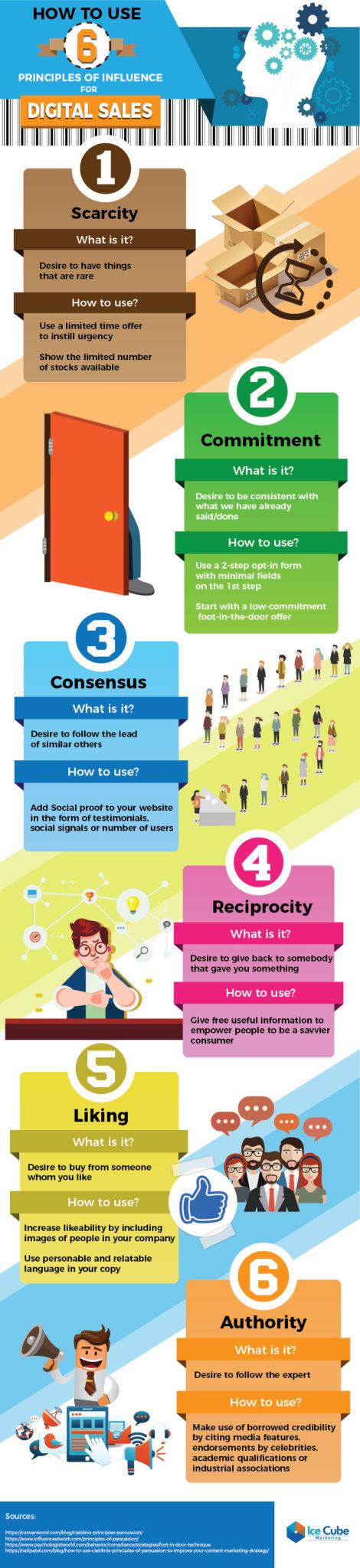
1. Scarcity
People are always driven to take action when things are scarce. If you want your offers to really entice them to make a purchase, you need to give them a strong reason. There are many ways to use scarcity in your online marketing.
This can be anything from offering a time sensitive discount, providing exclusive bonuses for the first buyers, to only selling a limited number of products for acting on your offer.
2. Commitment
People are more inclined to take action once they’ve committed to a previous action. The idea here is to get people to act on small commitments and lead them forward with bigger ones throughout the process. You can think of it as an ascending ladder.
A great way to use this principle in online marketing is to start with lead generation. Give new subscribers a valuable gift for signing up to your email list. You can then follow up with a low cost offer and follow that up later with a higher priced offer.
3. Consensus and social proof
It’s human nature to look to others for proof. People want to follow the crowd because they want to belong and make the right decisions. Social proof is a form of consensus where things like customer testimonials can help convince prospects that your product or service has great value.
A great way to use this in online marketing is to use case studies and personal video testimonials on your sales pages and content. In the eCommerce industry, reviews are one of the most powerful forms of social proof. If you want to go for consensus, you can focus on building a community and create stories involving your customers.
4. Reciprocity
When we are given something of value, it’s normal to return the favor. This principle of reciprocity is a simple buy powerful way to get prospects and customers to take action. A great way to use reciprocity is to offer something that is appealing and relevant to your audience.
This can be anything from free samples, free products, informative content, and free trials. This not only makes people want to return the favor, it gives them a glimpse of the value your business offers.
5. Liking
At the end of the day, people prefer to do business with people they like. This principle is simple but not easy to pull off. How can you get people to like you with online marketing?
You can create a strong personality, tell emotional stories, engage your audience, provide valuable content, and establish clear brand values. The whole process will build a relationship with your audience and also communicate all the ways your business is distinct from the competition.
6. Authority
People want a way to distinguish an average person from an expert. By positioning yourself as an authority, you will be able to do a better job in selling your product or service online.
How do you establish authority? You can mention recommendations from well known figures in your industry, use authority badges (As Seen on TV, Featured on Fox News, Mentioned on the Morning Show, etc.). Other authoritative elements like certifications, degrees, and licenses will also help.
Have you come up with any ideas on how to use these six principles in your online marketing yet? These examples should give you a lot to work off. Make sure you integrate as many of these principles as you can for your next marketing campaign.
— Ted Chong is from Ice Cube Marketing, a digital marketing agency in Singapore that helps local small businesses acquire leads from channels such as Facebook and Google.

- Posted 4.18.20 at 05:07 am by Roy Osing
- Permalink
April 13, 2020
How COVID-19 can actually help a small business do better

Source: Pexels
How COVID-19 can actually help a small business do better.
I know you’re struggling to keep the lights on, pay your employees and just keep your head above water in these insane times.
And I wish you all the very best of luck and that each and everyone of you come out at the end of this deadly tunnel safe and still able to provide the services that we all need in our communities.
So what can you do now that the pause button has been pushed? How can you make the very best of a bad situation and prepare yourself when times get better (and they will)?
Unlike most of a small business leader’s life, you just may have some time available to work ON your business instead of constantly working IN your business 24X7.
You rarely have had the opportunity to look forward to making sure you’re on a path that will increase the likelihood of success because day-in and day-out you’re focusing on what you need to do TODAY to make ends meet.
Here are 5 things you might want to do with your new found bandwidth.
1. Work on the game plan for your business
Whenever I’ve asked a small business owner to work on their business strategy, I get “I don’t have time for that stuff. I’m too busy.”
Well guess what? Now you have the time even though you might not think your business future is great.
Issues to consider in your strategic game plan review:
▪️Reset your growth goals. COVID has destroyed every small business revenue plan so it’s time to reset it. Develop a new 36-month revenue plan with a startup mentality. Think about your challenge as starting over again, because that’s what you’re doing.
▪️Question whether your customer base is still appropriate. After COVID, people will have changed — your previous customers included — and their buying habits have probably changed as well.
You may decide to try and attract different customers than the ones you had prior to the pandemic.
▪️Reassess your competitive approach. Post-COVID, if you choose different customers to attract, you will probably have new competitors to contend with so you’ll probably need a new strategy to beat them.
2. Learn more about new technologies
COVID rules to respect social distancing requires enabling technology, and there are many that have risen in popularity, some old and some new.
FaceTime, Skype have seen a resurgence in use and newer portals such as Houseparty and ZOOM have risen in popularity.
Take the COVID break to learn about communications technology and how it can be used to engage with your customers, suppliers and partners.
The application of technology has the potential to build your competitive strength so use this time to learn as much as you can about the options available.
3. Research new potential suppliers
Again, when you consider going after different customers, you might have to consider modifying your products and services which, in turn, might require new sourcing.
Or even if you decide to stay with your current portfolio of customers and service offerings, you should probably take the time to see if new suppliers might give you a better deal than your present ones.
Better margins should always be in your crosshairs so now you have a window to explore your options.
Take it.
4. Scout out some potential new employees
My view has always been that leaders need to be constantly on the lookout for new talent, and for small business it’s always a challenge to find the right people.
So take the “gift” COVID has given you and get out there and hunt. Hunt for great service people who will carry you reincarnated business to new levels and hunt for others who according to your revitalized game plan are critical to your success.
Get proactive and don’t wait for people to come to you. And poach them from other businesses if you have to.
5. Talk to your customers
Many news video clips these days show customers walking up to a small business establishment, trying to open the door and looking inside with yearning looks on their faces.
Why not take some of your time available and stand outside your closed door and (at the correct social distance away from them of course) talk to people who just might ask you something about your business?
It’s a hell of a way to not only establish a personal connection with people who are already leaning in to you, but it’s also an incredible opportunity to learn something from them that might be of value when you open back up.
Oh, and don’t forget they are very likely to tell their friends and family how AMAZED they were to see you there in these times.
Every business needs referrals; this is a natural and powerful way to get them.
COVID-forced downtime wasn’t in your plan and it’s creating havoc for you, your employees and your customers.
But there might be some benefits if you look for them.
Cheers,
Roy
Check out my BE DiFFERENT or be dead Book Series
- Posted 4.13.20 at 06:22 am by Roy Osing
- Permalink