


Roy's Blog: December 2012
December 13, 2012
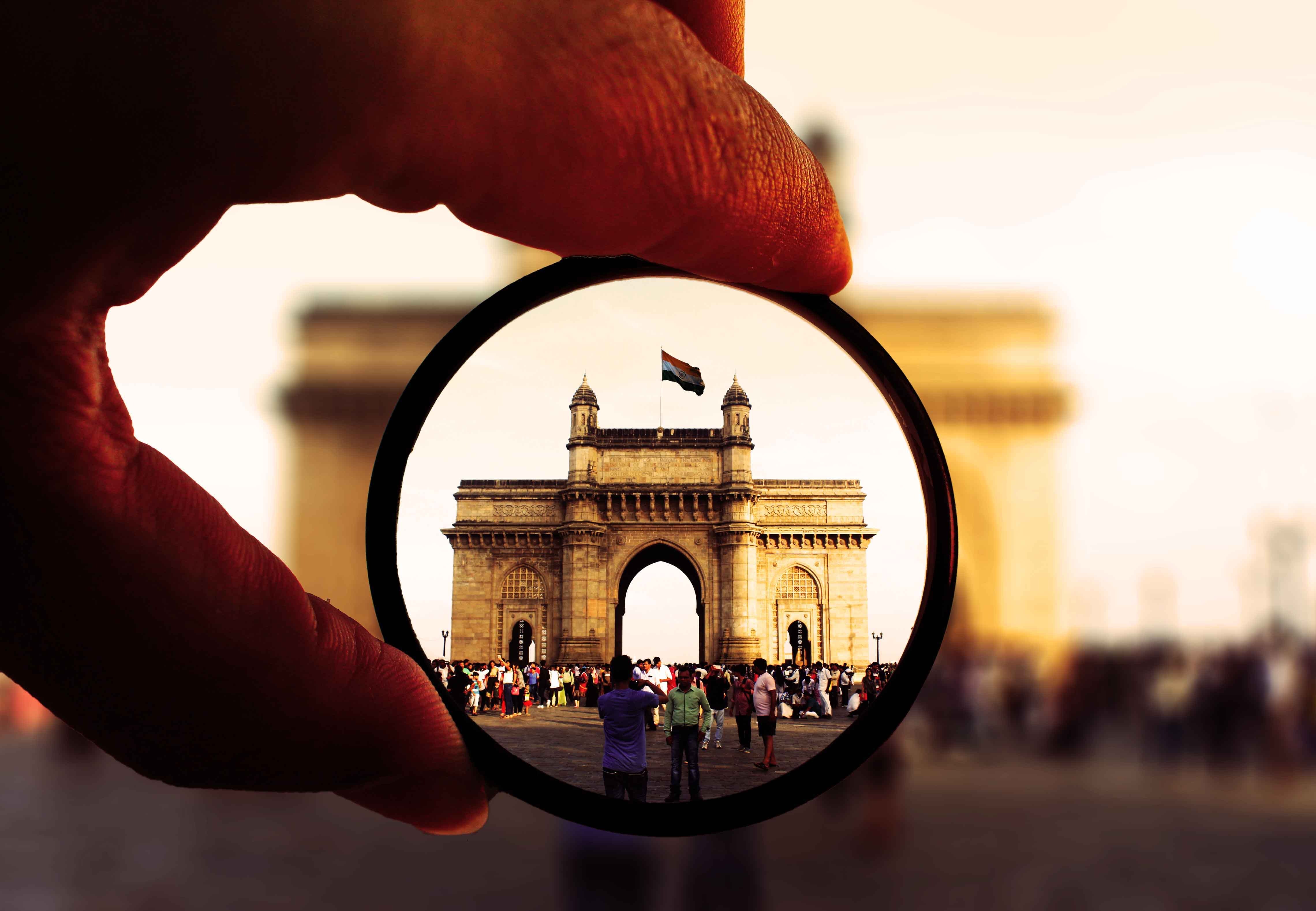
Why is Baboo in Mumbai absolutely amazing at creating unforgettable experiences?
Source: Pexels
Why is Baboo in Mumbai India absolutely amazing at creating unforgettable experiences?
Mumbai, India.
It never ceases to amaze me how critical frontline people are in terms of creating lasting impressions on the people they touch
We have Baboo as our driver for the day. We easily negotiate a fare for the day. We ask him to show us the main points of interest and hit some of the better shopping areas. Off we go.
Mumbai is certainly a city of contrasts. Baboo doesn’t hide the poverty from us. He doesn’t make excuses for it. It simply is, and he factually reports on it. In fact, he actively embraces this side of his city to explain who is living in such conditions, and what they do to survive.
Like it or not, he puts the reality in our faces for us to understand.
He takes us to the Crawford Market where “Papa” (no doubt a colleague he has used many times before) guides us through a mosaic of businesses offering everything from fruits and vegetables to live animals.
Goats and birds occupy the premises. Men sleep above their cubicle stores. Not the pristine conditions of a modern supermarket, but Papa proudly delivers to us the amazing olfactory stimuli of the wonderful spices offered by his market friends.
Sellers are friendly. Not pushy. Remarkable in a very caring way.
Baboo asks questions. Many questions. And he listens intently. You know he wants to create the right experience for us. Shopping? What are we looking for? “No problem, I know a place.” is his consistent reply. And he delivers.
His excitement over what he discovers his own city is contagious.
We stumble upon the Tiffin-Wallahs, locals who pick up and deliver lunches to workers throughout the city. Mumbai is the only place in the world with this pick up and delivery system he tells us — another delightful harmless story.
They are loading the lunches on their bicycles for delivery. At Baboo’s shouts of encouragement, we jump from the car and snap pictures of this scarce opportunity.
You would think we’ve stumbled on an ancient treasure.
Maybe we have.
Baboo tells us what Gandhi allegedly said ‘Someone is always right’. And he adds his own spin: The customer is always right. Then goes on to explain to us how important it is to make sure tourists see the many faces of his City in a way that makes them comfortable.
Maybe they will talk about his City. Maybe they will return. He hopes.
After more shopping stops, lunch (and shopping) at The Taj Mahal Hotel, and a visit to the Outdoor Laundry area we are safely delivered back to our ship. Baboo asks more questions. ‘Were we happy with him today?’; ‘Did he do what we wanted of him?
We assure him that he was amazing and we stumble out of his chariot, exhausted.
Again, like Nasr in Petra, Jordan and Mohamed in Safaga, Egypt, I have discovered someone who passionately gets it.
A simple philosophy. Challenging and volatile environments. Executed brilliantly.
Leaving memories to cherish forever.
Thanks Baboo.
Cheers,
Roy
Check out my BE DiFFERENT or be dead Book Series
- Posted 12.13.12 at 10:43 am by Roy Osing
- Permalink
December 10, 2012
Why a fast follower is still a copycat and is a big mistake

Source: Pexels
Why a fast follower is still a copycat and is a big mistake.
Some organizations declare a fast follower strategy and claim that it is less risky than being a first mover.
The first mover is first-in the market with a new idea, original technology or revolutionary product.
Risk level can be high as customer response is uncertain while investments can be material.
The fast follower hopes to be in fast with a me-too response to the first mover and capture some of the market success of the innovation.
Risk is believed to be lower as the market response to the first mover can be observed and market entry strategy adjusted based on what is seen.
The fast follower is nothing more than a speedy copycat
Sure, they may tweak what the first mover does, but essentially they are going to market with the same proposition.
The fast follower is another version of emulating best-in-class or best-of-breed. Except in this case, the strategy is to be a fast copycat.
They strive to be the same as the first mover as soon as possible!
Rather than slowly inching themselves further into the competitive herd, they run into it.
Copying, disguised in any way, is risky as it prevents you from achieving a unique and special — vis-a-vis the competition — position in the market.
There can be no more risky position than that.
Cheers,
Roy
Check out my BE DiFFERENT or be dead Book Series
- Posted 12.10.12 at 10:41 am by Roy Osing
- Permalink
December 3, 2012
Why constant practice really isn’t the way for perfect results

Source: Unsplash
Why constant practice really isn’t the way for perfect results.
The implication is that if you repeat something often enough, striving for incremental improvements with each iteration, you will eventually get to a point where no further improvements can be made.
And ’perfect’ is achieved.
It might make sense if the outcome is produced from a well understood number of inputs. If a formula can be applied to predict the results.
If you want to consistently win at blackjack you need to understand and play on the basis of probability theory.
If a surgeon wants to successfully remove a tumour they must follow accepted surgical procedures, and the more they accurately conform to the procedures the more ‘perfect’ they become.
But what if you are looking for a creative outcome that is like no other; one that is different from what others are doing?
What if you want to capture the imagination of people?
▪️ A ‘painting’ that makes them cry?
▪️ A serving moment that leaves customers ‘gaspworthy’?
▪️ A policy that is intended to capture the hearts of people and show the humanity of the organization?
▪️ A product that meets the exact needs on a person and blows their mind?
Practice doesn’t make you perfect. It makes you conform to a prescribed set of rules.
Achieving best practices won’t make you noteworthy. Your only claim to fame is that you lead the herd. But still in the herd nevertheless.
Want to be perfect? Don’t try!
Don’t practice. Don’t fit-in.
Ignore what others are doing. Start something. Anything that creates value for people. Non-conform. Step out.
Create a beginning. Be an artist for others to follow.
Cheers,
Roy
Check out my BE DiFFERENT or be dead Book Series
- Posted 12.3.12 at 10:57 am by Roy Osing
- Permalink
November 5, 2012
11 simple ways great leaders micromanage ‘the customer moment’

Source: Pexels
11 simple ways great leaders micromanage ‘the customer moment’
Leaders must micromanage the customer moment
I know, leaders are supposed to set the tone and direction for the organization and then let people drive to deliver the results expected. A Leader that micromanages is often scorned and encouraged to “get out of the kitchen” and let the workers do their thing.
There is, however, one area that not only needs leadership hands-on involvement, it demands it if success is the end game.
The customer moment: that special instant when your most precious asset touches your organization. The moment of truth when things will either go brilliantly well or horribly wrong.
The moment when, based on the outcome, your customer will decide to either continue doing business with you or leave you and scream how terrible you are to their friends.
This moment requires an active deep-dive by the leader to ensure that the customer is
▪️ DAZZLED;
▪️ SMITTEN;
▪️ WOW’D;
▪️ BLOWN AWAY;
▪️ LEFT BREATHLESS.
This moment requires the leader’s fingerprints.
Here are 11 things leaders should do to micromanage the customer moment:
✔️ Tell your organization what you are up to and why it is so critically important to have blazing moments with your customers. Make sure everyone understands why you are getting into the engine room and getting your hands dirty. It’s not a trust issue; it’s a strategic one.
✔️ Declare what you expect every moment to look like; the key behaviors you expect.
✔️ Monitor moments. Open up your calendar to get to the frontline and witness how moments are being handled.
✔️ Provide real time feedback and coaching to your people engaging with moments.
✔️ Show ‘em how it’s done. Take some moments yourself and paint your folks a picture of what you expect a moment to be for the customer.
✔️ Catch them doing the right thing. Praise someone who has just handles a moment brilliantly. Recognize them to their peers.
✔️ Take notes of the things that get in the way of people being able to deliver dazzling moments. Rules, procedures and policies that are barriers to WOW!.
Be the champion who goes back inside the organization and removes the Grunge that prevents the frontline from doing what they have to do to achieve the right moment outcome.
✔️ Have fun. It you are seen to be enjoying the moment, they will too.
✔️ Be spontaneous. Show up unannounced. Leave your entourage behind. Make it about you, your folks and the moment.
✔️ Stream your experience to the rest of the organization. Publish what you learn in Roy’s moments for all to see and learn from.
✔️ Be consistent. Don’t let the flame diminish. Keep your fingerprint on the moment. If you let it wane in your personal priority list others will see, and conclude that the moment is simply another flavor-of-the-month.
Leaders: take personal ownership of the activities in your organization that are critical in delivering your business plan.
Do not delegate the stuff that will either make you win or lose. A customer moment is in this bag of stuff — Roy, do-it-yourself
It begs for your attention.
Cheers,
Roy
Check out my BE DiFFERENT or be dead Book Series
- Posted 11.5.12 at 10:52 am by Roy Osing
- Permalink