



Roy's Blog: February 2016
February 3, 2016
How your new brand dream can either succeed or die

Source: Unsplash
How your new brand dream can either succeed or die.
What or who in an organization has the greatest control over your brand?
Why is it disastrous to change your brand without changing your strategy with a new operational support infrastructure?
I’ve sat in board meetings as the EVP of marketing listening to board members pronounce their views on the company’s brand and how it should change to meet changing market conditions.
From the 21st floor, they declare what brand position best serves the organization in terms of the current business plan and the environment as they see it.
Yes, board members should have influence on brand positioning, as should people further down the line in marketing, advertising and public relations — not to mention a plethora of others in the organization who want to join the brand party because it’s fun to be involved.
But let’s be clear: the brand work done by these folks is at best aspirational and bears little resemblance to the impact felt by the brand when implemented and experienced by customers and other stakeholders.
The brand developed by marketing, for example, represents the value proposition that they want communicated in order to meet the marketing objectives involving competitive differentiation and customer value considerations.
Whether it’s declared by the board or marketing, it’s a paper brand position at this stage — a brave idea only
Because at the end of the day, if an organization can’t deliver on its brand promise, the promise is useless and and is seen as a lie by all who witness it.
The brand stays in the ‘dream’ stage until it’s edited, filtered and tested by all of the practical, operational factors that impact the brand’s efficacy.
In my experience, these are the factors that either reinforce the brand dream or kill it.
▪️The frontline of the organization who engage with demanding customers day-in and day-out with aggressive competitors must believe the brand promise.
They must feel that they can deliver on the promise 24X7, because if they don’t believe, the dream dies;
▪️Operating processes that impact the way customers engage with the organization must support the brand promise. If, for example, the brand promises a friendly future but the internal policies make it cumbersome and difficult for customers to transact with the organization, the promise and delivery collide and the brand lie is borne over and over again. And the dream dies;
▪️Internal rules and policies affecting the customer experience must be in harmony with the brand promise. If the brand promises amazing customer experiences but internal rules force the customer through hoops they don’t like, customers are pissed off, they tell their friends what horrific service is being delivered and the dream dies;
▪️Frontline people must have the personal attitude, life experience and competence to deliver the brand promise day-in and day-out. Rude and uncaring treatment of a customer renders an organization as self-serving and narcissistic with utter disregard for the needs and wants of the people they serve. And the dream dies;
▪️The organization must be cleansed if the grunge and CRAP that gets in the way of employees delivering the brand promise. If frontline people are constantly fighting unnecessary internal roadblocks that get in the way of delivering what customers crave, again, the customer experience suffers and once loyal customers leave for a more friendly environment. And the dream dies;
▪️Frontline emotion and proclivity to serve others must be a huge component in the engagement process if the organization is to maximize the value of the customer experience, and this requires that people with a high EQ - emotional quotient - are recruited into frontline positions. If frontliners don’t illicit goosebumps during the interview process then the wrong person is being hired. And the dream dies.
Changing your lipstick
You can put lipstick on a pig, but it’s still a pig.
▪️There are many organizations that decide to rebrand themselves without addressing the alignment factors discussed in the previous points — and nothing changes. They create a new identity with a flashy new logo and tag line but the essence of the organization carries on the way it always has. For these organizations, leadership seems to believe that the new logo will miraculously change their performance, but it doesn’t.
They overhaul their web sites with a new look and feel. Advertising messages change stressing an aspect of the organization they feel is now important and nothing changes.
The same operations problems persist; the same employee morale issues remain and competitive vulnerabilities continue despite the fact that how the organization is visually presented to the market has been morphed into something different. And the dream dies.
A brand begins as a dream, conjured up by people intent on finding the best solution to the market challenge they face in a crazy changing environment. And it stays as a dream until leadership creates the infrastructure — the support systems — that makes the brand real.
If they’re not up to the task, the dream dies.
Cheers,
Roy
Check out my BE DiFFERENT or be dead Book Series
- Posted 2.3.16 at 12:00 pm by Roy Osing
- Permalink
January 31, 2016
Why marketing to the crowd really sucks

Source: Unsplash
Why marketing to the crowd really sucks.
Marketing to the crowd sucks; it has no future.
‘ME’ marketing will destroy traditional marketing; it’s all about the individual not the crowd.
Brilliant marketers get that ‘ME’ segments generate higher returns than market segments produced by traditional marketing.
The four bases of commonly prescribed market segmentation are demographics, psychographics, behavior and location (‘geographics’) and the marketing process is to develop programs targeted at potential customers with similar traits within a particular segment.
Segmentation studies are based on observations of population behavior; the characteristics of the masses (represented by the ‘average’ person in the population) determine the conclusions of the study.
Why are these four segments used as the prescription for marketing segmentation? Because this type of data on people is readily available to the marketer.
Census data provides demographic and location information, billing and web visitor tracking systems produce product usage information and standard market research studies ask for lifestyle preferences which people are generally ok with providing.
For a marketing program, individuals are ‘mapped’ into each of these segments and are assumed to be like everyone else in their segment in terms of their likelihood to be attracted to a particular marketing program targeted to the segment.
The marketer’s assumption is that each person in the segment ‘looks the same’ in terms of the segmentation variable chosen and because of this similarity will all exhibit the same buying propensity.

Source: Unsplash
I’ve always found this assumption to be a non-starter. Just because I’m a skier does not in any way suggest that other skiers would be interested in buying the same products as I do.
And just because I’m in the boomer demographic with a specific income in no way is a good predictor of what others with similar characteristics will be interested in buying.
In this approach, an ‘average’ target for a service might be ‘a male boomer with an annual income of between $60 - $100K who lives in Vancouver and who has an annual ski pass at Whistler’.
And the flaw is that there may actually be some people who do have the targets attributes and who would be interested in what is being offered, but there will also be many with these attributes who won’t be interested and who will not be interested in the offer.
Traditional segmentation produces hits and misses and the marketer hopes there are more of the former. But you can’t count on it.
There are two serious issues with traditional segmentation methodology; its underlying assumptions are flawed.
First, having segmentation variables prescribed with the simplifying assumption that people tend to make purchase decisions on the basis of their demographics and so on, is fallacious; people express their differences with their own buying triggers which can’t be prescribed up front.
And second, assuming that people who exhibit the same segment characteristics will make similar buying decisions is simply not true; there are many sub-clusters within any given segment that have their own buying motivations quite apart from those in the overall segment.
‘ME segmentation’ is different from the commonly-used methodology, and should be adopted by a marketing organization that wants to stand out and perform above their peers.
ME segmentation poses the research question to an individual person not the population.
ME segmentation is strategic
It is considered as a strategic exercise which asks the question “How should the market be segmented to expose as many opportunities as I can?” not how do I assign my customer base into the prescribed segments.
The prescribed segmentation variables such as demographics, location, usage and lifestyle are not automatically used; they are given mild attention only: the focus is on determining the appropriate variable that will unlock the growth key for the organization.
The objective is not to place people in the prescribed segments, but to discover the appropriate segmentation elements that will produce the best sales result.
For example, if a specific web application best appeals to a Gen-Z individual with an IOS device, lives in Tsawwassen BC, is a member of a family of 4, and has a household provider who is female, then this is the appropriate segmentation to use.

Source: Unsplash
ME focuses on differences
Traditional segmentation seeks to define small numbers of customer groups that share similar characteristics, and these characteristics are broad and general in nature.
People who are over 65 years old who have right-of-centre political beliefs, women who live on the west coast who are pro abortion are examples of the segments that are produced by the traditional approach.
ME segmentation, on the other hand, is a process driven by the intent to find differences in customer clusters in order to expose as many customer clusters as possible.
Opportunities come from the differences between people NOT similarities among them.
And greater the number of segments that are defined, the more intelligence you have on each person in the cluster AND the better the ability to match a product, service or experience to their specific individual need.
The ME end game is on ‘the many’
As stated above, ME segmentation tries to define as many different customer clusters as possible in order to get closer to the individual with the belief that if you have a tight fit with an individual person, you have a better chance of selling them something than if the person’s desires are watered down by a larger group.
The probability of making a sale increases due to the fact that you are better able to match your offering with the more precise needs. wants and desires of the individuals in each cluster.
Person-research will yield many conclusions; one for each person you talk to.
And each conclusion will be valid unlike conclusions from population research which will be valid for some individuals (who just happen to be exactly identical to the population profile) and invalid for others (whose special unique characteristics don’t match the population profile.)
Better to have 100 different conclusions from 100 individual people rather than 1 conclusion based on the “average” person in a population of 100.
Sear hung for ME never ends
ME segmentation is a continuous process of going deeper and deeper into a cluster of customers. Obtaining more and more information on the individuals in the cluster.
The marketer needs to keep looking for differences until they are nose-to-nose with an individual because that’s when total understanding of people’s desires is achieved.
If there were one million customers, the result of the ME process would be one million segments of 1.
What are the implications of a million clusters of 1?
▪️you would be different as few undertake the journey;
▪️you would have more rich and deep knowledge on your customers than your competitors have;
▪️your sales potential would increase exponentially;
▪️you would build both share of market and customer share;
▪️customer loyalty would increase because you are better able to match your solutions to their needs and wants;
▪️you would be better able to survive unpredictable ’body blows’ you might suffer in an ever changing world because you are so tight with your customers.
All because you choose to put in place a marketing philosophy to treat segmentation as a continuous strategic learning down to the individual.
Keep segmenting your market until you are nose-to-nose with a person.

Source: Unsplash
The role of the ME marketer
Within the ME context of segmenting markets down to ‘the nose’ of an individual and examining their needs and wants rather than treating markets as homogeneous groups, the ME marketer’s role is different than what marketers have done in the past.
The ME marketer:
— Is driven by individual people have to say, not by what is implied by large markets or populations, and puts the individual before the average needs of the crowd;
— Is ok with the possibility of creating a unique marketing plan and product or service solution for an individual;
— Drives IT to ‘mass-personalized’ serving systems capable of uniqueness delivered to thousands of customers;
— Reserves Customer Appreciation Day events for specific customers who have demonstrated their loyalty to the company for many years;
— Looks to the power of new technology to define the needs of individuals and to use the secrets discovered to create personalized solutions and not to flog their current product portfolio;
— Uses every tactic available to build long term relationships with people rather than flog products at them with a focus on making short term sales. They see AI as a way to create new experiences for people and not a productivity tool;
— Is a strong advocate for the customer inside their organization, ‘doing battle’ for them to protect their interests in their own bureaucracy;
— Does whatever it takes to try and eliminate any dumb rules in their organization that infuriate customers and threaten their loyalty.
Mass marketers are the dying breed of the profession, and it starts with the practice of segmentation.
Segmenting down to ‘the nose of a person’ enables a deep understanding of what people want and desire, and exposes opportunities to not only enhance marketing productivity but also to create sustaining long term value for the organization.
ME markets are superior to crowds.
Cheers,
Roy
Check out my BE DiFFERENT or be dead Book Series
- Posted 1.31.16 at 04:29 pm by Roy Osing
- Permalink
January 25, 2016
5 proven ways to stay organized in a world of chaos

Source: Pexels
Many young professionals I mentor ask me “How do you stay organized?”
So many things to do.
So many people to satisfy.
So many demands on your time.
So many distractions.
In this milieu you can stay organized only if you start organized.
Here are 5 proven ways to get you going on the right track.
▪️Understand the objectives you’ve been asked to achieve.
If they are vague ask for clarification. Chasing unclear objectives is a waste of your precious time and energy and will prevent you from being a high performance individual. All it does is increase your anxiety level.
▪️Determine 3 priorities that will get you 80% there.
Forget the to-do list; you can’t juggle 10 projects in the air and hope to accomplish anything brilliant in any one of them. Organization is all about being focused on a few things that really matter.
▪️Eliminate the activities that don’t relate to your priorities.
This is your to-don’t list. If it’s not related to your main agenda, kill it. Or it will kill you.
▪️Don’t get sucked in with ‘yummy incoming’.
Once you have set your priorities there will be new temptations that try and pull you off your course. Don’t go there. Yummy will force you back into the run around mode.
▪️Stay in touch with your the results and adjust as you go.
Plans rarely turn out the way you intend. Be prepared to modify what you are doing or completely change direction and go Plan “B”.
If you can be calm and still in the moment when the world swirls around you; if you can maintain your focus when there are so many other possibilities to chase, you will not only be organized you will stand apart from everyone else.
You will be noticed.
You will be successful.
Cheers,
Roy
Check out my BE DiFFERENT or be dead Book Series
- Posted 1.25.16 at 04:09 am by Roy Osing
- Permalink
January 11, 2016
Do salespeople really know anything about great service?

Online sales is beating offline sales; here’s how ‘feet on the street’ can get their mojo back.
The traditional role of offline sales is pushing the profession closer to extinction.
It’s interesting to observe the evolution of sales over the past several years.
Technology affecting the online marketing and sales function has evolved at a blistering pace over the past 5 years.
Artificial Intelligence and web personalization tools allow organizations to track what individuals have researched and purchased and to present them with an array of buying options during their subsequent browsing sessions, and much more.
All under the guise of improving the customer online experience by making the suggested choice more relevant based on their past behaviour.
I personally find the experience anything but pleasant. Irrelevant ads pop up when I’m browsing and despite the claim from marketers that the digital tools they use are improving the customer experience, I find the process intrusive, annoying and frustrating. My reading experience is diminished with advertisers disrupting me with totally irrelevant product offers.
Notwithstanding the fact that the objective of enhancing the online customer experience is being met with varying degrees of success, this aspect of online sales is ahead of its offline cousin by an order of magnitude.
The online salesperson is nothing more than an algorithm devoid of emotion and ego; the offline one has all those constraints.
How can offline sales morph to what online sales is trying to achieve?
It’s all about context. Online sales is trying to improve the customer experience, and be more effective in anticipating products and services an individual might be interested in buying, so why doesn’t the offline sales world attempt the same?
I know offline sales aspire to build deep meaningful relationships with customers, but when you look at what motivates them it’s hard to believe.
My observation is that offline sales remains in the doldrums, holding on to its traditional role, motivated by:
— improving conversion rates;
— managing the sales funnel more effectively;
— get the sale;
— keeping the pressure on and don’t let the person say ‘no’;
— getting (and staying in) the faces of potential buyers;
— terminating the customer meeting if it looks like no sale is in the offing;
— pushing the product and make it fit what the customer wants;
— improving how to make a cold call;
— achieving quota;
— outperforming colleagues;
— winning the annual sales contest;
— earning salesperson of the year award.
With these motivating factors, it’s not believable when they say that relationships matter; their behaviour speaks otherwise. And certainly, without a strong relationship-building bias, the ability to anticipate customer purchasing behaviour is restricted.

So, what’s the solution? How can offline sales be better than their algorithmic online sales cousin?
We need to redefine the function as ‘un-sales’ and describe it as the folks that don’t sell; taking the focus off selling and putting it on building relationships. And change the way sales is compensated.
To get started, here are the rules for offline sales that must be put in place to build better relationships and experiences with the customer.
1. Pay people for relationships — If sales aren’t paid to exhibit the behaviours necessary to build relationships and create better experiences for their ‘target’ they won’t do it. Period.
So if leadership aspires to get closer to their customers but don’t put in place the infrastructure to enable it, nothing progressive will happen and the aspiration becomes an unfulfilled dream. And online sales keeps winning.
2. Stress (and micromanage) the conversation — Relationships and experiences get better when conversations between people are ingratiating and serve the needs of both parties.
Get rid of the one-way sales pitch. Make offliners the best listeners on the planet. Set a performance rule that the customer must occupy 80% of the conversation airtime. Have ego purging classes; strip dysfunctional ego-drive that prevents a productive two-way conversation (or remove the salesperson who can’t comply).
Make note-taking a compulsory part of the sales kit bag; it’s a vital element of giving someone a relevant, meaningful experience. No act shows that the salesperson cares about what the other person is saying than committing what is heard to paper. The act implies that one has been heard and that follow up is promised along with further action.
3. Find human ‘cravings’ — For the offline salesperson, behind every productive conversation (defined as a deeper relationship and a pleasant experience) is an objective; a specific intended outcome.
And for offline sales, the endgame of every customer engagement is to discover an insight on the other person that is useful in feeding the buying process. Further, if the insight is a rare find that no one else — i.e. the competition — knows, it’s a strategic gem that has the potential to achieve and maintain strategic advantage of the organization.
Knowledge is strategic power, and the offline salesperson is key in the process of learning what people desire and converting this knowledge into economic benefits for the firm.
4. Develop a serving culture — amazing long term relationships and memories can only be created by offline salespeople who like putting the needs of others before their own; they like serving people.
There are serving salespeople out there but in my experience they are rare because of the traditional role sales played and because of past hiring practices that reflected traditional sales values. Servants weren’t coveted; those with aggressive, pushy, and domineering attributes were given the priority.
As a start, how about devoting equal time to product and serving training? Teach the offliners what serving (to gather strategic insights) ‘looks like’ and why it’s critical to the future of the organization.
And, as an aside, if a serving culture were successfully created, offline sales would forever outpace online sales which depend on algorithms and predictive models produced by people who know the digital tool world, not people.
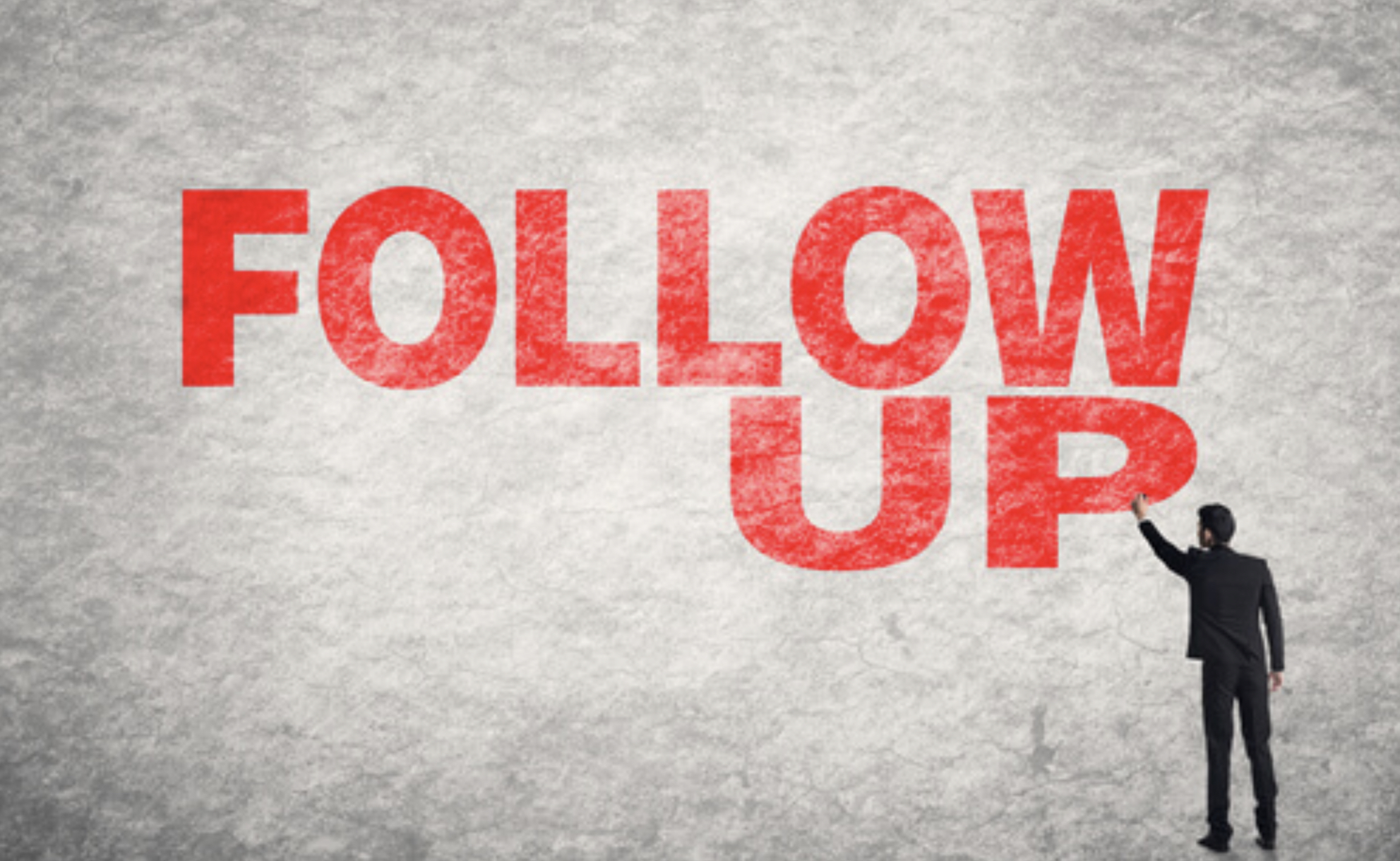
5. Follow up. Follow up. Follow up — Perhaps this might be viewed as a small thing, but it’s HUGE in terms of influencing experiences and relationships. If someone promises you something and you don’t hear from them for 2 weeks, how do you feel and what’s your conclusion? Most people would conclude that they lied to you and they really don’t care about your needs.
This is the one activity offline sales has the advantage. Yes, Amazon can inform us of the status of our delivery but it doesn’t fulfill any other follow up function. For example they don’t enquire on how we liked the purchase (relying on us to advise them if we were dissatisfied) and other more qualitative aspects of the buying process. Humans, only humans, do this the way it needs to be done.
6. Advocate for the customer — Wage battle for the customer inside your company.
There is nothing worse for a customer than having to battle the bureaucracy of an organization when they need something or when something has gone wrong and their expectations haven’t been met.
They are literally on their own to fight the rules and policies and other restrictions that make the experience extremely unpleasant and in many cases annoying.
The salesperson needs to put themselves on the line among their peers and bosses on the inside to represent the best interests of their customer.
Online sales cannot do this; only offline sales can. And it’s critically important to an experience and relationship. When a customer has an issue with their order and they have to deal with the ‘inside world’ of an organization, they feel alone. The offline salesperson can be their advocate to take the pain and suffering away; the organization is rewarded with loyalty and referrals.
Online selling has captured center stage because of the plethora of new digital tools available. But they have limitations that can only be remedied by offline sales.
The successful sales organization will learn how to balance online vs offline to optimize the strategic benefits of both channels.
Cheers,
Roy
Check out my BE DiFFERENT or be dead Book Series
- Posted 1.11.16 at 04:17 am by Roy Osing
- Permalink