



Roy's Blog: May 2022
May 10, 2022
What is breakaway leadership and how can you achieve it?

What is ‘Breakaway Leadership’ and how do you achieve it?
Breakaway Leadership dispels the MYTHS out there that a leader must:
❌ Have charisma.
❌ Have vision to ‘see in the future’.
❌ Command and direct people.
❌ Act with precision.
❌ Delegate, NOT micromanage.
❌ Be ‘BIG PICTURE’ minded and not get bogged down in detail.
“Leadership charisma is ‘communications on steroids’ and a classic case of style over substance.”
#Audacious
Breakaway Leaders, on the other hand, practices Audacious Unheard-of Ways focused on:
✔️ DIFFERENCES not similarities.
✔️ THE ONLY ONE—not one of many.
✔️ ’CRAZY’, not normal.
“Gem #1 that will make you a dauntless leader — STOP! doing stuff.”
#Audacious
✔️ CONTRARIAN not ‘going with the flow’.
✔️ PRACTICAL MOVES not theoretical textbook prescriptions..
✔️ EXECUTING and learning, not planning.
✔️ REACTING not predicting.
✔️ CUSTOMERS not products.
✔️ SERVING not selling.
✔️ INDIVIDUALS not crowds.
“Gem #2 that will make you a dauntless leader — STOP! following so many textbooks on leadership.”
#Audacious
✔️ “How can I HELP?” leading not “Do this!” managing.
✔️ CREATING not copying.
✔️ Helping FRONTLINERS not following the boss.
✔️ MICROMANAGING—DIY—not excessive delegation.
Food for thought and, for those leaders who want to step up their game, the necessary ingredients for an amazing and successful career.
Cheers,
Roy
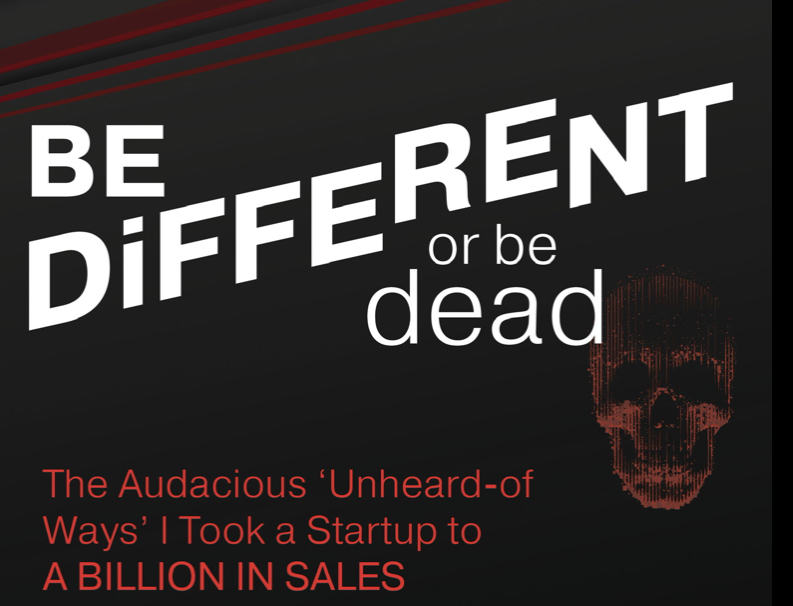
Check out my BE DiFFERENT or be dead Book Series
‘Audacious’ is my latest…
- Posted 5.10.22 at 07:01 am by Roy Osing
- Permalink
May 9, 2022
Why rare qualities in people result in amazing careers

Why rare qualities in people result in amazing careers.
Ever asked yourself these questions?
— “Am I intelligent?”
— “Am I qualified?”
— “Am I skilled?”
— “Am I competent?”
— “Am I good enough?”
— “Am I capable?”
Probably, at some point in your working life, one of these questions has crossed your life.
But have you ever asked yourself “Am I rare”?
You may not have, and yet this is the most important question of all to ask.
RARE people are:
▪️The ONLY ones who do what they do
▪️Special
▪️Unique
▪️Memorable
▪️Unforgettable
▪️One of a Kind
▪️Distinctive
▪️Stand outs in a crowd
▪️Weird in an amazing way
All the qualities of someone who is noticed in the crowd.
Someone who will attract attention.
Who others will notice.
Who will have a chance to show what they’ve got BEFORE others more commonplace.
BE RaRE.
BE the topic of conversation and object of someones attention.
BE the ONLY one who offers unique solutions to problems.
BE contrarian.
BE creative not a copycat.
RaRE is the prerequisite to success.
Cheers,
Roy
Check out my BE DiFFERENT or be dead Book Series
‘Audacious’ is my latest…
- Posted 5.9.22 at 04:11 am by Roy Osing
- Permalink
April 25, 2022
Why winning customers is more important than keeping them

Source: Pexels
Why winning customers is more important than keeping them.
How do you build a loyal customer base that is impervious to the sirens who try to lure them away from you with their enticing promises?
I’ve spent considerable space in this blog talking about how to build customer loyalty.
The challenge tends to be multifaceted in its set of solutions with no single silver bullet that will do the job.
Here are some specific tactics I’ve mentioned in other articles on the topic:
— recruit people who like to serve humans.
— abolish the dumb rules, policies and procedures in your organization that your customers don’t want to play by that only piss them off.
— create an empowering rule system to ‘say yes’, not one that is controlling and ‘says no’.
— listen to the frontline and do what they say you should do to improve how customers are served.
— put in place a service recovery strategy that is enacted whenever you screw a customer over.
If you fix your OOPS! and surprise me with something I don’t expect, I will forget the mistake and remember what you did to atone for your sins.
— allow frontline people to bend a rule in favor of the customer when it makes sense to do so.
— give your special marketing deals to your loyal customers first before offering them to customers if your competitors (this is a classic lie most organizations tell: they say they want to encourage and reward a customer who has been loyal to them for many years, but refuse to offer them the same special deal they offer someone who they want to attract from a competitor).
— pivot you’re call centers away from call processors with cost management as the priority to ‘loyalty centers’ where caring for people is the key— and don’t outsource them.
— forget about what your competitors are doing to take your customers; worry about what YOU are doing to KEEP them.
Although these tactics are proven to be effective in retaining customers, for long term benefits they need to be expressed within a cultural context.
They need a cultural framework that defines the people in the organization should value loyalty above anything else and that they should behave a certain way in order to earn it.
In my experience, this cultural context is best expressed this way:
In order to build long term customer loyalty, we must do whatever it takes to ‘win the customer’s business every day’.
In other words, if we want the customer’s loyalty forever, we need to have a ‘win their business everyday’ mindset that permeates the entire organization.
▪️We need to earn the right to serve them, not expect that since they are a customer of ours today, they will be a customer tomorrow.
▪️It’s an active expression connoting proactivity rather than a passive approach to ‘managing the account’.
◾️It’s a drive to take action to retain their business rather than assume the business is ours and react when we think it’s in jeopardy.
The key words in this value statement are: ‘Whatever ‘- ‘Win’ - ‘Business’ - ‘Everyday’
‘Whatever’ — there are few limits when it comes to keeping the customer on our side in every department of the organization.
Everyone’s job is to go all out to find appropriate ways to do what the customer wants.
And notwithstanding that every organization has rules and policies, there is substantial latitude given to step outside the rule system and do what’s needed to meet the customer’s needs.
‘Win’ — treat every customer engagement as if it represented a new sale. Expend the same amount of energy engaging with an existing customer as you would trying to win a customer away from their current supplier.
It’s amazing to me how much time and money most organizations invest in trying to either lure someone away from another company or win back a customer who was lost to a competitor.
The extra effort and cost made to ‘offer 3 months free service’ or ‘give away a TV’ should be reserved for loyal customers first and everyone else second but it is rarely done.
‘Business’ — get away from the notion of ‘managing the account’. Your actions with an existing customer are to expose problems and opportunities for them and new business for you.
It’s a proactive approach you take for every encounter you have with a customer who has been with you for some time.
The questions you ask all point to uncovering the issues they have that can be accommodated by your product and service solutions. The ‘How’s it going?’ call isn’t that at all; it’s prime objective is to create business value for the customer.
‘Everyday’ — winning their business isn’t an occasional act; it must be practiced every time out. You can’t take time off from this obligation. Every customer engagement must have ‘winning their business’ as the expected outcome.
Most organizations declare how important customers are to them and that they want to serve them in an exemplary way. Yet the culture of these organizations tells a different story; it values other principles.
In fact look at their performance planning system. Does it specifically measure an individual’s performance in the above categories?
If someone is not recognized and rewarded for how they contribute to and achieve the outcomes needed to build customer loyalty then nothing productive happens towards this goal.
Serious organizations ‘bake’ these behaviours into their rewards system rather than simply declaring their aspirational intent.
Only a ‘win the customer’s business everyday’ culture will produce a stream of loyal customers.
I challenge you to look at your actions and test them with the approach I advocate here to determine whether your organization is serious about procuring loyal customers or merely stating the intention but continuing to do the same-old, same-old things you’ve done in the past.
Cheers,
Roy
Check out my BE DiFFERENT or be dead Book Series
‘Audacious’ is my latest…
- Posted 4.25.22 at 03:34 am by Roy Osing
- Permalink
April 18, 2022
The 5 most important decisions a leader must make

Source: Unsplash
The 5 most important decisions a leader must make.
As a leader, you do have a choice as to how you spend your decision-making time; there are numerous possibilities when it comes to which decisions to make yourself and those that you leave for others.
How do you determine the ‘my decision’ areas?
The criteria I used was payback. Where could I add the greatest value to the organization?
It’s not about what you enjoy doing or where your strengths are; it’s about where others will realize the maximum benefit if you focus your decision-making time there.
You may be amazing at financial analysis and enjoy dabbling in numbers, but if marketing is a critical element of the organization’s strategic plan, for example, you need to leave financials to someone else and re-vector your decision making efforts.
Make the call on these strategic issues; they must be owned by the leader and no one else.
#1. The business plan
The strategic game plan for the organization.
Leadership value starts with deciding on the organization’s future.
And it should be created by the leader and not chosen from a number of options submitted by management.
What business you intend to be in and how you intend to differentiate yourself from your competition can only be decided by the leader who is directly accountable to ownership. It’s not something that can be delegated to business development folks.
#2. Values
The values that shape culture.
Values describe how employees behave with each other on the inside of the organization and externally with customers.
The leader must decide on the values critical to their strategic success and they must make the call on eliminating the traditional values that are no longer appropriate.
#3. The talent in the organization
The talent that gets recruited.
Strategy and values are the determinants of the people you recruit.
The leader must have their fingerprints on the people strategy. They must decide if it will do the job; it can’t be delegated to human resources.
The wrong people in critical roles will drive your strategy to fail. I used to participate in candidate interviews; a great way to monitor how your expectations are being met, as well as a great learning experience for the other managers in the room.
4. Architecting the customer ‘moment’
The customer moment architecture.
If the leader isn’t personally involved in defining what the customer transaction with the organization looks like, dysfunction results; everyone does their own thing and offers up their own version of serving the customer in an exemplary manner.
The truly great leaders don’t delegate the architecting of the customer moment; they own how customers are to be served.
The leader must decide what the moment looks like at the frontline level where customer perception is controlled. Leaders generally don’t like to engage at this level of detail, but this micromanaging is essential.
5. Aligning activities to strategy
Aligning activities to the strategic game plan of the organization.
This is where most things go wrong. The strategy says one thing but the people in the various functions behave in a manner inconsistent with the chosen direction.
The leader must decide on an alignment plan developed by every department in the organization; it’s the only way synergy is guaranteed.
Strategy, values, people, customers and organizational synergy. What could be more important to decide on for a leader?
Cheers,
Roy
Check out my BE DiFFERENT or be dead Book Series
‘Audacious’ is my latest…
- Posted 4.18.22 at 04:11 am by Roy Osing
- Permalink