



Roy's Blog: Your Life
January 16, 2017
7 easy ways to finally complete your To Do list

Source: Unsplash
7 easy ways to finally complete your To Do list.
Too much energy is consumed on making the list.
There is something gratifying about jotting down all the things you need to do. It quenches one’s thirst for being organized and for wanting some control over one’s life generally complicated by too many things to do with insufficient time and financial resources to do them.
When we complete the list we feel that we have accomplished something.
The longer the list, the more pleased we feel as the long list represents mastering the translation of our complicated and ever changing personal world into concrete terms.
We spend considerable time making the list and managing the list when changes are required.
Frequently we lose the list.
Occasionally we are unable the decipher items on the list due to the abbreviated language we use to save time making it.
And list making teaches a bad habit, namely that if you write an action plan down it will happen.
We all know this is delusional thinking. The list is never completed the way it was originally conceived yet we continue to pour our energy into making the list knowing (hopefully) that it is a draft at best.
It’s time to change the list dynamic from making the list to doIng the list.
I know it’s called a To Do list, but it’s realły a statement of intent: “(I intend)To Do” is the common interpretation of what the list means however the ‘Do’ action piece normalły gets short shrift.
It’s time to rid ourselves of good intentions; cut back on the time spent on creating the list and increase the time spent DOING it.
The list is an imperfect ‘creature’ anyway; it will never be 100% complete. Tomorrow something will come up that will render the list or a portion of it irrelevant. And the list will have to be revised.
Here are some quick-hit suggestions to do the list.
▪️Think short term. What absolutely must get done in the next 7 days? If you think beyond the next week you allow intentions to guide the list, you waste time and DO nothing.
▪️Limit the list to not more than 3 things. You can’t DO more and if you think you can, you are falling victim to intentions.
▪️Allocate the 3 DO items to the 7 days you have available. Space them out; don’t cram them in to one or two days where time constraints could impair your ability to execute.
▪️Don’t allocate the full 7 days to your DO items. Leave some spare time to deal with temporary unexpected events (which will always happen) that distract you from your list.
▪️Stay focused and avoid multitasking. ‘Get-one-done; move-on-to-the-next’ is the formula for DO. Some argue that sequential action is unimaginative; perhaps, but it gets things done.
▪️When an item on the list is done, strike it off but don’t replace it with anything. This could jeopardize the remaining item(s). You are on a 7-day DO cycle; new items will be listed at the start of the next cycle.
▪️Develop the next list at the end of the 6th day. Carry over incomplete tasks if they are still a high priority. Incorporate what you have learned from DOING in the current cycle.
Apply this template to your career and job where success is measured by what you DO, not by your intentions.
Cheers,
Roy
Check out my BE DiFFERENT or be dead Book Series
- Posted 1.16.17 at 04:16 am by Roy Osing
- Permalink
March 21, 2016
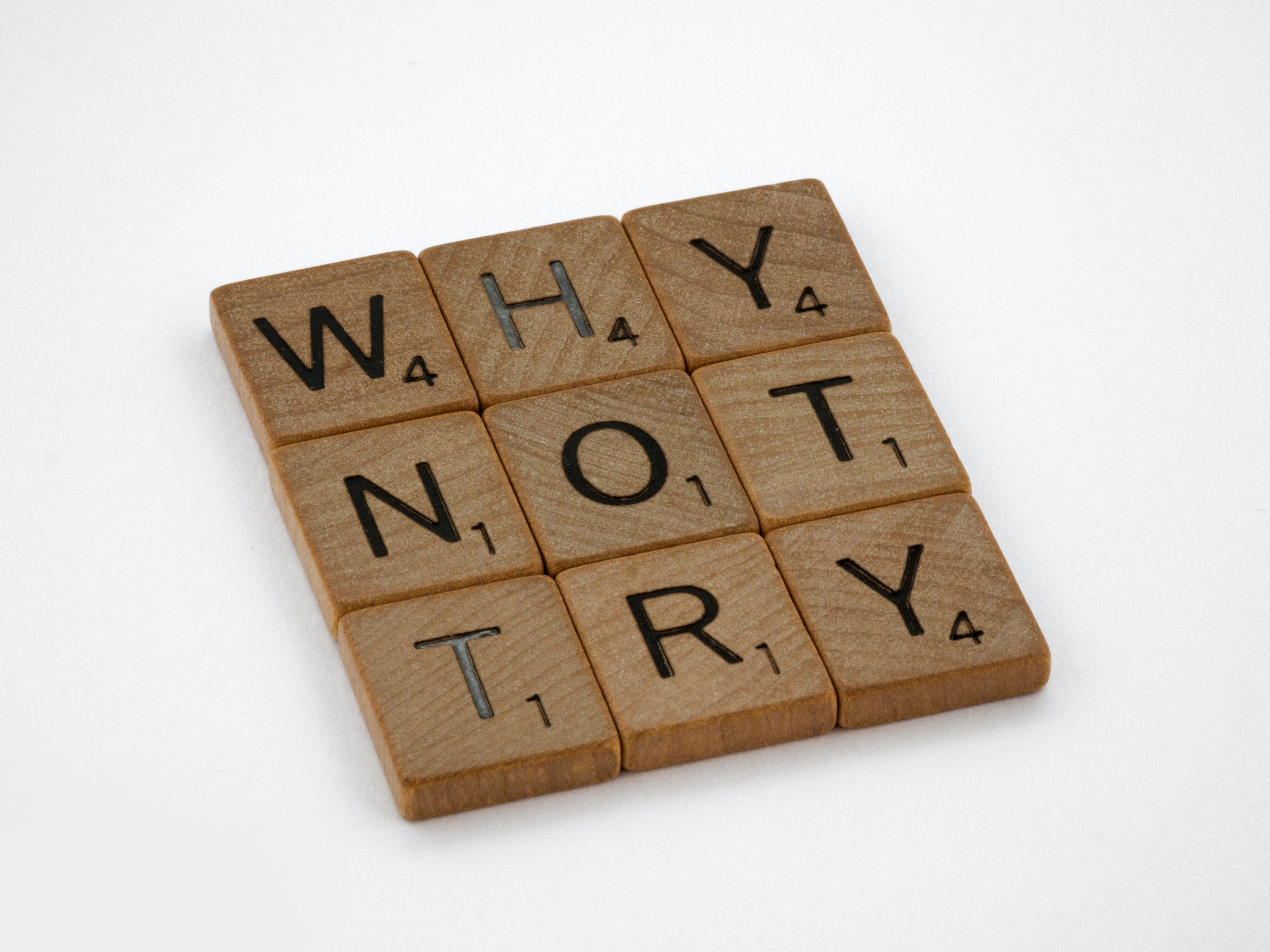
Why amazing strategies result from making bold and courageous ‘tries’
Source: Pexels
Why amazing strategies result from making bold and courageous ‘tries’.
Making tries is about all you can do in a complicated environment where making progress is exceedingly difficult.
There are no silver bullets in the business toolbox that produce a high probability that any given action you take will succeed and that you will see your plans progress.
The world simply won’t let that happen. There are too many competitors, too many regulations, too many fickle customers, too many unpredictable events and too many advancing technologies all happening at once to allow a single tactic, strategy or project to work the way you want it to.
I think COVID-19 illustrates the point that surviving in the face of this disastrous pandemic was impossible for some and plausible for others. Some organizations made it; others did not.
What is clear, however, is that those that did make it had to try and try and try different approaches to keep their business afloat; they didn’t get it right the first time.
Here’s the thing. Because we live in a world of constant and unpredictable change with so many factors affecting an organization, it’s virtually impossible to create a strategy that addresses and accommodates each and every variable perfectly — we will never ‘figure it all out’.
Innovation today is not a single one-shot event; it’s the end result of a number of successive small nano-wins.
The assumptions that are made to develop any strategy are always flawed — we assume no regulatory intervention and then it happens, or that current technologies will remain stable for the next 12 months and suddenly a new one appears in our markets and completely disrupts our business model, or that demand for our products will increase 8% but it comes in at 4%.
No sooner have we put our business plan to bed, some assumption we made changes, and we are forced back to the drawing board to shift our strategy.
This is permanent; it’s not a temporary phenomenon that will go away. This is organizational life from now on that will only intensify in terms of the number of random forces that will impact us and the weight that each will impose on our success.
Traditional business planning can’t successfully play out in this scenario.
The application of the standard analytical tool set won’t help thwart the unexpected missiles that will strike us; hours of debate over strengths, weaknesses, opportunities and threats won’t decrease the probability that we will likely have to take a random punch at some point.
And the quest for a perfect plan is time consuming, costly and is doomed to fail — there’s no such thing as a perfect anything.
Survival and success depends on the willingness to try new things constantly; if you’re feet aren’t moving you’re dead
So what’s the answer? How do we prepare our organization to succeed in the face of pandemic market forces?
If the original strategy can’t be depended on to deliver intended results, we need to loosen up on the process employed to create it, focus our efforts on plan execution and on trying new things imposed by the chaos that engulfs it.

Source: Pexels
Progress is a function of the number of tries we make.
The more tries, the more successes and the more progress; the fewer the tries — relying on one approach and not changing it in the face of crazy market forces — the less successes and the less likely the organization will survive.
How do you create a ‘tries’ culture? — First of all, ‘trying’ must be included in the organization’s set of values that describes the way that work is done.
Making more tries than the other guy is the way to achieve competitive advantage and to grow your business
For example the ‘tries’ modus operandi is focussed on skinny business cases — back of a napkin in many instances — and then quickly having a go to discover if something will work. And if changes are required because something doesn’t work, it’s changed on the run.
Contrast this with the traditional approach to undertaking something new: a robust 100-page business case is developed and is circulated to all 10 stakeholders for comment; it’s then modified to incorporate stakeholder input; it’s then re-circulated for final approval; an implementation committee is struck which prepares an action plan to implement the final proposal; the action plan is passed to the stakeholder group for comment and approval; and when approval is given action begins. Whew!
Clearly the ‘try’ culture is necessary to survive the times we’re in now and will be in going forward.
And a critical element of creating a ‘try’ culture is to incorporate the concept into the performance planning system of the organization (as an aside, this holds true regardless of the size of the organization.
A 10-person small business and a 10,000 employee company should have a ‘tries’ value guide it’s performance planning).
Set 30-day ‘tries’ targets throughout the organization. For example, you might want marketing to execute 5 tries for a new product launch process and sales to try 10 times to build a more effective training program. The point is to hold people accountable for the trying activity with the belief that the more activity, the more progress.
Track and monitor the trying results to ensure the trend is growing. Keep a funnel to make sure there is sufficient ‘tries’ activity going on to ensure there is a high likelihood that progress will be eventually made.
And make sure that something is learned from every try; you never want to repeat a try the same way if it didn’t produce the desired results. Each try must be different in some way so that a new possibility can be explored with every try.
In the new normal, progressive organizations will create a ‘try’ culture where progress is measured in baby steps not giant leaps
Cheers,
Roy
Check out my BE DiFFERENT or be dead Book Series
- Posted 3.21.16 at 05:53 am by Roy Osing
- Permalink
January 25, 2016
5 proven ways to stay organized in a world of chaos

Source: Pexels
Many young professionals I mentor ask me “How do you stay organized?”
So many things to do.
So many people to satisfy.
So many demands on your time.
So many distractions.
In this milieu you can stay organized only if you start organized.
Here are 5 proven ways to get you going on the right track.
▪️Understand the objectives you’ve been asked to achieve.
If they are vague ask for clarification. Chasing unclear objectives is a waste of your precious time and energy and will prevent you from being a high performance individual. All it does is increase your anxiety level.
▪️Determine 3 priorities that will get you 80% there.
Forget the to-do list; you can’t juggle 10 projects in the air and hope to accomplish anything brilliant in any one of them. Organization is all about being focused on a few things that really matter.
▪️Eliminate the activities that don’t relate to your priorities.
This is your to-don’t list. If it’s not related to your main agenda, kill it. Or it will kill you.
▪️Don’t get sucked in with ‘yummy incoming’.
Once you have set your priorities there will be new temptations that try and pull you off your course. Don’t go there. Yummy will force you back into the run around mode.
▪️Stay in touch with your the results and adjust as you go.
Plans rarely turn out the way you intend. Be prepared to modify what you are doing or completely change direction and go Plan “B”.
If you can be calm and still in the moment when the world swirls around you; if you can maintain your focus when there are so many other possibilities to chase, you will not only be organized you will stand apart from everyone else.
You will be noticed.
You will be successful.
Cheers,
Roy
Check out my BE DiFFERENT or be dead Book Series
- Posted 1.25.16 at 04:09 am by Roy Osing
- Permalink
August 10, 2015
Why a divergent stands out from the crowd and is awesome

Source: Unsplash
Why a divergent stands out from the crowd and is great.
What are you: a faction member or a divergent?
Factions are groups of sameness.
Crowds controlled by a set of rules; expected to think and behave in a calculated way.
A member of a faction is commanded to conform to a predetermined set of societal rules.
They are crafted from a common blueprint; stamped with the same tattoo.
A Divergent, on the other hand, is an independent thinker that can’t be controlled.
They create their own box to play in.
They are feared by faction leaders because their actions can’t be predicted and they have a disregard for any value set and rule system they can’t identify with.
We need more Divergent’s.
We need people who challenge; who question; who like to be CoNTRARIAN; who are disgusted with the status quo; who are ok with putting it all on the line.
I wonder what a faction of Divergent’s would look like?
Cheers,
Roy
Check out my BE DiFFERENT or be dead Book Series
- Posted 8.10.15 at 04:35 am by Roy Osing
- Permalink