



Roy's Blog: Entrepreneurs
September 5, 2022
Why Customer Learning is a better tool than Market Research

Source: Pexels
A critical component of audacious marketing is customer learning: a continuous process of developing a deep understanding of the customers in your business plan that you have chosen to SERVE.
It’s an organic capability that should be developed in your own organization rather than one which can be outsourced to another firm. Why? Because you nurture and retain the attributes that will distinguish your organization from the competitive hordes, and customer learning is one of the traits that will separate you from others and drive superlative performance’.
Most organizations rely on Market Research to try and understand customer demand; Customer Learning is the breakaway tool to make you DiFFERENT.
In addition, online tracking tools that monitor individuals’ behaviour on websites and search engines don’t try and understand the customer, they merely want to observe the products or services people click on and push advertising to them. One could argue that observing behaviour is a form of learning, but when the outcome is to have advertising messages relentlessly pushed at you when you are on the web, it has the pusher’s benefits in mind not the surfers.
This marketing tactic is a product flogging technique not a learning one.
Here is a comparison between the common Herd approach to mining customer data and the approach I used to take a startup to A BILLION IN SALES.
Market Research
- evaluates the market periodically.
- can be (and is often done so) outsourced to an external firm.
- is viewed as a study.
- takes a snapshot of a customer at a point in time.
- takes a narrow view of the customer.
- describes the ‘average’ customer.
- knows little about each individual studied.
- uses few traditional segmentation variables.
- focuses on determining customer ‘needs’.
▪️is an ongoing process. Every customer contact is treated as an opportunity to gather information about the customer. It’s anything but periodic.
▪️engages all employees. Each person is the organization is given the responsibility to zero-in on what a customer desires when they engage with them.
▪️is considered a core competency of the organization. Customer Learning is viewed as an essential element of the organization’s competitive strategy that will separate it from its competitors.
▪️looks at the customer continually. The continuous nature of the process is able to spot changes to customer demand and put the organization in a better place to respond to it.
▪️looks a the customer holistically. Customer Learning looks at the customer from a broad perspective, rather than focusing on what their narrow product and service requirements might be. It looks at lifestyle for consumers, or overall strategy for businesses for example.
▪️ seeks to understand very small groups of customers. Customer Learning focuses on small discrete groups of people as opposed to mass market segments in order to look for differences in demand rather than similarities which is the main emphasis of Market Research.
▪️targets knowledge on individuals rather than the ‘average’ person. The ultimate goal of Customer Learning I’d to go nose-to-nose with an individual; to know what each person—not a mass—craves and covets.
▪️uses many segmentation variables to obtain robust information on many unique customer groups. Customer Learning uses as many segmentation variables as it can to get closer to an individual.
▪️seeks to discover customer secrets and what people CRAVE.
The bottom line is that there is a role for market research, but it won’t get you a competitive advantage in your market.
Invest time and energy in building a customer learning capability in your organization and you will be handsomely rewarded.
Cheers,
Roy
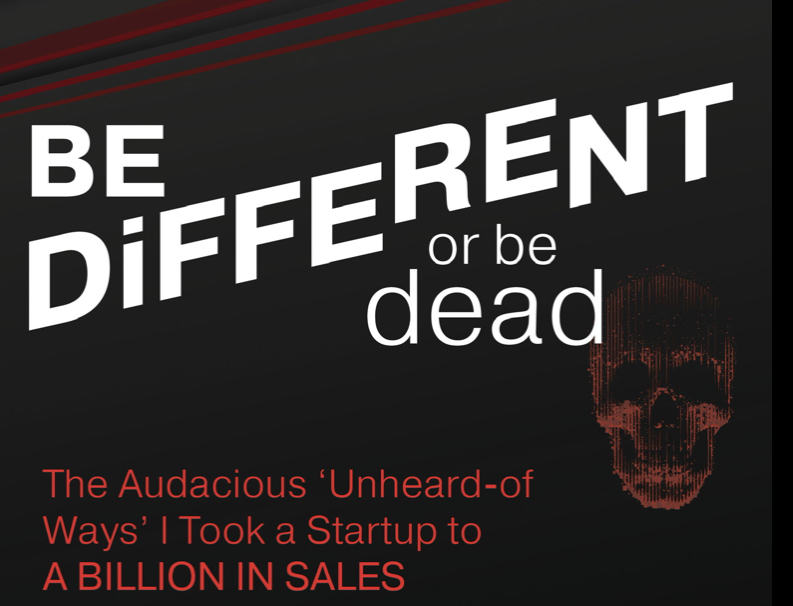
Check out my BE DiFFERENT or be dead Book Series
‘Audacious’ is my latest…
- Posted 9.5.22 at 09:00 am by Roy Osing
- Permalink
August 29, 2022
How an employee can easily break loose when they are forced to conform

How an employee can easily break loose when they are forced to conform.
The reality is that sometimes an employee is confronted with a culture that encourages sameness: copying best in class organizations, following academic pedagogy, complying with non-practical consultant advice and conforming to many internal company practices.
Some organizations want you to comply, but there are ways of breaking out.
They feel stifled; stepping out from accepted norms in terms of how their job is performed is simply not an option if one is to avoid being labeled as a loner—not a team player—and if they want to keep their job.
So what options does someone have if they want to be creative and be different but the culture says conform to the traditional established scripture?
First, recognize that the world is not black or white; either fit in or step out are not the only considerations when faced with this dilemma.
This is the approach that I used in an organization that reeked of adhering to strict standards.
#1. Define the areas of the job where conformance is expected and no deviation is tolerated.
If, for example, copying best practices is mandated for a specific function in sales like sales funnel management in order to have everyone doing it consistently then accept it and perform the function in amazing fashion.
#2. Define other aspects of your current role where compliance rules haven’t been defined and step out in these areas.
To illustrate how you might go about stepping out of the conformance challenge, here are some simple actions that worked for me to perform my roles differently than others and shed the shackles of compliance.
#1. Personal brand — Build your personal brand strategy on the principle of standing out from the crowd. You need a strategy to guide your actions outside of the conformity zone. Look for opportunities to breakaway in areas that add value to the organization.
#2. Teamwork — Lead the teamwork process with other functions in the organization to get more support for your own team. A simple act that will benefit the entire organization; get known as the person who championed the cause.
It’s unlikely that others will be willing to go the extra mile in this area; you’ll be recognized as someone who is breaking away and adding significant value to the organization.
#3. Relationships — Try to find a way to be the champion for relationship building both inside and outside the organization. Look specifically for how to engage with customers and bond them to your company.
Long term success requires intimate customer relationships and loyalty; create your own rules for doing this and teach your colleagues.
You will be substantially rewarded for this stepping-out act.
#4. Contrarian — Outside of the compliance zone defined by the organization, be audacious in doing the opposite of what you observe others doing.
Take leadership to eliminate boilerplate and copycat thinking and focus on innovating and creating new approaches to how the organization conducts business.
#5. Cravings — Gather people ‘cravings’: those deep innermost wants and desires people have but will tell only their most trusted partner. This can be practised with colleagues and ultimately with customers and partners.
This is an area you can easily breakaway from the traditional ‘needs based’ way most organizations do marketing.
Cravings not only pave the way to building loyalty, they also enable you to step away from the common ways others perform their roles.
#6. Report card — Introduce an internal report card; rate others on how well they support your organization.
This is an excellent way to enhance the support received from other functions in the organization and be innovative in improving the performance of the organization without being spotted as a non-conformer.
#7. Customer champion — Look for opportunities to step up to be the customer’s champion inside your organization. Be that person who does whatever it takes to get an issue resolved if it comes your way; shield the customer from the pain of having to deal with your bureaucracy, rules and policies.
Talk up and behave live THE customer advocate among the others in the herd around you.
You can be different in an environment that mandates compliance and sameness.
And you can be an effective agent in changing the culture of your organization from a copycat to a vibrant, innovative and creative one.
Cheers,
Roy
Check out my BE DiFFERENT or be dead Book Series
‘Audacious’ is my latest…
- Posted 8.29.22 at 06:00 am by Roy Osing
- Permalink
August 22, 2022
Why a startup must stand apart from others to be successful

Source: Pexels
So, you have created a great idea that you believe will capture the hearts and minds and, hopefully the pocket books of people.
You have laboured for months and maybe years making sure your product or service concept works; the technology is sound and consistently stable.
You have now arrived at the point where you need to morph your idea into a business. More specifically your challenge is to turn your innovative idea into a thriving economic engine. So how do you do it?
My mantra: If you’re not different you’re dead (or soon will be); if you can’t provide unique reasons to attract business then your startup idea will never get off the ground.
The number one consideration for anyone looking to start a business is that your idea has to be unique in some way or it can be morphed into a unique state. As I said above, you can have a great technology idea, but unless a BE DiFFERENT mindset is applied, you may never have a great business.
The starting point: develop business plan —my strategic game plan—based on answering three questions:
- HOW BIG do you want to be?
- WHO do you want to SERVE?
- HOW will you compete and WIN?
Declare your financial or market goals first. Second, select target customers that have the potential to deliver to your financial expectations. Third, create a differentiated market approach that will beat your competitors. Your game plan can be created in 3 days; you can start executing it on the fourth!
The essential component of the HOW to WIN part of the strategy is the need to create the ONLY statement for your business; this is the essence of your strategy to beat your competitors in the trenches. The challenge is simple to explain but challenging to complete:
‘We are the only ones that…..’
This is the ultimate manifestation of a real differentiation strategy and you should look in every nook and cranny in your business for this edge.
Figure it out with your team and then test it with prospective customers. Make sure it is real, compelling and believable and that you are not mesmerized by your own thoughts of grandeur.
Your strategic game plan must be set in place first; all action plans, tactics and activities are driven from it.
The bottom line for you entrepreneurs out there is that if you cannot define your business in relevant terms to your target customers (i.e. you will deliver something that is a high priority to them) and if you cannot explain in clear concise terms how your offering is DiFFERENT from the other alternatives available then STOP.
Continue to work on your idea until you meet the ONLY criteria. You will reap the rewards later.
If you want a guide to your efforts, work with my BE DiFFERENT quiz.
Use the practises in the quiz to build your business in a different way.
Cheers,
Roy
Check out my BE DiFFERENT or be dead Book Series
‘Audacious’ is my latest…
- Posted 8.22.22 at 06:56 am by Roy Osing
- Permalink
July 18, 2022
11 simple proven ways to grow your small business

Source: Unsplash
11 simple proven ways to grow your small business.
The Audacious Unheard-of Ways I Took a Startup TO A BILLION IN SALES are not applicable to large businesses, they are also relevant to small businesses.
Here’s what one small business owner says:
”Every concept Roy touches on in ‘Audacious Unheard-of Ways’ can be used in small business. This is about a personal journey to success. Roy teaches you not just how to focus but where to focus, how to cut the CRAP, that there is greater value in looking ahead then behind, and how to build respect and get results with your staff in his Bear Pit sessions. And the list goes on. If you are a small business owner and you really want to differentiate yourself to achieve better results Roy tells you how. Ask yourself, do you want to be DIFFERENT or be dead?” — Daniel Boisvert, A DiFFERENT Entrepreneur and Notary Public, Delta Canada
In my experience, these 11 Moves will put your small business on an growth trajectory that will leave you speechless:
#1. Strategy — Get your strategy done FIRST!
Don’t start chase tactics until you have created your strategic context. My Strategic Game Plan—‘Head West’ planning method—will get you there by asking 3 simple questions:
✔️ HOW BIG do you want to be?
✔️ WHO do you want to SERVE?
✔️ HOW do you intend to COMPETE and WIN?
#2. Competitive advantage — Create the ONLY Statement.
Declare a clear separation between your business and your competition using my ONLY Statement—“We are the ONLY ones who…”
Avoid CLAPTRAP and ASPIRATIONS in your competitive claim — BETTER, BEST, #1, LEADER, PREMIUM, MOST COMPELLING, MOST RELIABLE, GREAT TASTING etc.
They are aspirations at best and offer little to define how your small business is different from others.
Examples of unhelpful claims
“Canada’s largest and most reliable 5G network.”
“(XXX) offers the best coffee and espresso drinks for consumers who want premium ingredients and perfection every time.”
“We work hard every day to make (XXX) the world’s most respected service brand.”
“We’re in business to save our home planet.”
“To inspire humanity – both in the air and on the ground.”
ONLY examples
“St John Ambulance is the ONLY First Aid Advocate that provides safety solutions anywhere, anytime.”
“Roy is the ONLY coach and advisor who offers The ONLY Statement as a practical and proven tool to create a competitive advantage for organizations and individuals.”
Rules for ONLY
▪️The ONLY Statement must speak to the experiences and value you create for people—WHAT THEY CARE ABOUT—not the products or services you want to push.
▪️Keep it BRIEF. It’s a sound bite not a narrative. If it consumes a page it isn’t a viable claim.
▪️Talk to the specific customer group—the WHO— you are targeting, not the market in general.
▪️TEST your ONLY statement with customers and employees to ensure it is relevant and true. Tweak it based on what you learn.
▪️Consider your ONLY statement a DRAFT. Revise it ‘on-the-run’ based on changing circumstances.
#3. Cravings — Discover what your customers ‘CRAVE’.
Competing on the basis of what people NEED, unfortunately, is not always a winning strategy. There are too many competitors in this space and people tend to be price sensitive.
’CRAVINGS’ is a category beyond NEEDS. It refers to what people desire, want or wish for as opposed to the basic thing they need to sustain their lives. Of course, the needs category continues to expand as new products, services and technologies continue to proliferate.
And, as THE major benefit, the CRAVINGS business has fewer competitors and is less price sensitive which means margins are higher.
#4. Feelings — Focus on the CUSTOMER EXPERIENCE.
Don’t do like everyone else and focus on how cheap your prices are. People will soon forget about what they paid for a product or service, but they will NEVER forget about the experience they had when they bought it.
Develop your service strategy as the way of deciding on the level of service you want to deliver.
#5. Loyalty — Focus on rewarding your EXISTING LOYAL CUSTOMERS.
Avoid the common mistake of putting most of your energy into acquiring new customers by offering them special promotional deals and other ‘goodies’ you don’t make available to the customers who have supported you for many years.
You can grow your business by getting current customers to refer you to others.
#6. Policies. — Simplify and ‘kill’ your internal rules and policies—DUMB RULES— that annoy your customers and threaten their loyalty.
#7. Stop doing stuff! — Eliminate projects and activities—CRAP—no longer relevant to your strategy.
#8. Frontline people. — Stay in touch constantly with the employees—FRONTLINERS—who deal directly with your customers, and get their input on what’s working and what’s not.
#9. Don’t delegate. — Micromanage the activities critical to the execution of your strategy. These actions—for example architecting what the ‘customer moment’ looks like—should never be delegated to anyone. They’re the role and responsibility of the leader.
#10. Hiring. — Recruit people who have the innate desire and ability to ‘take care’ of humans. You can’t deliver memorable customer experiences with employees who don’t ‘like” people.
Hire for GOOSEBUMPS.
#11. Strategy execution. — Ensure every employee understands their specific role in executing your strategy—LINE OF SIGHT LEADERSHIP.
Every employee needs to understand what new things they have to take on, new behaviours they have to learn and adopt, and what old things they need to give up.
Amazing business performance happens when all the simple actions are taken to ‘light fires’ in people and deliver pristine strategy execution.
If you follow these 11 Audacious Ways, you’ll be surprised how well you can sleep at night!
Cheers,
Roy
Check out my BE DiFFERENT or be dead Book Series
‘Audacious’ is my latest…
- Posted 7.18.22 at 03:04 am by Roy Osing
- Permalink