




Roy's Blog: Entrepreneurs
December 26, 2022
What are the dangers of working on tactics without a clear strategy?

Source: Unsplash
What are the dangers of working on tactics without a clear strategy?
You don’t have unlimited time or resources to do a hundred things. If your organization is ‘raining down’ with tactics you could be chasing stuff as opposed to being guided by the strategic direction you have set.
Here are characteristics of both types of organizations.
If the ‘tactics drive’ scenario sounds familiar, take a step back, get your strategy defined and then decide on the critical few projects necessary to achieve it.
When tactics drive activity…
- numerous projects are going on; people complain that there is too much to do.
- aspirations drive the activity, like ‘we intend to be best in customer service’ which are meaningless to most customers.
- many project teams are struck throughout the organization. Almost everyone is on one.
- projects are measured individually in terms of deliverables.
- activities lack a strong common thread among them.
- divergent actions persist. Projects are in conflict and are often heading in opposite directions.
- projects are often lead by individual Departments and carry with them intrinsic bias as a result.
- people are frustrated with too much activity and lack of synergy.
- people complain that there is no approved course that all of the activities follow.
- leadership is criticized for not providing the overall direction to justify all of the projects going on.
- consultants are brought in to assist and they are forced to subordinate organizational issues to those of the individual projects.
When the strategy drives activity…
- a handful of projects key to influencing 80% of the results are active.
- the business plan drives all the activity. Everyone has direct line of sight to it for guidance.
- a few focused project teams exist.
- projects are measures in terms of business plan expectations.
- the common thread among all activities is contribution to the business plan.
- synergy acts among all activities; they are monitored to ensure they are acting in unison.
- projects are primed at the organization level. Project leaders are appointed corporately based on skills and competencies to deliver expected results.
- people are energized as efforts are focused and are balanced to achieve the most meaningful results.
- people recognize that the business plan is the driving force behind all that goes on.
- leaders are acknowledged as effectively moving the organization forward.
- consultant activity is limited to areas where new expertise is required. They are all managed relative to business plan results.
Avoid the tactics until you are satisfied you have a clear enough business plan to be a beacon of all activity in your organization.
Cheers,
Roy
My 50+ Podcast Shows that will change your life.
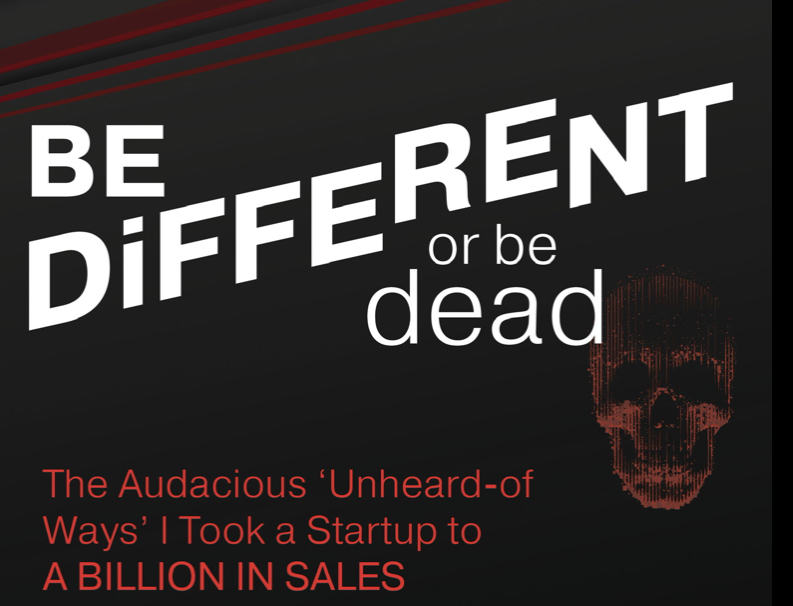
Check out my BE DiFFERENT or be dead Book Series
‘Audacious’ is my latest…
- Posted 12.26.22 at 01:00 am by Roy Osing
- Permalink
December 12, 2022
How managers who love holding on to the past can be eliminated

Beware of managers who are stuck in the past and refuse to move ahead.
Creating strategy is just as much about letting go of the past as it is about taking on new things.
Eliminating non-strategic activities, projects and programs in fact is critical to creating the bandwidth to take on the new things required.
You simply don’t have sufficient time, energy and resources to take on new stuff while continuing to carry on with past activities.
Of course there will be managers in your organization that really like the past direction and don’t want to be part of executing on a new course.
For many, the past is familiar and comfortable and relatively stress free. Why would they want to give it up for the anxiety, risk and uncertainty of going a new direction?
Their preference is to continue to manage the irrelevance that gives them satisfaction and security.
It is essential to identify these custodians of the past and to act on them.
If not, they will infect others in the organization by attempting to convince them not to embrace the new strategic direction.
Here’s a process to follow.
▪️determine the CRAP, or non-strategic activities and projects that are no longer appropriate given your new strategy. Make the list long. Avoid being persuaded that everything associated with your old plan is relevant to the new.
▪️identify the people associated with the CRAP.
▪️develop an action plan for each person who is engaged in irrelevant activities. Don’t assume a single solution will work for everyone. Each person will be different and will require a personalized solution.
▪️reassign those who want to go to your brave new world and give them all the training and development support they need to succeed.
▪️exit those who are either not qualified to take on the new challenge or who refuse it.
Either way, they need to go to prevent the inertia virus from spreading!
Cheers,
Roy
My 50+ Podcast Shows that will change your life.
Check out my BE DiFFERENT or be dead Book Series
‘Audacious’ is my latest…
- Posted 12.12.22 at 01:00 am by Roy Osing
- Permalink
December 4, 2022
Why the ability to communicate is critical to get A BILLION in sales

Why the ability to communicate is critical to get A BILLION in sales.
There were many actions I took as a leader to take an early stage internet company in the telecom space to A BILLION in annual sales, but I haven’t talked much about the importance of communication as a critical element of my journey.
The ability to communicate was incredibly important to my audacious leadership role because we were faced with making breakaway moves away from the traditional ways we conducted telephone company business in the past and adopting new ways necessary in a highly competitive internet world where customer power was a dominant force.
We had to:
▪️Add a stronger marketing and customer service focus to the engineering strength that had served us well in the past as a regulated monopoly telco.
▪️Replace order-taking with serving customers.
▪️Learn how to be proactive with customers in the sales game and place more emphasis on selling solutions as opposed to ‘flogging products’.
▪️Build a data and internet culture from the largely voice oriented culture that had existed in the past.
▪️Create the ability to achieve extraordinary growth rather than more linear growth that was normal in days gone by.
Communications was the key element in building a new organization and achieving lofty growth goals.
How did I use my communications skills?
As the leader, there were many ways I used my communications skills to build an amazing team and achieve miraculous performance:
Calendar management — My week was replete with communications ‘sessions’ with employees, discussing what we were trying to achieve—our Strategic Game Plan—and what action needed to be taken to make us successful.
Bear Pit Sessions — I held informal workshops (with no accompanying entourage) with multifunctional groups to understand what was working and also what was preventing us from executing our Game Plan more effectively.
Frontline focus — Given my focus on Game Plan EXECUTION, I spent huge amounts of time with the frontline teams across my organization asking “How can I help?”.
I needed to know what they needed to enable them to do their jobs more effectively and also it gave me the opportunity to thank them for the fantastic job they were doing under arduous circumstances.
Line of Sight translation — I personally led workshops with the various functional teams—marketing, sales, service, accounting, credit etc.—to define what, specifically, the Game Plan to A BILLION meant to each and every one of them.
They needed to understand the new behaviours they had to adopt (with new expedited outcomes) and the old ones that were no longer appropriate.
Do I have a personal strategy that guides how I communicate with others?
My BE DiFFERENT or be dead brand provides the context—and the anchor—for how I choose to communicate.
My overall approach is to BE DiFFERENT from how everyone else—the ‘speaker crowd’—does it.
My logic is that if my message is to be listened to and followed by my audience, it must be incomparable, it must stand out from others , it must be inspiring to the listener and it must evoke action.
I observed how others did it and chose another way that was consistent with my personal audacious leader brand.
Quite frankly, I Ignored ‘textbook thinking’ or commonly espoused practices, approaches because if I copied someone else’s methods I would surely NOT be different and would merely increase the speaker herd by 1.
What are some of the things I do to make my presentations DiFFERENT?
First and foremost, my prime objective when speaking to any audience is to create a memorable experience for everyone attending, and to do so I think about it as a PERFORMANCE.
It’s not just about the information you’re delivering, it’s about how you make people feel when they receive your information. People will remember some of your content but they never forget how you make them FEEL.
I am emotionally connected with my content—I’ve been described as a passionate speaker—and I try to convey it with as much energy as I can muster.
“Energy up!” is what I say to myself before every performance; it has always served me well as the push to keep me up and pumped.
I think about myself as a content expert and storyteller NOT an orator. My ‘job’ is to lead and deliver unmatched performance; it isn’t to be a great speaker.
But I’ve discovered that audience reaction is a function of content+emotion not following the ‘practices of oration’ and this is best served by bringing your content to life through storytelling.
To be an audacious speaker, your content must ‘flow from your veins’.
How does a person start to be audacious at communicating?
There are 3 things to think about if you intend to walk the audacious path of lighting fires in people when you speak.
#1. Be the ONLY one — You need to own your own unique place in communicating.
Study how others practice their art and determine how you can be different from the rest.
Figure out your ONLY brand to separate yourself from the speaker crowd.
#2. Be a performer — Treat every presentation as a performance where your objective is to DAZZLE every person in your audience.
#3. Know your content better than you know your own name. — You can’t stream your content if you’re fighting with it, if you can’t recall what words you want to use to express your ideas.
Remember, your content is the least important ingredient in a mind-blowing performance.
An audience expects the speaker to be competent in their subject matter, but they are rarely treated to a performance that leaves them breathless. Fill THAT void.
You don’t want them satisfied, you want them blown away, crushed, ‘goosebumpy’ and awestruck with how you made them FEEL.
If a leader can’t communicate effectively, strategy execution fails and magical performance doesn’t happen.
Let my practical experience in ‘lighting fires’ in people to achieve A BILLION IN SALES be your guide.
Cheers,
Roy
Check out my BE DiFFERENT or be dead Book Series
‘Audacious’ is my latest…
- Posted 12.4.22 at 04:32 pm by Roy Osing
- Permalink
November 28, 2022
My top 5 tips to make a successful entrepreneur

My top 5 tips to make a successful entrepreneur.
The mortality rate for new businesses is extremely high—chances are you won’t make it—and you absolutely must avoid these 5 mistakes if your new brave idea is to survive and thrive.
1. DON’T EVER move forward with an idea that is not different from your competition. — Ultimate success will be determined by staking a unique claim in the market that clearly distances you from everyone out there.
If your idea is the same as, or similar to something already out there, it will be invisible. It won’t attract attention and no one will buy it.
If you can’t come up with an idea that is different from someone else’s, STOP!
2. DON’T EVER move forward if you don’t clearly identify who the potential customers are for your new idea. — Winning is all about targeting your idea to very specific groups of people and giving them a reason to buy from you.
It’s not about flogging your idea to the masses and hoping it will stick to some of them.
If you can’t define your potential customers, STOP!
3. DON’T EVER move forward unless you have people around you with strong marketing and customer service backgrounds. — Ultimately, the success of your idea will depend on go-to-market effectiveness. Better have people on board who have experience in serving customers and providing value-based solutions to people.
Technology and finance expertise are needed as well, but in a supportive role. People responsible for customers must be your anchor.
If you can’t put together a team of people with customer experience, STOP! until you find them.
4. DON’T EVER rely on cool technology to sell itself. — It’s not about a product or service. It’s about how your idea makes a difference to people’s lives or business.
People don’t buy technology, they buy what the technology creates for them. Happiness. Joy. Pleasure. Solution to a problem. Make it easy.
If you’re not looking for a way to deliver happiness, STOP!
5. DON’T EVER start chasing new applications for your technology. — Stay focussed on the one you feel will capture the imagination of your potential customers. After you’ve proven your idea works there, then consider other applications.
Chasing numerous applications at once will distract you and stop you from making progress.
You burn energy cycles and money dealing with potential opportunities proposed by associates and colleagues in businesses who would like a piece of your action.
These 5 mistakes can kill your startup; avoid them at all cost.
Cheers,
Roy
40+ Podcast Shows I’ve done that unpack my work.
Check out my BE DiFFERENT or be dead Book Series
‘Audacious’ is my latest…
- Posted 11.28.22 at 05:48 am by Roy Osing
- Permalink

