



Roy's Blog
September 1, 2011
The Grateful Dead were amazing marketers for 3 simple reasons
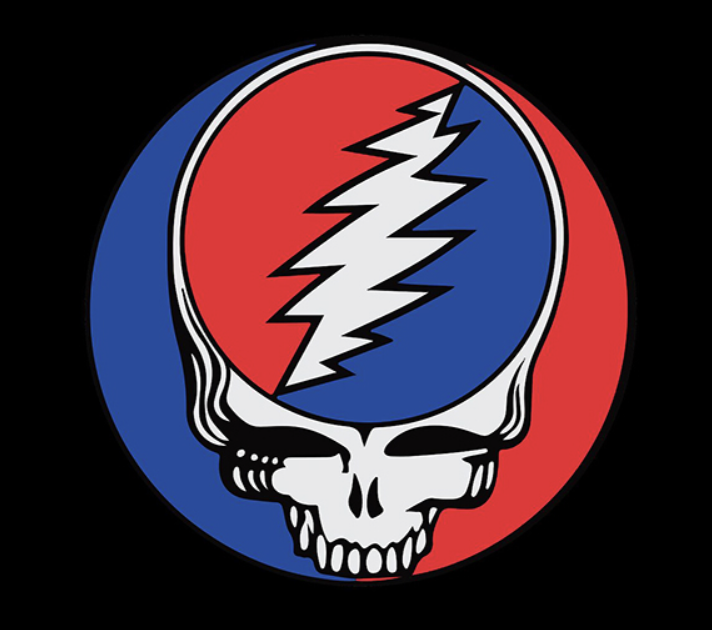
The Grateful Dead were amazing marketers for 3 simple reasons.
The most successful touring concert band was The Grateful Dead. Some of you may have even been ‘Dead Heads’; members of their tribe who religiously showed up at every one of their shows.
Apart from their musical genius, however, was their marketing acumen.
Students of the Dead discover just how progressive their thinking was when it came to building a fan base and creating financial success.
Here are 3 things the Dead did to separate themselves from other bands.
1. Focus on your loyal fans for growth
Delight them and trust they will not only buy your stuff but they will talk about you to others. The Dead gave their fans the priority over others. Long before social media tools were available they made a point of knowing who their fans were and engaging with them regularly.
They engaged with them and kept them up to date on concerts and other happenings. Unlike most other organizations, their loyal fans were the first to get preference on seating and any other special deals the Dead were offering. Word of mouth was their focus for growth. It happened.
2. Create memorable experiences for your fans
If you WOW! their feelings, they will most certainly do business with you. The Dead didn’t set out with the prime purpose of selling records. They focused on blowing their fans away at their concerts; by creating an experience they would never forget. Their fans returned the favor by buying records.
3. Be contrarian; go opposite to the crowd
Don’t copy what others do. All that will do is perpetuate what the common herd does. Don’t conform; be different. The Dead made it easy for fans to record their music. They provided recording equipment to do it when every other band jealously protected their music from being recorded by audiences.
The Dead didn’t care what any other band did. They wanted to go against the grain to make it easy for their fans to record and share their music.
BE DiFFERENT marketing has its roots in unexpected places. Check out the Dead!
Cheers,
Roy
Check out my BE DiFFERENT or be dead Book Series
- Posted 9.1.11 at 10:00 am by Roy Osing
- Permalink
August 25, 2011
Why customer appreciation days are an insult to people and don’t work

Source: Unsplash
Why customer appreciation days are an insult to people and don’t work.
Customer appreciation events are commonplace in business.
Customer appreciation day, week or for the more ambitious, month, are intended to show customers how much they are cared for.
Why? I don’t get the logic. And in most instances it’s hypocritical.
Do we only appreciate or care for people one day (or week, or month) a year?
Do we save up all our love and dump it on them at one time and expect them to thank us and believe we sincerely want to develop a deep intimate relationship with them?
I have always been offended by this marketing tactic because it implies that the business doesn’t give a damn about someone for the rest of the year
Even worse is the situation where a company with marginal service does this believing it will mend broken customer relationships. Really?
Think you’re fooling people? Think again.
So, to those who want to throw their money into an event that few customers believe in, I say this: invest in providing caring service to your customers every moment of every day and you shall reap the rewards of rich fan relationships and maniacal advocates who will spread your word to others.
Keep ‘grinning’ your most precious asset once during the year and you won’t be around long.
Cheers,
Roy
Check out my BE DiFFERENT or be dead Book Series
- Posted 8.25.11 at 09:59 am by Roy Osing
- Permalink
August 15, 2011
Why magical feelings are created by the best marketers

Source: Unsplash
Why magical feelings are created by the best marketers.
There are four basics of storm marketing.
▪️ Create value; don’t flog products and services;
▪️ Focus on your loyal customers to grow your business. These are the people who care about you and what you do;
▪️ Create packages of value to reflect the broad range of wants and desires people have as opposed to a narrow set of needs;
▪️ Target individuals with your offerings rather than the mass market.
What is value?
First, it is different for every person. Everyone values different things. What is valuable to one person is of less or more value to the next.
Next it is the feeling or emotion people get from what you do or supply.
Value is described by words that complete the sentence: “I felt ...”: happy, surprised, joyfull, pleased, important, honored, amazed, listened to and cared for.
If you create these feelings in the people that do business with you, you provide value.
Value is derived from an experience.
Think about the last time you were in a restaurant and you had an amazing experience. What made you feel incredibly delighted?
Whatever it was defines value. The personal service. The caring attention. The comfortable surroundings. The elegant atmosphere. The funny server. The chef that visited your table. All dimensions of the value you received.
Marketing should be in the feelings creation game.
Like it or not, your product doesn’t really matter as long as it works 24X7X365.
Add another dimension to the position of Chief Marketing Officer.
Bring in the Chief Feelings Officer.
Cheers,
Roy
Check out my BE DiFFERENT or be dead Book Series
- Posted 8.15.11 at 11:00 am by Roy Osing
- Permalink
July 30, 2011
What important habit does a great leader practice every day?
Source: Unsplash
What important habit does a great leader practice every day?
“...any regularly repeated behavior that requires little or no thought and is learned” — a habit
Leaders should always be looking for something that will step up their game, that will continue to make them relevant and standout from the crowd of other leaders who are content to led from a textbook.
There are bad habits. And there are good habits.
You acquire a habit. You do it and you can’t help it. You do it without thinking. A habit tends to be an involuntary response. It becomes part of who we are — integral to our DNA.
If leadership in organizations were to mandate that this habit be acquired, our consumer lives would eventually be a whole lot more satisfying.
The Habit?
Call a customer every day.
It’s rather easy to learn. Easy to do. And the rewards are unlimited for any organization wanting to separate themselves from the faceless competitive herd.
One phone call — no, not an email — to someone who is loyal to you and does business with you regularly.
A 15 minute conversation or longer if you are lucky enough to have the other person actually want to talk to you and will accept your call.
A connection at the same time everyday. Calendarize it so it becomes a part of what you naturally so each day. 1232
The call content is pretty straightforward. Ask a question - Listen - Make notes - Ask a question - Listen - Make notes - Ask - Listen - Take notes…..
After the call, do something with what you’ve learned. If you don’t take action you have wasted the customer’s time. And make this habit matter to others in your organization.
Get others in your organization making the call as well. Spread the habit. Infect your colleagues with it.
The call is not a run-of-the-mill habit.
It actually has a multiple ROI for your 15 minute investment:
▪️ The customer is flattered you called and continues to be loyal and give you their business;
▪️ They tell their close contacts you called them which draws then to you and you censure more business;
▪️ You learn a secret or two during the conversation which not only allows you to serve them better, it also provides you with insights on how you can better serve others and attract new business;
▪️ By getting others in your organization to ‘make the call’, you take a giant step to creating a customer-centric culture which will increase your chances of success and survival in the long term;
▪️ You learn a fact or two about your competition (if you ask the right questions) which allows you to stay one step ahead of them.
You imprint the habit on others to scale the benefits. Wow! A scaled habit. Who would have thought? You improve something in your organization that serves the customer. You earn the continued loyalty of a fan.
Not bad for a habit.
This is one habit you never want to kick.
Cheers,
Roy
Check out my BE DiFFERENT or be dead Book Series
- Posted 7.30.11 at 10:00 am by Roy Osing
- Permalink