



Roy's Blog
April 18, 2020
How to use the principles of influence in online marketing

Source: Pexels
In 1984, psychologist Robert Cialdini wrote a groundbreaking book called Influence: The Psychology of Persuasion.
It was based on years of studying the sales strategies used in car dealerships, telemarketing firms and fund-raising organizations to identify six key principles that influenced people to make buying decisions.
His work has helped many business over many decades, and the same principles also apply to online businesses.
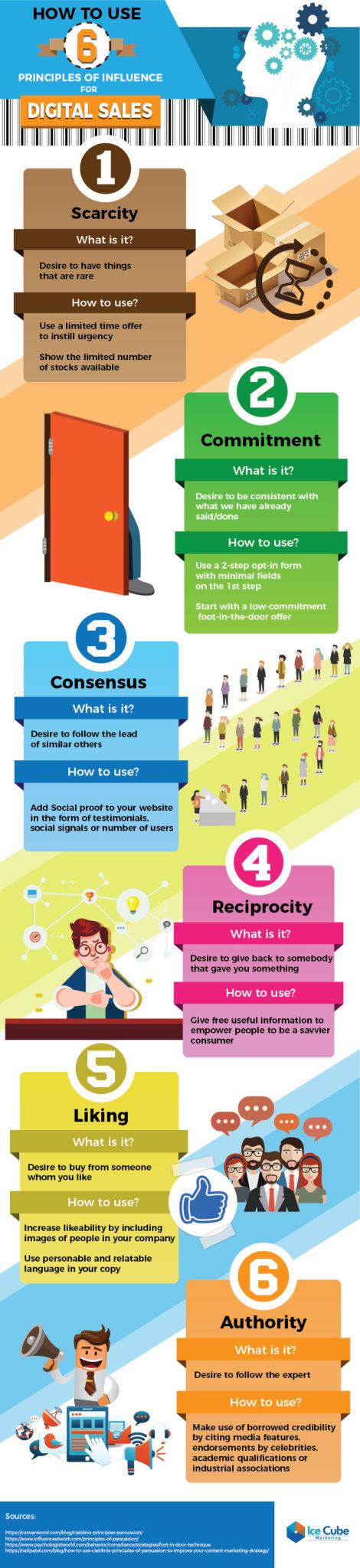
Let’s take a look at each of the six principles and give you an idea of how they can be used in online marketing:
1. Scarcity
People are always driven to take action when things are scarce. If you want your offers to really entice them to make a purchase, you need to give them a strong reason. There are many ways to use scarcity in your online marketing.
This can be anything from offering a time sensitive discount, providing exclusive bonuses for the first buyers, to only selling a limited number of products for acting on your offer.
2. Commitment
People are more inclined to take action once they’ve committed to a previous action. The idea here is to get people to act on small commitments and lead them forward with bigger ones throughout the process. You can think of it as an ascending ladder.
A great way to use this principle in online marketing is to start with lead generation. Give new subscribers a valuable gift for signing up to your email list. You can then follow up with a low cost offer and follow that up later with a higher priced offer.
3. Consensus and social proof
It’s human nature to look to others for proof. People want to follow the crowd because they want to belong and make the right decisions. Social proof is a form of consensus where things like customer testimonials can help convince prospects that your product or service has great value.
A great way to use this in online marketing is to use case studies and personal video testimonials on your sales pages and content. In the eCommerce industry, reviews are one of the most powerful forms of social proof. If you want to go for consensus, you can focus on building a community and create stories involving your customers.
4. Reciprocity
When we are given something of value, it’s normal to return the favor. This principle of reciprocity is a simple buy powerful way to get prospects and customers to take action. A great way to use reciprocity is to offer something that is appealing and relevant to your audience.
This can be anything from free samples, free products, informative content, and free trials. This not only makes people want to return the favor, it gives them a glimpse of the value your business offers.
5. Liking
At the end of the day, people prefer to do business with people they like. This principle is simple but not easy to pull off. How can you get people to like you with online marketing?
You can create a strong personality, tell emotional stories, engage your audience, provide valuable content, and establish clear brand values. The whole process will build a relationship with your audience and also communicate all the ways your business is distinct from the competition.
6. Authority
People want a way to distinguish an average person from an expert. By positioning yourself as an authority, you will be able to do a better job in selling your product or service online.
How do you establish authority? You can mention recommendations from well known figures in your industry, use authority badges (As Seen on TV, Featured on Fox News, Mentioned on the Morning Show, etc.). Other authoritative elements like certifications, degrees, and licenses will also help.
Have you come up with any ideas on how to use these six principles in your online marketing yet? These examples should give you a lot to work off. Make sure you integrate as many of these principles as you can for your next marketing campaign.
— Ted Chong is from Ice Cube Marketing, a digital marketing agency in Singapore that helps local small businesses acquire leads from channels such as Facebook and Google.

- Posted 4.18.20 at 05:07 am by Roy Osing
- Permalink
Feedback
To share your thoughts, please contact Roy.