


Roy's Blog
September 14, 2020
How the best leaders get people working remarkably well together

Source: Pexels
How the best leaders get people working remarkably well together.
A colleague of mine, Ron Cox, Founder and CEO of Tailwind Consulting in Tampa Florida says that “a staggering 95% of employees in a company are either unaware of or do not understand the strategy”.
No wonder execution fails!
One of the biggest issues in any organization is the lack of congruence between what the strategy says and what people do on a day-to-day basis.
The strategy says one thing and not only do people do another, they do different things out of sync with the strategy.
Massive inconsistency and dysfunction results.
This is a failure of leadership.
Leadership tends to place more focus on direction-setting rather than on determining how the strategy will be executed.
Precision is applied to getting the strategy exactly ‘right’ and less attention is given to how it will be implemented in the trenches where the real work gets done.
The gap between strategic intent and actual results is due to this skewed attention.
If only 20% of leadership’s attention is placed on the details of how the strategy will be implemented, the strategy will likely be hit and miss as employees find it necessary to execute the plan the way they believe it should.
Effective strategy execution occurs when there is clarity between the functional roles that employees play in the organization and its strategy.
It is about translating the strategy into what it means to each function involved in delivering it. What specifically should the call center rep do differently? The product analyst? The sales person? The internal audit manager?
If at the most granular level each employee in the firm doesn’t know how to behave and what results to produce within the context of the new direction change will simply not happen and improved results expected by the new business plan won’t be achieved.
Line of sight
Line of sight to the strategy means what it implies; each employee can ‘see’ the strategy from their position and they understand what they specifically need to do to contribute to the strategy.
If direct line of sight is defined for every role, flawless execution results whereas indirect line of sight results in people having a clouded understanding of what action the strategy demands.
Most leaders absolve themselves of ensuring activity and strategy are aligned. It generally gets relegated to functional heads to sort out by declaring their priorities that they contend are homeomorphic with strategic imperatives.
The problem with this process is that subjectivity is introduced at a very high level in the organization and is magnified again and again as teams are asked to do the same thing through middle and junior management levels.
And the tipping point, of course, is that leadership doesn’t approve detailed functional plans which would at least show whether they were bordering on out-of-alignment or not.
Any inconsistencies between activity and strategy at the highest level in an organization are multiplied by an order of magnitude factor before it reaches the frontline people.
Under these conditions it’s not difficult to see why strategy and organizational activity diverge and not converge.
What can leadership do about this problem?
First, ease the precision around the strategy creation and tighten it up around execution. Get comfortable with getting the plan just about right and applying rigour to implementation and adjusting the plan on the run.
Next, take ownership of aligning organizational activity to strategy.
Alignment Plans
Institutionalize ‘Alignment Plans’ with functional heads; ask for sufficient granularity to the determination of whether or not a team has direct line of sight to the strategy or not. Make them work at it until they get it right and your leadership team approves.
Alignment Plans submitted to the leader should:
▪️ Define the key elements of the strategy that everyone in the organization must align with.
There are many dimensions to any strategy but it is critical to prioritize and focus on the critical ones. Greater alignment success will occur by focusing on a handful of the critical strategic imperatives rather than trying to ‘herd the cats’ around a dozen.
▪️ Define what needs to change in every functional team with an action plan to achieve it.
If the organization is pursuing a new or revised strategic direction, there will most certainly be projects, company values, people skills and technology that will have to be re-vectored to enable the execution of the new plan. Details of everything that needs to change must be defined in detail.
▪️ Identify activities, projects and behaviours that have to be dropped in order to take on new activities required for alignment.
Leadership is just as much about what has to be stopped as it is about what has to be started.
If out-of-alignment activity is not stopped, additional unnecessary resources will be most certainly requested. All non-strategic activity must be isolated and resources removed and redeployed to new challenges that must be undertaken.
Personal initiative
If you’re an employee in an organization that chooses not to impose a process to explicitly align activity to their strategy, take personal initiative to align your own work priorities to what the organization wants to achieve.
Successful careers are built on the backs of the organization’s strategy and those that execute more effectively than others are quicker to reach their personal goals.
These personal actions will propel you forward.
Translate for others
Help others translate what the strategy means to them in the organization.
Once you have determined your own line of sight, help others through the same process.
Everyone needs to understand the new things they will have to do and the CRAP they will have to dispose of. Unless this translation for all employees is done, the organization will be frozen in momentum management and no progress in the new direction will be achieved.
Get involved in organizing and leading workshops with various departments in the company and explore a new blueprint for each that represents the new course for them to follow.
The role of translating the new strategy for various employee groups is one that rarely gets performed. It’s a difficult task as it requires an intimate level of understanding of the strategy.
You can’t drill a strategy down into individual action if you don’t truly understand it at a detailed level.
If you’re a leader, you must dedicate much more of your time seeing that people treat this as a priority and hold them accountable.
Wander through the workplace asking people to clarify the top three things they are going to do to help deliver the new strategy and what dozen-or-so things they are going to give up.

Source: Unsplash
And get the expectations hard wired into the performance planning process. It is the difference between an effective one where everyone is working in parallel to support a common purpose, and a dysfunctional one where people are working at odds with one another to deliver some things that are on strategy and other things that are not.
Synchronized outcomes release the power of execution - and competitive advantage; inconsistent outcomes zap the energy of the organization, encumber execution and impair competitive success.
Set your calendar
Let the organization’s strategy guide your daily calendar. The ultimate manifestation of direct line of sight is a calendar composed only of activities relating to the outcomes you have deemed necessary for you to deliver the new strategy.
If you can’t strategically relate a particular activity you plan to do on a given day, question why it is occupying your time.
Zero base your calendar and build it through the weeks and months ahead in the image of your strategy.
If you are in a leadership position, ask to see the calendars of those reporting to you. Is each of them doing the things required of the new direction or are they continuing on as custodians of the past?
Communicate the strategy personally
Communicate face to face with others in your organization as the most effective way of injecting the emotional component necessary to get people to believe and act.
E-mail blasts to a broad distribution list, employee newsletters and other mass means of communication don’t work as effectively. Use technology like ZOOM if physical distancing is a challenge.
These mass communications vehicles preclude the ability for people to engage in a conversation to enhance their understanding of where the organization is going.
You need to press the flesh even if it’s virtual, and make it matter by showing up in person, explaining the strategy and answering the tough questions.
In non-pandemic times, I used ‘Infonet sessions’ to communicate the company’s strategy to all employees.
They required high levels of energy and were extremely time consuming, but what else could be more important?
People in the organization need to understand where it is going and they have a right to challenge it if they are not convinced it is appropriate. You can’t capture their hearts and minds if you’re a ‘no show’.
Use the strategy as the context for solving problems
When confronted by a business problem or issue, always assess it and talk about it with others from the perspective of your strategy.
Create the strategic context for the discussion and then assess your options. What does your strategy suggest is the appropriate action to take?
It’s an effective way to increase understanding and awareness of your strategy and establish you as a leader and the strategy hawk for your organization.
People suddenly forget that they have set a new course in motion for the organization and they look for solutions to problems in the old strategic context.
The opposite is also true; people often don’t relate the visible changes being made in their organization to the new strategic direction that has been put in motion. They don’t get that the cause of the changes they are witnessing is the new strategy.
Assume the role of connecting the dots for people in your organization. Reinforce that the changes that everyone is seeing are the result of your new strategy.
Line of sight leadership is necessary to build teamwork and commitment to the organization’s strategic intent. Take a personal role is making it an essential ingredient in your culture.
Cheers,
Roy
Check out my BE DiFFERENT or be dead book series
- Posted 9.14.20 at 05:38 am by Roy Osing
- Permalink
September 12, 2020
How chatbots can give you a competitive advantage

Chatbots have gained an inevitable role in digital marketing due to its multitude of benefits. Marketers have expressed that the advent of chatbots helps them in many ways as chatbots can be automated to perform specific tasks.
Social platforms have evolved into ‘sales points’ for most brands. Chatbots can be leveraged in multiple ways on these platforms to maximize the conversion rates.
Chatbots can be utilized in a variety of cool ways to take your business performance to a whole new level and to make it stand out in the crowd.
The dynamic conversational tool
Today, brands are keener on conversational marketing. They are looking for ways to develop an interaction as it helps them have a better understanding of a prospect so that they could frame a more relevant marketing strategy to a particular individual.
Let us consider that a person has landed on your e-commerce website. And usually, a website will have many webpages, so it might take some time for the person to find what they were looking for.
But, you can facilitate this process through your chatbots, and assure a smooth experience for them.
The chatbot can be automated to welcome the prospect with the message like ‘Hi, Hope you are doing well? May I know what you are looking for?’
It also leads them through the various sections of your website. Later, based on their interest, it directly takes them to the page and shows them the exact product they have been looking for.
If the prospect is not happy with the product shown, it will display relevant suggestions stating that ‘Check our new arrivals, I hope it matches your interest’, and it drives them to check out the product.
The notable feature of chatbots here is that the conversation of chatbot sounds more human. Thus, a chatbot is equipped enough to drive a person to purchase your product.
The way a chatbot can be used to create a better customer experience
Today, people are expecting a quick response to their queries. A recent survey has noted that 55% of customers stop purchasing their usual brand if they feel that the response is getting delayed from the company end.
So, brands don’t want to lose this staggering number of customers. Hence, to sort this out, many companies have started employing chatbots. They are capable of offering a real-time response to the queries.
Moreover, they have the potential to handle any number of customers simultaneously. Marketers opine that chatbots could solve 60% of basic customer queries.
Make sure you know the basic queries people usually shout out and incorporate the replies into your chatbots, which helps it to deal with the customers efficiently. Trollishly is a renowned service provider known for generating quality leads for businesses.
Craft personalised ads using chatbots
Today, personalization plays a crucial role in generating new customers and sustaining the current ones.
The brand that takes personalization seriously can achieve high sales.
Chatbots play an influential role in personalization. If a person lands at your Facebook page, for example, it will start a conversation with them, as noted above. Simultaneously, it also collects necessary information about the prospect.
The reply to the chatbot will help you to know about the prospects’ interest. Hence, in a very short period of time, you can create a personalized ad for them and drop it in their Messenger.
For instance, you can prepare a customized ad with framing sentences like ‘Hi Roy, glad you have landed on our page. Here are some of the leather jackets that are made exclusively for you.’
Make sure that you have added the name of the customer as it will give them a feeling that you have valued them among a ton of customers that you serve and that you have framed an ad exclusively for them.

Chatbots: ‘The data driver’
Usually, you derive a strategy for your prospect based on the data you collected about them. Hence, the more data you collect about a prospect, the more you can have a better understanding of them.
Subsequently, this will help you frame a more relevant strategy facilitating the process of turning a prospect into a customer. The chatbots can be used to retrieve more information about a prospect such as their email and phone number by scanning various sources available on the internet.
It also delivers data about the customer’s purchasing pattern and their commonly visited sites, which will also help you make accurate predictions about them. So, chatbots are also regarded as ‘Data Drivers.’
Today, all the top brands have their very own chatbots to enhance their business and to generate leads. Their proactive nature and fast-paced action have caught the attention of people.
Hence, they are looking to take advantage of this technology to achieve their goals on social platforms. So, incorporate chatbots in your strategy without any second thought.
Integrate chatbots with social messaging platforms
Many brands discard social messaging platforms without knowing its potential. Social messaging platforms like WeChat, Messenger, and Viber are witnessing a steady rise in their user base.
For instance, Facebook Messenger is home to 1.3 billion users, which is anticipated to reach 2.5 billion users by 2022. A recent survey has noted that 55% of people who interacted with the chatbot are pleased by its ‘conversational tone.’
Hence, integrating chatbots into Messaging platforms will also play its part in uplifting your sales.
Renowned brands like H&M and Domino’s Pizza have integrated their chatbots with Facebook Messenger. These chatbots help people place the order within it without switching to the browser or any application.
Bottom line
Chatbots possess all the features that are essential for modern-day marketing ranging from spotting quality leads to interacting with them and driving them to take action.
Since researches are still underway to equip chatbots, it will gain a more prominent marketing role in the coming years.
If you want to start your career as a digital marketer, check here.
— Claire Divas is a US-based freelance content writer and longtime reader about new trends in Digital Marketing. She loves to work in WordPress and focuses on her writing skills. She also experienced in content marketing to make a qualified SEO. You can follow her on Twitter and LinkedIn.

- Posted 9.12.20 at 04:19 am by Roy Osing
- Permalink
September 7, 2020
4 proven ways to deliver the best customer service

Source: Unsplash
4 proven ways to deliver the best customer service.
Blowing the socks off your customers is not a one act play; it’s a synchronized series of continuous actions that is repeated throughout an organization day in and day out.
Consistently delivering amazing service requires a carefully thought out service strategy, with two essential elements: core service — what you deliver to people — and the service experience — how they feel when it is delivered.
Core service
Core service is the basic product or service you provide the market.
Without a core service you don’t have a business.
If you’re in the communications business, for example, your core services are defined by your product portfolio and include television entertainment, internet and mobile services as well as billing and repair services.
If you’re in the hospitality world, your core service includes clean rooms, interesting surrounding attractions and good food.
Core service is not a source of customer loyalty. Customers expect their internet service to work every time they use it; they are not dazzled when it actually works — I’ve never heard a customer say ‘WOW! I’ve just sent an email and it was sent through the internet incredibly well — it was delivered just the way I wrote it.’
Likewise I don’t recall anyone saying ‘OMG! My hotel room was so clean it was a Rembrandt in every way.’
Customers expect your core service to deliver on its promise and work flawlessly every time, and when it does they give you a ‘C’ on your service report card. Meeting expectations earns you and average rating and that’s all.
On the other hand, when the internet service doesn’t work or the hotel room is a mess, the customer is extremely dissatisfied and quickly tell their friends and family how crummy their service provider is.
The bottom line is if you want to earn the right to build a loyal customer base, you must deliver consistent core service as your foundation.
The service experience
The service experience is the critical layer of service that must be wrapped around your core service. It’s the feelings layer that answers the question “How do you feel when you receive your provider’s core service?”
— How would you rate the experience of signing up for internet service?
— How do you feel about the cleanliness of your hotel room?
— How’s your patience after waiting 40 minutes in a call center queue for a rep?
— Do you feel honoured and respected by your financial advisor?
— Are your questions met with friendliness and charm by the service people you reach out to?
On the back of consistent core service, the source of customer loyalty is the service experience; dazzling a customer will get you an ‘A’ — or excellent — on your service report card and they will keep coming back and tell everyone else how wonderful you are.
Amaze = deliver consistent and seamless core service for each and every customer transaction and dazzle them when you do it
How does an organization create dazzling experiences for their customers and amaze them?

Source: Unsplash
#1. Hire people who like humans
First, they need to recruit people who like to deal with other people. How can any organization provide amazing service if their people don’t like homo sapiens?
The most critical step if you want to amaze your customers is to hire people with the innate desire and ability to serve and please others
Why is it that we run into service people who obviously hate their job and would rather be taking inventory or working with technology rather than real people?
Why is it that frontline positions are filled with people who have a lot of seniority in an organization but basically don’t like working with other people?
Ever been in a restaurant and have been afraid that the server would either throw something at you or subject your underdone steak to the germ population residing on the floor of the kitchen?
First of all, there is no more important position in any organization that one that deals directly with the public.
These people should be called, as Tom Peters once called them, ‘Supreme Commanders’. They literally control all aspects of an organization that involve its brand: honesty, integrity, caring attitude, responsiveness and overall service quality.
In any call center operations, reps handle thousands of ‘moments of truth’ every single day! Do you think they could influence customer perception toward the company and subsequent decisions to buy a product or service?. No question.
Second, why would the leadership of the organization put anyone into such an important job if they didn’t have the requisite skills and attitude to serve other people? Beats me but they do.
I believe this dysfunctional behavior is due to the fact that they look at these positions as entry level junior jobs rather than a career destination responsible for influencing customer loyalty and long term profitability.
These actions can be taken to make sure you get people obsessed with serving people in frontline positions.
Ask the right question — Ensure the recruitment guide asks the right questions to expose this virtue. I find that there are many of what I would call hygiene questions asked, but rarely do I find that the ‘love’ questions are absent to any significant degree.
Come right out and ask the candidate ‘Do you love people?’ and then ask them to describe 3 situations that proved it. You can tell quickly if the person is suitable to turn loose on your most valuable assets (customers) or not.
The ‘lover’ will tell you a story that makes you tingle; the rest will tell stories that leave you cold. Hire the ‘tinglers’.
Engage leaders in the interview — Have a senior person (an executive leader is the best choice) in the organization to participate in the panel interview process — I did this all the time.
This achieves three purposes:
— it shows people in the organization that hiring frontliners is a critically important matter;
— the candidate understands how serious the organization is about getting ‘people lovers’ in these positions;
— it enhances the richness of the interview itself in terms of the questions senior people bring to the table.
Don’t look to training for the solution — Can you train people to like people?
My experience is a resounding NO! You either have an innate proclivity to like humans or you don’t; no amount of training will change that. Training might influence how you behave — talk with a smile in your voice for example — and as long as the customer interaction is scripted you might get away with it.
The reality is, however that customers can’t always be scripted and sooner or later the trained frontliner will have to rely on their natural abilities to handle a challenging customer in an elegant and memorable way.
Be proactive in finding the ‘lovers’ — You should always have a frontline recruitment program underway to ensure that you are gathering the best people lovers you can to fuel the funnel created by employee turnover.
Tag ‘em early by going to schools at all levels and spotting the chosen ones.

#2. Recover from your service blunders
The second source of customer amazement is how service breakdowns are handled. Typically service breakdowns include such things as a broken promise made to a customer, a product or service that doesn’t work the way the manual says it should, billing mistakes or service repairs that need to be redone because they weren’t completed right the first time.
The solution to these missteps is called service recovery and it’s formula is simple:
Service recovery = fix the screw-up and do the unexpected.
Let’s face it when you screw a customer over, they expect you to fix it. But they’re not particularly blown away when you correct your error; they don’t say ‘WOW I can’t believe you actually remedied what you screwed up!’
This is where most companies fall short. They actually believe that by merely fixing their mistake the customer will be satisfied and their obligations will have been fulfilled.
The rule of recovery: fix the mistake fast and then blow the customer away by surprising them with something they don’t expect
If your goal is merely to satisfy a customer, you may be content with having a fix it capability that is incredibly efficient. But if you want to create the ability to consistently build customer loyalty and earn their lifelong trust you need to go further.
You need to move from a positive response to ‘Were you satisfied with what we did to fix our service screw up?’ to ‘Did we blow you away with what we did to recover from our mistake?’
The surprise factor
If you choose the path of wanting to delight your customers and create memorable service experiences for them, you need to understand that the source of of an amazing experience is doing what the customer doesn’t expect. The challenge, therefore is to discover exactly what that little bit extra is and for them to do it in a way that makes their eyes bulge out with amazement.
And the key is that the surprise act must be relevant to the customer. Providing something extra for the customer that doesn’t resonate with their needs, wants and desires will leave them scratching their head.
And it’s not about coming up with a boilerplate trash-and-trinket program that provides the same bland response to every customer — you’re wasting your money.
The surprise must have personal meaning to the customer otherwise it will be ineffective — in fact could make matters worse!
The surprise must also be extremely compelling to the customer; it must be a high priority with them if you want to impress them.
This is the emotional component of recovery. A compelling act will stir the emotions and make the customer believe you actually care about them.
Customer secrets and speed
The successful surprise requires that you need to understand what makes the person screwed over tick; what turns them on and what action on your part would most likely trigger an emphatic emotional response. You need to know their secrets — reread ‘How to build an amazing marketing machine’.
You can be relevant and compelling in your recovery act, but if you take a week to get it done, forget it. Your investment will be worthless.
Studies have found that you have about 24 hours to get it done; after that, the ability to capitalize on the screwup and build stronger customer loyalty goes down the tube.
If you make a mistake and recover in a dazzling way, the customer is more loyal to the organization than they were prior to the screw up
If recovery is such a critical element in building customer loyalty, why are there very few organizations that have a recovery service strategy? I suspect it’s because no one likes to admit that they will have a service OOPS! from time to time; they pride themselves on trying to get it right the first time. But if you know that mistakes will happen from time to time — and they will — and that there is tremendous strategic value in recovering well — and there is — why wouldn’t you have a plan on the actions to take when the event happens?
In my past role as Business Services VP with a major telecommunications company, one of the elements of our service strategy was: ‘If we fail, Recovery will be our #1 priority’.
We had a specific recovery plan that, for each customer segment, provided the range of recovery actions that could be considered to respond to an OOPS! and the level of recovery investment necessary given the value customers represented to the company — the higher the value, the more robust the recovery actions requiring greater investments.
And substantial training was given to all employees to ensure they understood the power of the strategy and what to do when a screwup occurred.
5 key recovery takeaways
▪️Recovery = fix it and do the unexpected;
▪️Do something personal; make it relevant and compelling;
▪️Know your customers’ secrets;
▪️Get it done in less than 24 hours;
▪️Build a detailed recovery strategy.

#3. Kill your own ‘dumb rules’
One of the most effective ways to create memories for your customers, amaze them and earn their loyalty is to break your own rules to favour them when it makes absolute sense to do so.
This opportunity normally arises when your rules clash with what the customer wants; they simply don’t want to play by them.
Dumb rules
‘Dumb rules’ are given birth usually by some control freak in the organization with a nonsensical purist view that a customer should behave in a certain way that serves the organizations purpose with little regard for whether or not a customer will react favourably to getting treated in the prescribed manner.
One of my favorite dumb rule stories took place at The Mirage Hotel Resort and Casino in Las Vegas. There is a wonderful deli in the casino that serves the best rueben sandwiches ever but the customer friendliness of their policies sucks.
My wife and I show up late one night and asked the hostess for a booth and were told flatly that our request was not possible since it was their policy to offer booths only for parties of 6 or more.
I get that management wanted to maximize the check value from these specific seats, but in this case the store was empty save my wife and me! Maximizing revenue beyond the two of us was an impossibility!
In my experience the fathers and mothers of dumb rules can be found in staff type jobs whose role is to develop and implement operating procedures to govern, among other things, customer transactions. In these circumstances the objective is to meet internal requirements like efficiency and productivity rather than ensuring rules enhanced the customer experience.
And, unfortunately where customers are not considered the prime target for the rule or policy they become collateral damage in the rule’s application; they are mistreated and tell hundreds of other people how crummy the organization’s service is.
But there is a way to both have your cake and eat it to. You can both realize efficiency gains by applying the rule to the masses and bending or breaking the rule for those few customers who don’t accept it and push back on you.
The apply-the-rule scenario gets you the productivity gains you want from the majority of your customers who are ok with it; the bend-or-break-the-rule scenario avoids the pain of an unpleasant customer encounter and impresses them and makes them more loyal to your organization.
When apply-the-rule is winning
You’re in loyalty do-do when apply-the-rule is winning. If your frontline employees spend a great deal of their time enforcing the rules, policies and procedures of your organization and, as a result, are constantly saying ‘no’ to your customers nothing good comes of it — loyalty is threatened — and employee engagement is in jeopardy because being a rule enforcer is not a rewarding role to play in any job.
Job frustration can eventually lead to employees finding another organization where day to day existence isn’t so painful.
Employees can’t create delightful moments for customers when they are constantly trying to get someone to tow the line on something they don’t agree with — empower your frontline to ‘say yes’
I’m not suggesting that a frontline person should break a rule that would violate the law, but they should have permission to bend-or-break an internal policy that has no significant negative long term consequences for the organization.
When you test your policies
Rules and policies impact people differently; each person will react to an enforce-the-rule encounter in a different way; some will be ok with having to comply with the rule while others will go postal.
One way to anticipate how your customers will likely respond to one of your rules is to ask them before it is implemented. Unfortunately I’ve never witnessed a process where detailed due diligence is done to brainstorm the negative reactions that customers may have to a particular rule or policy that is being considered, but there should be.
Given that customers are likely to respond to a rule in ways we never imagined, the only solution (if you want to protect and grow customer loyalty) is empower your frontline people to bend one of your standardized rules, policies or procedures when the customer needs a different treatment; when their needs are quite reasonable but out-of-bounds to what the policy manual says.
To those who think that empowering frontline folks will result in them giving away the shop, stop worrying. They won’t.
In my experience, empowering them to use their judgment and determine when and how a rule should be bent-or-broken actually produces a greater degree of rule enforcement as they typically reserve flexible treatment for those customers who truly need it.
Once given the latitude to apply flexibility to policy enforcement, they actually take a more active role in advocating the company’s position behind the policy.
When frontline people are allowed to control the bend-or-break process, the organization is rewarded by a customer who is blown away by how they are being treated and how humane the organization is. And they tell others how truly great you are.
The solution: the dumb rule committee
How do you go about identifying and killing these ugly loyalty threateners?
Go ask your frontline what dumb rules they are constantly having to deal with. They know them but do you have the courage to listen and do something about them?
I created dumb rules committees in the operations areas of my organization and appointed a dumb rules leader for each committee whose responsibility it was to seek out and destroy (or otherwise modify) rules that made no sense to customers and drove them crazy.
Fun was had by all over this concept. Everyone, particularly the frontline, welcomed this initiative; they all were passionate about the purpose; we made real progress.
We had contests among the committees to see who could come up with the most dumb rules to kill, and we celebrated the winners. The committees were expected to not only identify rules, policies and procedures that annoyed customers, they were also charged with the responsibility of eradicating them by taking whatever action was necessary to get it done.
My role and that of my senior leaders was to remove any roadblocks preventing the committees from getting a rule dealt with.
Customer-friendly dumb rules
Certain rules are required by law or regulatory governance. First of all do your due diligence to make sure that the claim is real and not the posturing of a champion who doesn’t want their rule or policy removed. If the rule is necessary, however, then at least look for ways to make it customer friendly.
And reconsider how the rule is enforced with a customer; what communications strategy is used. Is it friendly and helpful or is it demanding and intimidating?
Take the time to design the customer communications content to minimize an adverse reaction; it’s not always possible but it is worth considered doing nevertheless.
If you are able to expunge even 20% of the dumb rules you have in your organization, your customers will reward you with their loyalty and your reputation will soon attract new customers as well.

#4. Bend your own rules; empower your frontline to ‘say yes’
Even if you think you’ve purged all the dumb rules in your organization, I guarantee there will be some residual ones that some customers will find and it’s crucial you have a strategy to deal with them.
You can’t amaze customers if your frontline is enforcing rules all the time; telling them what they can and can’t do to comply with the company’s position.
Saying NO! constantly does nothing to endear someone to you; it’s a de-dazzling event that won’t encourage any sense of loyalty.
Allow your customer contact people — and systems — a certain amount of flexibility to bend the rules when it makes sense to do what the customer wants.
Most organizations limit this type of empowerment; they are unwilling to trust that their people will make sensible decisions that will favour the customer and the company.
When a rule is bent for a customer, they feel listened to, respected, honoured — and amazed, when it occurs.
An amazed customer is a loyal customer who provides a never ending stream of sales to an organization and pulls their friends with them
To recap
If you want to amaze your customers and have them for life, do these 4 things:
▪️Hire people who love people;
▪️Recover from your service screw-ups with a SURPRISE! factor;
▪️Eliminate the dumb rules in your organization;
▪️Allow customer facing employees to bend your rules and ‘say yes’ most of the time.
Cheers
Roy
Check out my BE DiFFERENT or be dead Book Series.
- Posted 9.7.20 at 04:16 am by Roy Osing
- Permalink
September 5, 2020
7 exciting bucket list ideas to consider when you want to retire

7 exciting bucket list ideas to consider when you want to retire.
If you’re like majority of people, your biggest retirement concern is likely whether or not you’ll have enough saved when it comes time to step back from your career. If you aren’t careful, you can find yourself focusing so much on your retirement finances that you forget to plan anything else.
That might not seem like a big deal, but it’s part of the reason that the probability of experiencing clinical depression rises by about 40 percent after retirement.
When people concentrate all of their energies on making sure they can retire, they’re much more likely to feel lost once they actually do.
As you begin thinking about your retirement lifestyle, one tool you may consider is a bucket list.
Bucket lists can be great for bringing an element of specificity to your plans for your future, but only if approached the right way. Many bucket lists are comprised entirely of extreme, once-in-a-lifetime goals that are more fantasy than reality.
While these “wish” style bucket lists are great, they won’t bring you any closer to crafting a specific image of what your day-to-day will look like in retirement.
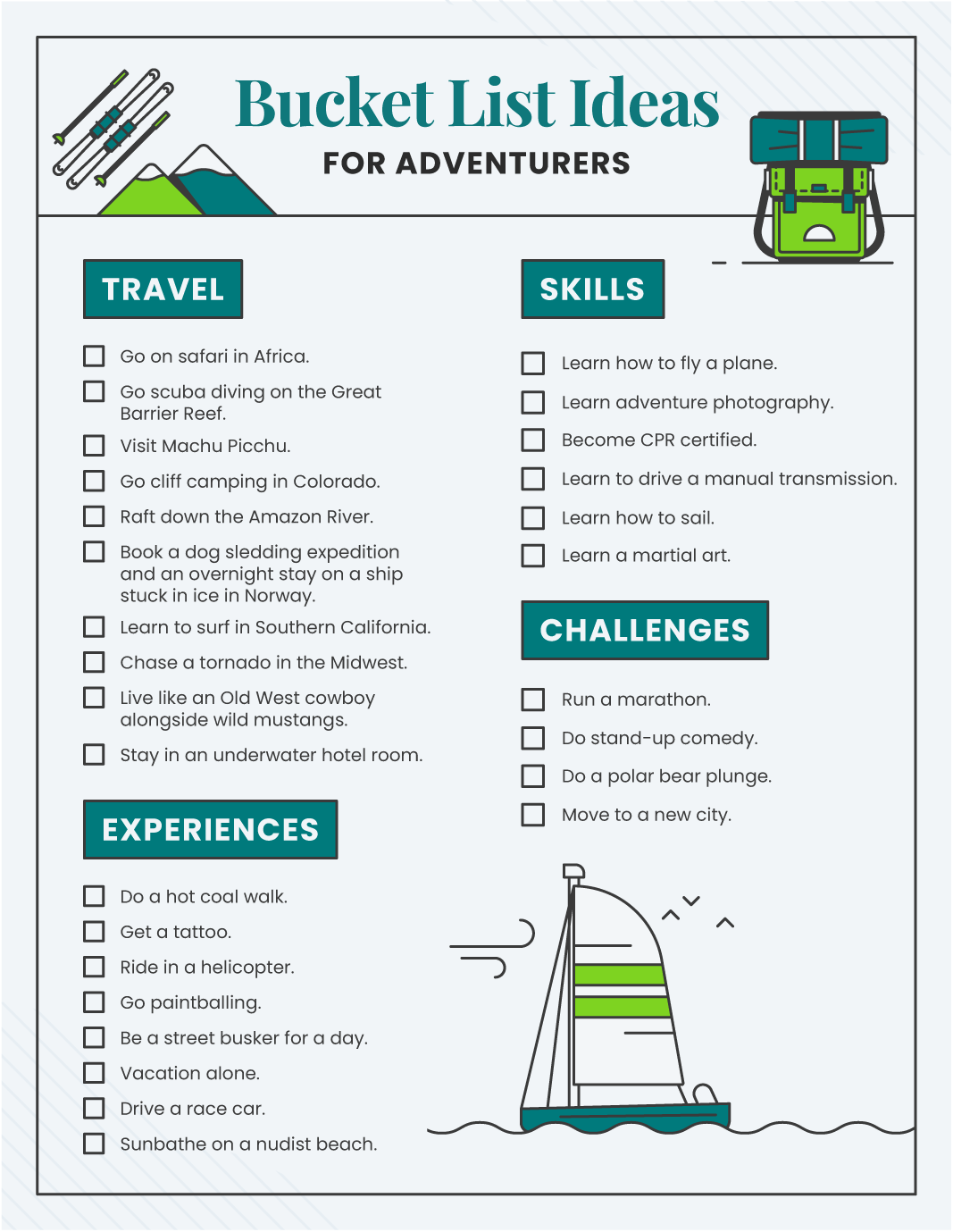
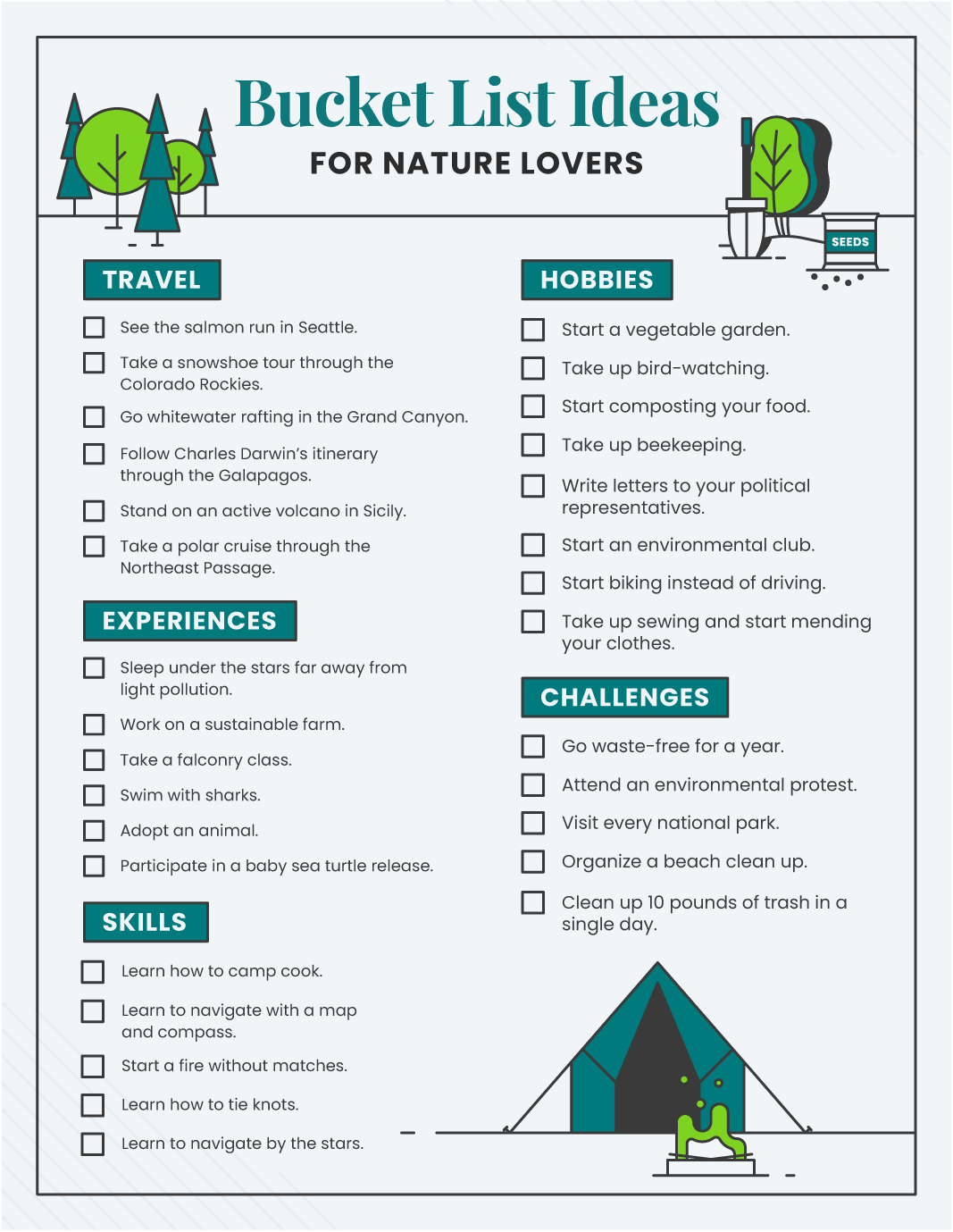
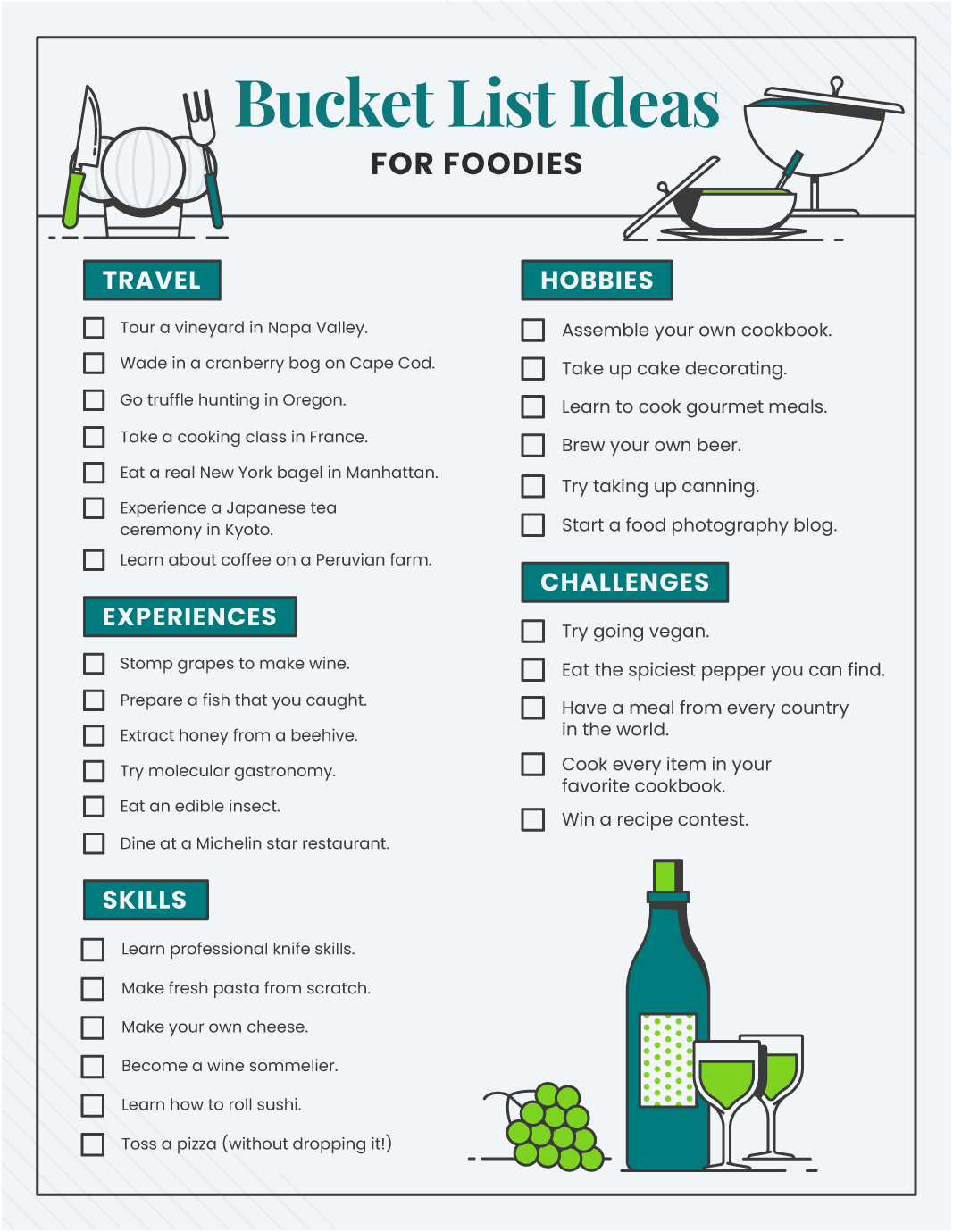
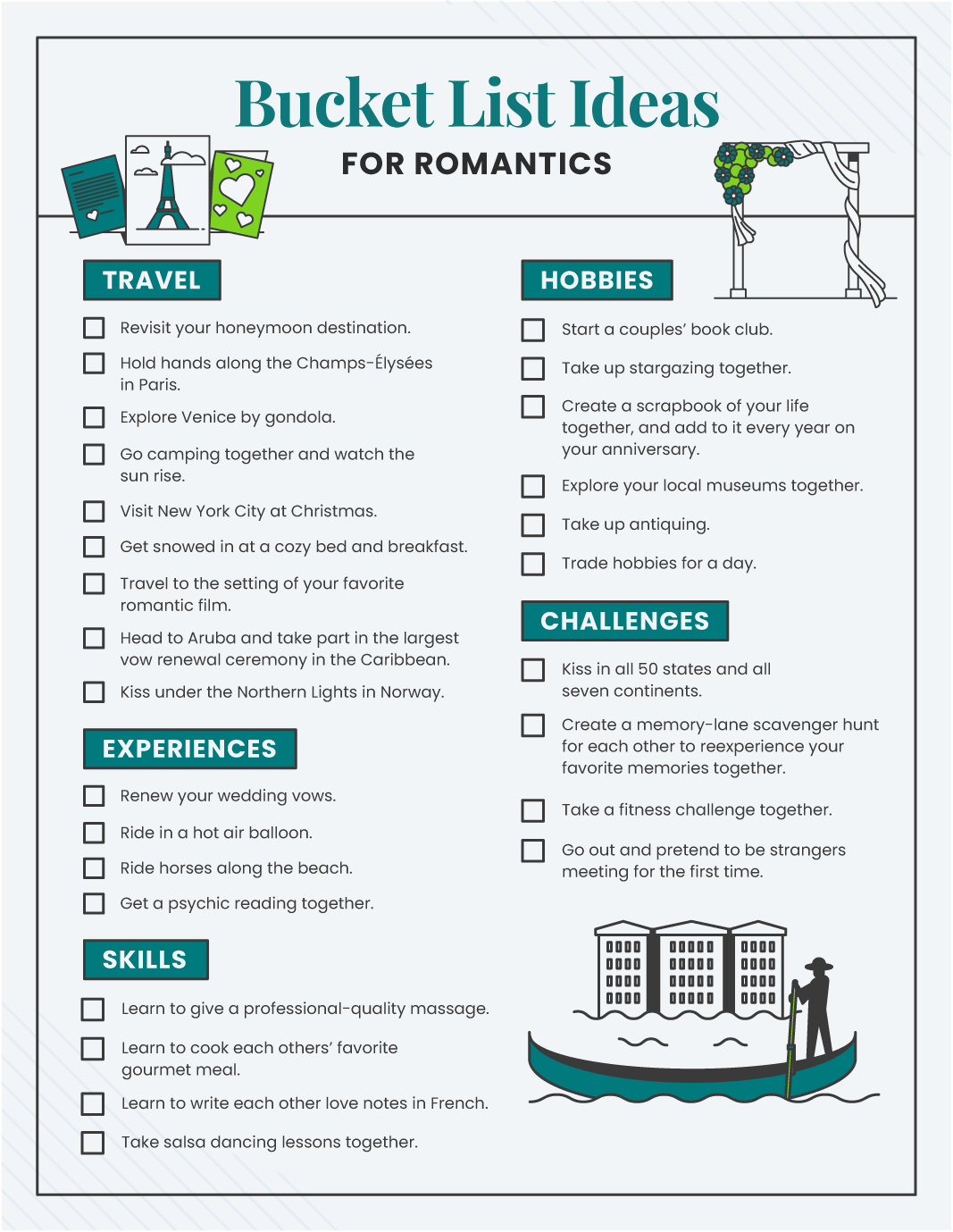
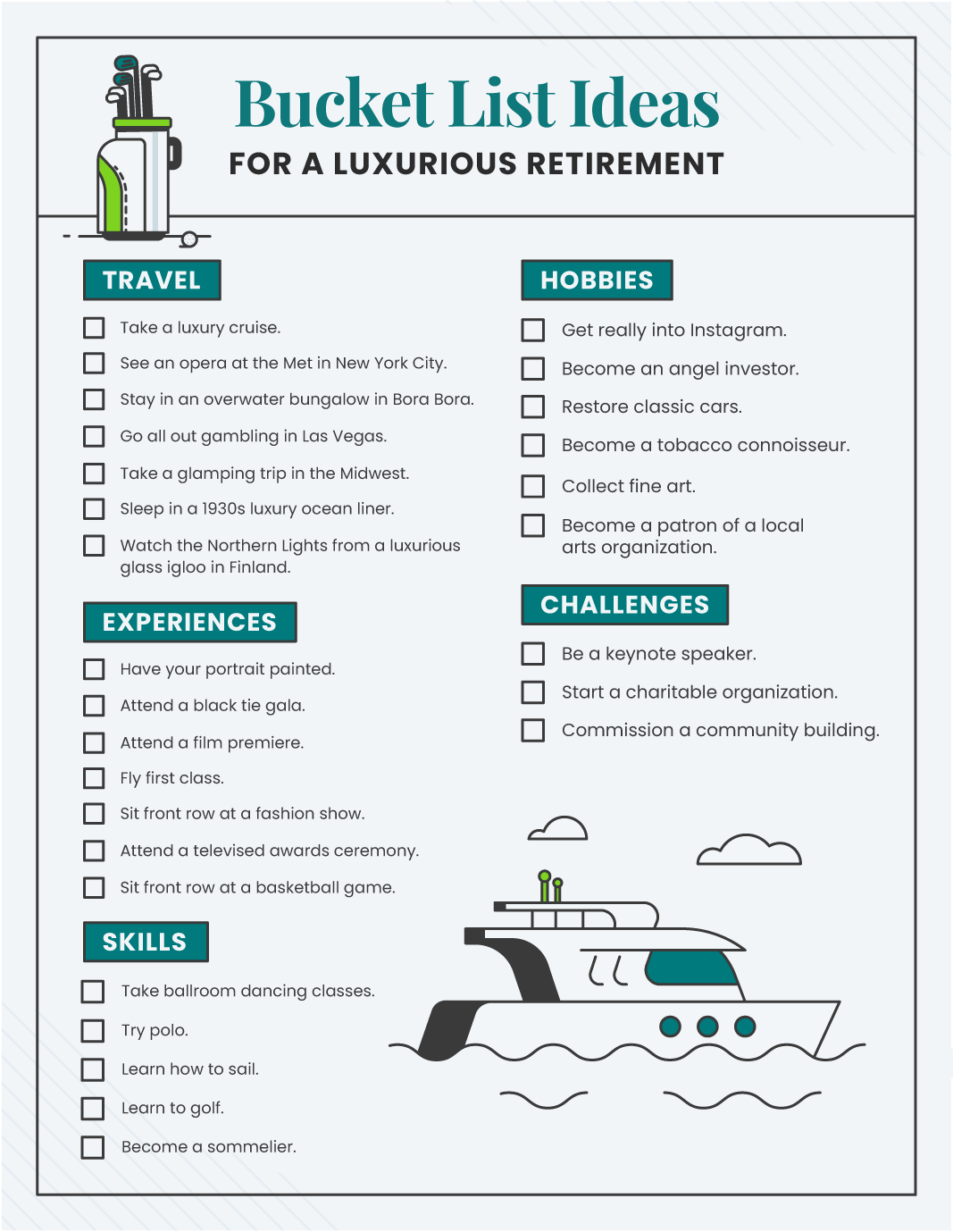
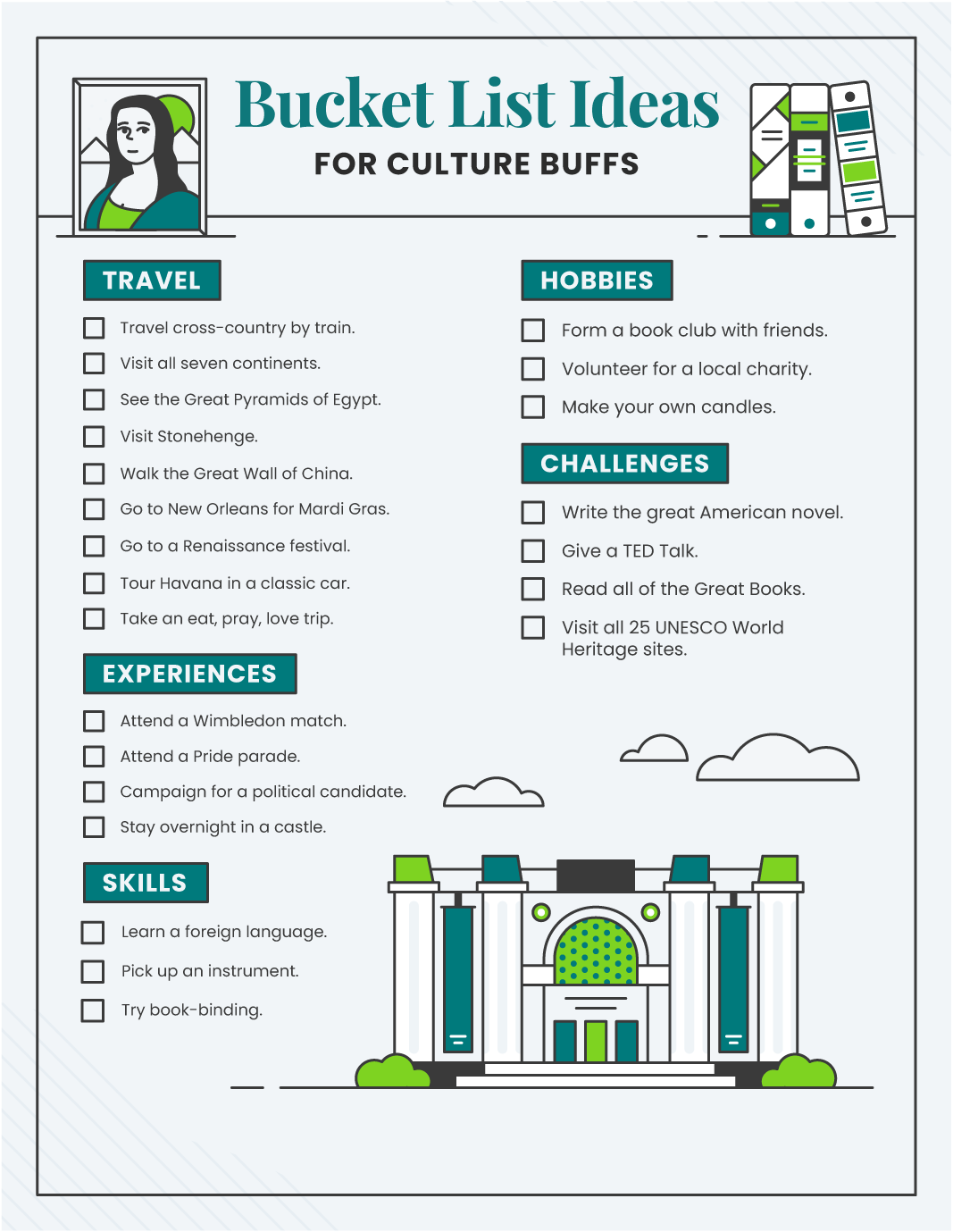
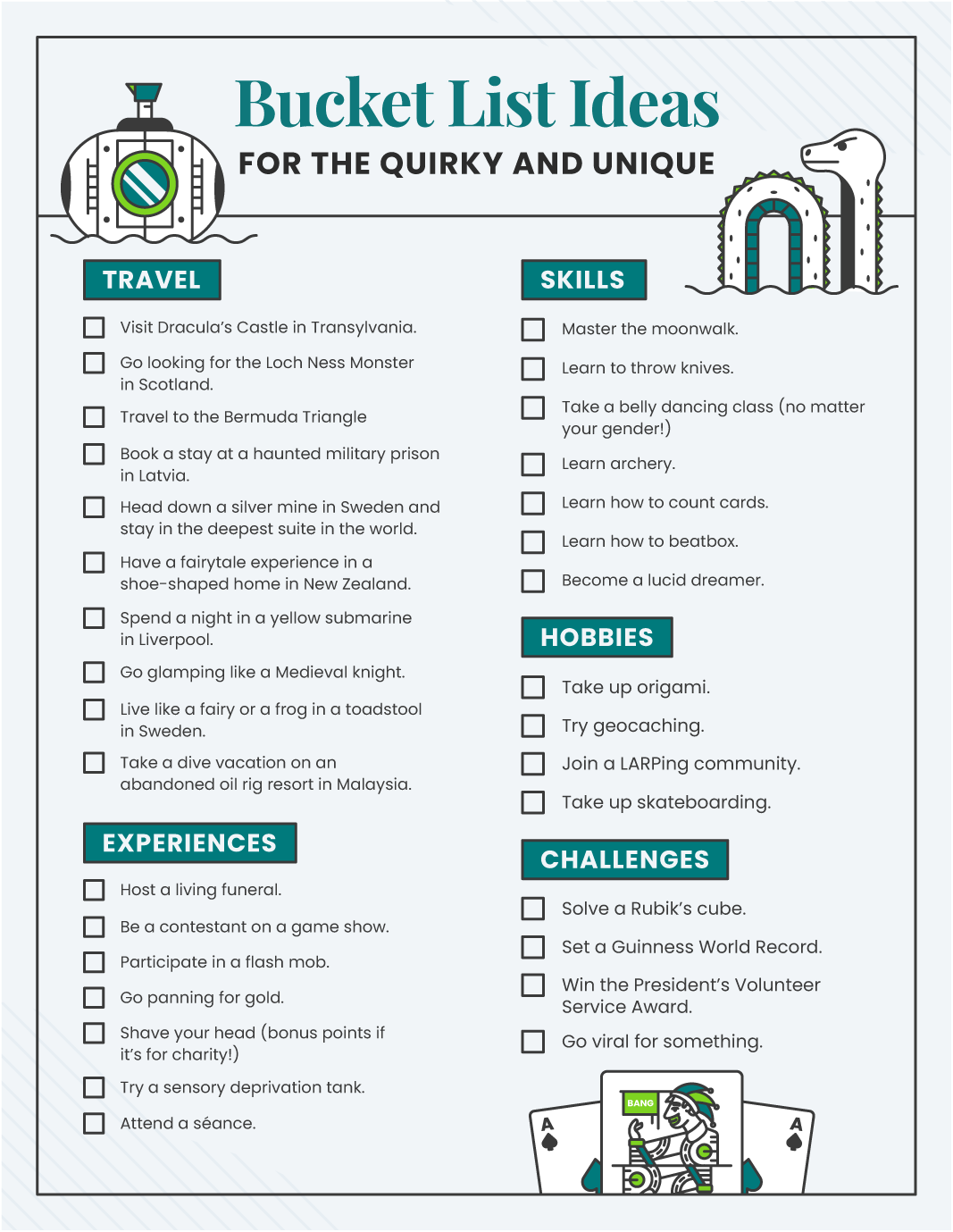
Consider getting started with one of these printable retirement bucket lists, created by the team at Annuity.org.
Each of the seven lists is catered to a particular lifestyle, and they all have sections for hobbies, challenges, experiences, skills, and travel to help you flesh out your ideal retirement life. You can start with one of these lists and modify or add to it as you go.
Having a concrete list of ideals will also help you budget accurately for retirement — those who opt for the “luxurious” bucket list will likely need larger savings than those who select the list for nature lovers.







— Amanda Pell is a writer and content strategist who specializes in personal finance and lifehacking content, covering everything from moving tips to investment ideas to travel hacks and more. When she’s not knee-deep in research, you’ll likely find her hiking with her dog or with her nose in a good book.

- Posted 9.5.20 at 05:10 am by Roy Osing
- Permalink