



Roy's Blog
September 23, 2021
How great leaders ‘nudge’ their organization to stay on course

Source: Pexels
How great leaders ‘nudge’ their organization to stay on course.
A one-liner that resonated with me from the movie ‘Waiting for the Barbarians’ was in answer to a question posed to The Magistrate on how he managed to keep his frontier outpost safe and ‘orderly’:
With a ‘nudge’ here and a nudge there I kept the world on its course.
My leadership belief exactly.
Effective and sensational leaders are really good ‘nudgers’; they are relentless and unyielding at moving their organizations forward—‘slightly west’—with constant prodding to keep it from slipping off the chosen path.
Nudgers understand that it’s not reality to have a business plan that is developed, dropped on the organization and left alone to ‘live its life’ successfully without help.
A misinformed leader announces their grand plan and expects everyone to understand and execute it precisely — it never happens.
The 5 key roles of the Nudger:
1. Key functions
Identify and prioritize the functions of the organization that deliver the key strategic imperatives of the business plan.
Not every department will have equal weight when it comes to their contribution to strategic goals; it’s important to identify and rank the prime contributors and pay an inordinate amount of attention to them and leave the balance alone.
This is a critical piece of work because it demands that Nudger knows the strategy at the most detailed and granular level in terms of what behaviour specifically is required to deliver the output that will allow the organization to achieve the intent of the business plan.
“Who are the key players and what do they have to consistently deliver”? is the question the Nudger answers.
The Nudger’s formula: if (this behaviour); then (this successful outcome).
2. Key processes
Since meaningful results are rarely produced by a single functional team in an organization, it is essential to identify and prioritize the key processes that are summoned to create strategic value.
These are processes that work across the organization and involve several separate functions. It could be the product fulfillment process, for example, involving the call center, inventory management, logistics and billing.
If one link in the chain breaks, the customer is certainly unhappy and might just leave for another supplier. The process must work every time it’s used to deliver.
Meaningful strategic results are produced by teams working together across—not down—the organization.
The Nudger typically looks more intently at the critical processes in the strategic value chain.
2. Influencers
It’s critical to identify the people in the organization who control the key functions and processes. These are the leaders without whom control and adherence to the organization’s strategy and direction will not happen.
These people need to be convinced of the new plan and be prepared to put their heart and soul into it.
They must be the ’warriors’ who will determine success or failure so the Nudger spends a copious amount of time getting them on board and securing their commitment.
3. Serving
Nudgers know that the high performance expected of the functional and process leaders can’t be achieved by a one-of meeting.
The Nudger must be in constant contact—serve around—with each leader, monitoring their progress and assessing whether or not they’re achieving the expected results.
And asking “How can I help?”. Nudgers ‘bash barriers’ getting in the way of people doing their job; if the inside grunge isn’t cleared, little progress is achieved and organizational dysfunction occurs.
4. Nudging ‘on the run’
A single nudge doesn’t do it; it won’t achieve miraculous success by putting the organization back on the right path when it deviates from its original game plan because of events encountered that were not envisioned when the plan was assembled.
In view of this constant barrage of unforseen body blows, successive nudges from dauntless leaders are required ‘on the run’ in order to mitigate the downside of these events and maintain a high performance course.
The Nudger is always online with strategy execution, aware of the progress being made and of the issues being confronted by employees, and taking corrective action ‘in the moment’.
Execution runs through the veins of the Nudger
5. Performance moments
Consistently high levels of performance need reinforcement of the behaviours that caused it, and this is where the Nudger adds stunning value.
The Nudger is always alert to catching someone in the act of committing a superlative deed, providing them the recognition they deserve and communicating it to everyone else in the organization. In addition, the Nudger used these moments as an opportunity to coach and mentor as appropriate.
The Nudger lives with employees who are critical in achieving the strategic intent of the organization. They are ambassadors and advocates of the frontline, and will do anything to support their needs.
‘Nudging’ is not a role that is discussed in leadership doctrine but in my experience it is a fundamental trait of outstanding and spectacular leaders.
How much nudging time do you spend as a leader?
Cheers,
Roy
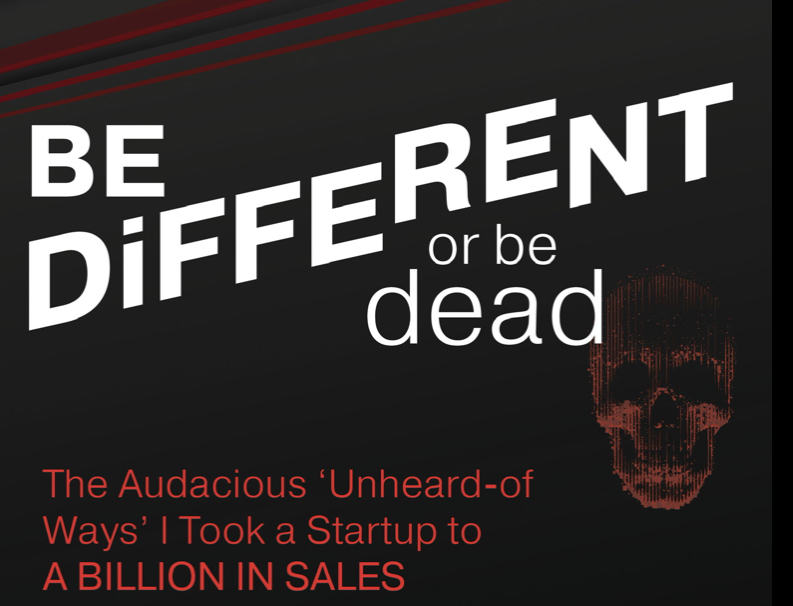
Check out my BE DiFFERENT or be dead Book Series
‘Audacious’ is my latest…
- Posted 9.23.21 at 06:35 am by Roy Osing
- Permalink
September 20, 2021
Why ‘best in class’ is really a one hit wonder

Source: Pexels
Why ‘best in class’ is really a one hit wonder.
Organizations are energized over one simple concept: find another organization that is good at something you’re not good at, and copy them (or try to).
The process is called benchmarking and it is characterized by expressions that everyone in business knows such as ’best in class’, and ‘best practices’.
I’ve written many pieces on why I think benchmarking has deadly implications for any organization on the hunt for a best practice.
No value
Benchmarking adds no strategic value to an organization since copying what others do can never result in competitive advantage.
Ultimate competitive advantage comes from being the ONLY one that does what you do.
No innovation
Benchmarking chokes innovation and creativity since copying what others do requires ZERO originality, and in fact robs the organization of any incentive to seek new ways of doing things.
No culture
Benchmarking is culturally dangerous because it creates the illusion that people in the organization are behaving in a way that adds value, when in fact all they are really doing is trying to transplant what has proven (to varying degrees) to work somewhere else.
But, in addition to the above, there is one other fact that copying organizations need to consider when deciding to slide-on-down the slippery slope of benchmarking.
It’s a caution: you may very well be following a ‘one hit wonder’.
Why?
It’s a simple proposition really. If one day you’re best in class in any one thing—process, product—and the crowd jumps on the bandwagon to copy you the next, your best in class status suddenly disappears and you’re another member of the herd who happens to have a solution to something that once was best in class.
And where does that leave you, the organization that decided to copy them in order (you thought) to gain some sort of an advantage in something?
You’re deeper in the herd with less advantage—and more ignominious—than you had when the lead dog was best in class and you may have been a fast follower.
There are two profound lessons here:
Freefall
If you suddenly find yourself in the best in class position, be prepared for the freefall you might experience when the copycats show up and you are (perceived as) nothing more than them and your prestige has disappeared.
Copying frenzy
If you’re a copycat (even a fast one), any advantage you may have had in adopting the best’s practice, process or whatever goes down the tube and you are anonymous.
The bottom line for me is that best in class is a fleeting notion, here today, gone tomorrow adding no long term value to either the possessor of the title or the pursuer of it.
The way out of this dilemma is pretty simple: find your own way and seek your own truth in terms of providing amazing solutions people will consume at profit levels owners are delighted with.
Sure, be curious as to how others have approached the same issue you are currently facing, but use their expertise as fodder to impose your own unique fingerprint on it rather than copy it blindly.
And never stop innovating because the herd is on your tail and they want to not only catch you, they want to destroy you.
Cheers,
Roy
Check out my BE DiFFERENT or be dead Book Series
‘Audacious’ is my latest…
- Posted 9.20.21 at 04:22 am by Roy Osing
- Permalink
September 18, 2021
3 proven ways you can protect your business by using Blockchain technology

Source: Pexels
3 proven ways you can protect your business by using Blockchain technology.
These days, cybersecurity is one of the most pressing concerns for any business. Globally, 30,000 websites are hacked daily, making 64% of the world’s businesses victims of a cyber attack.
Online connectivity has become both a blessing and curse for businesses, but blockchain systems just might change all of that.
Blockchain technology is improving business security, creating new and powerful solutions in data protection. And the implications are revolutionizing the way we handle data.
But how is blockchain making this difference? And how are businesses applying blockchain towards a more secure information network?
By exploring these questions, you too can understand blockchain and its role in staying safe and relevant in business.
How Blockchain is revolutionizing cybersecurity
Blockchain systems are the next evolution of cloud data security. This is because blockchain offers new levels of protection, transparency, and privacy across data systems.
But what is blockchain and how is it producing enhanced security results?
Blockchain technology was created for and popularized by cryptocurrencies like Bitcoin. Blockchain systems are necessary for making cryptocurrencies work because they provide immutable data storage on a decentralized database, all linked together through cryptographic hash functions.
What this means is that there is no singular server system that stores information. Instead, the data is locked in a node behind personalized authorization keys that can then be used to access the data from anywhere.
This protects the integrity of information by keeping data separate, even though it’s linked together.
Then, the cryptographic hash functions make changing data all but impossible. To alter information on a blockchain, a hacker would have to alter the entire chain since changing one node interferes with the linked cryptography of other nodes. Dominating the chain takes computing power that not many hackers can manage.
The structure of a blockchain naturally gives businesses security advantages when it comes to protecting data. In securing Internet of Things (IoT) devices, for example, blockchain is especially useful because it can link and protect access points while tucking private data away in various locations. This safeguards systems against network crashes as well as expensive data breaches.
In the course of protecting data-driven business practices, blockchain stands to improve security across the board. This has countless practical applications for business owners looking to reduce risks while enhancing efficiency.
Practical applications of Blockchain for business owners
Blockchain equates to an all-new ability to innovate data security and transparency for business owners. The results often come in the form of efficiency and security upgrades that take business data from a place of vulnerability to one of safety. This is all possible through the ways blockchain can be applied to more efficient use of data.
Here are some of the practical ways in which business owners are already applying blockchain for enhanced business security:
1. Tracking changes — One of the key cybersecurity features of blockchain that makes it a revolutionary tool is its ability to immutably store all change information that occurs within a data set.
With blockchain, changes are time stamped and locked in forever. This includes everything from transactions to authorization data.
This is especially useful when it comes to the security of food products. In one instance, Golden State Foods partnered with IBM to implement a blockchain-based tracking system for food transit and IoT sensory data. This meant the path of food and its quality metrics were stored transparently across the chain.
From here, the company can ensure the quality of its products by tracking any updates to the information. This makes implementing a recall simple and more effective should it be necessary and keeps customers safe.
2. Preventing breaches — Blockchain also acts to protect against data breaches. This is especially important as businesses make greater use of IoT sensor networks to monitor and improve their own practices.
And companies are applying blockchain already to help ensure the safe transfer of information across IoT devices. For example, Hdac security technology creates quality records at each process stage on a private blockchain. Then, data is cross-checked and inspected for authorization and behavior, ensuring the quality and accuracy of data use.
In this fashion, companies can protect against IoT network breaches through comparative data solutions on the blockchain.
3. Backing up data — Last but not least, blockchain is instrumental in business security through its ability to back up data safely. Blockchain excels in this regard since it is incredibly difficult to alter blockchain data and the decentralized nature of these systems ensures that all data isn’t stored in a single place.
Many companies, resultingly, have had success adding blockchain to their data backup procedures. Acronis, for example, has applied blockchain file certification to all their storage systems and in doing so has secured millions of data files.
By integrating peer-to-peer computer networks for storing data over blockchain, companies all but guarantee that data will be safely backed up somewhere. This mitigates the threat of data breaches and ransomware attacks.
Securing your business future
These features of blockchain technology offer unprecedented security solutions.
This technology takes what can be an overwhelming job and reduces it to a system of checks and balances that can be simple on a blockchain platform.
Integrating blockchain in data security on the job can then make problem-solving easy for full-stack developers already attempting to juggle dozens of complicated security factors.
From there, your business security solutions can make the strides needed for protection in the modern world. No matter the path of your cybersecurity career or business endeavors, consider applying blockchain to give you the data tracking, safety, and backup options you’ll need.
— Jori Hamilton is an experienced writer residing in the Pacific Northwest U.S. She covers a wide range of topics but takes a particular interest in covering topics related to wellness and mental health. To learn more about Jori, you can follow her on Twitter and LinkedIn.

- Posted 9.18.21 at 06:59 am by Roy Osing
- Permalink
September 6, 2021
8 easy ways to build a successful sales team that CARES about people

Source: Pexels
8 easy ways to build a successful sales team that CARES about people.
Sales organizations are often challenged to be successful.
They craft a strategically brilliant sales plan that would make the pundits proud. It’s replete with industry and competitive analysis, internal strengths, weaknesses and a set of objectives that are time bound with accountabilities assigned.
Then they launch their plan but are disappointed in the results they achieve; they are unable to deliver the results they expect.
And they wonder why they aren’t successful.
But reason is right in front of them.
Success isn’t about the efficacy of the strategy; great plans have been know to fail and mediocre plans have earned amazing success.
The execution competencies of an organization separate those that achieve the results they intend from those that underperform.
The care factor
And those that standout in the ability to consistently execute have one thing in common: they all have a huge ‘care factor’ in their culture. They understand that people caring about people is a critical ingredient to consistently deliver superlative results.
Care about customers and they return the favour by buying what you have to sell. And they do it repetitiously. And they tell others.
Care about your sales warriors and they not only individually produce tremendous results, they also work together across the organization to deliver what customers want when they want it.
Effective organizational processes require seamless handoffs, or ‘touch points’ in order to flawlessly deliver products and services to their customers.
Three are facilitated when people respect and care for the roles and responsibilities of others.
What do sales organizations with a high care factor look like?
▪️they have caring as a critical component of their stated values; “We care about others” in some manner is explicitly stated.
▪️their sales strategy is consistent with caring. Their plan is based on serving customers intimately in order to create memorable experiences for them because they know it will result in sales.
And their sales approach is to discover what their clients care about as opposed to only focusing on what they need.
Caring must be measured
▪️they measure caring outside and inside. Every client and sales employee survey includes questions on caring and the extent to which employees practice the value.
▪️they have a recruitment process that looks for the caring attribute — it goes well beyond whether a person has demonstrated sales skills.
You can’t teach people how to care; they either have the innate drive to do it or they don’t. They are born with the gene to honestly serve. The human resource effort in sales is geared to discover people with this gene.
▪️their sales leaders care and they show it relentlessly. Caring starts from the top; it’s what leaders do to build higher levels of employee engagement.
And they make it visible to everyone.
▪️in addition to specific product sales targets, they include caring in their performance and compensation plan and build in specific objectives to measure it.
The basis of measurement is perception; do customers and employees THINK sales people act in a caring manner; do they think they care?
Sales caregiver stories are told
▪️their employee communication is overwhelming with stories of sales caregivers — when have you EVER heard ‘caregiver’ linked to sales? — and what they’ve done to live the caring values.
What is talked about is what culture is all about. If the airwaves are consumed with caring stories, what conclusion do people reach?
▪️they consider caring to as the essence of their competitive advantage. You can’t build anything if you don’t care, ergo growing a business requires a strong human feeling element exercised particularly through sales, as being a critical customer facing team.
Some might consider caring soft, unnecessary and perhaps a bit weird to consider as a critical element to shape the culture of sales. After all, the prime purpose is to push products and services and make a sale, right?
These folks don’t get it.
They don’t get that mind-blowing sales performance that results in a competitive advantage for the organization is the result of individuals working closely together for a common cause.
And that only happens if there is a caring culture at play.
Cheers,
Roy
Check out my BE DiFFERENT or be dead Book Series
‘Audacious’ is my latest…
- Posted 9.6.21 at 01:06 am by Roy Osing
- Permalink