



Roy's Blog: July 2021
July 19, 2021
Why the ‘Internal Report Card’ will get you the most amazing teamwork

Source: Unsplash
Creating highly proficient teams is a challenge for most leaders who recognize that unless synchronicity among work groups is systematically established in the organization, performance and results suffer.
I’ve looked at teamwork from a number of angles in past blog articles and suggested a number of ways to improve the effectiveness of people working in solidarity towards a single purpose.
These are a few sound bites:
Strategy — ensure everyone understands the strategic game plan of the organization for without shared understanding of where the organization wants to go, harmonious activity with needed results simply don’t happen.
Line of sight — establish a direct line of sight between the strategy and every function in the organization; if every person doesn’t act in accordance with the specific outcomes expected of them dysfunction results as divergent outcomes throughout the organization are produced.
Translation — leadership must take on a translator role to break the organization’s objectives down for everyone; if individuals are left to figure out what the strategic intent means to them, more erratic behaviour occurs and inconsistent performance results.
Cross-functional measures — since systems and processes across the organization among departments typically produce results (as opposed to a ‘vertical’ process operating in a single function producing the final good or service the customer receives), metrics must be introduced that measure the effectiveness of cross functional activities.
Handoff improvement — internal customer-supplier relationships must be improved to eliminate inefficient and mistake-ridden handoffs, because eventually these fumbles damage ‘real’ external customer dissatisfaction with waning market performance.
If you can make internal handoffs seamless on ‘the inside’, amazing service is delivered on ‘the outside’.
I would like to pivot off the last point because I believe there are substantial improvements to teamwork that stem from the fact that inside an organization, people—internal suppliers—deliver results for other people—internal customers and if somehow those connections could be made more seamless and effective, overall teamwork and performance would follow suit.
Internal quality
Organizations rarely set up a system to measure ‘internal quality’; the value of what internal suppliers deliver to their internal customers.
For example, sales expects marketing to develop a training program for a new product but marketing is not held accountable for the result they deliver.
— Was the training program delivered when it was promised?
— Did it cover all the elements that sales expected?
— Did it provide a unique value proposition that sales could use in competitive selling encounters?
— Did it include selling aids the salesperson can use in front of the customer?
The few organizations that do systematically measure internal customer-supplier transactions, rely on internally generated statistics; data on such topics as:
— delivery times.
— % defects.
— amount of rework required to remediate defects.
This type of internal quality measurement system is a good first step but it needs to go further if the desired outcome is high performing teams that consistently deliver expected results.
Perception measurement
The measurement system needs to be expanded to include perception measures, how the internal customer ‘feels’ about the service provided by the internal supplier.
— How does sales feel about the quality of the training program marketing delivered to them?
— Did it meet their expectations?
— Did it fall below what they expected?
— Did it go beyond what they expected?
These are subjective qualitative measures, but they are so important in helping improve team performance because if someone feels the service they were delivered is below what they expected, it’s their reality.
In a way, it really doesn’t matter if the internal stats say that there were a mere 2% defects (and it’s somehow ok to screw up 2% of the time) if the internal customer feels the service they were delivered doesn’t measure up to what they expected.
Perception is the reality. It really doesn’t matter what the data says.
Internal Report Card
The simple way of getting perception measurement going is to introduce the ‘Internal Report Card’, where an internal customer gives their internal supplier a report card rating on the service they provided.
Here’s how to do it.
1. The internal supplier asks each of their internal customers what handful of service elements—no more than 6—are critically important to them.
2. The internal service elements are discussed and mutually agreed upon between customer and supplier.
The sales Report Card on marketing, for example, could have these internal service elements:
▪️New products are introduced in a timely manner to keep sales competitive.
▪️Product prices are acceptable to our customers.
▪️Marketing staff are responsive to our concerns. They connect with us regularly and act on the help we need from them.
▪️Product training programs are valuable and help us stand out among our competitors.
▪️Advertising and customer communications programs give us the ‘air cover’ support we need in the marketplace to give us a competitive advantage.
▪️We have sufficient input to product sales forecasts produced by marketing.
3. Every month or at some other agreed-upon interval, marketing asks sales to complete the report card using the classic ‘A’ for amazing service; ‘B’ for good service; ‘C’ for average service and ‘D’ for below average service.
In the report card, sufficient room should be provided for comments on why a particular rating has been given. This is extremely important as it points the service supplier in the right direction to improve.
4. Sales posts their report card results for the marketing team and develops an improvement plan to deal with problem areas. This normally follows a ‘whining and snivelling’ period for marketers to go to their cave and get over the results those unreasonable sales people gave them!
5. Marketing meets with sales to discuss their improvement plan and gets their sign-off that their intended action plan will address the shortfalls sales identified and will continue to build on the marketing strengths that were identified.
6. Sales share the results with their teams and openly support the efforts taken by marketing to improve teamwork.
Reverse Internal Report Card
So what does sales do if marketing doesn’t initiate the report card process? Let’s face it, marketing may not want or care to know how sales feels about the service they provide to them.
This is where the Reverse Report Card comes into play. If marketing won’t ask for input, sales can give it to them regardless.
Consider it an unsolicited sales report on how well marketing supports the sales effort.
If your internal supplier doesn’t care to initiate the report card process with you, do it to them.
This is achieved by sales architecting their own report card and sending it to their marketing colleagues. And hopefully (after the shock wears off) it will encourage marketing to take the initiative to begin the formal process by asking for details behind the Report Card, what the results mean and what they need to do differently to improve sales’ perception of marketing support.
The simplest ideas are often the most effective. As kids our Moms encouraged us to reach for A’s as a measure of our learning competence; let’s now use this tool to build height effective teams in our organizations.
If you’re interested in establishing a Report Card process among your teams, connect with me. I would be pleased to help in any way I can.
Cheers,
Roy
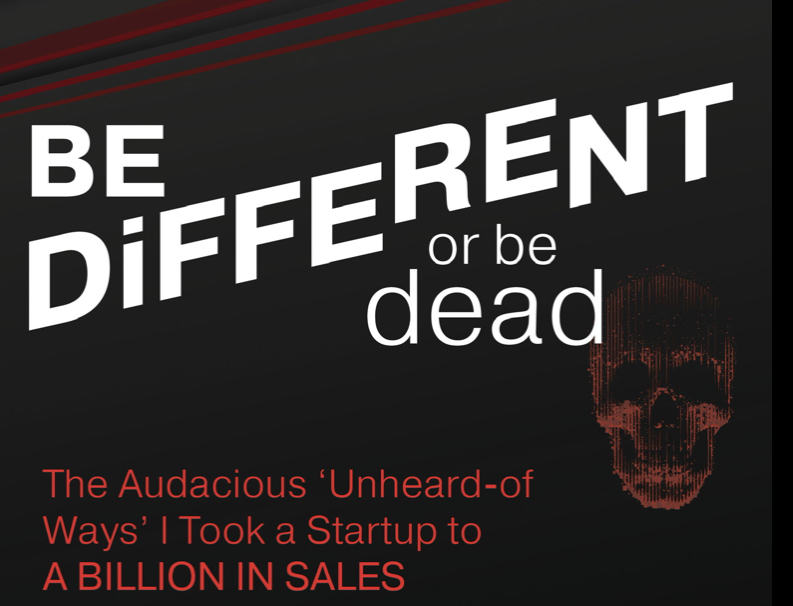
Check out my BE DiFFERENT or be dead Book Series
And ‘Audacious’ is coming soon…
- Posted 7.19.21 at 01:52 am by Roy Osing
- Permalink
July 12, 2021
Why being different is key to career and business success

Source: Pexels
Why being different is key to career and business success.
If you are not different from others in some meaningful way, you will likely achieve no more than 50% of your potential; you leave 50% of your net worth on the table.
This is what young professionals face today as they begin their journey to fulfill their career dreams and be successful.
There are more people looking for jobs than there are jobs.
And the people in the crowd approaching organizations for an opportunity look the same.
When being interviewed, members of the job hunting herd are literally indistinguishable from one another.
— They have a boilerplate CV they downloaded from the internet;
— They talk mostly about their academic credentials and the marks they earned;
— They exhibit a superficial understanding of the organization they are speaking to and the challenges it faces;
— They don’t ask meaningful penetrating questions about the company and the markets it serves;
— Their answers to interview questions rely more on what they’ve been taught in school rather than from a practical perspective;
— The conversation is replete with standard cliches: “My strength is dealing with people”; “I understand new technologies”; “My weakness is trying to do too much, or I’m impatient at times” and on it goes.
When they cannot demonstrate something unique about themselves, they unfortunately provide hiring organizations no compelling reason to pay attention to them over others and to consider them high for employment potential.
Some say that it is ok to possess skills and competencies similar to others; that there is a limit on how people can be different.
Not true! That’s like saying there is no way you can turn a commodity into a differentiated product and we all know that is absolute rubbish.
Products can be made to be special in a myriad of ways and all it takes is imagination and creativity to create something different and unmatched in the marketplace - ever heard of The Heart Attack Grill in Las Vegas?
It’s no different with people.
Each and every one of us can be distinct from every other person in some special way if we are motivated to discover our specialness.
The problem is we have never been led to think that being different was expected. Rather, ‘the system’ imposes on us conformance and compliance expectations and has brainwashed us to believe that fitting in was the only acceptable outcome.
The school system is all about grinding our students who have all mastered the same stuff in the same way.
Being different is not driven into young people; it’s frowned upon.
So the consequences of not being different are:
▪️first, young people have an extremely tough time getting a job and launching their career;
▪️organizations are robbed of the creativity they need to survive and thrive in our unpredictable and chaotic world.
Double jeopardy with very unfortunate outcomes.
Cheers,
Roy
Check out my BE DiFFERENT or be dead Book Series
‘Audacious’ is coming soon…
- Posted 7.12.21 at 02:47 am by Roy Osing
- Permalink
July 5, 2021
8 proven ways to beat the competition for the job you want

Source: Unsplash
8 proven ways to beat the competition for the job you want.
There are more people out there today competing for scarce jobs; people competing for careers are more educated and the urgency to be successful is huge with the severe economic pressures facing everyone.
To win a job in this type of environment requires that you be the best at what you choose to do; that you be the topic of conversation; that you and only you deliver unique results that matter.
These 8 proven and practical actions will enable you to be unmatched in the crowd of people hungry for success in their career and you will handily beat the competition for the jobs you seek.
1. Be visible to others
If you’re not noticed, how can you be judged among your peers? Recognition for achieving results can only come when the career decision makers are aware of what you are doing and the value you are creating.
Manage your activity with this in mind. Don’t force it — like ‘Hey! Look at me!’ — but ensure that people know you and are able to compare you to your colleagues.
This will also get you top of the list of high potential people who should be given greater opportunities to prove their worth.
2. Be a niche player
Try and be a player in a strategic area where the need is greatest as opposed to trying to be a generalist who aspires to be all things to all people — you need to be focussed.
For example if your organization is suffering from the lack of marketing skills to differentiate itself from competitors (and you are a competent marketer), focus your brand building efforts there.
The people who win jobs are recognized as individuals who provide the unique leadership required to achieve strategic success. They focus their energy and use their competencies in the specific areas that will deliver superlative performance for their organization.
3. Be different than everyone around you
It always amazes me that everyone wants to copy what works for others.
When confronted with a problem to solve, it seems a natural tendency to consult best practices and employ the tactics and game plan that others have successfully implemented.
Whereas benchmarking what others do may result in improvements, it will never give you a strategic advantage over your competitors.
Successful job winners don’t copy; they set the standard that others aspire to achieve. And they do it by being different in some meaningful way that resonates with their audience.
4. Keep your promises
A simple thing really, but one that so often is missing in action when it comes to peoples’ integrity. It shouldn’t be an advantage to someone but it is; many are great with the words and rhetoric but fall short on the action and results.
Someone who has a strong brand around doing what they say will surpass those who rely on words alone to set them apart.
Winners don’t just aspire, they do.
5. Forget your degree
The truth is, the consistent job winners don’t come from being the most well educated; there are too many people that are likely to have degrees and marks better than yours. Furthermore academic credentials are not a reliable predictor of success.
In the real world success comes from achieving results faster than others — from being more nimble than the crowd.
Being the best at winning jobs is achieved by getting stuff done better than anyone else, not by outthinking them. You DO need a good knowledge foundation to even play the career game, but it’s the actions you take that make a difference.
6. Go beyond what is asked of you
Most of my career competitors did the minimum amount to meet the given objective.
My view was always to meet the minimum expectation and look for an opportunity to go beyond it; to create work that was more original and insightful than what others did. Sure, it took extra time to do it, but it was worth it in the long run.
Look for opportunities to:
▪️make your work broader and richer than expected by engaging more experts and opinion leaders in your analysis.
▪️provide a greater level of detail in your reports. Don’t just skim the surface; do a ‘deep dive’ into your material and provide the granularity your readers don’t expect.
▪️package your work differently than what others do; make your work compelling for your audience to study.
The required minimum satisfies expectations; going beyond what is asked of you will attract attention and make you unmatchable among your competitors.
7. Give ‘em what they don’t expect
Most people approach a problem they have been asked to solve in the same way. They do a SWOT analysis, set a goal and then develop a list of objectives to achieve it. This process is the pedantic way that your competitors will generally use to problem solve. It’s predictable and it’s boring.
Being the best person for a job opportunity requires breaking away from the way everyone else approaches a challenge and doing it in a way that surprises people.
If you can surprise people, they will remember you and what you’ve done.
Some simple ways of coming at this:
▪️ask someone who is affected by the problem how THEY would solve it. People closest to the problem often don’t get invited to help solve it; those looking in are surprised when they are.
▪️abbreviate the formal analysis; get to a solution fast, implement it and tweak it on the run. Spending most of your time to figure out how to implement a solution is almost never done; when you do you just might attract a “WOW!”
▪️go in the opposite direction implied by the traditional problem solving approach. Doing a 180 on how a problem is typically addressed is often a great inertia breaker and will attract attention.
8. Change the playing field
It’s all about context — the ‘bigger picture’ — and most people don’t think this way.
Push the narrative to a higher level than the issue on the table. For example, rather give an opinion on civic leadership ethics, raise the level of the conversation to discuss civic leadership accountability — a broader topic which includes ethics.
I am constantly asked my opinion, for example, on specific advertising campaigns, and personal brands, and I refuse to comment until I clearly understand the strategy that each intends to fulfil.
Unless you have strategic context, your views are merely personal biases and add little strategic value to the issues at hand.
The job winners avoid getting drawn into a debate on a narrow topic; they create a more holistic frame of reference and go there to present their views.
They don’t conform; they don’t comply; they don’t rely on their schooling and they don’t copy what others do.
They look for niche opportunities and rely on ‘doing it’ to achieve results that others are incapable of delivering.
Cheers
Roy
Check out my BE DiFFERENT or be dead Book Series
- Posted 7.5.21 at 01:41 am by Roy Osing
- Permalink
June 28, 2021
Why customer loyalty is not determined by what the organization sells

Source: Unsplash
Why customer loyalty is not determined by what the organization sells.
Why do people buy from one organization over and over again?
Is it because they:
▪️‘love’ the business?
▪️love their commitment to sustainability and the environment?
▪️love the way they support the communities in which they operate?
▪️love the products and services they offer?
▪️deliver consistent high levels of financial return to investors?
In a generic sense, the question really is: “Are customers loyal to an organization because of what they deliver — i.e. output related— or because of the way they deliver it — i.e. process related?
Output or process: which is the determinant of customer loyalty?
I don’t see much differentiation among businesses in terms of what they produce. If you’re in the communications business, you’re going to have internet and home phone service in your product portfolio.
If you’re in the financial business you’re likely to offer essentially the same financial products such as basic savings, retirement savings, and education savings accounts as well as other products such as term deposits and investment vehicles.
I’ve written much about the fact that even though competition is fierce and growing relentlessly in global markets, differences among competitors that are both meaningful and compelling to customers are shrinking and are becoming less and less obvious.
Increasing competition is ironically resulting in less meaningful differences among combatants.
It’s a surprising result.
You would think that as competitive forces escalate, a business would get better at creating a sustainable competitive advantage in the markets they compete in.
But they’re not. My observation is that every participant basically looks the same and they all exist to produce something for the masses, using price to attempt to separate themselves from the crowded mob around them.
And generally, production-oriented, mass motivated and price focused organizations tend not to be a huge loyalty magnet; customers come and go based on short term satisfaction.
Sustainable loyalty actually has little to do with what is produced by a business; rather it is a process-based phenomenon with people as the nucleus.
People buy when they’re happy; when the engagement they have with an organization ‘feels good’ and they feel their cravings are being addressed.
And warm feelings are not likely to be continuously produced by a product or service which turns into old or used eventually when the lustre of ‘the new’ wears off.
These are the process and people things that, in my experience, create warm experiences for people and make them coming back:
1. Easy-to-do-business-with processes
There are two principles that are critical in terms of having ‘customer friendly’ processes.
First, build systems to enable customers to engage with the organization the way they want rather than force them to comply with processes designed with company efficiency as the main design criteria;
What percentage of customers that use a company’s website are ever asked if they like the navigation and buying experience? How many of them are asked to pass judgment on the artificial intelligence technologies used?
I doubt it ever happens.
Organizations build systems with scale and productivity in mind not with customer satisfaction as a key driving factor.
Furthermore, they serve as a factory to the ‘normal’ masses who are content to comply with whatever business processes they use and not the outlier ‘weird’ ones who require special handling — a group by the way growing larger and more powerful everyday and sometime soon will eclipse ‘the normal ones’.
Second, ensure that internal rules and policies serve the same customer purpose: to enable not restrict, to ‘say yes’ not ‘say no’, to empower not control and to please not disappoint.
Ever heard of a company asking their customers to participate in a panel to evaluate whether or not the policies of the company made any sense to customers? Whether they made it easy to engage with the company? Whether they were understandable or just plain dumb?
Unfortunately, I’ve never seen an organization enlightened enough to take such a risk and welcome their customers in to help manage their business.
2. People who like to serve
The majority of warm feelings that customers experience are induced by human beings. Technology might impress you, but people can delight you, blow you away, mesmerize you, dazzle you, surprise you, shock you and astonish you — all symptoms of loyalty building.
So it follows that organizations need to hire the type of person who can cause these types of feelings to exude from other people. Yes, they have to be intellectually competent to qualify for a customer server role, but beyond that they must possess the innate hunger to care for another person and be driven to satisfy whatever craving the customer has at the moment.
Most businesses aspire to provide memorable experiences for their customers, but the quality of the engagement process doesn’t back up the claim. Their customer contact repair folks may be great at troubleshooting an internet problem sitting in a call Center in the Philippines, but the engagement moment with the customer falls short of being warm and caring. It’s often frustrating, cold and harsh.
It’s absolutely true that delighting a customer time and time again will deepen the affection the customer has for the organization and will lead to sustaining loyalty. The catch though is to have the type of ’human being lovers’ in place to pull it off.
Let me crystallize the loyalty takeaways for you:
— Customer loyalty has more to do with HOW you conduct your business than it has to do with what your business produces.
— Loyalty is created when business processes are created in the image of making it easy for the customer to do business with an organization.
— Loyalty grows from customer affection which is earned by having caring customer servers who are the natural architects of warm moments customers experience.
Businesses don’t create customer loyalty; processes and people do.
Cheers,
Roy
Check out my BE DiFFERENT or be dead Book Series
- Posted 6.28.21 at 01:45 am by Roy Osing
- Permalink