




Roy's Blog: Marketing
January 26, 2012
5 simple ways to build the best marketing loyalty program

Source: Pexels
5 simple ways to build the best marketing loyalty program.
Most marketing loyalty programs are the same. Points are acquired for purchases and they can be redeemed for a variety of things: another product or service, travel and so on.
Most loyalty programs lack the marketing juice that make them memorable. Every program is the same. Boring-ness pervades.
The intent is to bind the customer to a specific organization forever; to provide them with so much additional value that they will never be enticed by another provider to leave.
Some loyalty programs are more effective than others but the one ingredient that seems to be missing in many of them is marketing juice — the treatment that is normally given to products and services to make them unique and to make them stand out from the competition.
Here are some ways to inject ‘the juice’ in your loyalty program:
1. Be relevant — A loyalty program should be relevant, something your customers care about. I know it sounds trite, but generally some marketing analyst decides what rewards define the program without an extensive amount of individual customer research.
In fact most of the time the program reward portfolio is determined by what the organization wants to supply (based largely on economics and logistics) as opposed to reflecting their customers’ demand profile.
Furthermore, most loyalty initiatives are based on mass market one-size-fits-all considerations rather than a more personalized approach. What drives loyalty is most often a personal motivation: what makes one person loyal to an organization doesn’t make any impact at all on another.
Build your loyalty program on the principle of personalization. Discover the secrets of your target customer group and construct the elements of the program around them.
Remember if you treat your program as something for the masses, it won’t be for anyone.
2. Be unique — A loyalty program should be unique, something your target customers can ONLY get from you. And if you do a good job to define specifically what your customers desire as hooks for their loyalty, you will end up with something very close to being unmatched in the market because most others will be building their programs on mass market needs.
If you can’t make your program special in some exciting way, don’t do it. Doing the same thing as everyone else will diminish its value to the point of making it worthless.
As an expression of your program’s uniqueness, develop an ONLY statement for it using the framework I discussed elsewhere. Remember to be as specific as you can; the things that your program has (that other programs don’t have) must jump out at you when you read it.
‘Our loyalty program is the ONLY one that….’
This is the most effective claim that makes it easy to explain what your program is all about to customers and to make explicit how your program is different from the competition — YOU become the benchmark for others to follow.
3. Be targeted — Tailor your program around your top customers. They are the ones who probably create a disproportionate amount of wealth for your organization and who should be the first ones in line to reap the benefits for their loyalty. Again, stay away from thinking what ALL of your customers want; reserve your loyalty investment for the special ones.
Consider providing greater benefits to those who have been with you the longest. Someone who has been with you for 10 years is worth more than someone who has been loyal for 2 years.
Success is measured by retention rates in your high value customer groups not by its attractiveness to your entire customer base, so make sure you can track how well it resonates there. In fact if it appeals to a broad base of customers it’s a symptom that the program design is flawed.
4. Be myopic — Let your special customers guide the design of your program; base it on what they are telling you rather than by what your competitors are doing. Their programs might work for them, but they won’t likely work for you.
In fact, avoid benchmarking other plans completely if you want to do something remarkable.
You know by now I am absolutely against copying what others do and tagging your actions as innovative and it applies here unless you want to be contrarian and go in the opposite direction of the herd.
Be open — Before launch, test the plan design with your target customer group and be prepared to modify it on the basis of their feedback. If your program doesn’t address their high priority wants and desires it will fail, dragging your investment under water.
Rather than go the traditional hard core quantitative route, I suggest using focus groups as the way to get customer input.
It’s a more informal setting that, in my experience, is much more effective in deciding on whether your proposed program hits the mark or not. Plus, it’s a great way to gather more insights — secrets — on the special ones you’ve invited.
And btw, they love to be asked and they love to help.
If you want to be unique in the loyalty program space, just ask your reward recipients how you can make your program better
5. Be engaging — The communications strategy for your program should be based on continual customer engagement. It’s important that your customers are kept up to speed on the details of the program, their rewards status and the new rewards opportunities available to them.
Invite them to respond with how well they are liking your program — does it continue to be relevant to what they care about? — and with any suggestions they have to improve it.
Because you’ve designed your program to be more personal to the individual, it’s critical that you have a stream of feedback on whether you’re hitting the mark.
It’s interesting to me that even though there are thousands of loyalty programs being offered in the market, I’ve never once been asked to provide feedback or ideas to make them more personal for me.
How about providing loyalty club members a dedicated communications channel — phone, email or whatever — only for them to connect with your organization when they need to. Simple. Easy. Impressive. Different.
Cheers,
Roy
Check out my BE DiFFERENT or be dead Book Series
- Posted 1.26.12 at 01:04 pm by Roy Osing
- Permalink
November 10, 2011
Why giving thoughtful gifts to your customers will make you rich

Source: Unsplash
Why giving thoughtful gifts to your customers will make you rich.
Give stuff away and get rich. Think it can be done?
You’ve heard of the lost leader product which is often sold at below cost to get the buyer’s attention and to convince them to buy another offering. A cut priced pair of shoes just might entice her to pay full pop for a matching purse.
The other approach used is bait and switch: lure someone in by a tempting offer on one product bit then get them to buy another priced more expensively.
FREE in the sense of business building refers to neither of the above marketing strategies; it refers to gift giving. giving something of value unconditionally, expecting nothing in return.
The shameless act, as Seth Godin says, of passing your art to someone else, hoping you make a difference in their life.
Effective gift giving is all about intent. If your intent is to fool the receiver into believing you are earnest when you’re not, you will be discovered for your dishonesty and lose business
You will be found out and punished for your lack of integrity.
Pure gift giving has an amazing upside. First of all, the recipient is surprised with your unselfish act.
They will most assuredly accept your gift with thanks and will spread the word of your gift giving to their friends and colleagues.
And, when faced with the opportunity to do so, will go out of their way to help you in any way they can. They will also continue to reward your selfishness with repeat buying; in fact they will feel obligated to do so.
So, give a gift. Give it unconditionally. Unselfishly. Openly. With no ulterior motive to sell something. With no eye on a commercial transaction.
When you do, watch the magic.
Cheers,
Roy
Check out my BE DiFFERENT or be dead Book Series
- Posted 11.10.11 at 09:35 am by Roy Osing
- Permalink
October 31, 2011
What is a customer ‘secret’ and why is it really important to business success?
Source: Unsplash
What is a customer ‘secret’ and why is it really important to business success?
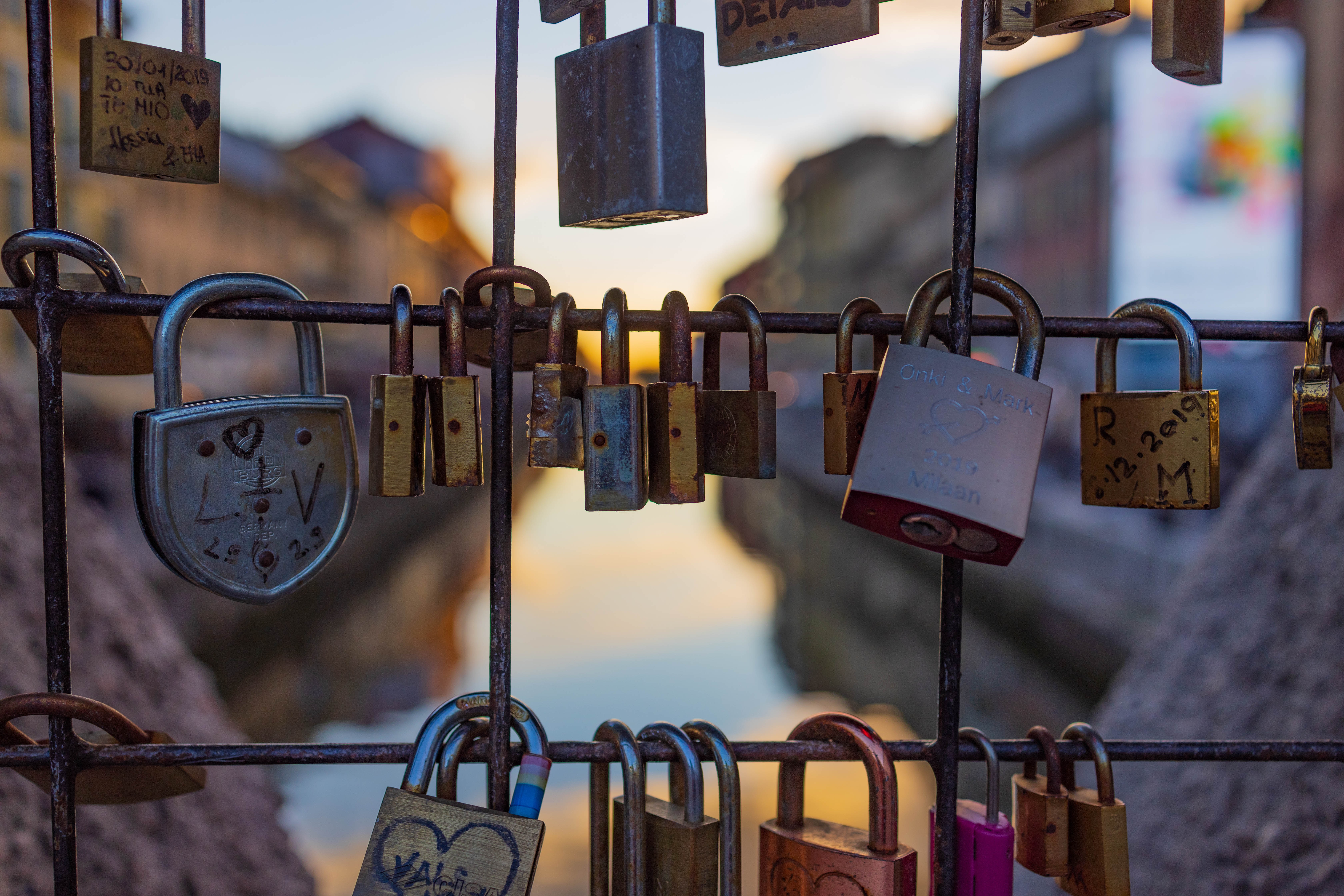
Successful organizations know more about what people want than their competition; they use information — customer ‘secrets’ — as the power ingredient in their value proposition mix to separate themselves from everyone else and to achieve incredible levels of performance.
The winners are the insightful ones because there are two tiers of information available to organizations; the first tier is common, and the second one rarely gets used.
Tier #1 is the ‘needs-layer’; it consists of what people need.
Tier #2 is the ‘secrets-layer’; it consists of what people want.
A typical organization talks about the importance of determining what their customers need and delivering appropriate solutions accordingly.
The theory goes: identify what a person needs; build a product or service that delivers the needs and provide it. Simple enough.
The problem is that every competitor is doing it and no one in the market gains any sustainable advantage.
And the added challenge is that the needs of most people are already satisfied; most people already have the things that sustain their everyday lives.
So how can you be successful in attracting them if you and every other market player are using the needs-layer as the basis for your marketing efforts?
You can’t.
People are now more than ever doing business with organizations based on their wants and desires; products, services and experiences they ‘covet’ and ‘lust for’ as opposed to what they need.
And the successful organizations understand that it’s the secrets-layer of information on people that provides the insights they need to get and keep an advantage over their Tier #1 competitors.
So, what’s a customer ‘secret’?
A secret is an individual thing; it’s not a mass thing. Crowds don’t have secrets; individuals in the crowd do.
My secret is not likely to be the same as yours because we are different people with different backgrounds, different competencies, different lifestyles and, in organizations, different financial and market challenges.
A secret reveals itself as a habit, bias, dream, hope, skill, competency, lifestyle choice, family priority, ego drive, friendship affinity, recreation preference, entertainment choice, or in the case of an organization, inventory problems, cash flow margin challenges, employment equity concerns or product quality issues.
If we can discover the secrets of individuals or business decision makers, we will be in the enviable position to deliver something that they can’t get anywhere else (since others are still basing their offerings on what they learn from needs-layer information).
What does it mean to marketing?
A secrets-layer focus changes both the process we use to obtain information on people and the type of information we gather.
The focus of research must be to discover the secrets that every person has, with the trust and conviction that sustainable competitive advantage will result from using this information to develop products, services, packages and other offers (as an aside, packages solutions can only be created if we holistically understand what people desire.)
Marketing strategy must move away from periodic needs based research of mass markets to continuous secrets based learning of individual people
And the secret learning process must be continuous; information is constantly streamed into the organization as a result of ongoing customer engagement as opposed to conducting periodic studies which only provide a snapshot in time of what people are wanting.
What does it mean to customer service?
Secrets-layer information feeds the service recovery process — what the organization does in response to a service blunder that royally screws the customer. The objective is service recovery is to turn the service OOPS! into a loyalty building event where the customer is more committed to the organization after the mishap than they were before it occurred.
The service recovery process looks like this: fix the problem fast (studies show that a response is necessary within 24 hours) + surprise the customer with something they don’t expect.
If you can’t respond to an OOPS! in 24 hours you lose and chance of enhancing customer loyalty
And the essential ingredient of a surprise is the secret-layer; some fact or fantasy you have discovered about the screwed over person that they would be startled to learn that you know about them.
What is critical to get full value from the secret-layer in service recovery is that secret information is available to the service organization in real time.
When a mishap occurs, “What secrets do we know about this customer?” must be answered quickly so the recovery process can conclude within 24 hours.
Use the secret to personalize the process of apologizing for the mishap and ‘atoning for your sin’. Make it special. Show them that you put thought into what is the right way for you to make amends.
And they will quickly forget about the OOPS! and all they will remember is how amazing they felt when you recovered in a personal way.
What does it mean to sales?
A secrets-layer focus means that sales must be held accountable for gathering customer secrets, leveraging them as a customer engagement tool and reporting the information back to their colleagues (like marketing and customer service) who are then able to use them as needed.
Even though sales is in a great position to ask the right questions of customers, listen, take notes, and record what they discover, they are rarely asked to perform this function. They continue to be expected to perform their traditional — and commonplace — role of pushing products and services to their markets and hitting their short term quota.
And unfortunately, this traditional role contributes virtually nothing to enable an organization to stand out from their competition and gain a strategic advantage.
Notwithstanding the fact that the process exposes opportunities to grow revenue, secret gathering is an excellent way for a salesperson to deepen relationships with their customers.
The mere fact that it’s the secret discovery process is highly interactive means that relationships are automatically strengthened (with the caveat of course that fulfilling promises made is done promptly and to the customer’s satisfaction).
The way to get sales to be ‘secret agents’ is to build secret gathering into sales performance and compensation plans otherwise it won’t get done.
Sales bonuses should assign a material weight to this component to get sales attention - I suggest at least 25% of the sales bonus should be based on secret gathering effectiveness and that a customer report card be used as the measurement vehicle.
What does the discovery process look like?
The fact is that people are willing to give you their secrets every time you engage with them if the right approach is taken.
All you need to do is to show that you are more interested in them than you are in pursuing your own agenda. By your actions tell them that you are a ’human being lover’, and that you are interested in their story.
The secret floodgates will open.
The secret gathering process looks like this:
Ask a question > listen > record what you hear > ask another question > ask another question > repeat.
The point is that we have all been taught to be in the transmit mode, anxious to tell the other person what we have been up to, what we have to sell and the attributes we possess.
To really learn about someone we need to make a right-angled turn from this behavior. We need to be open to others and focus on learning what THEY are all about.
As a way to get started, create a secrets manual on each of your high value customers
Have fun with the idea. How about a secret agent award to honor the person who discovers the coolest secrets every month?
Or an annual recognition award of someone who excels at continually maintaining and sharing their secrets manual?
A sustainable advantage is the most difficult thing for any organization to achieve in markets overwhelmed with intense and aggressive competition.
It’s ironic that most organizations look to the text books on strategy for the solution. They all look to technologies, products, services, branding and a plethora of other tactics to one-up their competitors, yet there is one rather mundane and non-sexy thing that can be done to attain incredible strategic success: discover the secrets that decision makers house and protect — and exploit them to grow business.
Secret gathering is strategic and it should be developed as a core competency in your organization if you want to standout and power up your business.
Cheers,
Roy
Check out my BE DiFFERENT or be dead book series
- Posted 10.31.11 at 10:41 am by Roy Osing
- Permalink
September 1, 2011
The Grateful Dead were amazing marketers for 3 simple reasons
The Grateful Dead were amazing marketers for 3 simple reasons.
The most successful touring concert band was The Grateful Dead. Some of you may have even been ‘Dead Heads’; members of their tribe who religiously showed up at every one of their shows.
Apart from their musical genius, however, was their marketing acumen.
Students of the Dead discover just how progressive their thinking was when it came to building a fan base and creating financial success.
Here are 3 things the Dead did to separate themselves from other bands.
1. Focus on your loyal fans for growth
Delight them and trust they will not only buy your stuff but they will talk about you to others. The Dead gave their fans the priority over others. Long before social media tools were available they made a point of knowing who their fans were and engaging with them regularly.
They engaged with them and kept them up to date on concerts and other happenings. Unlike most other organizations, their loyal fans were the first to get preference on seating and any other special deals the Dead were offering. Word of mouth was their focus for growth. It happened.
2. Create memorable experiences for your fans
If you WOW! their feelings, they will most certainly do business with you. The Dead didn’t set out with the prime purpose of selling records. They focused on blowing their fans away at their concerts; by creating an experience they would never forget. Their fans returned the favor by buying records.
3. Be contrarian; go opposite to the crowd
Don’t copy what others do. All that will do is perpetuate what the common herd does. Don’t conform; be different. The Dead made it easy for fans to record their music. They provided recording equipment to do it when every other band jealously protected their music from being recorded by audiences.
The Dead didn’t care what any other band did. They wanted to go against the grain to make it easy for their fans to record and share their music.
BE DiFFERENT marketing has its roots in unexpected places. Check out the Dead!
Cheers,
Roy
Check out my BE DiFFERENT or be dead Book Series
- Posted 9.1.11 at 10:00 am by Roy Osing
- Permalink

