


Roy's Blog: Leadership
May 25, 2020
Why copying weird people is necessary for a winning career

Source: Unsplash
Why copying weird people is necessary for a winning career.
The world today revolves around benchmarking; determine who does something really well (as judged by the experts) — call them best in class — and copy them.
The objective of benchmarking: to improve some aspect of your organization or your life based on the experience of others.
In business, benchmarking has been useful in improving process related issue — billing, ordering, fulfilment, human resource methods and the like. In one’s personal life, benchmarking might help in matters such as physical fitness routines, yoga practices and school courses to take.
But at the end of the day, although benchmarking may result in productivity or efficiency improvements, it does little to help either the organization or individual stand out from the crowd.
If everyone copies best in class how can specialness ever be created? All you get is a crowd of bench-markers who all share something in common.
Creating something that is unique and unmatched by others can’t be done by copying anything or anyone. Strategic advantage can’t be achieved by doing what other organizations do; a unique persona cannot be created by copying how others conduct their lives.
The lure of benchmarking is that it’s relatively easy and generally humans like easy stuff. And we also like to fool ourselves into believing that what is easy to do will somehow make us special.
The truth is that copycats are not special; they are their own herd.
I know this sounds axiomatic, but uniqueness is not spawned by copying what other do. The source of innovation and creativity to stand out is the incessant — almost subconscious and involuntary — drive to do things differently than everyone else.
Here are some descriptors of individuals who spend their life trying to be the ONLY ones that do what they do: crazy, delirious, contrarian, edgy, weird, borderline, careless, risky, absurd, eccentric, freaky, funky, creepy and eerie.
The point is, highly creative people don’t attract standard adjectives explaining who they are and how they approach problem solving.
If you’re a normal person and want to be abnormal because it will help make you more creative, here are 5 things you can do.
Never benchmark anything again
You need to dispel the notion that is the antithesis of being different, and that is copying. This means never asking “What do they do?” as a means to doing something creative.
Copying is the straight jacket that will forever prevent you from coming up with something truly new and different.
Bury the copycat. Have a funeral for it and say goodbye.
If you can’t rid yourself of the copycat beast you will NEVER be capable of generating an original thought.
Try doing a 180
A simple way to deviate from what everyone else is doing is to ask: “What if I were to go in the opposite direction to common belief?”.
This essentially declares that whatever the crowd does you will do the opposite. If you start out with a contrarian view, you are at least able to moderate it to something less extreme — but still different.
The 180 starting point is critical to a creative mindset; without it, crowd forces will suck you in to their mediocre and commonness.
This is one of my favourite examples of going against the flow with an outrageous proposition for customers. I’m not advocating it, but it is one example of a thought process that bucks the trend.
In this scenario let “What if I were to go in the opposite direction?” guide your ways.
Hang around weirdos
Not everyone has the same take on stepping out of the crowd; creative people have their own fingerprint on an approach they find that separates them from those around them.
To find your BE DiFFERENT signature, venture out and discover people who live on the spectrum between “normal” and special; between people who are average and those who are unlike no other. They’re around us if only we pay attention.
If you’re going to benchmark anything, benchmark weird because I guarantee that in the process of following their ways you will discover a sliver of what they do that you can twist to make it your own.
Follow your feelings
The world operates more on feelings than ever before. People buy things on the basis of how they feel about a supplier and the engagement experience they have with them.
They actually expect the product to work the way the manual says; the actual product or service is a commodity where generally price separates competitors in the short run.
The reason to choose one supplier over another doesn’t depend on their product portfolio.
The only thing that differentiates competitors in the long run is their brand — the value they consistently provide which, in the case of major market leaders who perform consistently, is a feelings oriented attribute.
So use how people would feel as the main criteria for deciding whether one of your new ideas might work. Let your intuition trump your logic.
Do stuff with no end game in mind
Activity rather than purpose may be the best guide to follow.
The problem with having a specific destination in mind, is that you engage your logic to try and figure out how to reach it. And as we all know, once our left brain is engaged, it doesn’t like to consider a myriad of possibilities once it lands on its primary route to achieve the goal.
I was infatuated with The Inner Game of Tennis at one point in my past.
The premise offered by the author was that it is almost impossible to be a good tennis player if you allow your mind to control how you play the game.
Trying to return a ground stroke to your backhand has a high probability of not succeeding if you think “Rats, here comes another shot to my backhand! I know I’m going to screw it up!”
Well guess what? Your control side acknowledges your weakness and gets in the way of your body reacting to the shot and indeed your mind’s prediction comes true!
If you can unhook from your controlling left brain and let your body do what it is naturally equipped to do, your performance will improve immeasurably.
So, focus on the activity not the end game and follow your gut.
These 5 proven ways will help you be a member of the abnormal herd.
They will guide your ways to a highly successful career. Give ‘em a try. They worked for me!
Cheers,
Roy
Check out my BE DiFFERENT or be dead Book Series
- Posted 5.25.20 at 05:31 am by Roy Osing
- Permalink
April 27, 2020
What surprising legacy will COVID will leave when it’s finally over?

Source: Pexels
What surprising legacy will COVID will leave when it’s finally over?
Every major event in the world plans to leave a sustaining legacy long after it concludes.
The 2010 Olympic Winter Games in Vancouver left the Sea-to-Sky highway from Vancouver to Whistler along with many other game’s venues which stand ten years later and will likely be a reminder decades from now of the one-in-a-lifetime experience some of us witnessed.
And Steve Jobs gave us the iPhone.
COVID-19 didn’t intend to leave a legacy, but the deadly virus will.
Here are six remnants of COVID that I believe (hope) will influence us as we move forward and will be indelibly etched in our society forever.
1. The frontline
COVID demands that either the frontline get the recognition it deserves or the human species better be prepared to encounter the armageddon.
In this crisis, frontline workers are finally getting the respect and adulation they rightly deserve.
I have been advocating the value the frontline contributes to organizations for decades, that they are the face of any enterprise and that they carry their brand at every customer contact moment.
Well, thanks to COVID, the world now recognizes the importance of frontline workers, but not to individual organizations, but to humanity.
Healthcare workers, truckers, first responders, food preparers and deliverers and elderly care home support staff have all been thrown into the spotlight because of the service they provide to others in the COVID crisis.
They are now given the gratitude they have earned for the professions they have. Without frontline workers doing their job selfishly, leaders of organizations and of countries simply can’t succeed. And with their undying unselfish efforts, either will COVID.
2. Technology
COVID has forever changed how we communicate with one another, and will fuel, I believe, greater use of technology generally.
“Let’s have a ZOOM meeting” is becoming part of our vocabulary just as “Google it” is. And the Boomers are discovering the fascination with FaceTiming or using Skype to see their grandchildren as the only way they can stay in touch.
I’m seeing a greater willingness for people generally to explore and learn new ways of doing day-to-day things with the help of technology; there is a greater motivation to “dip your toe” in new technology because of COVID and I believe it’s a tipping point for technology use, particularly among the older demographic.
In addition, the need to shop online will forever change our consumption habits. People who never shopped online now do, and those that did it before are now doing more of it.
Bricks and Mortar operating businesses under pressure from online buying before will be even under more pressure post-COVID. The pressure to meet online needs of people will never relent; because of COVID it will be the norm of customer behaviour.
3. Personal space
COVID demands that we NOT invade the personal space of others; that we refrain from contact closer than 2 meters or 6 feet in order to prevent the transmission of the virus. I believe that this fingerprint of the disease will in the future take on a deterministic role in how certain functions are performed.
Physical spacing will drive workplace layout and design and will also influence how herd demand in the airline and entertainment businesses for example will be met. Pressure will be applied to the economics of product and service topologies, but will force solutions that best balance the needs of safely separating people and delivering acceptable profit margins.
4. Innovation and creativity
COVID stimulated innovation and creativity, as organizations had to figure out how to adapt to the new rules governing social distancing; it wasn’t a theoretical exercise on how to enhance innovation in their business, it was a matter of survival. And many didn’t make it.
Small businesses shifted from an in-house dining model to a takeout one; larger companies, in the face of reduced demand for their normal products and services, shifted their resources to produce the tools for fighting the virus such as masks and ventilators.
5. Customer service
The COVID world reemphasized the critical importance of caring for others, and this has profound implications for getting back to business as unusual. My reader knows how passionate I am about serving leadership and customer service based on taking care of others. Well, COVID has brought the importance of these attributes in people out into full display.
Under the banner of “we are all in this together” and “show kindness to your fellow humans”, the need to subordinate one’s own needs to the needs of others assumes a top priority.
I hope this attitude carries forward as a critical COVID learning. I have been critical of organizations that are more in it for their shareholders and care less about their customers and employees.
Customer respect — as evidenced by their dumb rules and policies — has waned over the years and perhaps now we can get back to the basics of serving customers and delivering what they desire.
6. The environment
Efforts to contain COVID by lockdown and isolation have resulted in a dramatic reduction in carbon emissions and other pollutants that contaminate the environment.
After many weeks of these measures, parts of the world are able to literally “see” the results of cleaner air.
The Himalayas, for example, after 30 years can finally be seen from the Punjab region of India due to the significant reduction of air pollution.
This is likely to be a stimulus for more climate change action and support from the population generally where people can actually feel what it’s like to have a more contaminant-free environment.
Every legacy is created by something truly remarkable, be it in the form of a great persona or an event with a powerful impact that changes the future course dramatically.
COVID is such an event. It has the potential to leave a long lasting positive affect on all of us.
I hope we remember what it gave us and use it productively.
Cheers,
Roy
Check out my BE DiFFERENT or be dead Book Series
- Posted 4.27.20 at 04:55 am by Roy Osing
- Permalink
April 20, 2020
Why being second is absolutely the wrong position to have

Source: Pexels
Why being second is absolutely the wrong position to have.
Seriously, think about it.
When you’re second, you’re staring at a backside; I’ve never found it a pleasant view particularly when you consider what the unobstructed view looks like.
Without the backside staring you in the face you’re looking at wide open spaces, a landscape void of other humans; nothing but untampered dimensionless opportunity.
The backside placed before you is not only an obstruction, it’s the tissue that stands between you and your maximum potential.
I believe we should be encouraged to avoid the backside view, to go for the position that has an expansive view with no backsides in sight.
But the narrative out there today is exactly the opposite: “It’s not winning that’s important, it’s playing the game.” and “I don’t care if little Roy wins the game as long as he is having fun.” is the normal commentary that pervades the conversation when it comes to the notion of winning.
Some schools on sports day don’t want to hand out winning ribbons because it highlights the winners and says nothing about participation. “Everybody should get a ribbon” essentially communicates that you should be rewarded for just showing up.
What a shock when kids in these schools grow up and have to fight for a career among hungry competitors.
And some schools don’t hand out letter grades; rather they introduce a system that recognizes effort and not the result. So, if you put in a ton of effort you might get an “exceeding” rating; if you didn’t try that hard you may get an “improvement needed” one.
Trying is important but the ultimate measure of how effective one is at trying are the results that are delivered.
The fact is, that in the real adult world, where you stand in relation to others matters; it separates you from the other participants.
“I achieved a first class mark in economics” is more important to your life than “I tried hard and enjoyed the subject content.” Like it or not, that’s the way it is.
A job candidate would last about 30 seconds in front of me after uttering such nonsense. What I want to know is what they achieved, scholastically and organizationally not that they “tried real hard”.
Anytime I have been sucked into believing that coming second was ok it was rationalization behaviour at best
It was an attempt to make myself believe that looking at someone’s backside was acceptable.
The problem is that when I find myself accepting a posterior perspective there are some seriously destructive forces at play that can cause personal damage.
Motivation — My motivation to drive forward stops.
Why should I push myself to try and show my backside to the leader of “the race”? And as a result of this logic, I take my foot off the gas because I don’t believe there will be any consequences.
But there ARE consequences. I may not overtake the backside I’m staring at but at least I’m motivated to try which is completely different than accepting the inevitability of being second or third or fourth and being ok with it.
Survival and success in the world requires highly motivated individuals who will do whatever it takes to avoid a backside view.
Creativity — My creativity takes a rest.
Highly motivated people tap into their creative spirit naturally as their heart beats. If I’m driven to see the backside in my rear view mirror, I MUST solve the problem I’m looking at. I MUST look for an opportunity to get by it.
But if I’m ok with second position, I stop looking for a solution; I don’t need to be creative in the moment and I stop my creative juices from flowing.
Success demands creativity; the backside view stultifies it.
Competition — My competitors have an advantage.
Hungry competitors are always looking for an edge, and if they see that I’m complacent and have no motivation to seek the number one position they will gladly step in and achieve it themselves.
It’s a zero sum game to them and it’s the easiest way for them to gain an advantage: whatever I give up, they take. Simple.
So while I suffer this ideological disease, they pump up the volume to put yet another backside in my forward view. Winners NEVER let their competition have an advantage because they pay for it in the long run.
A second best attitude let’s them in when I should be shutting them out.
Rationalization — I’m fooling myself.
I believe I’ve accomplished something when I haven’t, even though people around me say “Well done!” “Good job!”.
A false sense of accomplishment is what it is when I see a backside and feel pleased with my performance. I guess it’s better than seeing 2 backsides buts never as good as seeing none at all. None = brilliant and that’s THE target I’m after.
The reality is that a backside view means I’m not going to grab the brass ring.
The only salvation from a backside view is if I learn something from the experience and never see a backside again.
So if my backside learnings catapult me into an open field in my next competition then second works as an interim step to my final goal.
Teaching — I’m failing my job as a role model to others I care about.
I see myself as a teacher, and being ok with a backside view contaminates my perspective which in turn is manifested in the lessons I teach.
What I want to help people with is how to win, how to be remarkable and how to transform their reality into amazing things.
How can I do that when I am happy with seeing back pockets? I don’t think I can.
So for better or for worse I need to aspire to an open field at my feet if I am to be able to help my closest people be the best they can be.
Don’t get sucked in to the playing the game is what’s really important narrative. It’s not the real world and it robs you of the very essentials it takes to achieve rewards in your life and your career.
Don’t look at the backside.
Pass it by…
Cheers,
Roy
Check out my BE DiFFERENT or be dead Book Series
- Posted 4.20.20 at 05:12 am by Roy Osing
- Permalink
April 13, 2020
How COVID-19 can actually help a small business do better
Source: Pexels
How COVID-19 can actually help a small business do better.
I know you’re struggling to keep the lights on, pay your employees and just keep your head above water in these insane times.
And I wish you all the very best of luck and that each and everyone of you come out at the end of this deadly tunnel safe and still able to provide the services that we all need in our communities.
So what can you do now that the pause button has been pushed? How can you make the very best of a bad situation and prepare yourself when times get better (and they will)?
Unlike most of a small business leader’s life, you just may have some time available to work ON your business instead of constantly working IN your business 24X7.
You rarely have had the opportunity to look forward to making sure you’re on a path that will increase the likelihood of success because day-in and day-out you’re focusing on what you need to do TODAY to make ends meet.
Here are 5 things you might want to do with your new found bandwidth.
1. Work on the game plan for your business
Whenever I’ve asked a small business owner to work on their business strategy, I get “I don’t have time for that stuff. I’m too busy.”
Well guess what? Now you have the time even though you might not think your business future is great.
Issues to consider in your strategic game plan review:
▪️Reset your growth goals. COVID has destroyed every small business revenue plan so it’s time to reset it. Develop a new 36-month revenue plan with a startup mentality. Think about your challenge as starting over again, because that’s what you’re doing.
▪️Question whether your customer base is still appropriate. After COVID, people will have changed — your previous customers included — and their buying habits have probably changed as well.
You may decide to try and attract different customers than the ones you had prior to the pandemic.
▪️Reassess your competitive approach. Post-COVID, if you choose different customers to attract, you will probably have new competitors to contend with so you’ll probably need a new strategy to beat them.
2. Learn more about new technologies
COVID rules to respect social distancing requires enabling technology, and there are many that have risen in popularity, some old and some new.
FaceTime, Skype have seen a resurgence in use and newer portals such as Houseparty and ZOOM have risen in popularity.
Take the COVID break to learn about communications technology and how it can be used to engage with your customers, suppliers and partners.
The application of technology has the potential to build your competitive strength so use this time to learn as much as you can about the options available.
3. Research new potential suppliers
Again, when you consider going after different customers, you might have to consider modifying your products and services which, in turn, might require new sourcing.
Or even if you decide to stay with your current portfolio of customers and service offerings, you should probably take the time to see if new suppliers might give you a better deal than your present ones.
Better margins should always be in your crosshairs so now you have a window to explore your options.
Take it.
4. Scout out some potential new employees
My view has always been that leaders need to be constantly on the lookout for new talent, and for small business it’s always a challenge to find the right people.
So take the “gift” COVID has given you and get out there and hunt. Hunt for great service people who will carry you reincarnated business to new levels and hunt for others who according to your revitalized game plan are critical to your success.
Get proactive and don’t wait for people to come to you. And poach them from other businesses if you have to.
5. Talk to your customers
Many news video clips these days show customers walking up to a small business establishment, trying to open the door and looking inside with yearning looks on their faces.
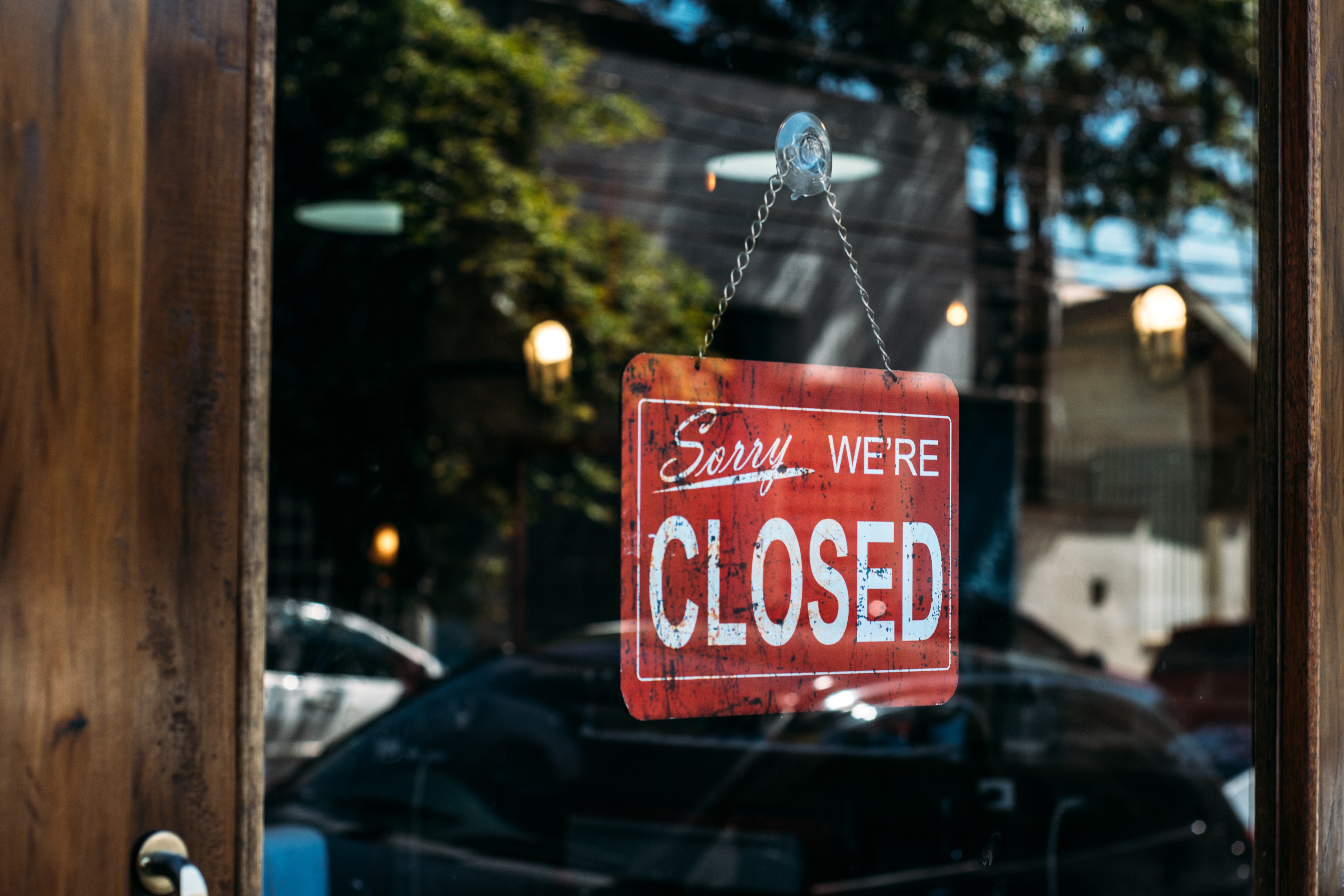
Why not take some of your time available and stand outside your closed door and (at the correct social distance away from them of course) talk to people who just might ask you something about your business?
It’s a hell of a way to not only establish a personal connection with people who are already leaning in to you, but it’s also an incredible opportunity to learn something from them that might be of value when you open back up.
Oh, and don’t forget they are very likely to tell their friends and family how AMAZED they were to see you there in these times.
Every business needs referrals; this is a natural and powerful way to get them.
COVID-forced downtime wasn’t in your plan and it’s creating havoc for you, your employees and your customers.
But there might be some benefits if you look for them.
Cheers,
Roy
Check out my BE DiFFERENT or be dead Book Series
- Posted 4.13.20 at 06:22 am by Roy Osing
- Permalink