



Roy's Blog: Guest Posts
March 28, 2020
High employee turnover causes serious problems; here’s how to solve them

Source: Pexels
High employee turnover causes serious problems; here’s how to solve them.
Retaining top talent is a priority for every organization. As a business leader or entrepreneur, high turnover can have a significant effect on your company’s everyday operations and profitability.
Turnover can stem from many reasons, including poor leadership skills, weak corporate culture, inadequate hiring practices and lack of career advancement. If you want to retain a valued workforce, read on to learn about the impacts of high turnover on a company and how you can combat it with the proper business strategies.
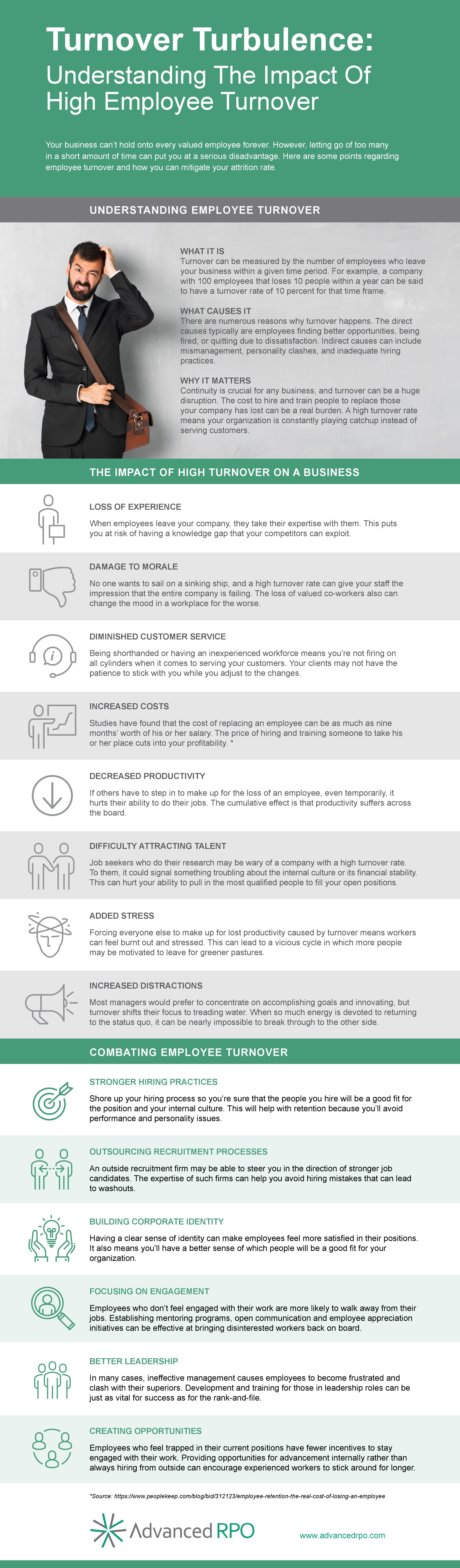
When employees are constantly coming and going, remaining workers can get distracted from your company’s mission and may not work productively to meet important goals. This can affect team dynamics in the office and the effectiveness of work.
Production could be delayed or even come to a standstill, especially if key employees quit without notice. The quality of your products and services can suffer as a result, which can lead to customer satisfaction issues.
It can be costly when you have to replace employees frequently, especially those who have the most experience. Your company can take a serious hit from the costs of recruiting, interviewing, onboarding, and training possible replacements. On average, it costs about $17,000 to replace an employee who is making median wage in the U.S.
Leadership
One way to counteract turnover rates in your workplace is with better leadership. Providing managers with training for setting effective goals, giving feedback, and recognizing and rewarding employees can help retain valuable staff.
When leaders are personable, communicative and qualified to lead, they provide positive work environments, which can lead to a more motivated and productive workforce. Effective leadership also can help employees feel valued and that their job matters to the company.
For more information on how turnover can impact your business and how you can rectify it, take a look at the accompanying infographic.
— Pam Verhoff is President of Advanced RPO, a talent acquisition company in Chicago, IL. Verhoff has extensive experience in building RPO businesses and solutions, as well as developing growth strategy.

- Posted 3.28.20 at 04:33 am by Roy Osing
- Permalink
March 21, 2020
6 tips for making your cafe business successful

Photo by Petr Sevcovic on Unsplash
Being successful in the café business requires a lot of investment, effort, and the right decisions. Without investing, you can’t have the appropriate products and equipment. And also, without excellent decision-making and effort, your customers won’t visit your place more than once.
Therefore, doing the right things from the early days of your business is mandatory for reaching the top. In this article, we will show you six vital tips for making your café business more successful.
Find a good business lawyer and accountant
Having an excellent business lawyer by your side to check your contracts and business agreements is mandatory. If you didn’t hire the right person in the early days of your café business, do it now – it is never too late to start doing things in the right way when it comes to legal stuff.
After that, once your business grows, it would be smart to hire an experienced accountant or bookkeeper. There will always be a lot of annoying work with paperwork, and it is always better to save your time and hire a professional to do it for you. Having a lawyer and accountant will make your business more secure.
Location is everything

Finding the right place is one of the most important tasks before starting your café business. Location is the first precondition for success. Among all the factors that you should consider when choosing the place, visibility is the most crucial. Your location has to be visible, preferably on a busy street. Anyone who struggles to find your shop will just sit in another one.
Also, it should be close to either college, business complex, or some city institution. You want to create loyal customers that come every day (even multiple times), and it is only possible if they spend a lot of time close to your location. But, keep in mind your budget limitations – a better place usually means more money at the start. However, you will still profit in the long run.
Everything is easy with the proper equipment
Delivering quality coffee, cookies, and other products is impossible without the best equipment. First of all, you need an adequate POS system for a cafe that contains every feature and option that your business requires. Also, you need basic stuff, such as espresso machines, freezers, blenders, drip coffeemakers, and much more.
Once you grow your business, start buying other tools and equipment that might make a difference. Storage and shelving systems should be on your priority list as well since you can’t operate your business well in a mess. And finally, think about your security and consider implementing an advanced security system.
A variety of products

Photo by Toa Heftiba on Unsplash
To create a successful café business, you need a fantastic atmosphere and a wide range of products. Serving only a few espresso and tea variations won’t attract too many people nowadays, even if you possess the best location.
Many customers will have some special requests, which you should fulfill in order to keep them in your café. Besides coffee and tea, it is vital to have a few excellent snacks and pastries on your menu. If it is possible, bake some cookies in-house since customers love to taste authentic food.
Expanding your food menu as much as possible can differentiate your cafe from the competition. It is a battle you have to win if you want to stay on the top in your business. However, don’t offer too much because you can end up with a substantial waste. Focus on products that your most loyal customers enjoy regularly.
A pleasant customer service
Developing a successful café with an excellent reputation is impossible without a great team of employees with a strong work ethic. They are the ones who speak to your customers and create a positive atmosphere. In other words, they are the mirror of your café business. On top of that, many people decide to come back to your place only because of a few pleasant employees.
That fact alone is enough to understand how crucial it is to have a great team. Besides that, you should opt for either counter or table service. Counter service minimizes labor costs, and it is better for busy periods, while table service is slower but much more beneficial if customers spend more time in your place.
Implement a loyalty program
Who doesn’t like a free coffee or a cookie? Implementing a loyalty program is a common strategy, especially for cafés, snack bars, etc. To put it simply – it encourages customers to come to your place more often (every day, preferably). For instance, you can offer a free coffee after five, eight, or ten orders. However, your competitors might apply the same strategy, so be aware. Become a spy, and see if they are doing the same thing as you, or even something better.
In that case, try to change your loyalty program to look more appealing to your customers. In the end, keep in mind that loyalty cards are great for promotion. Hence, print your logo and brand message on it, and make it suitable for wallets.
In the end, it is worth mentioning that love towards coffee is almost equally important as all other business aspects that we mentioned. It is practically impossible to be successful in this business without loving the pleasant taste of this drink. Coffee is love!
— Luke Douglas is a fitness and health blogger at Ripped.me and a great fan of the gym and a healthy diet. He follows the trends in fitness, gym and healthy life and loves to share his knowledge through useful and informative articles.

- Posted 3.21.20 at 05:29 am by Roy Osing
- Permalink
February 22, 2020
10 simple business lessons from women leaders in beauty
10 simple business lessons from women leaders in beauty.
The beauty industry isn’t the same anymore.
Marketing in beauty and cosmetics is constantly changing. It went from advertisements typically appearing on traditional media like billboards and newspapers, to now, influencer marketing.
The multi-billion-dollar beauty industry that has been created into what it is today, due to several revolutionary women.
From Elizabeth Arden to Kylie Jenner, the principles established in the past still remain consistent in new beauty companies.
The team at FragranceX has created a list of impactful women in the beauty industry, and from that, here are a few women that changed the game:
Elizabeth Arden
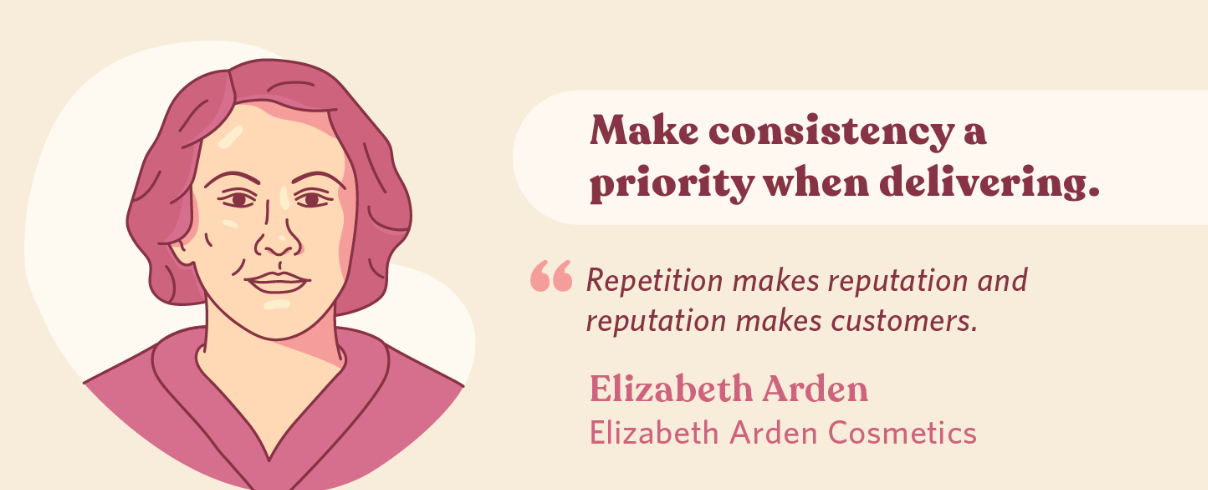
Elizabeth Arden started her business in the early 1900s and believed in the idea that familiarity is key. Her line hosts a wide range of products from anti-aging cream, moisturizing lipstick, and her famous red door perfume.
Her success comes from the idea that repetition and frequency allow people to be familiar with your brand, leading to trustworthiness. It’s the “oh, I’ve heard of that brand!” concept. The more you engrave something into the consumer’s mind, the better.
Kylie Jenner

Kylie Jenner is not only a business owner but a celebrity as well. With the rise of social media and more ways to be vocal, she discusses the scrutiny she has faced. As long as you push through the negative and focus on the people who are supportive, you and your brand will flourish.
The beauty industry is constantly evolving, as well as the marketing tactics that come along with it. It would be impossible to list out every powerful woman in the field, but the image below highlights some revolutionary women that should be noted.
— Leanna Serras is the in-house writer and perfume expert at FragranceX. She has extensive experience writing for a variety of subjects including fragrance, beauty, skincare and wellness. In her free time she enjoys taking on DIY projects and spending time with her pets.

- Posted 2.22.20 at 06:33 am by Roy Osing
- Permalink
February 8, 2020
How to use CRM to achieve a competitive advantage

How to use CRM to achieve a competitive advantage.
Today’s business landscape is fast-changing, and companies are looking for ways to stand out from their competitors.
Product quality and pricing may help your customers differentiate you from other companies. However, you can’t ignore the importance of customer interaction or the relationship you build with your audiences.
That’s why you need a CRM software.
Customer relationship management, is a set of technology that helps manage customer data. It supports lead management and helps deliver actionable insights that help salespeople to maintain a healthy relationship with customers.
In fact, the stats show that 91% of businesses with more than 11 employees have started using CRM.
Every company is slowly recognizing the value CRM has to add to their business. For instance, it easily integrates with almost any other software, including ERP, legacy databases, social media, and more.
Earlier, CRM was a tool reserved for the elite only, but now it is accessible to the smallest of companies. So if most organizations use it, how do I achieve a competitive advantage?
The fact is that although CRM may be readily available, not everyone chooses to reap its benefits.
Why is CRM software becoming so popular?
▪️Streamlines and automates the sales process
CRM automation refers to the system’s ability to streamline and simplify complex processes and automate repetitive and manual tasks. It improves productivity and customer satisfaction by ensuring consistent service delivery.
And, automation can free up time to focus more on meaningful and strategic work.
CRM automates a wide range of work across sales, marketing, and service activities. For example, it can save you time from creating a contract every time you sign a deal.
It will keep the customized templates and automatically generate it, when requested. Thus, you waste no time in closing the deal.
▪️Acts as a centralized database
CRM does more than just contact management. By integrating with other systems, it acts as a centralized database where all the information relating to customers, deals, orders, and deliveries made is stored and maintained. It then enables you to generate and track automatic billing, invoices, and more.
And it significantly reduces double-entry with two-way communication, minimizing the chance of human errors by always displaying accurate and up-to-date information.
▪️Provides the sales team with necessary tools
The most significant advantage of CRM is that it enables the sales team to streamline every process. It helps in closing deals faster by converting quotes into an order, and then to invoices to generate revenue.
It helps everyone to reach targets more quickly since order processing and preparing quotes is automated.
It also streamlines communication and syncs information in real-time so that the sales team stay updated all the time. The sales manager can also view all planned activity for the reps within the CRM, and keep an eye on their progress.
▪️Enables faster service to customers
With the use of smartphones, consumers have instant access to everything within a second. They expect fast replies when they call up customer service to know about the status of their order or in case they have any queries.
CRM can be of great use as it enables your customer reps to have instant access to the database and provide quick assistance. It doesn’t matter whether you are working from home or a cafe, you can have real-time access to company information whenever required.
In addition, CRM ties all the departments together. Thus, regardless of who receives the calls from a prospect, they will know exactly how to respond by viewing the past interactions.
CRM enables you to both grow your business and protect it from competitive attack. Here’s how…
1. CRM creates new business opportunities
A CRM software helps you create opportunities by providing great insights into your business activities.
It can help assess a lead and use effective tactics to convert them into opportunities. For instance, CRM provides the complete lead profile that contains the added information that can be useful to assess a company’s background, their interaction with your brand, and their competitors.
So if you see a client is buying a product X from you but not Y, you may be able to create a personalized offer by combining the product X and Y that will enable the client to achieve cost savings. Thus, it provides you an opportunity to cross-sell.
2. CRM enhances the customer experience
In today’s time, businesses usually operate on multi-channels to expand their reach.
However, the main concern is whether they can provide quality customer experience across all channels. A study revealed that 89% of customers were not satisfied due to the inconsistency among channels.
This problem can be avoided by using CRM to manage the customer data flow from different channels from a single platform. It gathers and collects all the required information into a single database, which enables you to align customer experiences across different touchpoints.
One example is how restaurateurs can gather information on their customer’s food and beverage preferences. So that when they come next time, waiters can immediately open up their profile and improve their experience.
3. CRM increases customer retention
The primary purpose of CRM software is to improve customer retention. And only by increasing customer retention by 5%, you can increase profits by up to 75%.
There are various ways in which CRM can help retain customers. For starters, it can help map customer’s experience from the point of initial contact to the process of engagement, and how the engagement process turned into a long-term customer relationship.
CRM tools help in providing insight across the strengths and weaknesses of your marketing strategy. It provides guidelines as to how to re-engage your customers.
In short, CRM aligns marketing and sales goals and activities. This helps the whole team in delivering a complete experience while making the customers feel that they are valued.
4. CRM lowers overhead costs
Profitability can be achieved by decreasing overhead costs and allowing more investments to be made in enhancing the customer’s experience.
CRM automates tasks and saves time on manual procedures, which again can be used to focus on more critical tasks. It increases the productivity of every employee.
Training Magazine’s 2017 Training Industry Report stated that companies spent an average of $1,075 per trainee in 2017, and the cost keeps rising.
Training employees on different systems takes time and also increases the training overhead. So instead of investing time towards completing project goals, they are stuck with learning multiple systems.
Thus, integration of CRM with other systems helps reduce the time required to get teams working together. Plus, CRM’s operate on standard procedures that are easy-to-use and also help avoid doubling of tasks.
Final Words
CRM empowers the sales management team. It helps them do a better job of lead management — nurturing leads into opportunities, and into customers.
In fact, you gain the most by integrating the CRM function with your company’s ERP solution. It allows you to see the company’s sales activity and forecast its demand based on past insights. It shortens lead capturing times and, thus, helps you outperform your competitors.
So are you ready to use CRM and gain more revenue for your business?
— Himanshu Singh is a marketing specialist at SoftwareSuggest, He is well versed in software platforms like eCommerce platforms, project management, invoicing software. He is also interested in domains like Machine Learning and Semiconductors. In his spare time he enjoys guitar, badminton, and photography. He can be reached on LinkedIn here.

- Posted 2.8.20 at 05:32 am by Roy Osing
- Permalink