



Roy's Blog: Guest Posts
April 25, 2020
3 simple steps to get the funding you need for your bold startup idea
3 simple steps to get the funding you need for your bold startup idea.
If you don’t have interested investors, your new idea will quickly die. There are some specific ways to get your small business funded and mistakes you need to avoid.
These three steps will get you the money you need to get your winning idea off the ground and make it a going concern.
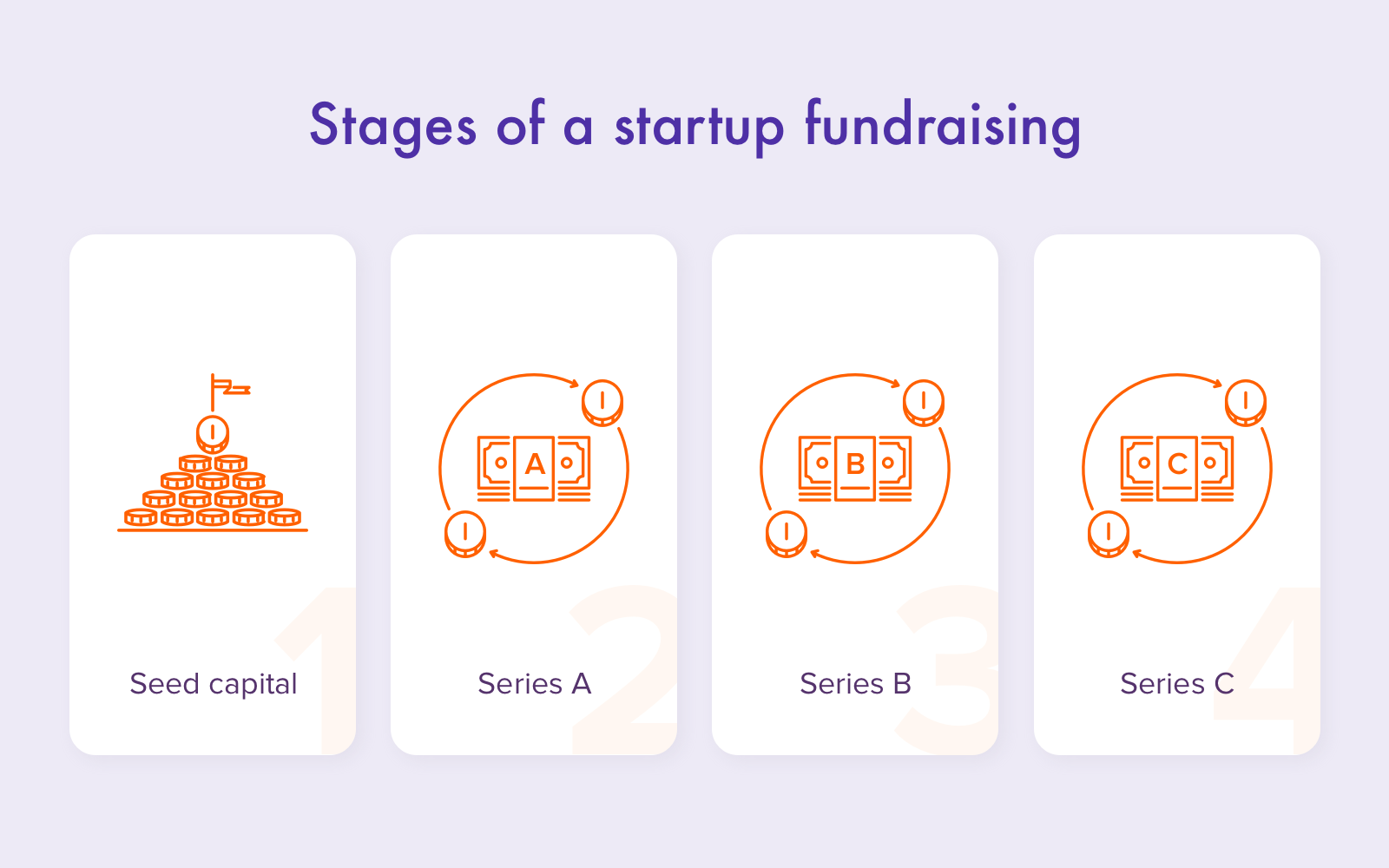
Step #1. Understand the stages of startup fundraising
There are several stages of fundraising that should be understood.
The first one is seed capital.
It represents the sum of money you have raised before going to the investment community. Simply saying, it’s a sum of your personal money you’re ready to spend on a startup.
‘Series A’ is funding you receive from your initial investors to launch your business; ‘Series B’ financing is normally required to show that your startup is able to be cash flow positive and ‘Series C’level financing is needed to underwrite future growth in your business.
Step #2. Choose the right fundraising strategy
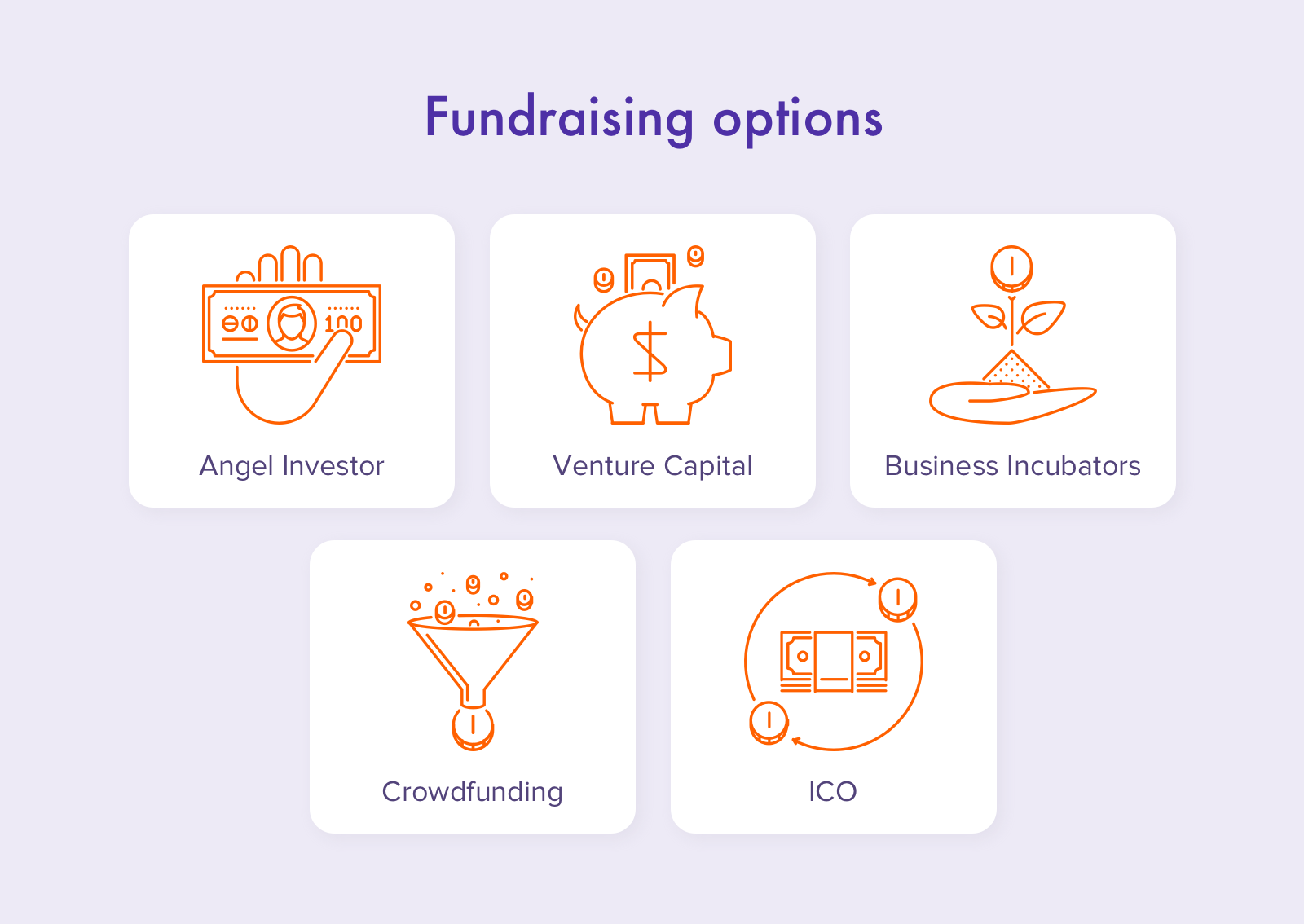
There are various types of investors. Additionally, it’s possible to cooperate with different investors types during startup development.
▪️Angel Investors — This category of investors usually stand for one person that wants to invest in your startup. It’s common to cooperate with them during seed capital or Series A. You can find the investors at the conferences related to your industry.
It’s also possible to find Angels online using such services as Angellist and Gust. They all work pretty much in the same manner, all trying to find promising project ideas and willing to help them start.
▪️Venture Capital — This type of investor normally includes enterprises or large companies that provide promising startups with money. These investors tend to be very demanding. To get investments from them, you need to assure them that there is little or no risk.
The only way to secure a Venture Capital investment is through multiple meetings with the companies’ representatives. The process can be extremely time consuming and arduous. to get their support and finances.
If you are unsuccessful in attracting a VC during the launch phase of your business, you may attract them after launch when they see you can be profitable.
▪️Business Incubators. These are organizations that help startups grow. For example, they offer seed capital for promising ideas. They also serve as mentors to newly minted CEO’s organizations by providing educational workshops and lectures as well as having successful business people engage with startup leaders.
Business Incubators exist all over the world, Y Combinator, for example, has worked with such popular startups as Airbnb, Dropbox, and others.
▪️Crowdfunding. These platforms collect donations from people. This way is perfect if your idea is connected to the charity. GoFundMe and KickStarter are the most popular platforms for crowdfunding. Also, it’s possible to use crowdfunding if you are ready to give some bonuses to your investors.
▪️Initial Coin Offering. This type is new for the investment field. An Initial Coin Offering (ICO) is the cryptocurrency industry’s equivalent to an Initial Public Offering (IPO). ICOs act as a way to raise funds, where a company looking to raise money to create a new coin, app, or service launches an ICO.
Step #3. Pitch your startup
To get investments, you need to describe your project. It’s required to persuade investors that there is minimum risk. To achieve this result, you need to prepare. There are many ways to express your new idea; these are two of them.
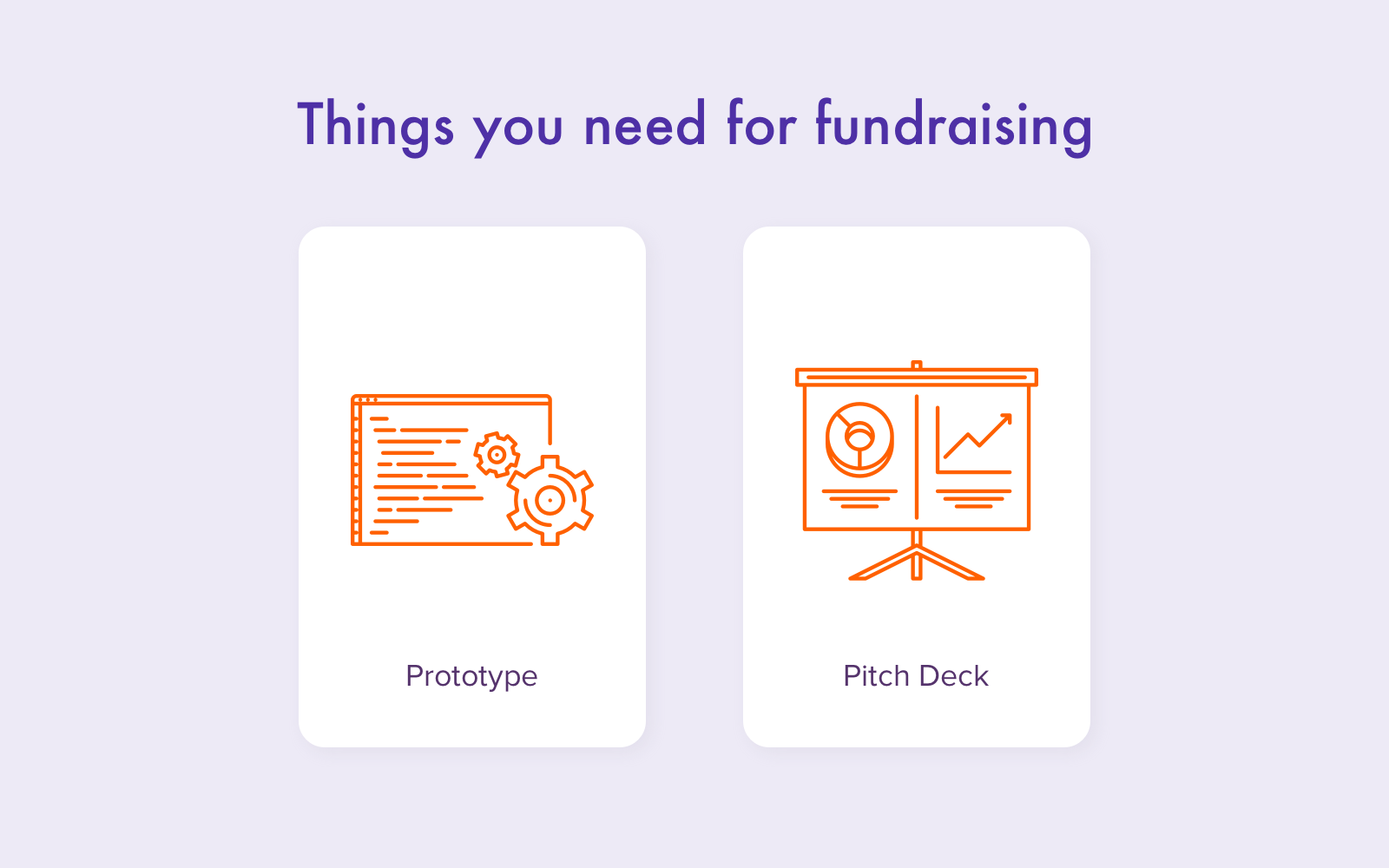
▪️Prototype — In the case of a software development solution you could present a workable prototype, allowing potential investors to see the main project idea and the detailed functionality through an MPV version of the app.
You could also present the design of your software solution which should be detailed enough to show that it is different than anything else they’ve seen before.
▪️Pitch deck — The Pitch Deck is basically the physical presentation of your startup idea. This presentation should contain data about expected revenue, marketing strategy, and more. There are many tools you can use to make a presentation including basic PowerPoint and Google Slides and more professional ones such as Figma.
Mistakes to avoid during startup fundraising
There are several reasons why investors reject certain investment opportunities.
▪️Obscure niche — your target market isn’t clearly defined. You need to define your intended niche and be able to show how your new idea meets customer needs better than anyone else competing in the same space.
▪️Copied idea — it’s obvious to the investor that you have copied someone else’s idea — and it’s one of the most common reasons why investors don’t provide funding. In order to attract an investor’s attention, your idea must not only be fresh in terms of solving an important problem in your niche, it also has to be unique and stand out from your competition.
▪️Inflexibility — you are unwilling to modify your idea in the face of valid feedback. Adhering to your original idea in the face of new input and valid criticism could take you out of the funding game.
Many successful startups have adopted a modified concept along the road to secure funding based on what they’ve learned from talking to potential customers and by observing the actions of potential competitors.
▪️Bad developers — your developers don’t deliver what they promised. Even if the project idea is excellent, bad developers can change the situation. For example, freelancers tend to not meet deadlines.
One of the most popular options is to outsource web development activities in an effort to get more reliable delivery of results, affordable prices and higher quality. Clutch is useful to study the reviews of various outsourcers.
▪️One founder — you have only one investor, and that is you! Startups with only one founder investor tend to be more risky for investors who generally prefer to see a number of people who have put up their money to support your idea. There’s comfort in crowd support so try and assemble an investor group before looking for additional financing.
Securing the funding you need for your startup can be time-consuming and complicated, and there are a number of pitfalls to avoid. But if you “do your work” as discussed here, your chances of success will improve significantly.
— Vitaly Kuprenko is a writer for Cleveroad. It’s a web and mobile app development company with headquarters in Ukraine. He enjoys writing about technology and digital marketing.

- Posted 4.25.20 at 04:11 am by Roy Osing
- Permalink
April 18, 2020
How to use the principles of influence in online marketing

Source: Pexels
In 1984, psychologist Robert Cialdini wrote a groundbreaking book called Influence: The Psychology of Persuasion.
It was based on years of studying the sales strategies used in car dealerships, telemarketing firms and fund-raising organizations to identify six key principles that influenced people to make buying decisions.
His work has helped many business over many decades, and the same principles also apply to online businesses.
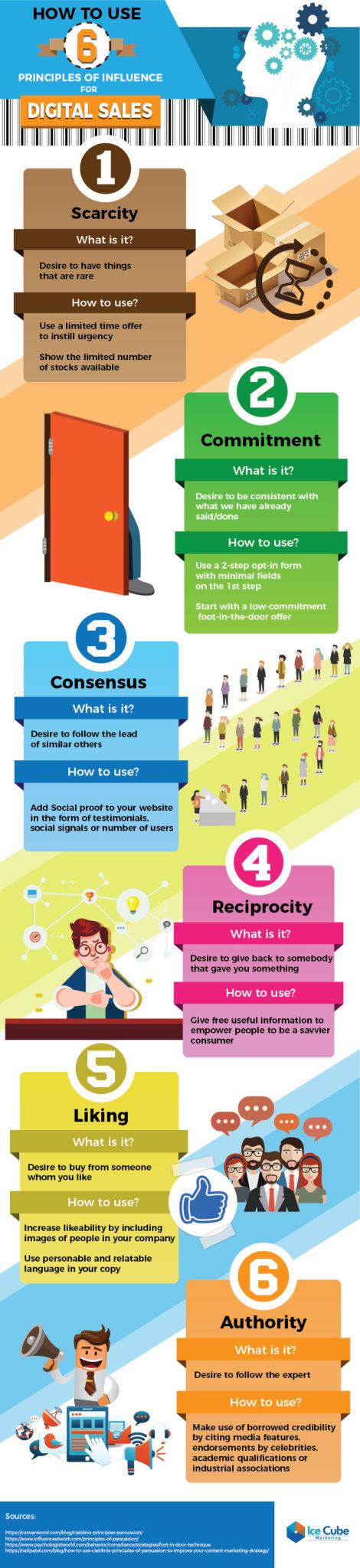
Let’s take a look at each of the six principles and give you an idea of how they can be used in online marketing:
1. Scarcity
People are always driven to take action when things are scarce. If you want your offers to really entice them to make a purchase, you need to give them a strong reason. There are many ways to use scarcity in your online marketing.
This can be anything from offering a time sensitive discount, providing exclusive bonuses for the first buyers, to only selling a limited number of products for acting on your offer.
2. Commitment
People are more inclined to take action once they’ve committed to a previous action. The idea here is to get people to act on small commitments and lead them forward with bigger ones throughout the process. You can think of it as an ascending ladder.
A great way to use this principle in online marketing is to start with lead generation. Give new subscribers a valuable gift for signing up to your email list. You can then follow up with a low cost offer and follow that up later with a higher priced offer.
3. Consensus and social proof
It’s human nature to look to others for proof. People want to follow the crowd because they want to belong and make the right decisions. Social proof is a form of consensus where things like customer testimonials can help convince prospects that your product or service has great value.
A great way to use this in online marketing is to use case studies and personal video testimonials on your sales pages and content. In the eCommerce industry, reviews are one of the most powerful forms of social proof. If you want to go for consensus, you can focus on building a community and create stories involving your customers.
4. Reciprocity
When we are given something of value, it’s normal to return the favor. This principle of reciprocity is a simple buy powerful way to get prospects and customers to take action. A great way to use reciprocity is to offer something that is appealing and relevant to your audience.
This can be anything from free samples, free products, informative content, and free trials. This not only makes people want to return the favor, it gives them a glimpse of the value your business offers.
5. Liking
At the end of the day, people prefer to do business with people they like. This principle is simple but not easy to pull off. How can you get people to like you with online marketing?
You can create a strong personality, tell emotional stories, engage your audience, provide valuable content, and establish clear brand values. The whole process will build a relationship with your audience and also communicate all the ways your business is distinct from the competition.
6. Authority
People want a way to distinguish an average person from an expert. By positioning yourself as an authority, you will be able to do a better job in selling your product or service online.
How do you establish authority? You can mention recommendations from well known figures in your industry, use authority badges (As Seen on TV, Featured on Fox News, Mentioned on the Morning Show, etc.). Other authoritative elements like certifications, degrees, and licenses will also help.
Have you come up with any ideas on how to use these six principles in your online marketing yet? These examples should give you a lot to work off. Make sure you integrate as many of these principles as you can for your next marketing campaign.
— Ted Chong is from Ice Cube Marketing, a digital marketing agency in Singapore that helps local small businesses acquire leads from channels such as Facebook and Google.

- Posted 4.18.20 at 05:07 am by Roy Osing
- Permalink
April 11, 2020
Amazing books every startup entrepreneur and founder should read now
Amazing books every startup entrepreneur and founder should read now.
When asked about the keys to success, Warren Buffett said that he reads 500 pages every day. He claims, “That’s how knowledge works. It builds up, like compound interest.”
Mark Cuban, another iconic entrepreneur says he reads about 3 hours a day. When asked about why he devotes so much time to books, he explained. “I feel like if I put in enough time consuming all the information available, particularly with the net making it so readily available, I can get an advantage in any technology business.”
Other famous startup founders like Bill Gates reads 50 books a year and Elon Musk claims to have taught himself to build rockets by reading.
You get the point. Some of the busiest and most successful people make the time to read. Not only is reading essential for gaining knowledge as an entrepreneur, but it’s an important part of growing your knowledge base, getting exposure to new ideas and changing your modes of thinking.
In a digital world, it’s the norm to default to podcasts, YouTube videos, a quick blog post or the occasional TedTalk to source knowledge. Not that there’s anything wrong with these mediums, but you don’t always get the juicy details that 300 pages will give you. If you’re an entrepreneur who aspires to turn your startup into a successful business, then you’ll want to start cracking open books — or doing so on a more regular basis.
So, where do you start? Not all books offer quality advice and it can be time consuming to sift through reviews to discern quality from fluff. Knowing this, the startup insurance company, Embroker, put together a guide of the best startup books to help point you in the right direction.
They broke these up into three categories for entrepreneurs who are looking to scale their business: growth hacking and scaling, books to read before pitching VCs, and entrepreneurship and startup stories.
● Growth hacking books— These are good reads for the entrepreneur who is specifically interested in what they can do to scale their business — e.g. mastering marketing, product development, sales, and other areas are crucial in growth hacking.
● Books to read before pitching VCs — This section is for founders who are ready to start raising venture capital (beyond what they’ve bootstrapped). If you’re in need of some advice on how to pitch venture capitalists, how to understand VC deal structures and strategies or how to choose the right investors and VC partners, these books are for you.
● Entrepreneurship and startup stories — There’s a lot of value in knowing the stories of other startups: what they’ve been through, what worked and what didn’t. If anything, reading these can be encouraging to let you know you’ve not in the trenches alone. This section speaks to books that cover the ups and downs of entrepreneurship and the startup experience.
More details like an overview of the books, key takeaways and who they’re written for can be found in this full startup book list.
— Keilah Keiser is a freelance writer and content curator with a focus on business development and startups. When she’s not behind a screen, you’ll find her hiking in sunny San Diego with her dog.


- Posted 4.11.20 at 07:12 am by Roy Osing
- Permalink
April 4, 2020
What is ‘imposter syndrome’ and is self doubt slowing down your career?

What is ‘imposter syndrome’ and is self doubt slowing down your career?
Do you ever feel like a fraud when talking in meetings? Or maybe that you feel way underqualified for landing the job of your dreams?
If so, you may be dealing with an extreme case of self-doubt called imposter syndrome. Turns out, 70 percent of millennials are going through the same things as you.
Not to mention, some of the highest achievers are hitting these roadblocks. Serena Williams and Tom Hanks being a couple of them.
This fraudulent thought may stop you from chasing your biggest goals or allow you to feel pride when achieving others. Recognizing these thoughts and pushing past your self-doubt is one of the essentials to success.
If you think you may be dealing with imposter syndrome, Mint created an infographic explaining the different types, how each type may affect your finances, and tips to overcoming it.
Push past your self-doubt and push past to conquer anything you put your mind to!
— Kayla Montgomery is a digital content marketer who helps Mint create helpful and compelling stories worth sharing. Her background in digital marketing and creative writing has led her to cover unique topics ranging from business to lifestyle. In her spare time, she enjoys working out, writing for her own blog, traveling, and exploring all the in’s and out’s Austin, TX has to offer. To learn more, connect with Kayla on LinkedIn


- Posted 4.4.20 at 07:47 am by Roy Osing
- Permalink