



Roy's Blog: Entrepreneurs
December 7, 2015
4 simple ways to stand out and easily beat your competitors

Source: Unsplash
4 simple ways to stand out and easily beat your competitors.
NEVER has it been more important to get out of the herd and carve out a distinctive and unique place for your organization in the market than it is today.
The economy is unpredictable.
Competition is intense as new competitors are entering the market at a blistering rate.
New technology disrupts organizations relentlessly.
Markets are cluttered with sameness; products and services are undifferentiated and competitive claims are lost in the crowd.
Customers are more empowered than ever before, establishing relationships with suppliers that deliver distinctive solutions and ignoring those that don’t.
Which organizations are successful and survive this challenging business environment, and what separates them from the others that struggle, hang on and eventually fail?
Those that are able to win this battle are different from their competitors. They survive the scrutiny of the discriminating customer by providing relevant, compelling and unmatched value.
Those that have no distinctive identity simply don’t make it.
They die.
How can organizations stand-out from the herd and easily beat their competition?
Business plan — It starts with reinventing how strategy is developed. The emphasis is shifted from strategic direction to execution. Many plans look good on paper but can’t be executed. They are theoretically pristine but worthless as they fall short of delivering results.
The strategic business game plan is designed for execution and is created by answering 3 questions:
1. HOW BIG do you want to be? - growth goals;
2. WHO do you want to SERVE - target customers to achieve growth;
3. HOW do you intend to compete and WIN - the value proposition that gives the WHO reasons to buy ONLY from you. Being the best of the best is ignored; being the ONLY ones that do what you do is coveted.
Marketing — Marketing is focused on creating experiences rather than flogging products. Investing in current loyal fans is given priority over providing special promotions and deals to acquire new customers.
Mass markets are ignored in favour of concentrating on the individual and discovering their secrets that will unlock economic value.
Marketing to ’ME’ gains momentum.
Customers are looked at holistically; experiential packages are designed for each of them to satisfy their broad life desires. Creating happiness is the marketer’s end game.
Customer Service — Customer service the way it has been traditionally practiced is out; SERVING customers is in with the end game to dazzle the customer and take their breath away. Internal rules and policies are re-vectored to make customer engagement a friendly process.
The customer is brought in to the organization to get their fingerprints on how they want to be treated.
Leadership — Leadership is practised by serving around is the new culture. “How can I help you?” are the words leaving leaders’ lips not “Do this.”
To Stand-out from the Herd you need to provide VALUE that people CARE about and that is UNIQUE. Failure to deliver and you’ll be IgNORED, InVISIBLE, CoMMON and DeAD (sooner or later).
Cheers,
Roy
Check out my BE DiFFERENT or be dead Book Series
- Posted 12.7.15 at 04:02 am by Roy Osing
- Permalink
November 23, 2015
Sales can push or build, what’s absolutely the best way?

Source: Unsplash
Sales can push or build, what’s absolutely the best way?
Sales people have a choice in terms of the modus operandi they choose to employ to deliver results: they can either push or flog products at customers or they can build intimate relationships with them and trust that sales will follow.
Here’s the profile of each.
The pusher:
- is focused on short term success; it’s all about making the numbers;
- flogs technology, emphasizing the cool things it can do;
- loves to make speeches on how wonderful their products are; not too much listening here;
- will try and force-fit their product to the customer’s problem even though the product is not be the perfect fit for the customer. They are more motivated to sell their product and not to do whatever it takes to solve the customer’s problem;
- is a one-way communications artist. They are constantly in the transmit mode; they listen very little;
- wants to get the sale and get out; the quicker the transaction the better;
- is frustrated by the need for after sales service and devotes minimal time to it;
- is driven by their annual compensation plan and dedicates little effort to medium and longer term issues;
- spends copious amounts of time doing cold calls;
- relies on low prices to express their value proposition; blames high prices when they lose a sale;
- avoids personal accountability when a client is screwed over through a service mishap made by the company;
- is super driven to win an annual sales award and get a trip to somewhere exotic.

Source: Unsplash
The builder:
- is a server with the innate desire and ability to take care of people;
- is a highly engaging individual; believes that deep conversations with the client will expose opportunities;
- wants to get paid by their compensation plan, but is willing to balance longer term needs with the short term;
- drives the majority of their sales through repeat business from long term loyal clients;
- creates intimate relationships with clients trusting that the relationship will yield sales over the longer term;
- sells value at the highest price possible. Avoids commodity transactions where the sale goes to the lowest price supplier;
- focuses on obtaining client referrals to grow sales; doesn’t have to cold call;
- spends time trying to discover client hidden wants and desires - secrets - and employs this knowledge as a critical component in their sales proposition;
- is a recovery addict; doing whatever it takes to recover from a service mistake the organization made that caused client pain;
- takes the role of client champion inside their organization fighting for them regardless of the issue;
- has incredible listening skills which represent a heavy dimension of their personal brand;
- uses a customer report card regularly to gather customer feedback on their performance; follows up to ensure improvements are recognized;
- will lose a potential sale by recommending someone else’s product when they have a better solution to a client’s problem;
- is very involved with marketing in the new product development process; ensures that their client’s unmet needs are addressed;
- are viewed by their clients as partners; part of the client team.
Which approach do you think will build customer loyalty and distinguish you from your peers?
Cheers,
Roy
Check out my BE DiFFERENT or be dead Book Series
- Posted 11.23.15 at 05:56 am by Roy Osing
- Permalink
October 26, 2015
The 2 simple questions that guarantee you will be innovative
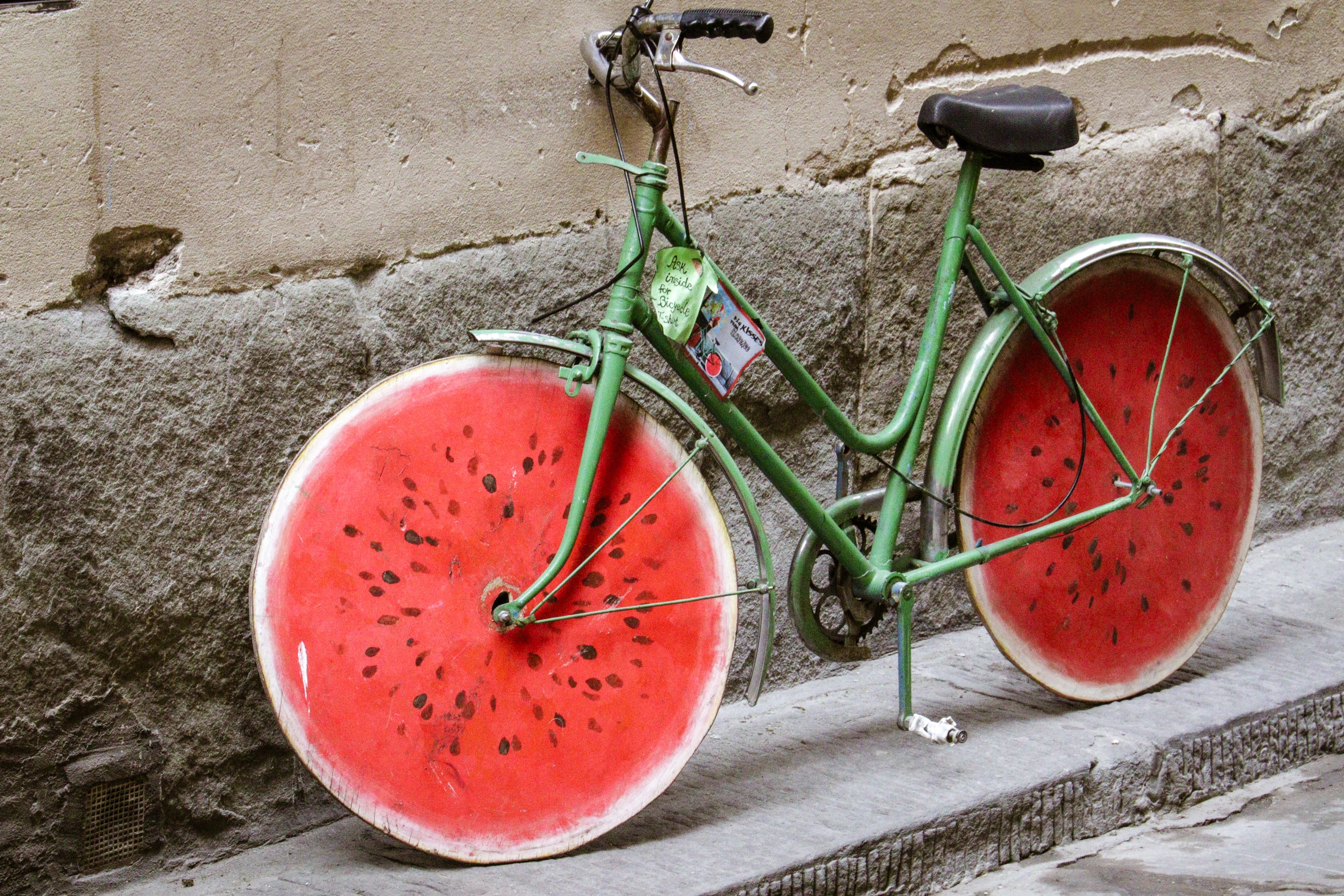
Source: Unsplash
The 2 simple questions that guarantee you will be innovative.
There are significant challenges facing innovation in any organization.
People are taught to be cautious and to make “informed” decisions based on thorough and rigorous analysis. As a result the process tends to be long and arduous and faces numerous levels of scrutiny before a decision is finally reached.
Paralysis by analysis often sets in and current business momentum is maintained. Nothing changes.
People are taught to avoid making mistakes. They witness how punishment is handed out to their colleagues and decide that risky actions have too much personal downside; they prefer the status quo. Nothing changes.
These powerful forces act against creativity in most organizations; here is my formula for letting the innovative juices flow:
Creativity = “How do we get there?”
If you know how to get from A to B the Creative Incentive Quotient – CIQ – is zero. On the other hand, if you have absolutely no idea how to reach your destination the CIQ is high.
Creativity is not spawned by applying analytical tools that draw upon historic performance to predict future results. Trend line thinking stultifies breakthrough action as it merely extends past performance with the expectation that the future will somehow mirror it.
Creativity is driven by declaring a goal without knowing exactly how it will be achieved and doing the hard entrepreneurial work to figure it out. It’s about having the intestinal fortitude to enter uncharted waters, pointing your ship in the general direction you want to go, and navigating – creating – as you go.
Creativity is killed by not wanting to go forward without knowing how the end goal will be achieved. I see people shut down when confronted with the objective of doubling revenue in 24 months because they don’t know how to do it. They stop, say the objective is “unrealistic” and adopt an uninspiring target that they think they can achieve. CIQ = 0. Creative juices don’t flow.
Creative juices flow more when the way to achieve the goal is unclear when you begin.
Creativity = “What do we have to do differently?”
Listen to the conversation that pervades most organizations today: “What is best in class doing?” is the driver of most activity. Benchmarking the leader of the pack and copying them absorbs everyone’s time and energy; yet even if you are successful you remain in the pack like everyone else.
Benchmarking is the tool of sameness.
It does not get the creative juices, and you won’t separate yourself from the pack. CIQ = low (some juice might flow as improvements are made based on others’ experience). And if you don’t stand-out from the pack, what does your long term future look like?
Sameness = mediocrity = invisibility = irrelevance = dying = dead (sooner or later).
To be successful in the long run, your CIQ must be high; creativity must force you out of the pack and make you relevant and unique.
Creativity is launched by asking these questions:
▪️“How can we be different from our competitors?“;
▪️“How can we be contrarian and seek uncommon ground to cover?”;
▪️“How can we go in the opposite direction to the leader of the pack?”.
The unknown and uniqueness are the drivers of creativity; what’s your CIQ?
Cheers,
Roy
Check out my BE DiFFERENT or be dead Book Series
- Posted 10.26.15 at 04:28 am by Roy Osing
- Permalink
September 21, 2015
How your business can grow the fast and easy way

How your business can grow the fast and easy way.
As a business you are generally limited in terms of resources; cash reserves can get depleted, customers can dwindle in numbers and growth in your business is difficult to achieve — in fact in the COVID world, survival is your prime objective.
Here’s a quick way you can get your business back on the growth path.
Set the context for growth by a quick review of your business strategy — Survival and growth should be a function of what overall direction you want to follow based on your basic business.
Take a moment to review the plan that has worked for you in the past; decide if you want to stay your course or if deviating from it is necessary given the new circumstances you face. It’s ok to make a change; your survival is at stake. And you just may find a new opportunity for your business in the post-pandemic era.
Dumb it down — Keep your approach simple; quick and easy sales is your objective with as little risk and investment as possible. Figure it out on the back of an envelope; it doesn’t have to be fancy just fast.
What demand seems to be there at this moment and how can you morph your basic business to take advantage of it? What assets for you have that can be used for a different purpose?
Some organizations with unused warehouse space launched manufacturing of personal protective equipment when things went sideways. Can you do a similar approach?
Decide how much revenue you need — Calculate how much revenue you need over what timeframe to turn the corner. Have a specific growth target and make it about top line revenue.
Even though the intent is to keep it simple and move fast, it’s important that you know approximately how many sales (and at what price points) you need so you can track your short term performance. You need to know if you’re making progress or not.
Declare your objective and be ok with not knowing how specifically to achieve it. Use ‘I don’t know’ to drive creativity and get your juices flowing.
Be short sighted — Look at short term performance; you don’t really have the luxury of looking far out into the future. Normally I would be recommending a planning horizon of not more than 24 months, however as I’m writing this piece three months into the COVID-19 era I’m now of the opinion that small businesses — no, all businesses — should be looking at what they need to do over the next 24 hours to achieve survival grade performance.
The shorter the planning period the more you have to execute to survive
Be clear on who you need to target — In the midst of chaos it’s really easy to start running all over and chasing opportunities. I’m not saying this is necessarily bad as long as it’s focused on customers you know have the potential to generate the sales you need to keep on breathing.
The easiest growth is achieved from the customers who buy from you repeatedly and often.
You should know who they are when they phone in an order or order something online; if you don’t, start capturing customer information ASAP so you can do everything possible to encourage them to return.
Organic growth is best achieved through the loyal customers you currently serve. Focus on THEM. Trust that with the right value proposition they will do more business with you and tell their friends and family.
Forget about trying to get new customers. If you happen to get some from word-of-mouth that’s ok but don’t try to be proactive. It’s time consuming, risky and takes your eyes off serving your existing base extremely well.
Think ‘fast-and-easy’ — An effective way to choose customers to target is what I call the fast-and-easy method.
It means choosing customers that:
Can be sold quickly — Customers you can get to fast with your current selling methods. If you have to build new sales channels, it will consume energy and precious time that you can ill afford without generating additional revenue.
In addition, as I’ve said elsewhere, it is critical to focus your efforts on the things that matter; those activities that you believe have a good chance at helping to grow your business.
Stick with what you know. Bear down on what you’re good at. Concentrate on customers you know. Ask yourself ‘Is this consistent with fast-and-easy?’ when considering chasing new stuff.
Are ‘close to home’ — In a geographic sense, explore the territory immediately around you before trying to exploit distant ones. If you have a good online presence, stay with the market focus you have.
Exploring new virtual or physical markets — probably with the need to establish new sales channels— can gobble up your time with questionable short term results.
Penetrate and dominate your current markets before you wander afar. This is an area where I’ve seen small business leaders fall flat on their face. They spot something new to do that is interesting and at least theoretically is a good idea and they decide to chase it, reducing the energy that is applied to fast-and-easy activities. They lose on both accounts: the new stuff doesn’t materialize and the current stuff suffers.
The fast-and-easy approach: get sales fast and don’t spend much time to get them.
Don’t need much selling — Where closing a sale can occur relatively quickly and revenue realized soon thereafter. An opportunity requiring a 12-month sales cycle won’t be terribly productive when you are in the survival mode.
Work with clients who will give you revenue tomorrow if you want to hit your sales targets.
And avoid customers who ask for proposals. Responding to the request and waiting for a decision will gobble up precious time you don’t have. The formal sales process is a time consumer; focus on people who are willing to deal you their business based on trust and past success with you.
Can give you quality referrals — Again, a short planning period requires closing as many high value deals as possible which generally means getting to deal closure without a lengthy sales preamble. High quality referrals should mean that your brand comes recommended and you can get to the solution presentation quickly.
Just do a few things — It’s critical to focus on doing the right one or two things that will kick in with sales; trying to do too much won’t work. You don’t have the resources or working cycles to pull it off. The secret is to pick a few critical objectives that you believe will give you an 80% chance of hitting your sales needs.
Avoid brainstorming as the way of setting priorities; if an action cannot be directly aligned with generating revenue from your loyal customer base, don’t chase it!
Stop! — It goes without saying that you can’t keep doing stuff that was part of your ‘yesterday’ unless you are absolutely confident it will make the survival sales you need.
Every time you’re tempted to do a comfortable ‘yesterday’ activity, stop and ask yourself whether it is necessary to meet your 24-hour sales goals.
You can’t afford to do unproductive things when you’re fighting for your life.
Yesterday’s relevance is today’s irrelevance.
Know where you are — Measure progress regularly to know if you are on track to hit your survival sales objectives or not. COVID has changed the meaning of time in this regard; you have to know literally every day where you stand. It’s the only way you will know if you have to change your plans on the run.
Pandemic notwithstanding, it takes discipline to grow your business; it doesn’t happen by serendipity.
Cheers,
Roy
Check out my BE DiFFERENT or be dead Book Series
- Posted 9.21.15 at 04:54 am by Roy Osing
- Permalink