



Roy's Blog: Entrepreneurs
January 24, 2022
What is the best way to state your competitive advantage?

Source: Pexels
What is the best way to state your competitive advantage?
Perhaps you’ve got an incredible product portfolio built on an amazing technology platform and believe that the potential for revenue growth is staring you in the face.
The truth of the matter, however, is that if you can’t answer this question, your growth intentions will never be realized.
“Why should I do business with you and not your competition?” is the killer question faced by every organization.
In today’s noisy world with every organization shouting out why they should be chosen, the marketer needs to determine how to get their products, services and solutions noticed in the milieu. They need a competitive claim that is unique and stands apart from your competitors.
Unfortunately, however, competitive claims made by organizations today lack creativity, imagination and truth.
Copying pervades — I would give most organizations today a less than satisfactory rating in terms of how well they address this challenge.
The tendency of most is to go on a copying rampage where the priority is on replicating in some way what someone else is doing in terms of products, services, pricing, distribution and brand positioning. Other players are benchmarked on some capability and the copycat strategy unfolds.
Even a fast follower is a copycat; they just do it faster!
Copying doesn’t create uniqueness and differences; it proliferates sameness.
It dilutes any marginal differences among organizations that might exist and renders them all as look-alikes. And it lowers the bar for each competitor to achieve.
The usual clap trap — Most differentiation statements advocated by organizations and intended to convince us involve words like ‘best’, ‘number one’, ‘leader’, ‘fastest growing’, ‘most’ and ‘highest quality’ to assert their distinguishable characteristics vis-a-vis their competition.
These are common statements which add little to clarifying the clutter:
- We have the best sales team in the business;
- Our people strive to deliver the highest level of client service at all times;
- We offer the highest quality products;
- We have the most knowledgeable salespeople;
- We have been in business for over 30 years;
- We rank number one in client satisfaction;
- We are the preeminent sales organization in North America.
Unfortunately, these declarations add little understanding to help people select a company to do business with.
How exactly does having knowledgeable employees make an organization the right choice given a number of alternatives to choose from who will all claim the same thing? And who decided that an organization has the best customer service, and why should I believe them?
And why should I be impressed with any organization that ‘strives’ to deliver great service — I won’t give anyone my business who claims their special sauce is that they try hard.
These statements are confusing and have little credibility with their audience. They are generally vague and aspirational without proven substance.
A credible competitive claim needs to be simple and specific in terms of how an organization is different from the competitive herd.
It needs to address a high priority customer need (claiming to be unique on something a customer doesn’t care about isn’t productive) and it needs to be true (failing to consistently deliver will drive a customer elsewhere).
Most competitive claims rely on overused clap-trap to position themselves against their competitors
In response to the need for clarity in competitive claims, I created what I call ‘The ONLY Statement’ as the practical way to do it.
‘We are the only ones that….’ is the claim that will cut through the clutter and make it clear why you should be chosen among your competitors.
“We provide the ONLY permanent solution that prevents biohazard contaminants (such as used syringes) and all other debris from entering manholes.”
What Jerry said
Jerry Garcia, leader of the former legendary rock band The Grateful Dead, nailed it: “You don’t want merely to be the best of the best. You want to be the only ones who do what you do.”

ONLY dispels the clap trap; here’s why:
Confidence — ONLY is bold; some might say arrogant. It’s audacious in the claim to be the one that owns a particular space and is prepared to show all to prove it.
This confident face of the organization, in and of itself, raises curiosity to find out what it’s all about. It’s not without its risks but well worth stepping out of your comfort area to say it.
Simplicity — ONLY is a simple expression which uses simple language. The low fog factor invites eyes to gaze on and process the thought articulated in it rather than struggle through what it means which is the case with the usual clap trap.
Clean form — ONLY relies on a binary view; the claim is either true or false. It exists or it doesn’t. It makes it very easy for the reader to assess both its relevance and its truth.
Emotional appeal — ONLY is built around what is relevant to the customer’s the organization has chosen to serve — what their target customer group cares about — therefore these specific people are warmed up to the competitive claim being made.
“We are the ONLY team that provides safety solutions anywhere, anytime that go beyond what customers ask to help build their business.”
This statement speaks volumes to those who could be in need on a moment’s notice and it reassures them that resources will be available to help them should the need arise.
Revealing shape — ONLY provides detail and clarity around what the solution does, to make it easy for the potential buyer to make an informed decision. It has the cutting edges and lines of specificity that attract followers.
“Unlike other distracted driving solutions that allow drivers to use their smartphone when driving, eBrake is the ONLY one that automatically locks a driver’s phone when motion is detected, but grants passengers unrestricted use.”
Proof — ONLY is easily measured by asking the frontline and customers whether the claim is true or not; the measurement process is simple.
In addition, the researcher can look up and compare other organizations and what they offer as a competitive claim and reach their own conclusions on ONLY’s efficacy.
Distinctiveness — ONLY is different. There is no other similar proven method of creating a claim of competitive advantage offered by strategy advisors in the consulting community.
It has a track record of success with many organizations I have had the pleasure of working with. No other advisor, consultant, academic or strategy pundit has a tool in their kitbag like ONLY but Roy — I am the ONLY one.
ONLY is a sound bite that punches above its weight. It’s small in frame and carries enormous impact.

Rules for ONLY — ONLY isn’t sexy through serendipity; it achieves sexiness by rigorously adhering to a set of rules to create it; here they are:
▪️ONLY must speak to the experiences and value you create for people not the products or services you want to push; it needs to be highly relevant and address the priorities that customers have expressed.
People want to buy things that help create memorable experiences for themselves or produce benefits that solve problems they have.
If an organization can craft their ONLY to address an overwhelming craving or desire their target customer has, a sustainable competitive advantage for the organization is within their grasp.
▪️Keep it brief. ONLY is a sound bite. It’s a nano-statement that shouldn’t require you to take a second breath. If it’s a narrative that consumes a page it’s not a viable claim.
▪️ONLY must talk to the specific customer group you are targeting and not the market in general. It’s really important that ONLY be as specific as possible which comes from addressing identifiable customers; market communication dilutes the claim which renders it incomprehensible and ineffective. Talk to customers rather than markets if you want your message to be acted on.
▪️Test your ONLY with customers and employees; it must be relevant — it satisfies a compelling want or desire customers have — and true — the organization delivers the capabilities promised by ONLY consistently day-in and day-out.
Claiming you are the ONLY one at something that your target customers don’t believe is deadly. They will tell everyone that you’re lying and that doesn’t turn out well.
▪️Consider your ONLY a draft. The reality is you won’t get it completely right the first time, so take your almost-there result and start working with it with your customer segments. Refine it as you go.
And stay alert for a response by a competitor who may suddenly come awake when they see your move.if this happens you may very well have to go back to the drawing board and make some changes.
“We are the ONLY First Aid Advocate that provides safety solutions anywhere, anytime.”
ONLY is a war-rallying-cry of sorts for your employees; it should get their juices flowing. It defines the hill you are claiming and dares the competition to climb it.
Your employees have to feel what it says and be able (with the help of the serving leader) to define exactly what it requires each and every one of them to do in order to deliver on it.
ONLY beats ‘best’; ONLY beats ‘#1’; ONLY beats ‘the leader in…’; ONLY is the clear winner if you want a sustainable competitive advantage.
Cheers,
Roy
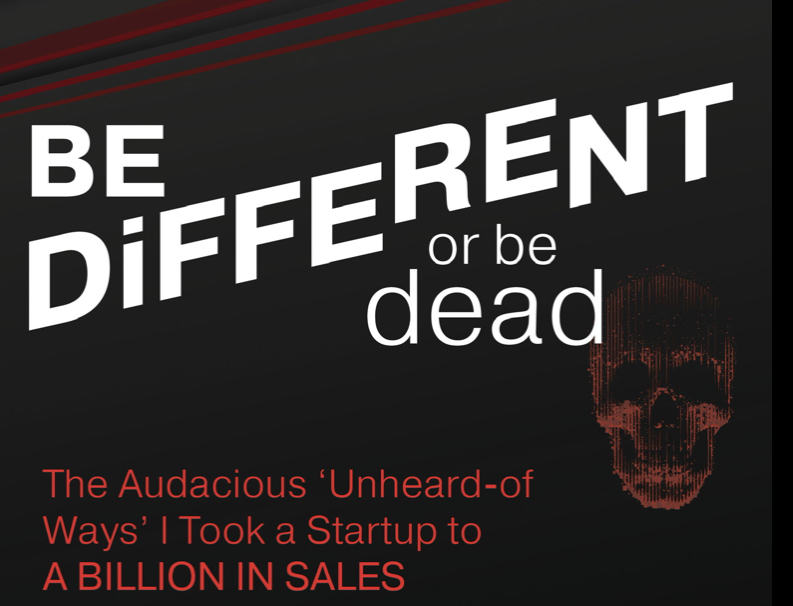
Check out my BE DiFFERENT or be dead Book Series
‘Audacious’ is my latest…
- Posted 1.24.22 at 01:10 am by Roy Osing
- Permalink
October 23, 2021
Female tech entrepreneurs must take these 6 important actions for a successful startup

Source: Pexels
Female tech entrepreneurs must take these 6 important actions for a successful startup.
Technology is one of the fastest-growing industries globally.
Unfortunately, it’s not that welcoming to women.
The latest data shows that the gender pay gap in tech is a global issue that needs to be addressed.
Women who work in Canadian tech jobs see a pay gap of about $20,000 per year.
Many women are dissatisfied with how they’re treated and eventually decide to quit their jobs and run their own startups.
If you’re faced with the same challenge, these 6 actions will help you build an amazing startup.
#1. Use the latest technologies for marketing
Any startup needs funding, and female tech startups are no different. This is where proper marketing and networking can do wonders and provide enough funds for the organization to develop.
Women who own tech startups need to go beyond the standard marketing methods and showcase their minimum viable product to the masses. To succeed in their endeavors, women entrepreneurs in tech should use the latest technology trends in marketing.
One example is a technology like VR, AR, or XR. This approach works great with all kinds of MVPs and can lead the user in and showcase an app or a platform user interface. In addition, it can help visualize complex data and allow the startup to connect with the audience differently.
#2. Be more flexible
Ever since the pandemic started, more businesses have shifted perspective and allowed working from home. However, female entrepreneurs may feel pressured to do more. Some may believe that letting people work from home won’t bring about satisfactory results.
In Australia, the largest pay gap is 24.4%in the science and technology industry.
Unfortunately, this kind of fixed mindset might prove to be detrimental to female tech startups. After all, many jobs can be managed online, and employees can be trusted that they’ll do what’s necessary.
Besides struggling with flexibility related to employees, female entrepreneurs might also be too harsh on themselves. This can cause more mistakes to happen and lead to more significant issues in the organization. Female entrepreneurs should know that their male colleagues make mistakes too.
#3. Achieve good work-life balance
Besides the gender pay gap, women in technology and startups often face another challenge—parenthood. Of course, the role of a mother is even more important than the role of an entrepreneur, but women know they need to juggle both.
When it comes to the UK, women earn up to 28% less than their male colleagues in the same tech roles.
To remain successful in the entrepreneurial world, female business owners should primarily quit blaming themselves for pursuing their careers while being mothers. Instead, they should look at it as something they’re doing for their children and their future.
In addition, to succeed in both raising children and scaling a company, they should discuss their plans and aspirations with their partner. Women shouldn’t be afraid to ask for help so they can focus on their careers.
#4. Ignore the imposter syndrome
Impostor syndrome is another issue that prevents female entrepreneurs from being successful. It’s related to the feelings of self-doubt and personal incompetence, regardless of the person’s education and experience.
Unfortunately, the imposter syndrome can make female entrepreneurs feel like they need to work harder to achieve their goals. Eventually, it might take a toll on their well-being and performance.
Here’s what female entrepreneurs should do to overcome the impostor syndrome:
▪️Avoid comparing themselves to others.
▪️Build a support network.
▪️Be honest about how they feel.
#5. Be open to receiving help
Women in tech businesses know they have a lot to prove to themselves and others. Therefore, female entrepreneurs often take on the jobs they shouldn’t be working in. They try to do it all and may often overlook the essentials.
However, women in business need to learn how to be open to receiving help. Regardless of the industry, all businesses require teams of people with different abilities and ideas. Only a business that has all hands on deck can thrive.
Female entrepreneurs should also work on surrounding themselves with like-minded people, not just in business. They should build a network of friends to lean on when things get rough. One of the best ways to do this is to find a community of other female tech entrepreneurs and brainstorm ideas.
#6. Find a remarkable mentor
The right mentor can mean a lot to a female entrepreneur, especially in the tech industry. They can help identify the growth opportunities and share their knowledge and expertise. Good mentors can also be consultants.
The most important thing a mentor can do is give feedback. This is crucial if the startup is new and needs a little push.
In the US, the gender pay gap is 3% for the same job, although the percentage differs based on location.
On the other hand, a role model serves as eternal motivation and inspiration. Role models show that the business can be developed, and success can be achieved. They’re there to help women entrepreneurs do more and dream bigger.
Summary
Women in tech are often facing issues with the gender pay gap. This is why many decide to start their own business. However, it’s not as easy as it sounds. Many female entrepreneurs feel like they don’t belong and are convinced their families suffer because of their careers.
Still, if they wish to be successful, they should work on promoting their MVP, show their knowledge, and not be afraid to ask for help when they need it. With the right community and a flexible mindset, female entrepreneurs in the tech industry have a higher chance of succeeding.
— Isaja Karadakovska is a pol-sci graduate, a former Junior Researcher, and currently TakeATumble AU’s Content Coordinator. She is driven to seek and create great content. Her free time is dedicated to her plant obsession. You can visit here on LinkedIn.

- Posted 10.23.21 at 03:25 am by Roy Osing
- Permalink
October 18, 2021
Why a business plan for ‘cults’ can be an amazing success

Source: Pexels
Why a business plan for ‘cults’ can be an amazing success.
There are a plethora of opinions on how to build a business plan, and I have written numerous pieces on my unheard-of Strategic Game Plan process which is unique and cannot be found elsewhere.
In fact I’ve dedicated one of my books to the topic and explained why a planning methodology geared to execution is critical for any organization to consistently achieve a high level of performance.
A practical element of my business planning process is to carefully choose the customer segments you decide to target and serve.
The fascinating criteria I advocate is quite simple: choose those customer segments that have the latent potential to deliver your growth goal.
The choice you make is absolutely critical to the plan’s success.
If the wrong customer segment is chosen, the organization’s resources are wasted and its growth goals are not realized.
And if a mass market is the choice, the same end result happens.
In fact in this scenario, the organization’s marketing message and resources are spread thinly across the entire market hoping for enough ‘hits’ to justify the investments made.
Flogging a value proposition to everyone is not likely to be very successful as the range of appeal is too broad to generate sufficient market momentum to deliver required sales.
So what’s the solution? How does an organization choose the right customers to serve?
One approach that should be given much more attention involves exploring the opportunities presented by polarization: examining clusters of people who are clustered at the extreme right end of the bell curve around a particular value set.
For example, if the value set to be explored were ‘concern for the environment’, a polarized view might be the belief that carbon dioxide emissions will destroy the earth’s atmosphere in 24 months.
Polarized groups—cult movements—are not only unique and distinct from the crowd in some way, their differences are quantum and order of magnitude in nature rather than incrementally distinct.
They are groups of individuals who have an obsession with, fixation on, mania for, passion for, idolization of, and reverence for an idea, thing or cause, for example, such as:
— the environment
— black lives matter
— LGBTQ
— #MeToo
— anti- globalization
— feminism
— veganism
— indigenous rights
People in these segments choose to express themselves in a way that others don’t.
I’m not referring to extremist right wing religious cults, but rather groups of people who share a passionately held view around a particular cause or movement and who express their opinions within acceptable societal and legal limits.
These polarized clusters of people represent relatively narrow slices—slivers—in the market that can have demand characteristics worthy of study.
They may represent a significant source of economic opportunity for the business because their beliefs are precise, well defined and the cluster is growing in number as an expression of society’s changing views.
And, if the business can use ideologies and beliefs to attract cult interest and cult member passion to engage them, perhaps relationships can be established and sales made.
We should start thinking about finding ‘cults’—who have excessive admiration for a particular thing—that express desires and cravings at the poles of the demand curve.
ME! segments are different from the mass crowd; cults are REALLY different.
The challenge, of course, is to find a cult or two whose members represent good potential for you to chase.
Here are five steps you can take to see if a cult has a future in your business plan.
#1. Keep your eyes open for trends
Cults typically follow social trends, so stay alert to the issues of the day because they could lead to the formation of a cult.
For example, there are many climate change cults—The Extinction Rebellion is one—that have been formed over the past few years which could represent a growth opportunity for some businesses because, for example, the cult is growing in membership and you have a solution that would easily allow them to collaborate among themselves very easily.
As a way of getting traction on this activity, assign someone to a cult follower role to identify, track and evaluate them as they are discovered and evolve.
#2. Talk to existing cult leaders
This is a good way to not only get a better understanding of cult values, but also to get insights on what the profile of the cult member looks like.
Even if a particular cult isn’t on your radar, it’s worthwhile engaging with a leader to deepen your understanding of cult dynamics which will provide ideas on how to engage with its members and form relationships with them.
#3. Check traditional and social media
Media headlines are a good source to explore which movements are currently attracting the most attention and therefore might be an attractive target for your organization.
And check out the nature of the conversation on social media to get a feel for the main themes of the conversation—the ‘triggers’—which would provide a window on not only what’s important to the cult members, but also whether your organization would even want to be associated with their cause.
This information is critical in terms of what it might take to successfully market your products, services and solutions to them.
#4. Pick a cult that seems to be a fit for you and give it a try
First of all, you’ll never know if a cult target will work for you until you give it a go.
I don’t think many (if any) organizations actually study cults to determine if they possess any potential so you would be breaking new ground here.
If trailblazing appeals to you, experimenting around the cult phenom is for you.
There are, however, a few considerations that you might use in selecting a high potential cult to chase:
— what does your current business plan say in terms of the customers you’re looking for? Is there some similarity between your current marketing efforts and the potential cult you could target?
— do a bit of back-of-the-envelope calculating in terms of the sales potential. Is there a good growth prospect if things work out for this cult?
— what are the possibilities of partnering with the cult to explore longer term mutual benefits?
— how divergent are the cult’s values from any element of yours? Although improbable, it might just be possible to find a hint of commonality with what the cult stands for and what your organization values. Any common denominator could help to define a workable marketing platform.
#5. Use experience and results to attract another
If your experiment works out, you may want to use it to attract the interest of other cults; you might be The ONLY organization that looks to social movements for joint opportunities.
So, track the results of your ’cult try’ in detail so you can use them in negotiating other arrangements if and when the time comes.
Social movements house untapped opportunities to grow your business and gain a competitive advantage as others are unlikely to pursue a similar strategy.
Exploiting customer groups at the edges of the demand curve—beyond ME!—can be risky, but can also be rewarding.
BE DiFFERENT.
You’ll never know until you give it a try.
Cheers,
Roy
Check out my BE DiFFERENT or be dead Book Series
‘Audacious’ is my latest…
- Posted 10.18.21 at 05:17 am by Roy Osing
- Permalink
October 11, 2021
Why the best people to execute new ideas are ‘double-downers’

Source: Pexels
Why the best people to execute new ideas are ‘double-downers’.
Why successful people don’t take NO! for an answer.
What happens when someone tells you “No”?
“No” to your application for a job.
“No” to a proposal you’ve submitted to your boss.
“No” to a new product idea.
“No” to added functionality to the Chatbot feature on your website.
“No” to the vacation suggestion you’ve offered to your partner.
I’ve seen 3 typical responses to this classic dilemma: Retreat — Hover & Meander — Double Down.
#1. Retreat — do you walk away licking your wounds?
In my experience, the most common response is the person holding the genius simply backs off, believing that since their idea was rebuffed, it was a bad idea.
Or that to pursue the matter any further isn’t worth the emotional trouble they would likely endure by going another round of pitching and trying to convince the other person that their idea has merit and is the rightful owner of the podium.
I’ve never been a fan of this approach.
First of all, it implies to me that the owner of the bright idea really isn’t all that committed to it. It’s like they’ve lobbed their position up in the air to see if it would fly and since it didn’t, they are ok with the rejection outcome.
In addition, backing off is another way of saying that the owner has no passion for their ideas. Perhaps their mind—and not their heart—owns it, and if that’s the case it’s easy to rationalize why they should accept defeat.
The lack of spirit around their idea is foreshadowing of a future problem as well if it came to implementing it.
Execution happens when emotion and passion are in play, not when the intellect is active.
As the recipient of the proposal, my conclusion when the owner backs off after rejection, is their idea would never see the light of day anyway, so justice is served.
#2. Hover & Meander — are you willing to incrementally change your idea and meander around it until you negotiate a compromise with the other person?
This is the response most often advocated by academics and experts of conflict management: the search for common ground upon which a compromise can be built.
When have you ever witnessed a crowd do anything remarkable?
Unbelievably amazing ideas NEVER result from a negotiation process. They are begotten from someone’s soul and stand the test of time to thwart rejection and, I’d needed, force fed to non-acceptors and unbelievers.
The compromiser isn’t my favourite person for a number of reasons:
✔️ they’re ok with a watered-down—‘hold-your-nose’—solution but in my experience don’t really apply themselves to implementing it because it lacks the lustre of their original thought.
✔️ they’re totally driven by logic and lack the emotional element necessary to do anything with their insight even if others agreed with it.
✔️ their willingness to find common ground is tantamount to allowing the crowd to be the prime influence on their idea. They are ok with becoming a member of the herd of average thinkers and allowing them to have a say (with the belief that herd members would then be committed to supporting the implementation of your morphed idea—rarely the case).
When the herd owns the idea, nothing magic happens.
✔️ they are empirical evidence that the drive to be truly innovative and different in one’s thinking can be shut down by the crowd, and that’s an issue for me.
✔️ The compromiser is forced to ‘round the corners’ of their original idea in order to feed the herd and thus the remarkability of their seed is lost.
✔️ When the holder-of-originality says of a crowd-influenced change ‘I’m ok with the new version’, they lose a certain amount of their drive to find new, interesting and different ideas — compromise reduces the innovation process.
When the crowd is the influence, average happens.
#3. Double Down — do you take a step back, take a deep breath and have another go at trying to convince the other person of the worth of your idea?
This response to being told ‘NO!’ is for the person offering original thought to stay in the moment and keep trying to sell their idea until either they win or they finally are beaten into submission (really response #1 after prolonged debate).
It’s ironic to me that the pundits favour compromise and yet the amazing ideas most often come from a vision and polarized thinking.
Elson Musk, Sir Richard Branson and Steve Jobs are/were polarized thinkers whose genius never touched a crowd.
We need to be teaching people how to advance their ideas with a minimum of crowd intervention rather than teaching them how to water down their ideas by taking the input from the masses.
We need more ‘Double Downers’ in the world; here’s why:
✔️ pushing for groundbreaking progress should be the priority these days, not looking for compromise. Climate change solutions, for example, require polarized holistic thinking not biased thinking based on how the needed change will impact us personally.
✔️ we need stronger innovators—more double-downers—given the rapid changes we’re experiencing in the world and the unexpected body blows that we have to deal with along the way.
We need to teach people how to push forward and learn the new skills necessary to advance their new ideas.
Double-down learning must take precedence over compromise teaching.
✔️ implementing anything new is an arduous job and it requires a champion to lead it. The Double-downer, because they are emotionally all in with their idea makes the best implementer. As mentioned before, the passive compromiser is less willing to push implementation to the limit.
✔️ double-downers require resilience and strong character, a trait we need more of in our organizations and lives. So let’s do what we can to breed people with this competency rather than dilute it by asking them to compromise themselves and find the lowest common denominator.
✔️ like it or not, achieving anything worthwhile today requires a high pain threshold to navigate a compelling thought through the maze of critics that sit in judgement of it.
Double-downers have assumed ‘pain absorption’ as a skill they must develop to see their creativity through to successful completion.
Double-downers have a reticence to submit; we need more not fewer of them.
✔️ double-downers have developed the uncanny skill of making their idea so compelling that they more often make the sale than lose it.
This is fundamental to audacious leadership where the leader makes the call after gathering input (which they may or may not heed) and is able to convince everyone around them that their direction is absolutely the right one to take.
Double-downers may not always be viewed as the nice, socially acceptable, politically correct persona to advance a creative agenda, but they get the things done that need to be done.
We need them.
Cheers,
Roy
Check out my BE DiFFERENT or be dead Book Series
‘Audacious’ is my latest…
- Posted 10.11.21 at 05:18 pm by Roy Osing
- Permalink