



Roy's Blog: Careers
February 21, 2022
How an unexpected bomb that blows up in your face can be no biggie

Source: Unsplash
How an unexpected bomb that blows up in your face can be no biggie.
▪️A pandemic shuts your business down.
▪️You’ve just been told you’re fired.
▪️An unfiltered remark your friend makes completely blindsides you.
▪️A small business tax increase announced by the government immediately increases your operating costs and reduces your profits.
▪️An aggressive move made by your closest competitor jeopardizes your market position.
▪️you’ve just lost the best player on your team.
Something happens that is completely unexpected, and could never have been predicted.
And it’s not a minor incremental event; it’s a BIG! discontinuity.
How often does this happen in business or your personal life?
It’s normal
It seems that ‘I didn’t see that coming!’ is becoming the new normal in all aspects of our world these days.
In spite of the plethora of sophisticated planning, forecasting and prediction tools available to us, as well as the pumped up awareness we try to exercise in our personal life, stuff we didn’t see coming hits us more often than occurrences we have successfully predicted.
The challenge is to be able to deal with it the best way possible to mitigate any potential downside for us personally.
Here are some ‘deal with it’ actions to take to get through the pain of the unexpected:
#1. Accept it
Understand that the unexpected is now a common element of life and accept it, because if you still believe that your original plan in anything will turn out the way you’ve intended, you’re in trouble. If you don’t have the right frame, you have no chance of turning a surprise into a successful outcome.
You can’t be leaning away from chaotic possibilities; you need to be leaning into it in order to turn a potentially disastrous event into a positive one.
#2. Be wary of predictive tools
Realize the limitations of forecasting tools and don’t put too much reliance on them. Treat the predictive tools as part of your ‘this is what might happen’ thinking; a possibility and no more.
If you give the result produced by the common predictive toolset serious credence, you are vulnerable to the surprise attack.
#3. Develop spider senses
Developing your spider senses to be acutely aware of conditions that might spawn discontinuity is essential if a win is to be extracted from a hit. You need to be prepared for a hit and constantly be uncomfortable in your skin.
If you’re not looking for a possible disruption, you will likely miss it when — not if — it occurs.
If you’re comfortable in these times, you’re not prepared.
#4. Get a rhythm
Try to be more nimble in the face of the unexpected. Can you dance? Can you change your cadence and rhythm to act differently when the unexpected happens?
Generally you don’t have a month to decide what action to take; get used to real time responses that make use of the very best information you have available to you.
Be on your toes, dash, stay on your toes and dash again — the only planning process that will work for a world where constant body blows is the expected.
#5. Have tolerance
Tolerate the blindside as a reality we all face at some point in our lives. There’s no point trying to fight it; it’s a legitimate fact of life over which we have little or no control.
If we can accept the likelihood that a massive shift will likely occur, our openness places us in a good position to create a positive outcome from it.
Intolerance to the blindside and believing that it is unlikely is an unreasonable position to take and it results in being subsumed by it.
#6. Create perspective
Develop a perspective about these happenings. Is the unexpected event a big deal or a no biggie?
You need to be able to assess the importance of the zinger in the total scheme of things in order to decide how much emotional energy you should be expending on responding to it. Pouring your guts into an event with little of no import in your life doesn’t make any sense; it’s draining and counterproductive.
I used the simple 1 — 10 scale to assess whether I should be reacting to a body slam; anything over a ‘7’ got my attention and I was all over treating it serious and responding accordingly. Anything in the ‘5’ to ‘6’ range got mediocre attention; less than ‘5’ got a nod of acknowledgment and nothing more.
#7. Have a backup plan
Always have a contingency plan just in case. If the unpredicted affects a plan you put into action, you should have thought through a contingency in the event that it is thrown off course.
No plan or strategy ever turns out the way we originally thought it would so be prepared with an option that you can throw into place on a moment’s notice.
As part of your strategic planning process, ask ‘what if’ of your critical assumptions. What if your estimated sales fall short by 50%? What if your business is suddenly closed — COVID certainly wasn’t expected, was it?
What if you lose your anchor client for your new product? Assess every cataclysmic event that could impact your plan and have a response ready and waiting to implement.
#8. Take a deep breath
Pause, take a deep breath and think before you act. OMG! knee-jerk responses are dangerous and typically lose the long term perspective; they play out in the here and now and can prejudice the future.
So think about the event that just played out; look for reasons why it occurred; consult the contingencies you’ve developed and then act on the one you believe is appropriate given all things considered.
#9. Stop being naïve
Lose the naivety; bad stuff happens. You’ll only be surprised if you have a pollyanna attitude to believe that continuity of anything is possible.
Being in a state of comfort has its roots founded in the past, where the rate and degree of change — across social norms, technology, politics and markets — was much more modest than it is today.
Today, with its deadly unpredictability must be respected and honored if you are to survive.
Morph your expectations into believing that anything is possible and that how we deal with the unexpected is the most significant determinant of progress.
Be prepared or be done. When the storm comes, it’s critical to be ready with a survival kit and storm shelter to protect you.
‘I didn’t see that coming’ should be part of every school curriculum under survival skills, what you need to know about getting by in a world of unpredictability and change.
And it’s more than developing the ability to cope; it’s about taking the forces you didn’t ask for and using them to your advantage.
Don’t be a victim. Be prepared for incoming.
Cheers,
Roy
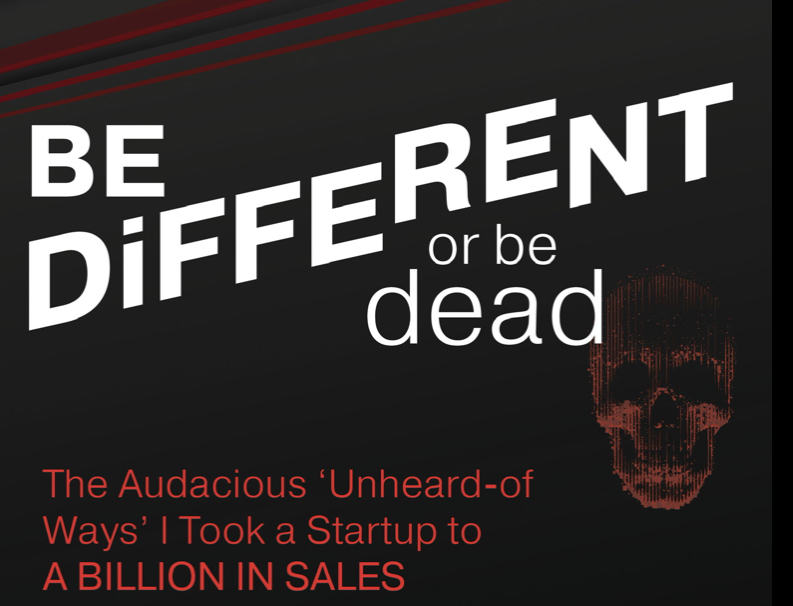
Check out my BE DiFFERENT or be dead Book Series
‘Audacious’ is my latest…
- Posted 2.21.22 at 04:18 am by Roy Osing
- Permalink
February 14, 2022
Why successful startup leaders are out-of-step with others

Source: Unsplash
Why successful startup leaders are out-of-step with others.
What is the prerequisite for a successful startup leader?
Is there one particular characteristic or attribute a person has that makes them more likely to succeed in the startup world than other individuals who also have a new idea they want to take to market?
Is it based on education? Is it based on how many degrees they have? Not at all. The fact is there are many individuals who have impressive academic credentials who fail at launching new businesses.
They walk away from university with an MBA, for example, with a chest full of case studies that they have mastered and land on an idea they think will change the world and bring them untold wealth. They get some funding and launch their startup. They apply everything they’ve learned at school. And they fail.
Why is that?
My experience has taught me that successful entrepreneurs are not made on the back of an academic pedigree; they need much more than a good education to take a brave idea that they have and turn it into an overwhelming market success.
Education helps but it doesn’t determine success.
An education should be looked upon as a required entry to the entrepreneur profession; without it, it’s a tough journey to succeed but with it there are no guarantees; you can still fail.
The secret, in my view, to at least having a decent shot at startup success is leaning away from the habits we learn from school.
We enter the unpredictable, uncertain and chaotic post-educational environment with our bags full of rote tools:
formulae.
— predictive models.
— business principles.
— economic theories.
— case studies.
— best practice methodologies.
— risk analysis techniques.
We are taught to believe that these tools will make the difference between a successful new idea and one that must be abandoned at some point.
The problem with the rote bag is that it’s contents aren’t particularly useful in a pandemic-like world where survival and success depends on a set of skills, competencies and knowledge that is different than what’s in our bag.
In addition, if everyone is practicing rote, it’s practically impossible for any single person to stand out and be noticed in the rote-practicing crowd.
The rote bag tools make you in-step with everyone else; what you need is to be out-of-step.
The best practice tool as I’ve said in my view is particularly egregious in terms of how it constrains one’s ability to be creative and separate themselves from those around them.
I’ve seen it happen before. The new CEO is faced with many launch challenges and turns to Google for suggestions on what to do.
The search results on their query returns a litany of approaches used by others around the world; the CEO picks one to copy because they believe it will work in their particular circumstances.
Copying best practices is a popular tactic used by not just startup leaders; most everyone uses it because it’s easy. But it does nothing to promote the innovation and creativity required for startups to succeed.
Copying forces the startup to be in-step with the crowd and is a formula to define it as common when it needs to be exceptional to succeed.
The startup leader needs to be out-of-step with the crowd.
I have seen success follow out-of-step people; those who reject crowd thinking and find best practices repugnant.
People who are constantly asking themselves ‘How can I do this differently than everyone else?’ People who look for weird, off-the-wall methods and outcomes as an expression of their individuality.
Out-of-step people make the world an interesting place to be and they make excellent startup leaders. And they are rewarded by achieving the recognition and reward they deserve.
My message to each of you intending to lead a startup: everyday when you get out of bed; decide that you will do something — some little thing — that is different than the in-step crowd.
If you make ’different thinking’ part of your daily routine eventually it will become part of your persona and will begin to govern the outcomes you deliver.
And success will follow. I guarantee it.
Cheers,
Roy
Check out my BE DiFFERENT or be dead Book Series
‘Audacious’ is my latest…
- Posted 2.14.22 at 04:30 am by Roy Osing
- Permalink
February 7, 2022
6 simple and proven ways to be seen and have a successful career

Source: Unsplash
6 simple and proven ways to be seen and successful.
What is the secret to both the organization that leads the market and the person who has a successful career?
What do they possess in common?
What do they pay attention to that others don’t?
For the aspiring career professional, do they have a special academic pedigree? A broad skill set? A deep personal network?
For the high performing organization, does it have significant financial resources? Highly skilled employees? A track record of consistent success?
All of these, of course, are contributing factors to success, but the highest common denominator is the ability for an organization or individual to be seen by people that matter.
Seen by customers. Seen by bosses. Seen by investors. Seen by recruiters.
If you’re not seen by those who influence whether you succeed, you’re not noticed; you are indistinguishable in the noise and clutter and won’t resonate with anyone.
If you’re not seen by those who control your fate, your chances of getting the job you want and launching a successful career are limited.
These six ways to be seen as you progress your career have been tested on the battlefield. They work.
#1. Pay attention to your ’target’; the person(s) you are trying to sell yourself to. Know them intimately – what they desire; what they covet.
Being seen begins with doing your homework. It doesn’t happen through serendipity.
#2. Determine 3 things you will do/deliver that will address the highest-priority requirements of your target.
Don’t try to boil the ocean. You can’t be all things to all people. Selecting a few things that really matter is critical. Focus on the essentials, and leave the other (relatively unimportant) needs to others.
#3. Deliver your stuff unconventionally. This is the most important step in being seen. If what you do/deliver is traditional, common and follows herd behaviour, you won’t be seen.
You will have no identity other than that of another one of those people/organizations who look alike and who have no creative bones in their bodies.
#4. Go in the opposite direction of everyone else. Again, if you are like the crowd, you will get engulfed by their momentum and blend in with them.
’Bite the dog’ and see what happens.
#5. Create your statement of uniqueness that governs everything you do and defines how you are different from the competitors you face for opportunities.
#6. Keep your eye on your competition; they will likely be watching you, if you are being seen, and will try to copy your approach.
When confronted by a copycat, you must create a new persona to deal with the desires of your target. Nothing lasts forever, so be prepared to change your approach on the run.
Success is a function of delivering what people desire in a way that is different than anyone else, because it’s the only way to be seen.
Cheers,
Roy
Check out my BE DiFFERENT or be dead Book Series
‘Audacious’ is my latest…
- Posted 2.7.22 at 05:06 am by Roy Osing
- Permalink
December 27, 2021
6 important things we need to teach kids for success

Source: Unsplash
6 important things we need to teach kids for success.
How well are we preparing our kids to be successful?
Are we teaching them the abilities necessary to enable them to solve the unique challenges of today’s complicated world, or are we merely promulgating the facts, figures and methods of learning that have been practiced for hundreds of years?
I believe our kids need more than what they get from school; they need an extra shove toward these 6 skills and competencies that are more critical for success today than ever before.
#1. Look beyond the classroom
Kids are super focused on learning what their teachers have to offer; mastering the curriculum is their prime objective. But, while this is essential, it shouldn’t be all consuming.
Like sports and other recreational activities, there needs to be room for kids to engage more with the world around them; to explore the problems, opportunities and challenges that are integral to the context within which they live.
And to think about how what they are learning could apply to making things better.
At a very young age, kids need to be challenged to apply what they’ve learned. They need to understand that success is more than learning what’s in textbooks; it’s more about how knowledge is used to achieve something useful and amazing.
#2. Question what you see
It’s important to cultivate curiosity in young people; to encourage them to not automatically accept what they are told — even from teachers.
They need to ‘ask to understand’ and to be able to see the broader implications of the information being presented to them.
Successful people don’t blindly accept what is given to them. They look, listen, probe, inspect and examine what they see and then decide whether to accept or not.
‘Ya, but…’ should be encouraged in kids because it represents a thinking process that is stretching information to another dimension. It shows they are wanting to understand more than what they’ve heard; that the facts presented to them don’t go far enough to satisfy their curiosity.
#3. Think outside the lines
Our children need to be encouraged to be uncomfortable with compliance; to view rules not as limitations on what they can achieve, but as guidelines to enable them to seek rich solutions to difficult problems.
Schools make this difficult because they insist students conform to the rule-set being taught, with success measured by how well someone follows them. An ‘A’ student is better at following the rules, for example than an ‘C’ student.
Successful people constantly look for opportunities to break away from the way the crowd sees things because they realize that being different is the source of high performance.
#4. Help your friends
A successful career is not a solo effort; it is built on a platform of support from many people. Unless someone has the respect and trust of fellow professionals and peers, they are likely to travel a bumpy road as they try to advance in any organization.
At an early age kids need to be taught to be team players and be encouraged to help their friends. This enables them to learn the skills required to build support and respect the unique capabilities of other people.
#5. Keep learning
The school curriculum should be viewed as entry level learning; the lowest level of knowledge that should be mastered in any given grade.
Kids should be encouraged to learn more than what they are being asked at an early age in order to develop the continuous learning competency.
Long term career success requires an ability to adapt to the changing circumstances around us, and the ability to be constantly in the learning mode is the critical ingredient to allow this to happen.
#6. Be different
It’s essential.
Schools and parents are uncomfortable with kids who are not like their friends and others in their peer group.
When Roy stands out and attracts attention, teachers often notice through a negative lens — ‘that’s not what I taught you’ — and parents criticize because of their discomfort — ‘why can’t you do what you’re told like your classmates?’
This reticence to allow our kids to stand apart and separate themselves from the herd has long term consequences.
All the successful people I know are not herd members; they don’t spend their life trying to be like everyone else — they don’t believe that copying what others do is relevant and useful to adding value in the world.
Let’s give our kids an early start on what I consider to be the most critical element of success: the capability to exploit differences rather than the mentality of replicating what the crowd thinks.
How about a class topic once a month on ‘What one thing could I do that is different from what we have been taught?’ Have fun with the topic. Teach kids that it’s ok to step out and be special.
Reading — writing — arithmetic competency is the baseline for developing our kids, without which they will likely never reach their full potential.
Helping others — continuous learning — being different — questioning — thinking outside the lines, on the other hand, represents the capabilities they need to standout from others and be successful.
Cheers
Roy
Check out my BE DiFFERENT or be dead Book Series
‘Audacious’ is my latest…
- Posted 12.27.21 at 05:17 am by Roy Osing
- Permalink