



Roy's Blog: Business Success
December 10, 2020
How to improve decision making with technology

Source: Pexels
For a business to grow in the right direction, keep staff on track, and customers happy, business leaders have to make tough decisions daily.
“How much do I allocate toward marketing and product development?”.
“Who’s the best person to lead this team?”
“Should I purchase new equipment or rent?”
“Is now the right time for expansion?”
These important decisions determine everything from day-to-day operations to what direction your company will take in the future.
When being tone-deaf can mean the death of your business, you need mechanisms to make informed, data-driven decisions.
Implementing the right technology and deploying it strategically will take the guesswork out of the decision-making process.
The result is cost and time savings, greater efficiency, and keener insight into a company’s health and growth potential at any given moment.
How technology impacts business decisions
Here are some benefits of using technology to make better business decisions:
● Tracking and monitoring employee and process efficiency. This will let you know when bottlenecks are being created, prevent fraud, and identify areas of concern;
● Improving customer service by helping you analyze market response, develop new ideas, collect and respond to customer feedback, and conduct field testing;
● Improving product development and service delivery by streamlining processes and providing added value;
● Enabling insightful asset management will tell you at a glance what assets are available, where they are, and how they can be better utilized.
Decision-making is a process that runs through several distinct phases. Data collection, sorting, and analysis is required at each phase.
Here are ways that technology can be deployed at any phase to make the process more accurate and transparent.
1. Information gathering
Before you decide where you want to go, you first need to know where you are.
This applies to your internal processes and conditions, and to knowing how you fare compared to your competitors.
Therefore, you need to gather all the information you can.
Businesses require data to analyze trends, predict customer behavior, manage finances, and keep up with the competition. Using automation and other data collection technologies allows your business to gather massive amounts of information quickly.
Rapid access, often in real time, enables insightful decision making. You can use information-gathering tools to create competitor and customer profiles or analyze market trends.
This will help you make decisions that will propel your business forward without relying on biased or incorrect assumptions about the state of your business.
2. Data collection
The amount of data collected by companies is staggering. Marketing stats, historical trends, business financials, and customer histories are among the numerous types of information to sift through.
Technologies like AI and Big Data allow you to segment, analyze, and refine huge amounts of data in a fraction of the time that a human team could manage the same feat. What’s more, these technologies eliminate human error, which means a greater degree of accuracy.
For example, a lawyer could deploy technology to analyze millions of documents and case histories in seconds when that kind of research would take a team of paralegals days to conduct.
Financial management companies could have stock histories and market trends at their fingertips, providing deeper insight for client portfolio management and buy/sell recommendations.
An entirely new industrial era is being ushered in by technologies that rely on gathering, analyzing, and exchanging data. Data tools are an essential component of Industry 4.0 to better use the data available across all aspects of a business. Among the most useful are:
3. Customer relationship management (CRM)
Customer relations technologies provide better insight into consumer requirements and improve service. Software and applications include inventory control and management systems, mobile apps, and order processing systems.
CRMs enable you to make granular decisions about approaching a client based on their history with your company.
Your marketing messages will be more targeted, and you’ll be able to spot upselling opportunities faster.
They can also inform you about the state of your customer service so you can take steps toward either increasing availability or working on removing common bottlenecks.
4. IoT
Internet of Things (IoT) is an interconnected network of devices, appliances, control systems, and apps that can run autonomously and remotely. It’s made up of different technologies that include robotics, sensors and data processing applications.
These networked systems can be accessed and controlled by staff and team leaders from any location, at any time. This leads to greater efficiency and less downtime.
IoT devices can also play an essential role in determining customer behavior and developing tailored customer propositions using the gathered data.
5. Machine monitoring and maintenance tools
These technologies oversee a lot of manufacturing processes. They can troubleshoot problems, calibrate and optimize production equipment, and conduct repairs to prevent disruptions.
Gathering this information can provide insights into business aspects you may otherwise not be able to see firsthand.
Be it identifying energy waste or monitoring equipment health before it breaks down and brings operations to a standstill, IoT devices have a wide range of applications in making better business decisions.
6. Mobile apps
Mobile apps can provide extra value to customers in the form of discounts and order processing, keep remote teams in the loop, and allow you to conduct business on the go. They enable real-time access to data and improve overall communications.
Having a mobile app for your business means that you can literally live in your customers’ pockets. The amount of data generated through apps ensures that your offerings are as relevant as possible instead of stabbing in the dark.
7. Information processing tools
Now that you have all of this data collected and collated, what do you do with it? Information processing tools, such as inventory control software, help you manage large amounts of data and put concise reporting into action.
By processing raw data more efficiently, you prevent creating a disconnect between business functions and information technology. It helps users and analysts make sense of the data and put it to use for the company’s benefit.
Modern BI tools allow organizations to monitor performance, compare historical data, optimize supply chains, and more. They enable users to select and manipulate data into whatever form is needed to make sense of the information at any phase of the decision-making process.
8. Business collaboration
Even before current circumstances forced many businesses to operate solely in the digital realm, remote work and collaboration were becoming the norm.
There is a wide range of tools available for remote teams to keep everyone on the same page and streamline otherwise cumbersome processes. This could entail using simple cloud-based collaboration tools like Google Workspace or project management tools like JIRA, Basecamp, Asana, and others.
It’s important to choose a customizable tool so businesses can simplify the decision-making process by zeroing in on aspects that matter most for their unique circumstances.
Using technologies connects scattered personnel and makes information available when and where it is needed most. This creates cohesion and supports a unified approach to meetings, strategy sessions, and other forms of remote collaboration.
Conclusion
Technology is about more than just convenience. It makes companies more efficient and productive by generating and processing precise, timely information that’s relevant and meaningful.
By choosing the right tech and deploying it in crucial areas, you stand a better chance of staying ahead of trends and riding them to success. In today’s more competitive, digitized global economy, that edge can mean the difference between helming a leading enterprise or going down with the ship.
— Heather Redding is a content manager for rent, hailing from Aurora. She loves to geek out writing about wearables, IoT and other hot tech trends. When she finds the time to detach from her keyboard, she enjoys her Kindle library and a hot coffee. Reach out to her on Twitter

- Posted 12.10.20 at 06:38 am by Roy Osing
- Permalink
November 29, 2020
10 easy ways to make your software business insanely different
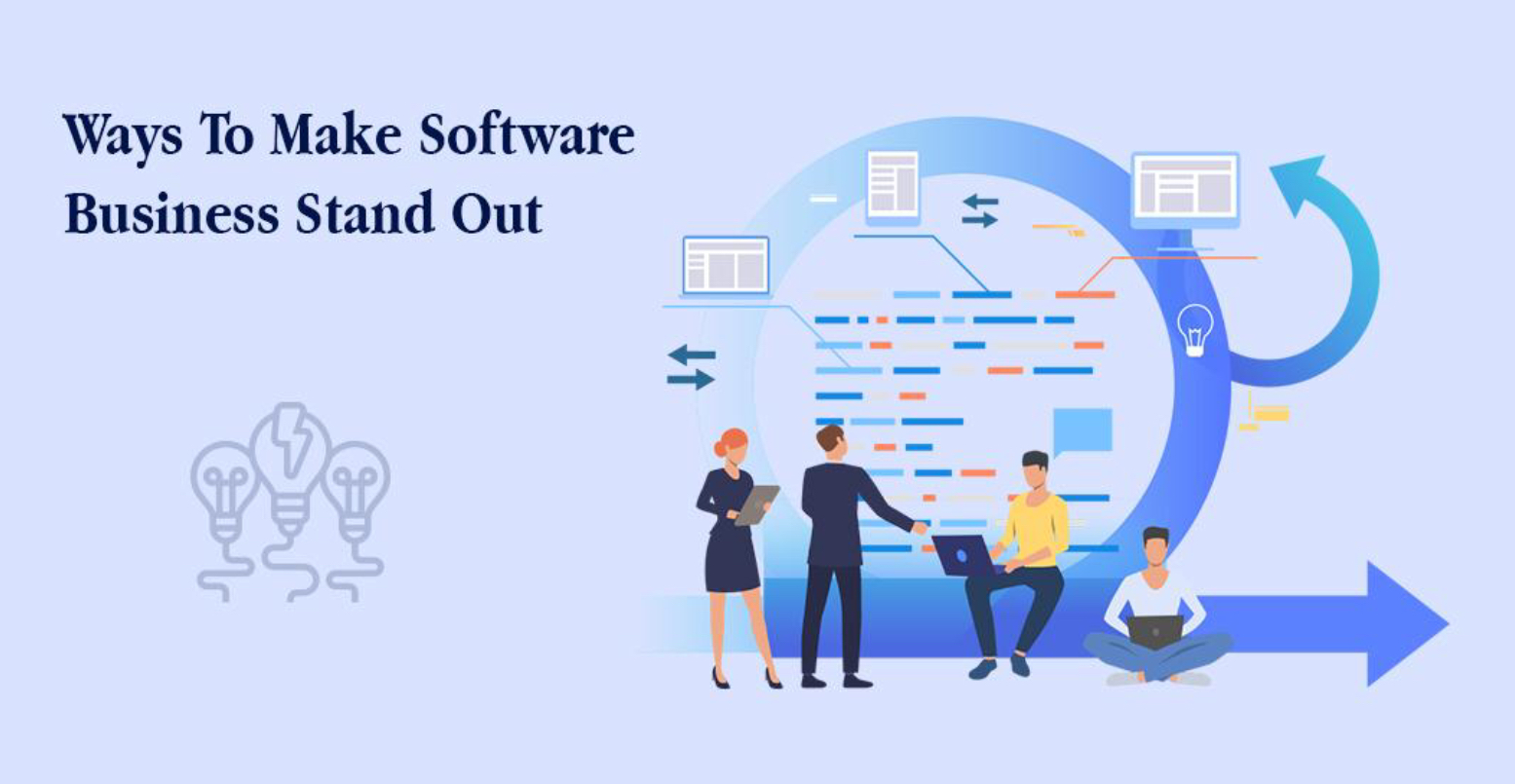
There are thousands of software companies operating in the market today and this is no point of argument. Many software firms inaugurate and close every day.
In this huge sea, how can you be the drop of honeydew that catches the right attention?
Here are some tips that you can use and stand out from the crowd.
Be different
To be irreplaceable, you first need to be different. You know you are not the only one in the market. There are thousands and even more enterprises offering similar services to your target audience.
Now, what can you do to stand out? You cannot bring something new every time in the market, but you can absolutely do the same thing in a different way.
Yes, this approach can help your software business stand out from other competitors. Every software business has its defining attribute.
What you need to do is figure that out and present yourself in a creative way to attract more people. Your software brand identity can become your peculiarity and help you in spreading brand awareness.
Focus on details
Your software makes communication between humans and computers possible. For seamless communication, your software must be coded perfectly.
A perfect code is the result of keen attention to the details. Your software is the puppet of your coding. It will work the way you have coded it.
No matter how small the error is, it can disrupt the entire performance of your software.
To stand out, you must provide quality, which can be achieved by focusing on details. Always make sure that you are keenly looking into the details for preparing the final code.
Git it
On-time deliveries are really important for any business, be it software business, to stand out. Imagine a situation when you have lost all of your code and there is a deadline close at hand.
In this situation, all you can expect is a miracle. Fortunately, the miracle is already available and that is GitHub. This version control tool can be so handy while coding.
You can use Git to handle and save all the versions of your code and retrieve any version to use at any point in time. Git is your saviour from hassles.
All you need to do is to learn to wield Git. Getting yourself free from hassles and focusing on creativity can help your business stand out from the crowd.
Encourage developers to be team players
The foundation of a successful software business is its developers. Your software can be your differential peculiarity if you’re skilled and enthusiastic developers are coding it with all their creativity and dedication.
Encourage them to be team players so that they can help each other in solving issues.
When all the team players work together and share their expertise, they will end up developing a great product.
Develop a sense of respect among all the developers for each other and encourage them to lift-up everyone around. After all, great software is the result of a great team.
Keep learning
In whichever field you are, learning never ends. When you are operating in the software business, technology keeps evolving and you have to keep up with all the latest trends in the market.
People demand more interactive and innovative software now. For this, new technologies are being developed and deployed. You need to learn them and show your expertise.
Use the Agile method
The Agile software development method can be imperative if you are using it in the right way. It is better to opt for the Agile method if you work on projects in a team.
The secret to the managed workflows of many of your competitors might be the employment of the Agile method. You can also learn and put this into use to gain a competitive edge.
The Agile method uses iterative workflows or sprints to develop software. All the team members collaborate and share their opinions at every stage of the project development so that no unplanned event can disrupt your workflow.
Build, Break, Rebuild
In software development, you can rarely expect a perfect result in just one go. Generally, you have to build software first, find mistakes or improvements, then rebuild the software to achieve the desired results.
Every time you work on a project, you have to challenge yourself to bring the best out of you. Your product will reflect the dedication and hard work that you put in.
Learning from previous mistakes will help you in coming up with new ideas to solve them. To learn, building-breaking-rebuilding is an incessant process.
This approach can enable you to bring a differential product & solution every time you work on a project and deliver the best results, which will eventually make you stand out.
Offer guarantees
Guaranteeing your software products builds trust in your brand and product. When you offer a guarantee, people do not hesitate in buying your products because of the assurance that you provide.
They know that you are there if anything unexpected comes up. Building such trust in your target audience can help you gain a competitive edge.
Be social
Being social is a different approach that many businesses in the market are adopting to build a social and emotional connection with their target audience.
This approach can take your software business to the next level. People trust you more when you become a social business.
You can enhance your brand value and increase brand awareness by working for any social cause. Companies help needy people when their audience buys from them.
Many companies give a part of one’s purchase to the people in need in an effort to change the world. In this way, you can build a different image of your brand and encourage people to buy from you and help others through you.
Define and focus on your niche
Defining your niche and focusing on it is very important for your software business. Defining a niche helps you target the right people. Focusing on your niche helps you in establishing yourself in the market as a service/product provider.
People must know if you are the right fit for them and for that, you will have to tell people your niche. It will not confuse people and the right people will come to you proactively to purchase. Trying to serve everyone can lead you in no particular direction.
To summarize
No one wants to be the sheep of the flock, but not everyone finds success in doing this. These tips can certainly help your software business to leave a distinguishing mark and have a remarkable presence in the market. We have shown you the way, now you will have to walk on it and achieve what you want.
— Harikrishna Kundariya is the co-founder and Director of eSparkBiz Technologies, A Mobile App Development Company. His 8+ experience enables him to provide digital solutions to new start-ups based on IoT and ChatBot. You can connect with him on LinkedIn and Twitter.

- Posted 11.29.20 at 03:07 am by Roy Osing
- Permalink
November 21, 2020
4 proven ways business chaos can be made into an exciting opportunity

4 proven ways business chaos can be made into an exciting opportunity.
Many people would probably think that the metaphor ‘thinking out of the box’ is a cliche. But it actually sums up why chaos breeds new ideas and opportunities. There is nothing more out of the box than being thrown out of whack.
For example, the chaos of the last World Wars we encountered brought about an industrial revolution, unlike any other. The example may be extreme, but it does make the point.
Currently, the world is experiencing an event that threw the word ‘normal’ out of the door. The Covid-19 pandemic has re-arranged our way of life in a matter of months, and only now are we starting to cope. While the epidemic has negatively affected traditional businesses, it did also open up new opportunities. This global health crisis has, in a way, became an equaliser in the business sense.
What is happening now is chaotic, and once again, opportunities abound at every turn. Tragic as it may seem, these current events are also hotbeds of new ideas to take advantage of.
You can see younger people, those who weren’t really concerned about the future before, are now opening up savings accounts for various purposes including retirement. People who usually don’t give a thought about saving or starting a business are now actively gearing up to handle the unknown future.
Using the chaos to your benefit
When you are comfortable, the tendency is to be complacent. Being relaxed is good and not a bad thing in itself, but comfort can lead to stagnation.
Upsetting the balance and veering away from the norm will usually lead to new and better things, depending on the person. When a person becomes uncomfortable, that is the only time that they will move. This is the same thing in the world of business.
Disruptions, particularly chaotic ones, are significant catalysts of reforms in the business world. One either gets overwhelmed by them or puts them to use.
Experiencing hardship is nothing new to entrepreneurs because they have been dealing with this from the moment they started their businesses.
Whether it is launching a new product, dealing with employee problems, generating more sales, and even budget problems, real business owners know that obstacles are normal and they help the company innovate.
Not everyone is ready to handle these obstacles, but there are ways on how we can deal with hardships. There are strategic frameworks that anyone can follow to flip the situation from a debilitating one in a vessel for improvement.
Here are some of the best ways to turn any crisis into opportunities:
1. Be calm and keep a cool head
Panic never did anyone any good, and keeping a cool head has never been more appropriate or applicable in a chaotic situation in any business.
Companies are living in turbulent times all the time to varying degrees, and CEOs who keep a calm head survive and even thrive.
Leaders are often already equipped with the basics of handling a crisis, but having a crisis management team can ensure that you can minimise the impact of chaos on your business.
Keep a list of employees or build a team who you can go to when the mess hits the fan. Your crisis management team should be able to help you assess how problems can be used as the stepping stone to success.
We have many examples, but just take a look at Microsoft. It is one of the biggest companies in the world and it was founded at a time of economic crisis. Take a look at its success now to measure how chaos has been turned into a great opportunity.
2. Shift your mindset
Not everyone will be able to do this in a pinch, but if one wants to survive chaos in their business or workplace, you have to shift your mindset.
This translates to making an effort and forcing your perception to see the good and see the opportunities in the developing scenario. When you can do this, you stop being rooted and immobile and instead, you begin to act.
As part of conquering the mindset, acceptance has a lot to do with making the right decisions. Along with approval comes the clarity to make the right choices and decisions. With acceptance, the tendency to be angry and clouded is minimal, and therefore the flow of decisions to better counteract the situation is more straightforward.
3. Think negatively
Seems counterproductive, right? It would seem so, but it is an advantageous trait when it comes to planning. By thinking about all the things that can go wrong, you and your team can better manage it when it happens.
By considering all the angles that can go wrong, there would be minimal to no surprises. This idea is not a new one but goes way back in history where all the evils are premeditated in battle.
This idea is often referred to as the premortem, and people in the business widely use it.
The idea is to practice hindsight in advance so as not to be caught by surprise. The chaotic event will not render you immobile by applying this, having anticipated it, and imagined it coming.
4. Get help from others
Most entrepreneurs fail to recognise that they can seek help from others. By others, we mean peers in the business, those who have been doing it, and those who have been in the business for far longer than you have.
Friends and relatives are no exception because they may provide a unique perspective to your business problem.
You can also reach out in a professional capacity, meaning hiring a coach or a mentor to help guide you along the way. Be open to being influenced by outside sources of your choosing.
The point is to acknowledge that you are never alone. Recognise the importance of inputs from people with more experience or those who have a different perspective to you.
Wrapping this up
Acceptance, the proper mindset, and preparation for the worst can be applied to all aspects of life, and not just in business. The ability to turn something negative into an opportunity is not an inherent one, but it can be learned by practicing and never giving up.
— Angeline Licerio is a content writer for Elevate Corporate Training, a team of corporate trainers committed to improving performance of individuals and teams within organisations.

- Posted 11.21.20 at 04:15 am by Roy Osing
- Permalink
November 7, 2020
5 proven ways to keep your clients coming back

As a business owner, professional, or agency leader, the most important asset you can cultivate is happy clients. It doesn’t matter whether you’re selling marketing support or SEO skills; without clients that are willing to vouch for your business, you’ll struggle to achieve your goals.
Unfortunately, while many business owners know that they need to dedicate time to find as many clients as possible, they often forget that the journey isn’t over after someone makes a purchase.
Here are some insights on how you can build a long and fruitful relationship with clients, keep them coming back and enhance your business in the process.
Always be helpful
When you’re trying to build a reputation for your company or brand, the most important thing you can do is demonstrate your value to your audience.
Just because you can’t necessarily say “yes” to every project a client brings your way doesn’t mean that you can’t offer assistance.
If you’re in a time crunch and can’t accept a job from a client, offer suggestions on where they can go for help elsewhere. This could mean sending customers to your competitors at times or teaching them how to solve some of their issues on their own.
It may sound counterintuitive, but remember that suggesting an alternative for your customers will be better for your reputation than trying to rush through a project and delivering poor results.
Understand the path to purchase
Building a positive relationship with your audience means understanding the journey they go through with your brand.
You probably have an established path from discovery to purchase in the form of a sales funnel. But your relationship with the client shouldn’t stop after they hand over the money.
Consider how you can deliver extra value after you’ve completed a project. Can you suggest some maintenance strategies? Are there other items your client might need to consider to succeed with the services you sold them?
This helps to form the foundations for a long-lasting relationship. You may not be providing those extra services or supplement products, but showing your customer you want them to succeed will make them feel like you always have their best interest in mind.
Demonstrate your thought leadership
Customers want to maintain relationships with companies that can give them value – not just businesses that are constantly asking for their money. Aside from regularly advertising your products and services on your website, you should also be using your digital presence as a place to showcase your thought leadership.
Write regular blogs and articles where you discuss important topics that are relevant to your industry and the customers you serve. Take advantage of opportunities to appear on popular podcasts or speak at local events.
Show your clients that you’re up-to-date on the latest industry changes and trends. They’ll appreciate your continuous effort to deliver high-quality services.
Be honest and authentic
Whenever you’re planning a price change, predicting issues with deadlines, or you think you’re going to have to apologize for a mistake, be up-front and genuine about it. Relationships are built on trust, and that’s what your clients expect from you.
Businesses today are susceptible to a number of threats, be it from natural disasters, disruptions to the supply chain, or IT-related issues. While you can’t completely curb every potential disaster, you can prepare your business so that you can quickly fix any major issues that happen.
Make it a point to include transparent communication with clients in your disaster and recovery plan. You don’t want them to find out about a data breach from the media.
In the age of social media and the always-on digital landscape, your customers can learn virtually anything they need to know about you. It’s better to be honest with them from the beginning if you can.
Everyone can make mistakes, but if you try to downplay them, your clients will wonder what else you’re withholding from them.
Make customers feel like part of the family
Finally, remember to reward your customers for sticking with you and giving you their loyalty. This doesn’t just mean setting up a loyalty program where you can regularly dish out discount codes and other gifts to your customers – although that can be helpful.
Sometimes, making customers feel special means giving them access to things like exclusive VIP events or shipping arrangements that are different from the competition.
You may even decide to set up an affiliate system where your most loyal customers can refer their friends in exchange for rewards. This will make your most valued clients feel like an important part of the team.
Make sure your customers also know how to connect with you whenever they have a problem. If your audience needs help with something, they should be able to reach you on the channels they use most often – including social media.
Strengthen Your Customer Connections
Building a long-standing relationship with your clients is how you set your business up for constant success. If you can give your clients a professional experience that they fall in love with, you can rest assured that they’ll keep coming back to your company in the future.
Repeat customers spend up to 300% more than their one-time purchasing peers. Plus, it’s much easier to get an existing customer to convert again than to make a sale from scratch.
Using the tips above, think about how you can make your customers feel special. They are an indispensable part of your business. You should treat them with the utmost care if you want your business to run successfully for a long time to come.
— Michelle Laurey works as a VA for small businesses. She loves talking business, and productivity, and share her experience with others. Outside her keyboard, she spends time with her Kindle library or binge-watching Billions. Her superpower? Vinyasa flow! Talk to her on Twitter

- Posted 11.7.20 at 05:54 am by Roy Osing
- Permalink