



Roy's Blog
June 24, 2013
Why people can be too focused on producing results

Source: Unsplash
Why people can be too focused on producing results.
Results focused—a characteristic of an effective person in an organization. Keeping your eye on the prize and pulling out all the stops to get it
Mindless pursuit of your target. is there anything wrong with this picture?
Don’t get me wrong. I am an absolute zealot of delivering results on time on expectations and on budget.
But there is a potential downside if the process of delivering the results is not done thoughtfully.
Delivering results without considering how they are delivered can leave road kill along the way
It can cause devastating collateral damage to bystanders and others who are involved in delivering the results.
Get your thinking around the long term impact of what you are delivering.
The long term lens will encourage you build relationships with people who will play an important role in delivery.
Take time to build trust between yourself and your stakeholders. Distance yourself from thinking about what you are delivering as a transaction.
What’s important is the longevity of what you are delivering. It is sustainability.
Short term transactions rarely yield long term value.
Results delivered through a process of trust, mutual respect and caring will deliver a quality result that will endure for a long time.
Cheers,
Roy
Check out my BE DiFFERENT or be dead Book Series
- Posted 6.24.13 at 05:03 am by Roy Osing
- Permalink
June 17, 2013
Why do you need hunters for breathtaking career success?

Source: Pexels
Why do you need hunters for breathtaking career success?
How proactively do you go after people who can effectively promote you to others and help you achieve your career plan?
I’m talking about friends, colleagues, network connections and recruiters.
What you want from these groups is a number of folks that will hunt for you.
Not leisurely pass your résumé around. Not passively mention your name to others.
What you do want are hunters that will actively seek out positions that are made for you. Who will scout the landscape and discover opportunities for you.
Who will go out of their way to generate some sizzle on your behalf.
How many hunters do you have?
If none, cultivate a handful of them (that’s all you need).
Point them in the right direction. Get your thinking straight about the position you want and the companies you are targeting.
Feed the right information to them and send them out to hunt for you.
And reward them for what they are able to accomplish for you.
A hunter is rare.
Nurture them.
Cheers,
Roy
Check out my BE DiFFERENT or be dead Book Series
- Posted 6.17.13 at 05:47 am by Roy Osing
- Permalink
June 15, 2013
Why copying others is lazy and wrong and you should be fired

Why copying others is lazy and wrong and you should be fired.
Benchmarking is viewed as a necessary process for most organizations. There are benchmarking consultant experts and courses you can take to learn how to benchmark proficiently and gain the maximum benefit.
In my view, benchmarking is a simple concept as is its process:
▪️Identify the organization that excels in some aspect of your operations that you believe requires improvement — customer service, business planning, customer engagement, sales management, accounts receivable, advertising planning and so on;
▪️Map (understand deeply) their system or process to understand exactly how they perform the operation;
▪️Define the actions you must take to incorporate their operating system into your operation with the objective of replicating their level of efficiency.
Benchmarking might help you improve your operations efficiency but it won’t make you stand-out from your competition.
Benchmarking can be problematic on several levels:
Benchmarking is copying
It’s ‘sucking up’ to an organization or individual recognized (by someone presumed to be the thought leader) to be the best at performing a particular function and is therefore the organization you should aspire to be.
It doesn’t make you special. It may help you improve your position in the crowd of hungry competitors by being more efficient at something, but it won’t help you stand out from them by being more relevant or unique.
Copying is the enemy of being different. The maximum benefit you can achieve by copying is best in class levels of performance which may return better operating results than previously obtained but unless you vault beyond these levels true differentiation won’t happen.
Benchmarking keeps you in the herd
The herd is a place where organizations go to blend in with others; to conform with what others do and to lose the DNA attributes that make them special.
Even if you are the ‘best of breed’ you’re still in the herd. It’s just that you execute a process better than any other herd member; you’re still rubbing shoulders with your sameness brethren.
And because you’re tagged ‘the best’, you have no motivation to break away from the herd; you find consolation in it.
The world is becoming a home for best practice addicts and as a result it’s boring and benign.
Benchmarking robs you of your individuality
Benchmarking results in conformance; it sucks any unique thinking you may have out of your system and replaces it with the need to capitulate to the leader of the herd.
Rather than look for a unique solution to your problem, you look for another herd member that has put in the work to create a solution that works for them and you assume you can boilerplate it and it will work for you.
When you copy someone or something, you relegate — subordinate — yourself to them. You roll over, put your ‘paws in the air’ and subsume yourself to the leadership of someone else. Looking up when you’re lying on the ground isn’t a very liberating place to be.
Benchmarking won’t make you special and differentiate you from your competitors
It has no strategic value in moving the organization to a position in the marketplace that ONLY you occupy.
“What are our competitors doing?” is often asked when organizations are thinking about improving how they conduct business, and the benchmarking process ensues — adding zero space between them and their competitors.
And, of course, if you’re chasing another organization, you’re adding nothing to the kitbag of things that make you ‘special’ in the eyes of your customers and encouraging them to spread your word to others and attract new business.
If you copy someone, all you do is lower the bar.
Benchmarking is the enemy of innovation
If you’re a copycat, you’re not an innovator. Benchmarking does little or nothing to stimulate innovation and creativity which seem to be values organizations covet in today’s world of uncertainty and constant change.
In fact benchmarking kills real innovation because it has performance improvement using the standard of another as its end game as opposed to revolutionary changes that determine new strategic outcomes.
We need to get our thinking straight.
Few organizations today stand out, which is sad; few are deemed to be really special by their customers.
Being remarkable isn’t a strategy on the radar of most, or if it is, it’s an elusive goal because leaders allow people to use traditional tools — like benchmarking best of class — to do their jobs.
Uniqueness, remarkability and being special come from being different than your competitors, not copying what they and others do, even if they perform certain functions more efficiently than you do.
We need to change our ways and stick copying where it belongs.
Let’s:
— Start thinking about being different than best in class, not copying best of breed;
— Covet being ‘different than breed’, not best of breed;
— Think about doing what others are not doing, not looking to other’s successes;
— Go in the opposite direction that others are going, not following in their footsteps.
— Define best in class to be the highest bar to be different from, not emulate;
— Purge boilerplates from our toolbox and break new ground (and maybe be the author of a new boilerplate).
Copying is the enemy of being special and remarkable.
And as leaders, let’s change the conversation in our organizations; purging the notion of benchmarking and copying as ways of achieving strategic progress by asking these types of questions of our teams:
▪️”What can we do to be different from the crowd of competitors?”;
▪️“How does what you’re proposing make us stand out from the competition and be special to our customers?”.
▪️“What crazy ‘insane’ thing is a different business to ours doing and how can we use the basics of the idea to morph it into a special idea for us?”
Benchmarking is absolutely the wrong thing to do when the end game for most organizations seems to be uniqueness and remarkability, but there are ways to ‘bend the curve’ and go in the right direction.
Start the change now, though, because time is not your friend.
Cheers,
Roy
Check out my BE DiFFERENT or be dead Book Series
- Posted 6.15.13 at 06:53 am by Roy Osing
- Permalink
June 3, 2013
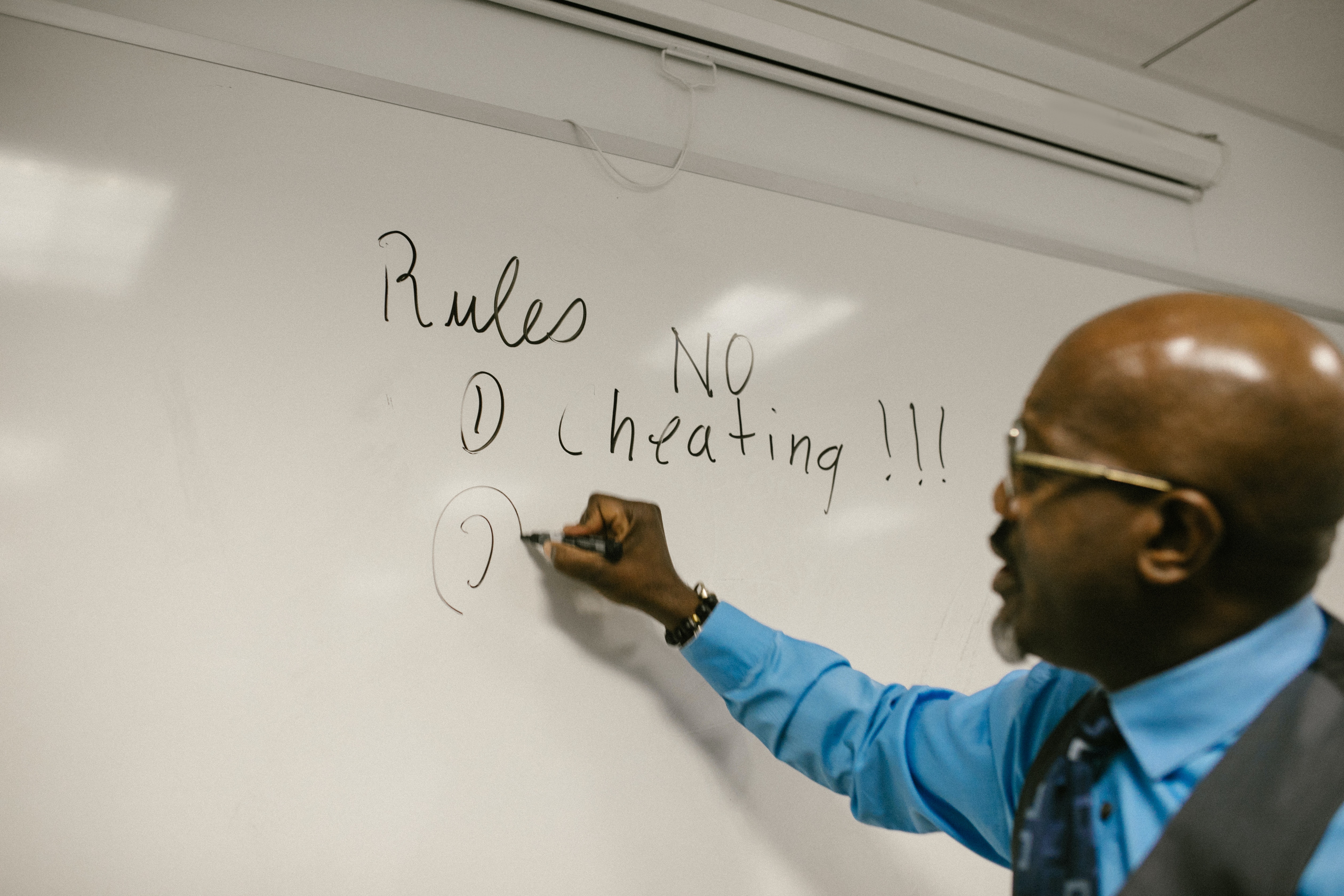
Why are company policies set to control customers who cheat the system?
Source: Pexels
Why are company policies set to control customers who cheat the system?
One of the things missing in most customer service plans is how to architect a rules and policies system that favours the customer.
The customer experience with any organization is destroyed when internal rules and policies are designed to prevent ‘cheaters’.
One of the main drivers of policy setting in organizations is to stop cheaters
Dishonest people who will try to beat the system for their own gain.
▪️ People who will steal from you — hence the policy of limiting the number of pieces of clothing you can take into a change room in a retail store.
▪️ People who will leave an outside serving area without paying their bill — hence the policy of requiring you to provide a credit card before being served. But it’s ok to be inside and be served without brandishing your card and having it retained.
▪️ People who will not spend enough money with you — hence the policy of refusing a booth for two people because booths are reserved for parties of 4 or more, who will generate more revenue per serving.
▪️ People who will not tip the server enough to compensate them for their hard work — hence the policy of automatically applying a 20% gratuity for parties of 6 or more.
How many more cheater policies can you name?
The truth is: people who want to screw you over wIll screw you over regardless of your policies and to the honest person the customer experience is ugly..
The problem is: while you go about implementing these cheater-policies, you infuriate all of your honest loyal customers who feel they are assumed guilty with unsavory motives.
That they are part of the cheater herd.
Here’s the distribution: cheaters = 2%; honest folks = 98%.
Which crowd do you think should determine your policies?
if you want to provide an amazing customer experience, create rules for honest people, not cheaters.
Cheers,
Roy
Check out my BE DiFFERENT or be dead Book Series
- Posted 6.3.13 at 06:12 am by Roy Osing
- Permalink