



Roy's Blog
July 18, 2020
How leadership expectations in the workplace are being redefined by Gen Z

How leadership expectations in the workplace are being redefined by Gen Z.
The distinction between and among generations is very evident in the workplace.
Generally speaking, the older the generation, the more traditional the work style is. For example, it may take a while for employees from the Boomer or Gen X demographic to adapt to new systems or tools due to either technical understanding or the reluctance to try something unfamiliar.
Gen Z-ers, on the other hand, are considered digital natives. Since they have been exposed to computers and the internet from the outset, they are naturally adept in using technology at work.
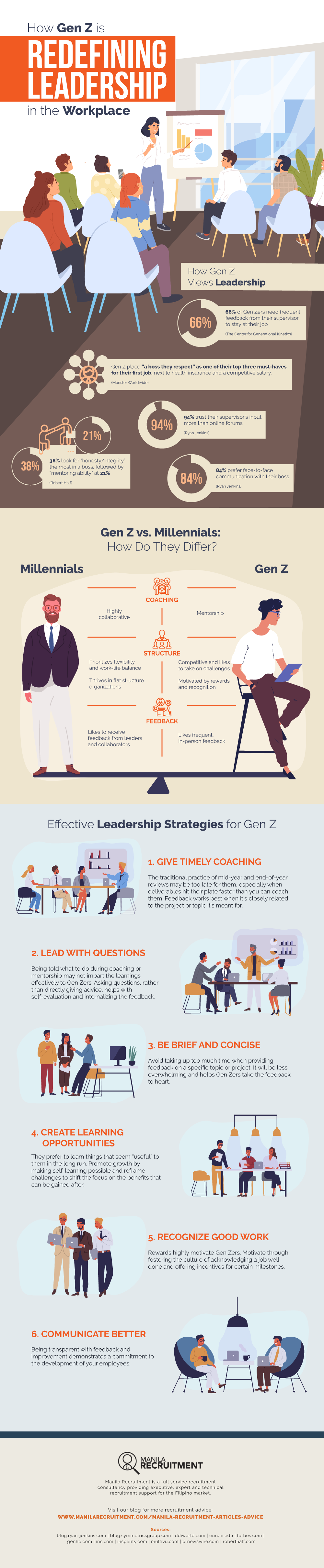
How Gen Z views leadership is also different from their older counterparts. Interestingly, Gen Z employees prefer to communicate with their managers face-to-face, even though there are many digital platforms designed for collaborative work.
Despite their technical abilities, they still value making personal and meaningful connections with people they work with.
Typical Gen Z-ers are also highly competitive individuals. They’re willing to get out of their comfort zone to learn something new or something completely different from their area of specialization. This can be beneficial not only for themselves but can also help you maximize their role in the team.
Many Gen Z employees also like sharing ideas that they think will help improve the workflow or processes within the organization. That said, Gen Z-ers want a leader who values their contributions to the company through a proper recognition and reward system.
Gen Z-ers are redefining the concept and values behind leadership in the workplace. Knowing their expectations and preferences in a leader can help as you try to engage your Gen Z employees.
For more insights and tips check out the infographic below.
— Valerie Chua is a Content Specialist at Manila Recruitment, a company providing headhunting solutions for the recruitment of executive, expert, technical and specialist positions in the Philippines.

- Posted 7.18.20 at 05:57 am by Roy Osing
- Permalink
July 13, 2020
12 easy ways you can successfully contribute to corporate goals

Source: Pexels
12 easy ways you can successfully contribute to corporate goals.
I often hear people say they are frustrated because they feel they personally can’t affect the outcomes of their organization. They believe that their actions as a single individual are insufficient to make a significant contribution to its strategic success when considering the size of the entire employee base.
This is not a surprising perspective. Organization’s are complex and often internal communication and leadership lack the precision of spelling out exactly what needs to be done by the various functions to execute its strategy.
Most strategic plans lack the implementation detail that would enable individuals to understand their specific role in implementation.
Plans generally tend to focus on WHAT outcomes are desired rather than on HOW they will be achieved through employee action on a day to day basis.
Here’s the step by step process I discovered that will ensure the actions of any individual are both relevant and effective in contributing to the strategic outcomes of any organization.
1. Business plan — You can’t contribute anything meaningful if you don’t clearly understand the strategic context the organization intends to operate within. You need to thoroughly understand the strategic game plan of your organization at the most granular level in order to define your specific role in executing it.
As I’ve said before, most plans won’t have the level of detail you need to define your contribution with any precision so you will have to dig for it. At this point in the process you are looking for insights into the plan that apply to you and your current responsibilities.
And once you think you’ve mastered understanding of what the organization intends to achieve, ask leadership to ‘approve’ your view; their acknowledgement is key if your following steps are to be productive.
2. Initiatives — In this step of the process you’re trying to break the insights you have on how you can contribute down to the specific strategic initiatives the plan defines. At this stage, you want to identify the strategic initiatives that align with your position responsibilities and competencies. If you are in sales, for example, look for the specific objectives contained in the plan.
And if you can’t find any initiatives that relate to what you’re currently doing, ask leadership to help you out and define them (not a bad way to test their understanding of the strategy they helped build, right?).
If you can’t define the specific sales initiatives, for example, perhaps the plan is deficient, and your question will be appreciated, or the expectations of sales are not clearly addressed and you can be a part of providing the necessary clarification.
3. Focus — Boil down the number of strategic initiatives where you could personally contribute to a critical few where you believe you can make a big difference. As the criterion for selection, look to those with bigger potential payoffs for the organization and focus on those.
My approach was to select no more than one or two initiatives and apply my energy there as opposed to scattering my attention over several action plans. The benefit for me was that I became known as an ‘expert’ of sorts in the specific strategic areas I chose which definitely helped me contribute to the overall plan; it impacted my future career choices as well.
4. Role — Draft the specific role you believe you can play in each initiative. Be as detailed as possible. At this stage, you want to define the deliverables you intend to produce with an applicable timeline.
And link each deliverable ‘up’ to the strategy so that any observer of your actions will be able to see that what you do impacts the organization’s strategy; define exactly what the strategic impact of each of your actions is so it’s easy to judge your contribution.
5. Approval — Confirm the details of your role with leadership. Press them to agree that you are on the right track; that the initiatives you’ve chosen represent the higher priority ones and that the deliverables you’ve defined are in fact important ones to advance the strategic agenda of the organization. And ask for changes that would align your actions more closely with the program’s intent.
This stage could be a bit tricky because you need sufficient currency in the organization to be able to get an audience with the leaders who play an active role in strategy execution. Use your internal mentor(s) for this; ask for their advice and guidance to pull it off.
If you don’t have the right leaders at the table listening to your plan, your personal contribution is in serious jeopardy. If you’re in sales, for example, do the appropriate back selling to get the appropriate sales leader at your approval meeting.
6. Sponsor — Find a leadership sponsor for your task — hopefully you can achieve this task when you present your plan for approval. You will achieve more progress with a ‘power pusher’ supporting your initiatives than without one (also you can use another mentor in your career, right?).
Make the ask at your approval meeting, or better still, have the appropriate power pusher already lined up so they are an active participant in your approval process and step up for the job.
7. Be different — Once you’ve obtained approval for your action plans and have your power pusher supporting your efforts, look for opportunities to perform your role differently than what leadership expects. Show originality and new box thinking.
You’ve got this far by ‘sticking your chin out’ boldly to step up to taking on strategic initiatives, so don’t fall short of expectations by going limp in the results you deliver.
This is an excellent opportunity to show them what you’ve got and if you do things differently you will be noticed; you will be taken seriously; your work will make a difference and your efforts will be rewarded.
8. Bandwidth — If you’ve selected your strategic initiatives right, you will have the capacity necessary to perform your role effectively. If you’ve been too ambitious, on the other hand, you may find yourself in a position of not being able to deliver what you’ve promised.
It’s absolutely critical that you have sufficient capacity to perform your role flawlessly.; that you don’t take on more than you are capable of delivering.
If you falter because your plate is too full no one will care. All they will see is that you blew it. Build slack time in your schedule to account for the unexpected tasks you will most certainly be asked to perform.
If you find yourself in a ‘bandwidth crunch’ take a step back and reassess your priorities. Consult with your ‘power pusher’. Make the appropriate adjustments. Reset expectations with leadership. Move on.
9. Purge — To help build capacity, eliminate as many of your current activities as you can that don’t relate to your strategic role. You won’t have total control over this, but, use your ‘power pusher’ and their influence to reset your activity calendar to favour the strategic priorities you’ve chosen. Try to hand off as many mundane tasks that fill your job descriptive role to make room for the strategic role you’ve chosen.
10. Jagged edges — If you’ve reached this stage in the process you may be tempted to overdo it; to try and deliver the most elegant solution anyone has ever seen. Don’t get sucked into this mindset because you’ll fail. Elegance and perfection rarely can be found in anything so get comfortable with imperfection.
And you don’t have the time to try to deliver the perfect anything. Plus, it doesn’t exist; it’s a waste of time trying. Be imperfect fast and often. Ship stuff; don’t study stuff to death. You will be judged by your output not your intellectual processing power. If you don’t do it, what good is the thought?
11. Teams — Show leadership and create a team to attack the initiatives you’ve decided to focus on. Involve all of the functions in the organization that touch on the challenge you have. You have a greater chance of making a valuable contribution when you have a number of resources at your disposal and not trying to get it all done yourself.
For prospective team members, look for individuals like yourself who want to personally influence the strategic outcome of the organization and who have ‘fire-in-their-belly’ to do it.
12. Talk. Talk. Talk — Make sure everyone knows what you’re up to and the results you and your team are accomplishing. Use your ‘power pusher’ as your megaphone and use them to give updates to the leadership team that gave you the green light to proceed.
But never make the message narcissistic; make it about the organization and what it is trying to do and that your team is all over it. If others are encouraged by what you are doing perhaps they will get involved in a similar journey and your efforts get multiplied across the organization.
There is a way for the ‘average’ individual to make a personal contribution to achieving strategic goals, but it doesn’t happen through serendipity. It requires, in my experience, a disciplined and structured approach requiring passion, tenacity, a high level of energy and total commitment to see it through to the end.
Don’t ask to make a personal contribution; go get it.
Cheers,
Roy
Check out my BE DiFFERENT or be dead Book Series
- Posted 7.13.20 at 06:00 am by Roy Osing
- Permalink
July 11, 2020
5 sales tips for creating a unique recruitment strategy

Candidates drive today’s job market to new levels. Top candidates often have multiple options and won’t settle for second best.
As a recruiter, you know what differentiates your company from others competing for the same talent. Your job is to convince candidates to give you serious consideration.
If this sounds like sales, you are correct. You are selling your business as a desirable career opportunity, and candidates are selling themselves as the right fit for the job.
A dynamic job market can mean inconsistent results if your strategy isn’t top-notch. You might have one strong month followed by weeks where open positions languish. You can’t control all the variables, but you can prime your process to improve outcomes.
Successful recruiters leverage a sales strategy to drive performance. A sales strategy is a scalable, repeatable process that optimizes your recruiting cycle to maximize success. Benefits include:
▪️repeatable results
▪️consistent execution
▪️scalable growth
▪️actionable metrics
Recruiting is about building relationships for mutual benefit: the candidate wants the right job, and you want the right candidate.
Start with these five sales tips for creating winning relationships:
Research your candidates
Once you have your candidate pool, tailor your questions to each interviewee. Research each person to learn what differentiates them from the others.
If a candidate isn’t interested in your current position, build a relationship for the long term.
▪️Target interview questions to the candidate’s unique background. You will learn more about what they offer, and they will better understand your opportunity.
▪️Discuss other possibilities within the company. You want the candidate to think of you for future opportunities.
▪️Set the stage for referrals. Each interviewee has a network. If you treat your candidates as individuals, they will feel more confident recommending you to peers.
Tailor your communications to the candidate
Most candidates can detect canned rhetoric and are looking for authenticity in their job search interactions. You can deliver by describing the opportunity genuinely and in detail. What is the company culture like? How would you characterize the department and management style?
For example, your firm may need project managers in four different technology groups, each having its own culture. Top candidates may prefer some work styles over others, even though the job description is the same. Help interviewees navigate these options to everyone’s benefit.
▪️Do not use scripts in phone calls, meetings, or follow-up emails.
▪️Pretend you are a job candidate. Why would you choose your company? Write down three legitimate reasons to potentially share with interviewees.
▪️Listen to your prospects. Give each person your focused attention.
▪️Notice what they don’t say. A passive prospect sounds lukewarm but doesn’t mention being happy at work. There’s your opportunity.
Build rapport
It’s challenging to appraise candidates when they say what they think you want to hear. While this scenario is common, it doesn’t help you or the interviewee find the right fit. Your task is to build rapport so that they relax and speak more sincerely.
▪️Smile while calling a candidate. Your voice will convey warmth.
▪️Have a conversation. Many interviews are like a ping pong game of curated questions and stilted answers. While still guiding the interview, encourage the candidate to ask questions and expand on answers. Share job and corporate culture details in a forthright manner.
▪️Ask behavioral questions. Behavioral interviewing helps you learn more about the candidate’s experience. A typical question is, “Tell me about a time when you had to deal with an irate client.”
▪️Keep your promises. If you pledge to follow up on interview results, do so even if it’s disappointing news. Candidates will remember that you kept your word and treated them as though they mattered.
Learn what the candidate wants
Nothing pleases candidates more than believing you understand their priorities. Applicants for the same position may have different values and preferences. For example, one candidate may prioritize a sense of workplace mission while another focuses on the benefits package.
Company culture also matters. Does your candidate want a flexible schedule, college tuition reimbursement, or on-site childcare? Avoid giving a rehearsed benefits speech to all interviewees.
If you did your research, then prioritize information for each person.
▪️Prepare a one-page benefits handout that interviewees can take with them.
▪️Ask questions to learn what candidates want.
▪️Listen to what interviewees valued in previous positions and why they left.
Use a CRM to manage relationships
A customer relationship management application, or CRM, is a potent sales tool for recruiters. It centralizes your candidate information, automates routine tasks, and can be customized to your business’ needs.
A good CRM:
▪️frees you up from administrative tasks to focus on active recruiting.
▪️builds prospect and candidate profiles so you can customize outreach throughout the recruiting cycle.
▪️tracks contacts and outcomes, so you always know where you stand with each candidate.
supports standardization of company HR processes and procedures.
Use a sales strategy to recruit top talent
If relationships drive recruiting, then the right sales strategy closes the contract. There are many effective sales strategies that you can adapt to your recruiting strategy. The best options are those that fit your company, market, and business goals.
You wouldn’t approach every client in the same manner, so it makes little sense to approach your candidates that way. You are hiring an individual with a unique set of talents, values, and priorities.
Playing to their unique needs might help you seal the deal.
Ask yourself whether you are consistently achieving great results. To supercharge your performance, you first need to benchmark where you are. Then, adopting the right sales strategy will help you achieve outstanding recruiting results for your firm and candidates.
— Lisa Michaels is a freelance writer, editor and a thriving content marketing consultant from Portland. Being self-employed, she does her best to stay on top of the current trends in business and tech. Feel free to connect with her on Twitter.

- Posted 7.11.20 at 04:59 am by Roy Osing
- Permalink
July 6, 2020
7 outstanding things to look for in a great mentor

Source: Pexels
7 outstanding things to look for in a great mentor.
As a young professional, one of your main challenges is to find a mentor who can guide you in your career.
It’s virtually impossible to launch and navigate your career in this complicated world and make the right decisions without insights from someone with experience who can help you maximize your potential.
It’s a tough challenge; the right choice can accelerate your success and the wrong choice can hold you back. What’s the best way forward?
The ‘mentor market’ is burgeoning with many people promulgating a variety of ideas on what it takes to have a successful career; the airwaves are cluttered with opinions and advice. Subject-matter experts abound on every topic.
Given this message barrage, to whom do you listen? Who do you believe? Who do you trust? Who do you follow? In whom do you invest your time?
And how do you recognize when someone is blowing smoke at you and feeding their own ego rather than providing you with quality advice?
The reality that young people face is that those with impressive academic pedigrees seem to get the attention and respect that appeals to those seeking career guidance.
Professionals who publish papers, give expert seminars and write books get tagged as good mentor material, so naturally you look to them for help.
I urge young professionals to be wary of these common types of mentors.
Amazing mentors are not found in the halls of academia and publishing but in the trenches of organizations where the work actually gets done and results get delivered.
#1. Find a mentor who has done stuff
My counsel is to find and listen to people who have had a rich and long career of actually doing stuff – lots of stuff – and who have demonstrated achievements in the areas that intrigue you.
If your ambition, for example, is marketing, find a marketing practitioner who has a strong track record of achievement in implementing new products, launching successful advertising programs and managing pricing in a highly competitive marketplace.
And shy away from marketing pundits that may be knowledgeable in marketing theory but lack the credentials in applying what they know.
Theory and academic principles are not trustworthy beacons for what works and what doesn’t work in the real world, which is replete with bias, uncertainty and unpredictability. Just because theory says it is the right thing to do doesn’t mean it will work – there are simply too many variables in play.
#2. Find a person who has a doctorate in messiness
Find people who have implemented successful strategies in an environment of organizational politics, cultural impediments and the wars of competition — where achieving anything worthwhile is messy, inelegant and often painful.
It’s not always easy to find these individuals to recruit as mentors because they are always heads-down in the swamp getting things done and not always receiving public acknowledgment and recognition.
Look for the people who have learned that a minor portion of theory with a major dose of practicality is the formula for success.
#3. Discover operators not thinkers
Find your way into groups of operations leaders in your organization and get insights on individuals they admire and respect because of what they’ve achieved; find people with a different type of MBA experience — ‘masters in business achievement’.
#4. Let frontline people guide you
Talk to frontline people about who they think are effective at getting stuff done. People engaged in execution are in a great position to identify supervisors and managers who excelled at supporting the execution process.
#5. Look to small business leaders
These people have to achieve things everyday to stay alive, so they are excellent mentor candidates. Find a successful small business and you will have, in its leader, a prime prospect.
Develop relationships with associations such as boards of trade whose members are typically small-business leaders and whose daily bread is produced by what they do, not by what they plan. Focus on members who get media recognition because of their consistent, sterling results.
#6. Find a failure
Rarely does a plan turn out the way it was originally conceived. Unpredictable events come into play which renders your original intent unachievable, so it’s mandatory to take an alternative course and salvage what you can to still describe your plan as a success. So what you need in a mentor is someone who has experience in failing and recovering from the ‘body blow’ they took.
The guidance you will receive from individuals who have failed a few times will be invaluable. The media is a good source to discover business failures and the people who were involved. Failures rarely happen because the idea was completely worthless; they happen because a brave idea could not be implemented for reasons beyond their control.
#7. Study execution cultures
Research other organizations and find those that have a culture of execution rather than one that tends to a lot of discussion and thinks that knowledge alone will produce brilliant results. Probe for leaders who have achieved noteworthy results and who may not be spectacular on the ‘know’ factor but are accomplished on the ‘do’ scale.
Doing it is 10 times better than talking about it, and I suggest you find a mentor that walks that talk.
Cheers,
Roy
Check out my BE DiFFERENT or be dead Book Series
- Posted 7.6.20 at 06:56 am by Roy Osing
- Permalink