



Roy's Blog: November 2020
November 9, 2020
How to be a standout leader in a COVID world

I have written a great deal on what it takes to be a standout leader; to rise above the leader crowd and practice their craft in a way that no one else does.
In brief, standout leaders:
— ‘serve around’ their work environment looking for ways to help people do their jobs more effectively;
— cleanse their internal world of rules, procedures and policies that don’t make any sense to customers;
— believe in speed over perfection;
— spend most of their time (80%) executing rather than building their strategy;
— communicate in person with their teams; they use email and other forms of one-way electronic engagement to a lesser degree;
— use ‘tries’ as a key metric of innovation activity.
So what do standouts do when a pandemic strikes and organizations have to pivot to survive?
Standout leaders don’t change their philosophy just because of COVID. They stick to their game plan of doing the things that separate them from the average ones because being a standout works in any environment.
They hold their leadership values even closer to their heart and recognize if anything, they must be practiced with more energy, passion and tenacity.
Here are some specific actions standout leaders take during these pandemic times.
Employee connection — They make a priority to personally connect regularly with each of their employees on a one-on-one basis. They make this a priority notwithstanding the other demands made of their leadership role.
Since most people will not be returning to the workplace in large numbers any time soon, it’s critical that the leader finds a virtual way to connect with each of their team members regularly.
The imperative to lead by ‘serving around’ has never been as critical as it is when people are out of the office and are working remotely. They are isolated and for the most part cut off from the organization so the leader must reach out to them and keep them close.
You don’t have to be face-to-face to ask ‘How can I help?’, the signature of the standout leader.
They schedule regular ZOOM (or whatever your favourite conferencing flavour is) calls with each member of their team to find out what they need to make their job easier.
Team meetings — They schedule regular meetings with their entire team.
It’s vital to maintain team dynamics, so they schedule regular virtual meetings as they would in non-pandemic times. It’s critical to carry on business ‘as usual’ as much as possible.
Team members need to be kept updated on what’s happening in the company: sales results, customer service issues and other operations matters need to be the focus.
In these times, filling in the communications void that is created by people working remotely is vital to keep workforce spirits (and performance) up as much as possible.
Technology — They make sure everyone has the best technology available to do their job.
Every remote employee must be equipped with the latest, most productive technology in the market. You don’t want people to ‘fight the technology’ from their home in order to do their job.
You can’t cheap out on this; invest in the best technology and you’ll reap the greatest rewards; don’t make the needed investment and watch your survival challenged.
Operations pivot — They bear down on their operations role; other responsibilities take second place.
Flawlessly executing current plans and programs is the priority.
Survival isn’t contingent on the efficacy of the plan, rather it’s dependent on how well sales are earned each and every day COVID has its ugly claws in your sides.
So issues like speed of delivery and streamlined processes to increase the rate of transactions and order fulfillment every day are emphasized.
‘Follow the customer’ is the mantra; fighting for and winning business everyday is the COVID culture and behaviour the standout wants to encourage.
Customer service problems are solved with immediacy; serving customers in an exemplary way (e.g. not making them wait for 1 hour in a call center queue to get a rep) demands more attention.
If you don’t know what your customer service choke points are, you’re not prepared to take on COVID.
Short term thinking — They look to the next 24 hours for opportunities.
The focus on execution renders longer planning an unnecessary use of scarce resources; it is all but ignored during COVID chaos.
Survival requires cash flow which comes from short term performance, so any opportunity evaluations are concentrated on the extremely short term.
Leveraging existing skills, competencies and underused assets are the new drivers of potential opportunities.
Bonus pay — They change the bonus plan to reward performance more frequently.
The bonus plan is re-examined with a view to making more frequent payouts to make it easier on employees during these difficult times.
Most plans pay annually; standouts make quarterly (or more frequent) payments based on performance results.
It’s important when people are ‘in pain’ to recognize their contributions more frequently.
Performance — They measure results more frequently.
As mentioned previously, the new ‘planning period’ is literally a month or shorter due to the chaotic impacts COVID is having on organizations.
“How’d we do today?” is the operative question in this new normal if survival is the end game. Standouts revector their systems to give them real time feedback on their performance.
Line of sight — They keep reminding people what their role is.
It’s even more important in a pandemic for people to know exactly what they have to do to deliver results than it is in normal times.
Inasmuch as the strategy gets downplayed in a ‘follow-the-customer-to-survive’ environment, it’s important that roles be aligned with a common purpose.
So the leader articulates precisely what each remote worker must do to multiply the number of successfully consummated customer transactions achieved so they collectively can survive.
The team must be ‘joined at the hip’ for a new purpose; the standout must translate the short term goal and provide the guidance necessary for people to execute.
Standout leaders flex to the changes in the environment around them; they turn from dreaming to hanging on in whatever form that takes.
Myopia plays a positive and useful role and COVID is sponsoring it.
Cheers,
Roy
Check out my BE DiFFERENT or be dead Book Series
- Posted 11.9.20 at 03:38 am by Roy Osing
- Permalink
November 7, 2020
5 proven ways to keep your clients coming back

As a business owner, professional, or agency leader, the most important asset you can cultivate is happy clients. It doesn’t matter whether you’re selling marketing support or SEO skills; without clients that are willing to vouch for your business, you’ll struggle to achieve your goals.
Unfortunately, while many business owners know that they need to dedicate time to find as many clients as possible, they often forget that the journey isn’t over after someone makes a purchase.
Here are some insights on how you can build a long and fruitful relationship with clients, keep them coming back and enhance your business in the process.
Always be helpful
When you’re trying to build a reputation for your company or brand, the most important thing you can do is demonstrate your value to your audience.
Just because you can’t necessarily say “yes” to every project a client brings your way doesn’t mean that you can’t offer assistance.
If you’re in a time crunch and can’t accept a job from a client, offer suggestions on where they can go for help elsewhere. This could mean sending customers to your competitors at times or teaching them how to solve some of their issues on their own.
It may sound counterintuitive, but remember that suggesting an alternative for your customers will be better for your reputation than trying to rush through a project and delivering poor results.
Understand the path to purchase
Building a positive relationship with your audience means understanding the journey they go through with your brand.
You probably have an established path from discovery to purchase in the form of a sales funnel. But your relationship with the client shouldn’t stop after they hand over the money.
Consider how you can deliver extra value after you’ve completed a project. Can you suggest some maintenance strategies? Are there other items your client might need to consider to succeed with the services you sold them?
This helps to form the foundations for a long-lasting relationship. You may not be providing those extra services or supplement products, but showing your customer you want them to succeed will make them feel like you always have their best interest in mind.
Demonstrate your thought leadership
Customers want to maintain relationships with companies that can give them value – not just businesses that are constantly asking for their money. Aside from regularly advertising your products and services on your website, you should also be using your digital presence as a place to showcase your thought leadership.
Write regular blogs and articles where you discuss important topics that are relevant to your industry and the customers you serve. Take advantage of opportunities to appear on popular podcasts or speak at local events.
Show your clients that you’re up-to-date on the latest industry changes and trends. They’ll appreciate your continuous effort to deliver high-quality services.
Be honest and authentic
Whenever you’re planning a price change, predicting issues with deadlines, or you think you’re going to have to apologize for a mistake, be up-front and genuine about it. Relationships are built on trust, and that’s what your clients expect from you.
Businesses today are susceptible to a number of threats, be it from natural disasters, disruptions to the supply chain, or IT-related issues. While you can’t completely curb every potential disaster, you can prepare your business so that you can quickly fix any major issues that happen.
Make it a point to include transparent communication with clients in your disaster and recovery plan. You don’t want them to find out about a data breach from the media.
In the age of social media and the always-on digital landscape, your customers can learn virtually anything they need to know about you. It’s better to be honest with them from the beginning if you can.
Everyone can make mistakes, but if you try to downplay them, your clients will wonder what else you’re withholding from them.
Make customers feel like part of the family
Finally, remember to reward your customers for sticking with you and giving you their loyalty. This doesn’t just mean setting up a loyalty program where you can regularly dish out discount codes and other gifts to your customers – although that can be helpful.
Sometimes, making customers feel special means giving them access to things like exclusive VIP events or shipping arrangements that are different from the competition.
You may even decide to set up an affiliate system where your most loyal customers can refer their friends in exchange for rewards. This will make your most valued clients feel like an important part of the team.
Make sure your customers also know how to connect with you whenever they have a problem. If your audience needs help with something, they should be able to reach you on the channels they use most often – including social media.
Strengthen Your Customer Connections
Building a long-standing relationship with your clients is how you set your business up for constant success. If you can give your clients a professional experience that they fall in love with, you can rest assured that they’ll keep coming back to your company in the future.
Repeat customers spend up to 300% more than their one-time purchasing peers. Plus, it’s much easier to get an existing customer to convert again than to make a sale from scratch.
Using the tips above, think about how you can make your customers feel special. They are an indispensable part of your business. You should treat them with the utmost care if you want your business to run successfully for a long time to come.
— Michelle Laurey works as a VA for small businesses. She loves talking business, and productivity, and share her experience with others. Outside her keyboard, she spends time with her Kindle library or binge-watching Billions. Her superpower? Vinyasa flow! Talk to her on Twitter

- Posted 11.7.20 at 05:54 am by Roy Osing
- Permalink
November 4, 2020
How story-driven content marketing gives you a powerful advantage

How story-driven content marketing gives you a powerful advantage.
As the world becomes more and more reliant on all things digital, the number of companies investing in digital marketing has increased. This reality means it’s imperative for businesses to find the right strategies that can help them stand out from the rest.
Fortunately, there is an abundance of approaches out there that can do just the job and more.
A great example is personalization. As mentioned in the post How to Use Personalized Marketing to Boost E-Commerce Sales, personalization can help bring brands closer to their clients through personalized pages, retargeted ads, personalized emails and the like.
While personalized marketing is beneficial on its own, you can still take things a step further by investing in story-driven content marketing.
What is story-driven content marketing?
Before discussing what story-driven content marketing is, let us first go back to the basics and define content marketing.
In its simplest sense, content marketing is a technique that focuses on creating and distributing valuable, relevant and consistent content in order to attract clients.
Of course, like any other marketing strategy, the end goal with content marketing is to drive profitable customer action.
On the other hand, story-driven content marketing goes beyond just putting relatable and informative content out there, on a regular basis.
Story-driven content marketing rests on the assumption that the story of your own business is of interest and matters to people.
Why is story-driven content marketing crucial?
We are now living in a world where data and information is seen as a new currency. It only makes sense for content to be seen as the main actors in a knowledge-based economy. This is the reason why content marketing is crucial for businesses, regardless of the industry.
However, Ayima Kickstart explains that one of the biggest hurdles for most small businesses is the lack of optimized content – or any content at all. Unfortunately, great content is crucial when it comes to successful organic campaigns; therefore, this is where most businesses fail.
But creating content isn’t enough – content needs to be engaging, targeted, and optimized. This is where story-driven content marketing can come in handy.
1. First, story-driven content marketing can make you unique
The products and services you offer may have unique features, but due to the market being so vast, there will always be a brand that will offer something similar.
So how do you set yourself apart? By sharing your very own story. Stories can help you present your products in such a way that makes it relatable, memorable, interesting and unique.
2. Second, it adds a human element to your content
Aside from being particular about the content that pops into their feed, consumers are also learning how to value experiences more than they do the products they buy.
It is for this reason that it is vital for content to be infused with human elements, through stories.
Customers are more likely buy products that can improve their experiences or are introduced through stories that reflect the same struggles they encounter.
3. Third, it helps build greater connections
Communicating these days may be easier than ever before, but the reality is that finding a genuine connection is still hard, if not harder.
This is the reason why today’s consumers are very fond of campaigns that they can relate to. When consumers feel a connection with a product, their tendency is to become what is referred to as “repeat purchasers” and this is not the only thing that increases.
The likelihood of these consumers phoning a friend or two about your product or sharing it on their social media accounts also spikes.
4. Lastly, it doesn’t sound ‘salesy’
Gone are the days where consumers would tolerate in-your-face marketing strategies that blatantly showed what brands want from their audiences: their money.
By incorporating stories into your content marketing strategies, you will not only be able to avoid cringe worthy ‘sales’ talks, but also prove to your clients that you are more focused on sharing an experience.
Through this, you are emphasizing the power of choice that consumers have, thereby making them happier and more likely to buy from you.
How to apply story-driven content marketing into your own marketing efforts?
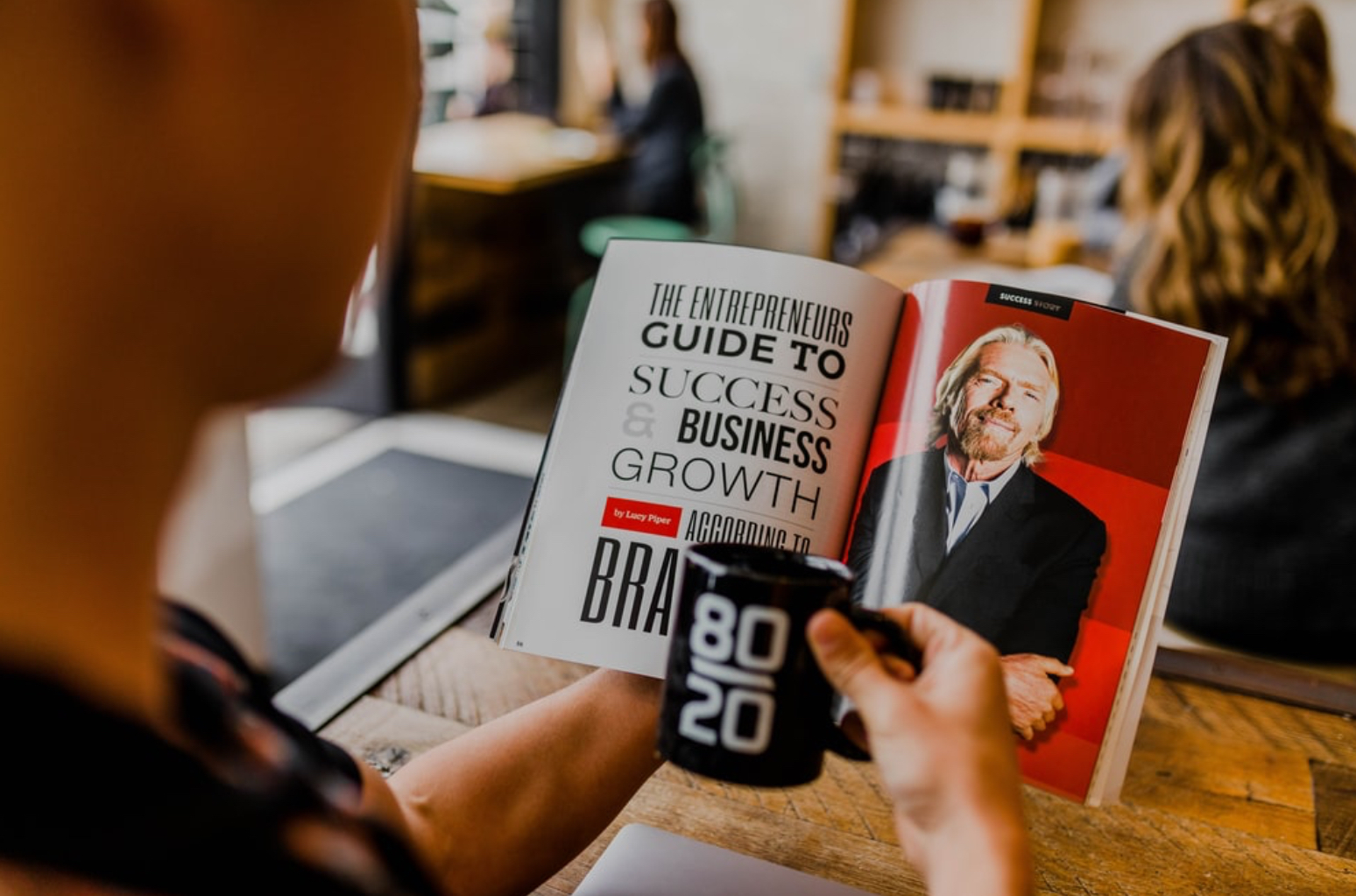
In order to reap the benefits of story-driven content marketing, there are certain things you have to consider.
Here are some of them:
Be audience-centered
Although story-driven content marketing values a brand’s story, they should never overshadow the stories of the audience and customer base. After all, the ones in control here are the customers, not the brand.
With so much content out there vying for their attention, they can easily use ad blockers or skip past blog posts. To ensure that clients do spend time reading your content, lead with their needs.
Focus on releasing content that can serve value to your audiences first. This approach may require loads of patience, but once you’ve established yourself as a reliable source, the payoff will come in dividends and improve your branding in more ways than one.
Focus on memory building
Stories have been in existence for a very, very long time, and it’s easy to see why. They are effective media that can carry life lessons and values.
At the same time, they are capable of evoking feelings and keeping us entertained. We may not remember everything about a story, but we do retain the important bits. To ensure that your content is able to do the same, focus on building memories.
Search Engine Journal explains that the only way this can be done is by creating strategic stories that will subtly highlight the messages you want to give to your audience. Your story doesn’t have to be Oscar-worthy. You just have to make your audience see the story and help them imagine themselves in it.
Conclusion
Similar to how you would arrive at any marketing technique, story-driven content marketing has to be backed up by research.
To enjoy the extensive benefits this approach offers, make sure to focus on your clients, be as relatable as you can, and always remember that your client’s stories and experiences are more important than your own.
— Corrine Porter is a long-time business consultant and part-time writer. Armed with a passion for writing, her main interest is evaluating how new innovations in marketing and technology will impact society. On her free time, she enjoys reading and film photography.

- Posted 11.4.20 at 04:05 am by Roy Osing
- Permalink
November 2, 2020
Why the ‘Magic Question’ is important to your career

Source: Pexels
Why the ‘Magic Question’ is important to your career.
Everyone looks for a silver bullet to have a successful career; the one piece of advice that if practised consistently and correctly will result in a rewarding future.
I’m not a believer in singularity; that there is one factor that explains the essence of anything in life.
Ceteris Paribus — all other things being equal — is not an assumption that’s particularly helpful in most instances because all other things surrounding any particular issue or challenge matter are NOT and never will be ‘equal’.
Attempts at formularizing messy real world outcomes have never been particularly effective since they rely on a degree of predictive precision — y = f(x) — that doesn’t exist when there are so many random variables at play.
No one variable can accurately determine a successful career.
That said, I did develop a simple but very effective qualitative tool that was amazing in terms of helping me in my career; I called it ‘the magic question’.
In retrospect, it was probably the most useful thing I used to successfully navigate my way through several positions in the organization to eventually reach president.
Of course there were other factors at play in my journey — right place-right time, personal relationships, mentoring — but I am absolutely convinced that the magic question had the most influence.
Are you ready for the question?
‘Now that I find myself in a new position in the organization, what do I have to do differently?’
The need to ask the question is triggered by change. Whenever you find yourself in any of these common circumstances, pose the question and spend serious time answering it.
— There has been a major organization change and you have been appointed to a new position.
— You are being moved laterally to another job in the existing organization structure.
— You are promoted to a higher level role.
— Your existing job role has been changed; you have either been given added responsibilities or the scope of your current role has been reduced.
— You, unfortunately, have been demoted to a lower level position in the organization. You need to include this possibility in your thinking even though it is unpleasant.
— You’re a small business owner that’s just expanded into a new market.
There are 3 possible outcomes in terms of how you approach the question.
1. You don’t ask the question
You continue in your new role acting the same way that you have in the past irrespective of the new challenges that you face.
You assume that the things that got you here will get you where you need to go in the future. After all, you have attained success so far by practicing certain skills and competencies; why shouldn’t this work on a going forward basis?
Momentum continues as you practice what you are used to. There is no change in your behaviour and you eventually fail.
New challenges require new thinking and new ways of doing things; repeating what got you here in an entirely new set of circumstances will simply not work.
2. You ask the question but answer it incorrectly the first time
In this case you are at least on the right track having asked yourself the question, and you enter the trial and error process of discovering the essential things you need to do differently to succeed in your new position.
The result of your efforts might be eventual success, but it takes a while as you iterate among several possible answers to find the right blueprint.
You need to get on with finding the answers FAST if you are to survive long enough to see the final result. What you learn from your first one or two attempts is crucial to your eventual success.
You don’t have the luxury of pondering what changes to make in your strategy for very long, so do a quick study of what isn’t working, then act quickly to implement what you think you learned and monitor the impacts. Then move quickly to another tactic if you see more shortfalls.
3. You ask the question and you nail it
You discover and successfully execute the essential thing you needed to do differently to be effective in your changed position.
Your bosses and others in the organization are amazed how quickly you adapt and learn in the face of a new challenge.
The results of your efforts produce success not only in terms of your productivity in the new position but also in the growth of your personal currency for future career advancement in the organization.
‘The magic question’ process is not an easy one; it’s arduous and time consuming. It requires honest self analysis, development of options and selecting a path that you believe will yield the success you expect. And being prepared to modify it on the run as you experience results.
Use feedback you receive from your boss, colleagues and those that report to you to decide what you have to do differently.
Be prepared to make agonizing decisions that place yourself at personal risk, but have faith that it will work out for you.
The question requires dedication and discipline. You can’t casually approach it; you must be all in otherwise don’t waste your time.
In every leadership position I held, I coached my team to employ this process to enhance their career; the ones who chose to do the work were rewarded.
Cheers,
Roy
Check out my BE DiFFERENT or be dead Book Series
- Posted 11.2.20 at 05:30 am by Roy Osing
- Permalink