



Roy's Blog: April 2022
April 18, 2022
The 5 most important decisions a leader must make

Source: Unsplash
The 5 most important decisions a leader must make.
As a leader, you do have a choice as to how you spend your decision-making time; there are numerous possibilities when it comes to which decisions to make yourself and those that you leave for others.
How do you determine the ‘my decision’ areas?
The criteria I used was payback. Where could I add the greatest value to the organization?
It’s not about what you enjoy doing or where your strengths are; it’s about where others will realize the maximum benefit if you focus your decision-making time there.
You may be amazing at financial analysis and enjoy dabbling in numbers, but if marketing is a critical element of the organization’s strategic plan, for example, you need to leave financials to someone else and re-vector your decision making efforts.
Make the call on these strategic issues; they must be owned by the leader and no one else.
#1. The business plan
The strategic game plan for the organization.
Leadership value starts with deciding on the organization’s future.
And it should be created by the leader and not chosen from a number of options submitted by management.
What business you intend to be in and how you intend to differentiate yourself from your competition can only be decided by the leader who is directly accountable to ownership. It’s not something that can be delegated to business development folks.
#2. Values
The values that shape culture.
Values describe how employees behave with each other on the inside of the organization and externally with customers.
The leader must decide on the values critical to their strategic success and they must make the call on eliminating the traditional values that are no longer appropriate.
#3. The talent in the organization
The talent that gets recruited.
Strategy and values are the determinants of the people you recruit.
The leader must have their fingerprints on the people strategy. They must decide if it will do the job; it can’t be delegated to human resources.
The wrong people in critical roles will drive your strategy to fail. I used to participate in candidate interviews; a great way to monitor how your expectations are being met, as well as a great learning experience for the other managers in the room.
4. Architecting the customer ‘moment’
The customer moment architecture.
If the leader isn’t personally involved in defining what the customer transaction with the organization looks like, dysfunction results; everyone does their own thing and offers up their own version of serving the customer in an exemplary manner.
The truly great leaders don’t delegate the architecting of the customer moment; they own how customers are to be served.
The leader must decide what the moment looks like at the frontline level where customer perception is controlled. Leaders generally don’t like to engage at this level of detail, but this micromanaging is essential.
5. Aligning activities to strategy
Aligning activities to the strategic game plan of the organization.
This is where most things go wrong. The strategy says one thing but the people in the various functions behave in a manner inconsistent with the chosen direction.
The leader must decide on an alignment plan developed by every department in the organization; it’s the only way synergy is guaranteed.
Strategy, values, people, customers and organizational synergy. What could be more important to decide on for a leader?
Cheers,
Roy
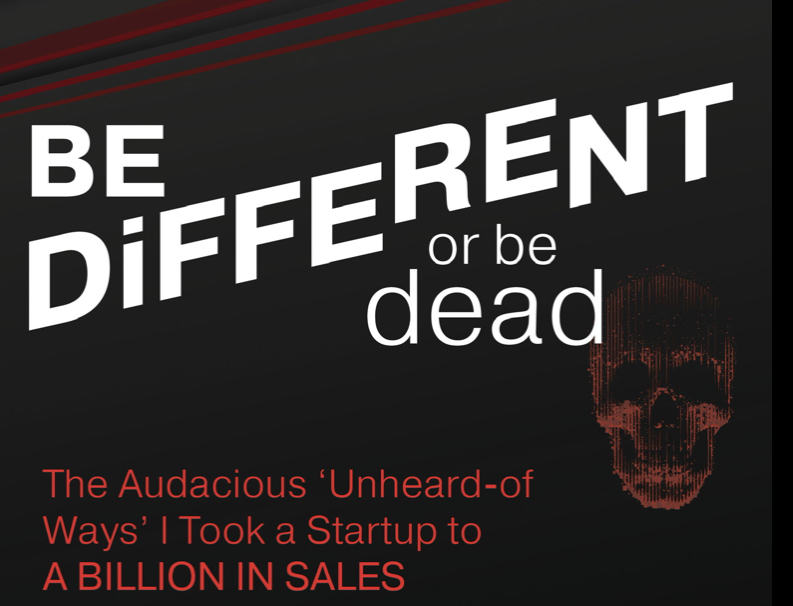
Check out my BE DiFFERENT or be dead Book Series
‘Audacious’ is my latest…
- Posted 4.18.22 at 04:11 am by Roy Osing
- Permalink
April 11, 2022
Why your past success doesn’t mean a bright and remarkable future

Source: Pexels
Why your past success doesn’t mean a bright and remarkable future.
It’s an interesting challenge: you’ve invested your time and energy into achieving your goal and now you must continue to reap the benefits of your journey.
Resting on your laurels isn’t an option because there are so many people who would love to assume the position you’re in; who would like nothing more than to replace you.
To keep what you’ve achieved, you must keep your feet moving.
These 6 actions were very helpful to me in my career as I navigated my way through the hierarchy to eventually reach the executive suite of a major corporation.
Change it up
Never assume what got you here will keep you here or will get you where you want to go next. If you continue with the play that rewarded you yesterday, be prepared for disappointment in your current position.
This is a tough one for most people who have a difficult time morphing themselves from their past successful job approach to something new and different; they assume that if they continue to follow the vector they are on, life will be good.
I created an approach that worked well for me. I tagged it “The Magic Question” — “what do I have to do differently?”. It is a disciplined method of assessing what changes someone must make when they find themselves in a new role — a self intervention.
Continued success must be earned every day; constantly reinventing yourself is essential.
Work harder
It’s easy to drift when you have achieved the goal you have worked so hard to achieve. You sit back in your new chair, put your hands behind your head, take a deep breath and say to yourself “I’ve made it”.
The issue is, however, your current resting place is temporary; it lasts only as long as you continue to add value to the organization. Falter for a moment and there are many others who are waiting to step in.
Once you’ve got it, keep your head down, sweat more and and deliver more.
Keep your friends
Continue to nurture “the family” that has supported you up to now; you will no doubt need their support as you go forward.
There is a tendency for some people to lose contact with their friends and colleagues once they have arrived at their career destination; this is a mistake.
The more challenging the role you achieve, the more you need support around you to advise you and to simply be there for you when you have emotional let downs.
Make a point of thanking each one of your support team personally for their faith in you and what you stand for, and ask for their continues allegiance.
Learn something new
You have been rewarded for what you have learned in the past, but don’t rest on your laurels too long.
New challenges require new thinking, and anyone who believes that yesterday’s knowledge can be successfully applied to consistently solve tomorrow’s problems is in for a major shock.
Continuing to relying on the expertise you’ve gained up to now will make you stale, and eventually will lead to ineffectiveness in fulfilling your responsibilities.
Keep learning new stuff. Not only will it keep you relevant in terms of your ability to take the issues of the day head on, being ahead of the knowledge curve will provide you with the energy needed to maintain the pace and momentum you require for continued success.
Look beyond the horizon
Take the initiative to play a personal role in your organization’s future.
Get out of the confines of your new job description and develop your own perspective on where the organization needs to go to build value for ownership.
Study how customer demand is changing and the likely impact it will have on your competitive position. Develop a profile of new competitors being licensed by disruptive technologies. And build your own view of the strategic game plan that should be followed to meet these new challenges.
If you provide strategic value to the organization beyond what is expected of your current responsibilities, you will establish yourself as an asset with long life to your bosses.
Draft your next chapter
You may be tempted to take a time out, rest, and enjoy the spoils of your efforts once you’ve achieved your goal, but don’t get sucked in to playing the game this way.
Take a deep breath perhaps, but then look for a new prize to focus on — lean into the wind and keep your journey alive.
Successful careers are built on a number of successive achievements; rarely does the “one hit wonder” happen. It’s a serial process of achieve your goal — learn and deliver success in it — look for other opportunities where you can add value for the organization — move on.
Finally…
Many people fall victims to losing it once they’ve got it. This is not only a travesty in terms of not achieving their ultimate potential, it represents an opportunity cost to an organization.
The victims essentially rob their organization of the future value they could have provided had they been able to leverage their achievement into added career success.
These six actions will at least give you a fighting chance to hold and build, not hold and lose.
Cheers,
Roy
Check out my BE DiFFERENT or be dead Book Series
‘Audacious’ is my latest…
- Posted 4.11.22 at 06:23 am by Roy Osing
- Permalink
April 4, 2022
How your great new idea can avoid becoming a loser

Source: Pexels
How your great new idea can avoid becoming a loser.
How many times have you heard someone say ‘right idea!’ when there is an execution blip that nullifies success and an otherwise brilliant notion bites the dust.
You hear it in kids’ sports all the time, particularly soccer, where an attempt to pass the ball to a mate is intercepted by an opposition player. The right intent was there but execution fell short of an awesome outcome. ‘Right idea’ is intended to support the right behavior and encourage the player to try it again and again until it works.
But it’s deflating. You can see they have a picture in their mind of what the result should be, but it’s shattered when it doesn’t play out the way it was envisioned.
The situation has a parallel in the startup world.
Startups have a ‘Right idea!’ when they develop their strategic game plan. It represents their solution to a common customer problem which should on paper be a raging success.
Right ideas are plentiful; new business ideas are constantly streaming from brilliant entrepreneurs. The thing is, the percentage of right ideas that make it through the successful implementation funnel are few and far between — as I’ve said before, roughly half of startups fail in the first 5 years.
The failure to execute on a great idea is beyond disappointing, it hurts.
In my experience people just don’t spend enough time determining exactly what has to be done to bring the new idea to life. The idea may be borne in an instant but more time is required on what to do with it to see it to a successful conclusion.
If you can’t implement, you’re done. It’s the end of your story.
These four essentials will increase the odds of your amazing idea crossing the finish line.
#1. Double down on implementation
Be prepared to dive deep on determining how to execute your idea and spend an overwhelming amount of time to figure out the details of making this sucker live.
Unfortunately the idea has no life on its own; it’s a figment of your imagination; a mere possibility. It needs to be transformed into something practical before it has any value.
The idea to prevent a driver of a vehicle from using their mobile device while driving is an easily understood solution to the distracted driving problem, but unless it can be delivered to the market it remains on the entrepreneur’s wish list.
The idea emerged 24 months ago in an insightful moment; implementation is 2+ years in and counting. It’s not a simple process and it’s certainly not easy.
Be overly disciplined in thinking about your implementation plan; the devil’s in the details so you want it to be as complete as possible, covering all possible actions that are necessary to get this puppy to market.
#2. Focus on a couple of really important things
Don’t try to boil the ocean; focus on a handful of actions that you believe will result in successfully seeing your idea come to fruition.
There are many actions you could take to implement your idea — usually a result of brainstorming — but the challenge is to define the few critical moves you should make.
You don’t have sufficient time or money to pursue numerous approaches at the same time; narrow them down to one or two that you believe are essential to moving the implementation yardsticks fast.
In business, one effective way of achieving this is to select one target market to attack rather than spraying your efforts across several potential ones.
Rather than focusing on a consumer segment, for example, which is complicated and often expensive to penetrate, target a specific business application which is more easily reached.
Or, go after a confined geographic area — a province or state —rather than a broader one like a country.
#3. Don’t chase cars
I talk a lot about ‘Yummy’, but it’s worth repeating here because I see too many startups held back due to their meandering. Stay focused; resist the temptation to stray from your action plan when new possibilities descend on you.
It’s all very well to be open to new avenues to explore but it can end up with you chasing anything that comes along. Chasing makes you busy, but is unlikely to achieve the results you want.
Every entrepreneur faces this issue. They no sooner lock their launch plan down and a new possibility comes over-the-transom and hits them — an application, a partner, a technology change.
Yummy might satisfy your immediate hunger but it won’t quell your appetite.
Yes, this Yummy incoming should be considered and examined thoughtfully, but not chased. Thoughtful consideration of these new possibilities must be given and should have overwhelming benefits before you decide to give up your initial execution plan.
#4. Change on the fly
Make changes on the run in the face of setbacks that question your idea.
It is a rare event when your original implementation plan plays out the way you had intended — not because of Yummy, but due to your planned actions not achieving the results you expected and because of unpredicted events — like COVID, sales channel failure, pricing problems, revenue shortfall — that slam you.
Be in touch with how implementation is progressing and be alert to any deviations from your game plan that require you to modify your direction.
Make the required tweaks and keep going.
Having a brilliant idea is a great place to start, but unless you put on your execution hat, it will never see the light of day.
Cheers,
Roy
Check out my BE DiFFERENT or be dead Book Series
‘Audacious’ is my latest…
- Posted 4.4.22 at 05:56 am by Roy Osing
- Permalink
March 28, 2022
Why a job is way more important than your career

Source: Unsplash
Why a job is way more important than your career.
Young professionals leave school with the intent of launching their career based on their study specialty; economics majors look for entry level jobs where they can apply their knowledge of micro economics and demand theory and lawyers migrate to law firms.
This may seem like a reasonable approach, but the reality is that when you begin your career journey you never really know where you will end up.
A career is an unclear destination with an unpredictable journey and a healthy dose of luck.
I graduated with a BSC in mathematics and computer science. I took a management trainee job and ended up as a CMO and president of a company we took to A BILLION IN SALES without any need to use sophisticated computer programming and differential equations that I learned at school to solve business problems.
I arrived in the executive suite after many years of strategic meandering around and up the hierarchy of the organization doing many things, developing and honing the skills necessary to add as much value as I could to the company’s future direction.
And to be positioned as the only logical choice for an opportunity should it arise.
I began as a junior systems analyst where I was required to do time and motion studies to improve the productivity of various departments.
It was a job.
I needed it to pay back my school loans and it was with an organization that was poised to undergo massive market change. But it really didn’t make use of my academic background, and I had no idea if it would result in a meaningful career.
Besides, I was married and I needed to pay bills. I couldn’t get hung up on whether the job was the right thing in the long term.
It turned out that the job was not to be my destination; it was a beginning and a learning point along the way.
When you are just starting your working life, you can’t with any degree of precision determine what your career will be.
I see too many young professionals unable to decide on whether to take a particular job or not. They agonize over whether it fits with their long term career plan; they are paralyzed and can’t make a decision.
They search and they search for the opportunity they believe to be a perfect match with their career ambitions. As a result, they make no job choice and no forward movement towards any career.
The thing is, if you don’t take a job, you will never know if it fits or not.
Every job in every organization presents the opportunity to make it your own and to craft it into something that satisfies your interests which typically are aligned with what you aspire to be ‘when you grow up’.
Find your passion
Your top priority should not be to find a job that’s consistent with what you think your career should be, but rather to look for an organization that excites you in some way and allows you to express your passion.
This is the environmental factor. If the work environment stirs a passion inside you, it is likely to be rich with opportunities and potential. If it doesn’t, it’s unlikely to produce the new challenges that feed a successful career.
Choose an organization that has a culture of mobility
It is critical to target an organization that has a program of moving new employees around and exposing them to different roles and various learning opportunities.
As a function of being a new hire from university, I was put in a management trainee program where I was placed in 6 different positions over a 24-month period.
This experience provided me an incomparable perspective on which areas were interesting and those that I would try to avoid.
Experiencing a variety of roles enabled me to architect my career path. I targeted specific areas and roles to acquire within a certain time period along with an action plan to get there.
My plan wasn’t all about getting promoted; sometimes it made sense to take a lateral move to acquire the added experience necessary to qualify for a promotion at some future point.
Don’t fret over whether a job staring at you suits your long term career goals. Look for an organization with a culture that gets your juices flowing and one that prides itself in providing different job opportunities to employees.
Take the job and it just might lead to a brilliant future if you are willing to take the risk.
Cheers,
Roy
Check out my BE DiFFERENT or be dead Book Series
May 31, 2022 ‘Audacious Unheard-of Ways’ is coming.
- Posted 3.28.22 at 05:34 am by Roy Osing
- Permalink