



Roy's Blog: October 2021
October 18, 2021
Why a business plan for ‘cults’ can be an amazing success

Source: Pexels
Why a business plan for ‘cults’ can be an amazing success.
There are a plethora of opinions on how to build a business plan, and I have written numerous pieces on my unheard-of Strategic Game Plan process which is unique and cannot be found elsewhere.
In fact I’ve dedicated one of my books to the topic and explained why a planning methodology geared to execution is critical for any organization to consistently achieve a high level of performance.
A practical element of my business planning process is to carefully choose the customer segments you decide to target and serve.
The fascinating criteria I advocate is quite simple: choose those customer segments that have the latent potential to deliver your growth goal.
The choice you make is absolutely critical to the plan’s success.
If the wrong customer segment is chosen, the organization’s resources are wasted and its growth goals are not realized.
And if a mass market is the choice, the same end result happens.
In fact in this scenario, the organization’s marketing message and resources are spread thinly across the entire market hoping for enough ‘hits’ to justify the investments made.
Flogging a value proposition to everyone is not likely to be very successful as the range of appeal is too broad to generate sufficient market momentum to deliver required sales.
So what’s the solution? How does an organization choose the right customers to serve?
One approach that should be given much more attention involves exploring the opportunities presented by polarization: examining clusters of people who are clustered at the extreme right end of the bell curve around a particular value set.
For example, if the value set to be explored were ‘concern for the environment’, a polarized view might be the belief that carbon dioxide emissions will destroy the earth’s atmosphere in 24 months.
Polarized groups—cult movements—are not only unique and distinct from the crowd in some way, their differences are quantum and order of magnitude in nature rather than incrementally distinct.
They are groups of individuals who have an obsession with, fixation on, mania for, passion for, idolization of, and reverence for an idea, thing or cause, for example, such as:
— the environment
— black lives matter
— LGBTQ
— #MeToo
— anti- globalization
— feminism
— veganism
— indigenous rights
People in these segments choose to express themselves in a way that others don’t.
I’m not referring to extremist right wing religious cults, but rather groups of people who share a passionately held view around a particular cause or movement and who express their opinions within acceptable societal and legal limits.
These polarized clusters of people represent relatively narrow slices—slivers—in the market that can have demand characteristics worthy of study.
They may represent a significant source of economic opportunity for the business because their beliefs are precise, well defined and the cluster is growing in number as an expression of society’s changing views.
And, if the business can use ideologies and beliefs to attract cult interest and cult member passion to engage them, perhaps relationships can be established and sales made.
We should start thinking about finding ‘cults’—who have excessive admiration for a particular thing—that express desires and cravings at the poles of the demand curve.
ME! segments are different from the mass crowd; cults are REALLY different.
The challenge, of course, is to find a cult or two whose members represent good potential for you to chase.
Here are five steps you can take to see if a cult has a future in your business plan.
#1. Keep your eyes open for trends
Cults typically follow social trends, so stay alert to the issues of the day because they could lead to the formation of a cult.
For example, there are many climate change cults—The Extinction Rebellion is one—that have been formed over the past few years which could represent a growth opportunity for some businesses because, for example, the cult is growing in membership and you have a solution that would easily allow them to collaborate among themselves very easily.
As a way of getting traction on this activity, assign someone to a cult follower role to identify, track and evaluate them as they are discovered and evolve.
#2. Talk to existing cult leaders
This is a good way to not only get a better understanding of cult values, but also to get insights on what the profile of the cult member looks like.
Even if a particular cult isn’t on your radar, it’s worthwhile engaging with a leader to deepen your understanding of cult dynamics which will provide ideas on how to engage with its members and form relationships with them.
#3. Check traditional and social media
Media headlines are a good source to explore which movements are currently attracting the most attention and therefore might be an attractive target for your organization.
And check out the nature of the conversation on social media to get a feel for the main themes of the conversation—the ‘triggers’—which would provide a window on not only what’s important to the cult members, but also whether your organization would even want to be associated with their cause.
This information is critical in terms of what it might take to successfully market your products, services and solutions to them.
#4. Pick a cult that seems to be a fit for you and give it a try
First of all, you’ll never know if a cult target will work for you until you give it a go.
I don’t think many (if any) organizations actually study cults to determine if they possess any potential so you would be breaking new ground here.
If trailblazing appeals to you, experimenting around the cult phenom is for you.
There are, however, a few considerations that you might use in selecting a high potential cult to chase:
— what does your current business plan say in terms of the customers you’re looking for? Is there some similarity between your current marketing efforts and the potential cult you could target?
— do a bit of back-of-the-envelope calculating in terms of the sales potential. Is there a good growth prospect if things work out for this cult?
— what are the possibilities of partnering with the cult to explore longer term mutual benefits?
— how divergent are the cult’s values from any element of yours? Although improbable, it might just be possible to find a hint of commonality with what the cult stands for and what your organization values. Any common denominator could help to define a workable marketing platform.
#5. Use experience and results to attract another
If your experiment works out, you may want to use it to attract the interest of other cults; you might be The ONLY organization that looks to social movements for joint opportunities.
So, track the results of your ’cult try’ in detail so you can use them in negotiating other arrangements if and when the time comes.
Social movements house untapped opportunities to grow your business and gain a competitive advantage as others are unlikely to pursue a similar strategy.
Exploiting customer groups at the edges of the demand curve—beyond ME!—can be risky, but can also be rewarding.
BE DiFFERENT.
You’ll never know until you give it a try.
Cheers,
Roy
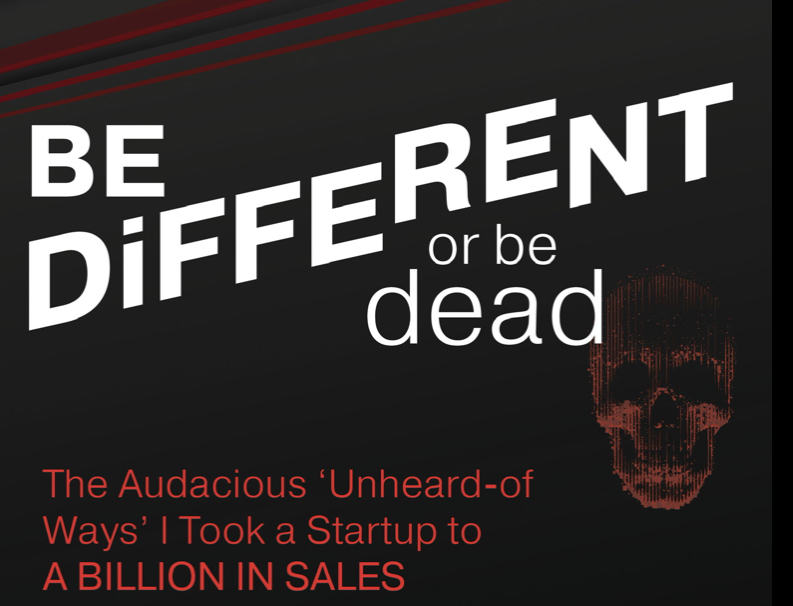
Check out my BE DiFFERENT or be dead Book Series
‘Audacious’ is my latest…
- Posted 10.18.21 at 05:17 am by Roy Osing
- Permalink
October 11, 2021
Why the best people to execute new ideas are ‘double-downers’

Source: Pexels
Why the best people to execute new ideas are ‘double-downers’.
Why successful people don’t take NO! for an answer.
What happens when someone tells you “No”?
“No” to your application for a job.
“No” to a proposal you’ve submitted to your boss.
“No” to a new product idea.
“No” to added functionality to the Chatbot feature on your website.
“No” to the vacation suggestion you’ve offered to your partner.
I’ve seen 3 typical responses to this classic dilemma: Retreat — Hover & Meander — Double Down.
#1. Retreat — do you walk away licking your wounds?
In my experience, the most common response is the person holding the genius simply backs off, believing that since their idea was rebuffed, it was a bad idea.
Or that to pursue the matter any further isn’t worth the emotional trouble they would likely endure by going another round of pitching and trying to convince the other person that their idea has merit and is the rightful owner of the podium.
I’ve never been a fan of this approach.
First of all, it implies to me that the owner of the bright idea really isn’t all that committed to it. It’s like they’ve lobbed their position up in the air to see if it would fly and since it didn’t, they are ok with the rejection outcome.
In addition, backing off is another way of saying that the owner has no passion for their ideas. Perhaps their mind—and not their heart—owns it, and if that’s the case it’s easy to rationalize why they should accept defeat.
The lack of spirit around their idea is foreshadowing of a future problem as well if it came to implementing it.
Execution happens when emotion and passion are in play, not when the intellect is active.
As the recipient of the proposal, my conclusion when the owner backs off after rejection, is their idea would never see the light of day anyway, so justice is served.
#2. Hover & Meander — are you willing to incrementally change your idea and meander around it until you negotiate a compromise with the other person?
This is the response most often advocated by academics and experts of conflict management: the search for common ground upon which a compromise can be built.
When have you ever witnessed a crowd do anything remarkable?
Unbelievably amazing ideas NEVER result from a negotiation process. They are begotten from someone’s soul and stand the test of time to thwart rejection and, I’d needed, force fed to non-acceptors and unbelievers.
The compromiser isn’t my favourite person for a number of reasons:
✔️ they’re ok with a watered-down—‘hold-your-nose’—solution but in my experience don’t really apply themselves to implementing it because it lacks the lustre of their original thought.
✔️ they’re totally driven by logic and lack the emotional element necessary to do anything with their insight even if others agreed with it.
✔️ their willingness to find common ground is tantamount to allowing the crowd to be the prime influence on their idea. They are ok with becoming a member of the herd of average thinkers and allowing them to have a say (with the belief that herd members would then be committed to supporting the implementation of your morphed idea—rarely the case).
When the herd owns the idea, nothing magic happens.
✔️ they are empirical evidence that the drive to be truly innovative and different in one’s thinking can be shut down by the crowd, and that’s an issue for me.
✔️ The compromiser is forced to ‘round the corners’ of their original idea in order to feed the herd and thus the remarkability of their seed is lost.
✔️ When the holder-of-originality says of a crowd-influenced change ‘I’m ok with the new version’, they lose a certain amount of their drive to find new, interesting and different ideas — compromise reduces the innovation process.
When the crowd is the influence, average happens.
#3. Double Down — do you take a step back, take a deep breath and have another go at trying to convince the other person of the worth of your idea?
This response to being told ‘NO!’ is for the person offering original thought to stay in the moment and keep trying to sell their idea until either they win or they finally are beaten into submission (really response #1 after prolonged debate).
It’s ironic to me that the pundits favour compromise and yet the amazing ideas most often come from a vision and polarized thinking.
Elson Musk, Sir Richard Branson and Steve Jobs are/were polarized thinkers whose genius never touched a crowd.
We need to be teaching people how to advance their ideas with a minimum of crowd intervention rather than teaching them how to water down their ideas by taking the input from the masses.
We need more ‘Double Downers’ in the world; here’s why:
✔️ pushing for groundbreaking progress should be the priority these days, not looking for compromise. Climate change solutions, for example, require polarized holistic thinking not biased thinking based on how the needed change will impact us personally.
✔️ we need stronger innovators—more double-downers—given the rapid changes we’re experiencing in the world and the unexpected body blows that we have to deal with along the way.
We need to teach people how to push forward and learn the new skills necessary to advance their new ideas.
Double-down learning must take precedence over compromise teaching.
✔️ implementing anything new is an arduous job and it requires a champion to lead it. The Double-downer, because they are emotionally all in with their idea makes the best implementer. As mentioned before, the passive compromiser is less willing to push implementation to the limit.
✔️ double-downers require resilience and strong character, a trait we need more of in our organizations and lives. So let’s do what we can to breed people with this competency rather than dilute it by asking them to compromise themselves and find the lowest common denominator.
✔️ like it or not, achieving anything worthwhile today requires a high pain threshold to navigate a compelling thought through the maze of critics that sit in judgement of it.
Double-downers have assumed ‘pain absorption’ as a skill they must develop to see their creativity through to successful completion.
Double-downers have a reticence to submit; we need more not fewer of them.
✔️ double-downers have developed the uncanny skill of making their idea so compelling that they more often make the sale than lose it.
This is fundamental to audacious leadership where the leader makes the call after gathering input (which they may or may not heed) and is able to convince everyone around them that their direction is absolutely the right one to take.
Double-downers may not always be viewed as the nice, socially acceptable, politically correct persona to advance a creative agenda, but they get the things done that need to be done.
We need them.
Cheers,
Roy
Check out my BE DiFFERENT or be dead Book Series
‘Audacious’ is my latest…
- Posted 10.11.21 at 05:18 pm by Roy Osing
- Permalink
October 4, 2021
Post pandemic mentors: 5 ways to get the very best

Source: Unsplash
Post pandemic mentors: 5 ways to get the very best.
The COVID pandemic has caused unbelievable discontinuity into the world. Organizations have had to pivot to new business models, business supply costs have increased with consumers having to pay higher prices for goods and services and the norms for social interaction have changed substantially.
And for people in the hunt for a satisfying and rewarding career, things look a lot different.
Specifically, the process of finding a mentor requires a careful review because the pandemic is forcing a different approach to seeking a coach and advisor to help us continue to make wise career choices.
Here are 5 NEW steps you should take to find a mentor as you navigate your way through the pandemic.
1. Find a survivor leader
Find an organization that is surviving the pandemic chaos and figure out a way to get close to its leader.
These people house the secrets of staying alive when they have no control over the unexpected blows inflicted upon them. These astonishing leaders figured out how to harness the negative energy of the unexpected and turn it into a successful outcome for themselves.
These leaders are a gift to the young professional, for they have achieved what few others have in the environment that will define the future for any organization.
Their advice, help and guidance is invaluable to anyone looking to build a successful career in the face of this uncertainty.
And focus on the small businesses that are surviving—restaurants for example—to get the real visceral ‘in the moment’ actions they took to stay alive. The leaders of these businesses have zero cushion for failure (unlike larger organizations) and are therefore able to provide more meaningful tactical guidance.
2. Find a caregiver
Find an organization whose employees give amazing shoutouts to the managers in it for their care and empathy. Use social media to get a conversation going on the ‘stars’ who actually give a damn about their employees and who make a priority of caring about their comfort and well-being.
Caregivers are great sources of valuable counsel; their sensitivity and empathy is the essence of what they can offer a young professional aspiring an improved leadership role.
3. Find a ‘repeat offender’
Find an organization that tried a number of potential ways to beat the pandemic and eventually struck one that worked.
And look for the person—the repeat offender—who was at the heart of the failure process but persisted until they discovered a successful solution to their challenge for survival.
This is a mentor who is worth their weight in gold. Winning is all about the number of tries you make and the willingness to absorb the pain of momentary failure, so if you can find and get close to one of these amazing people you will reap the rewards over and over and over again.
4. Find an analyst
Find a ‘pandemic student’; someone who has analyzed and studied what it takes to survive the pandemic and befriend them.
It’s not that they will necessarily have the right survival solution for you, but they may have clues based on their studies as to what might work for you.
You’re not looking for the precise prescription for your malady, you want possibilities based on informed opinion; the analyst is such a person.
Cast your mentor net far and wide; you’ll be surprised with what you catch.
5. Find an outlier
Find an organization that basically threw out their business plan and decided to not just pivot, but to reinvent themselves and take a completely different direction.
It’s not easy spotting these organizations because most look for the incremental change—pivot—rather than the metamorphosis.
The influencers—outliers—that are behind such changes are home run mentors. They present dramatic possibilities to the young professional which serve as another perspective anyone looking to enhance their career should consider.
I’m a fan of looking for the upside when confronted with the downside; looking for the pony that created the crap one is buried in.
The pandemic is forcing all of us to look at things differently, to look for opportunities to not only survive but to thrive.
And opportunities abound when it comes to discovering a mentor who can help our careers and our lives.
Follow my 5 simple suggestions and you’ll be looking at your career competitors over your shoulder.
Cheers,
Roy
Check out my BE DiFFERENT or be dead Book Series
‘Audacious’ is my latest…
- Posted 10.4.21 at 03:37 am by Roy Osing
- Permalink
October 2, 2021
4 proven steps to create a brilliant customer experience strategy

4 proven steps to create a brilliant customer experience strategy
The secret to providing consistently fantastic customer service is a sound customer experience strategy. In a thriving competitive market, extraordinary customer service can be a strong differentiator, especially when you’re competing with seemingly similar products, quality, and price points.
Your customer experience strategy can influence your brand perception, i.e., how your audience feels about your brand and how they tell others about it. Data shows that 43% of buyers ditch a brand for poor customer experience, so it pays to make your customers feel special by offering personalized services.
That’s why the first step in developing a customer experience strategy is to gather as much data as you can about your customers. You can find all the steps in the infographic below from GetVoip.
A detailed customer experience strategy can be instrumental in keeping your customer service efforts consistent and coherent across different departments. When customers are happy, you can retain them for life. Companies with extraordinary customer service have seen a 25% to 95% increase in profits just by a 5% increase in customer retention.
The customer should be the front and center of your customer experience strategy. The success of the strategy, however, depends on customer-centric company culture. From the top management to the customer-facing personnel, everyone should be on the same page to serve the customers the best. Only then the important (and tough) decisions can be made and implemented.
Once you implement the strategy, you will find many ways to make your customers feel valued. So, go ahead and start making your customer experience strategy to ensure greater success for your company.
— Reuben Yonatan is the founder of GetVoIP, a global comparison resource for business technology buyers. Yonatan works with companies to meet the needs of their business communication stacks.


- Posted 10.2.21 at 02:08 am by Roy Osing
- Permalink