




Roy's Blog: February 2022
February 14, 2022
Why successful startup leaders are out-of-step with others

Source: Unsplash
Why successful startup leaders are out-of-step with others.
What is the prerequisite for a successful startup leader?
Is there one particular characteristic or attribute a person has that makes them more likely to succeed in the startup world than other individuals who also have a new idea they want to take to market?
Is it based on education? Is it based on how many degrees they have? Not at all. The fact is there are many individuals who have impressive academic credentials who fail at launching new businesses.
They walk away from university with an MBA, for example, with a chest full of case studies that they have mastered and land on an idea they think will change the world and bring them untold wealth. They get some funding and launch their startup. They apply everything they’ve learned at school. And they fail.
Why is that?
My experience has taught me that successful entrepreneurs are not made on the back of an academic pedigree; they need much more than a good education to take a brave idea that they have and turn it into an overwhelming market success.
Education helps but it doesn’t determine success.
An education should be looked upon as a required entry to the entrepreneur profession; without it, it’s a tough journey to succeed but with it there are no guarantees; you can still fail.
The secret, in my view, to at least having a decent shot at startup success is leaning away from the habits we learn from school.
We enter the unpredictable, uncertain and chaotic post-educational environment with our bags full of rote tools:
formulae.
— predictive models.
— business principles.
— economic theories.
— case studies.
— best practice methodologies.
— risk analysis techniques.
We are taught to believe that these tools will make the difference between a successful new idea and one that must be abandoned at some point.
The problem with the rote bag is that it’s contents aren’t particularly useful in a pandemic-like world where survival and success depends on a set of skills, competencies and knowledge that is different than what’s in our bag.
In addition, if everyone is practicing rote, it’s practically impossible for any single person to stand out and be noticed in the rote-practicing crowd.
The rote bag tools make you in-step with everyone else; what you need is to be out-of-step.
The best practice tool as I’ve said in my view is particularly egregious in terms of how it constrains one’s ability to be creative and separate themselves from those around them.
I’ve seen it happen before. The new CEO is faced with many launch challenges and turns to Google for suggestions on what to do.
The search results on their query returns a litany of approaches used by others around the world; the CEO picks one to copy because they believe it will work in their particular circumstances.
Copying best practices is a popular tactic used by not just startup leaders; most everyone uses it because it’s easy. But it does nothing to promote the innovation and creativity required for startups to succeed.
Copying forces the startup to be in-step with the crowd and is a formula to define it as common when it needs to be exceptional to succeed.
The startup leader needs to be out-of-step with the crowd.
I have seen success follow out-of-step people; those who reject crowd thinking and find best practices repugnant.
People who are constantly asking themselves ‘How can I do this differently than everyone else?’ People who look for weird, off-the-wall methods and outcomes as an expression of their individuality.
Out-of-step people make the world an interesting place to be and they make excellent startup leaders. And they are rewarded by achieving the recognition and reward they deserve.
My message to each of you intending to lead a startup: everyday when you get out of bed; decide that you will do something — some little thing — that is different than the in-step crowd.
If you make ’different thinking’ part of your daily routine eventually it will become part of your persona and will begin to govern the outcomes you deliver.
And success will follow. I guarantee it.
Cheers,
Roy
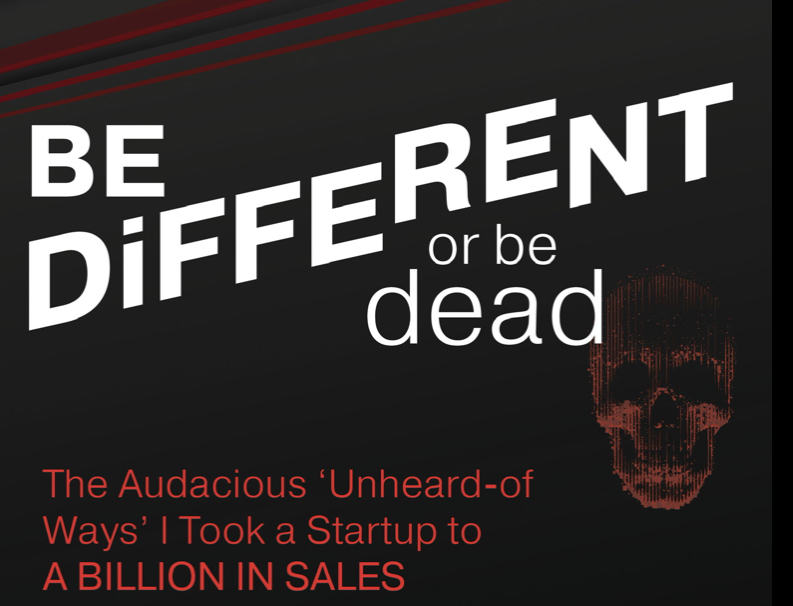
Check out my BE DiFFERENT or be dead Book Series
‘Audacious’ is my latest…
- Posted 2.14.22 at 04:30 am by Roy Osing
- Permalink
February 12, 2022
How to navigate tough startup business risks

Source: Pexels
How to navigate tough startup business risks.
Creating a startup can be a rewarding experience. You have the opportunity to start an enterprise on your own terms and truly innovate in your chosen field. But you must also accept that forming a startup is not without risk.
While few worthwhile pursuits are ever completely safe, the risks in forming a startup can certainly be a source of frustration. This means you need to become adept at navigating the risks in an agile and robust manner.
Let’s take a look at some of the aspects you should consider to address your startup business risks.
#1. Assess the risks
To best manage the toughest risks of a startup, you need to understand them from the earliest possible opportunity. The risks you face will vary depending on the type of business you’re running, which makes solid risk assessment vital. There will often be some basic common risks related to the location you’re operating in and the physical hazards of the work you perform. But you also need to identify which aspects of your unique combination of market targets, technological use, and even strategic approach can add to the difficulties.
As the leader of your organization, you can begin this process personally. It’s usually best to start with the planning stages, as it’s less overwhelming than when you’re in the midst of operations. Carefully analyze each element of your organization and business plan. Identify which challenges you face and be honest about the likelihood of the risk. This gives you a focus to put preventative measures in place.
It’s important to recognize that this risk assessment isn’t a one-and-done situation. Startup risks will evolve as your company grows and changes. Even individual projects you take on will have specific hazards. Build a solid set of assessment protocols to implement throughout the year and at intervals during projects. Make it a repeatable and reliable life cycle. Assess, plan, execute, assess again.
#2. Consider your people
The people interacting with your business can be both a source of risk and a solution to it. Their behavior and expertise impact your startup at all levels. No matter how much you think you have control of your company, you are reliant on people to succeed in your goals. As such, you need to focus on where people can make a difference in navigating risks.
This is easier to handle when you visualize the process. Stakeholder mapping provides clarification about the various groups of people who can impact your projects. This begins with analysis to identify who each stakeholder is and where they sit in the journey to your goals. Importantly, you can visually chart a course to highlight how each person influences risks along the way. Your analysis may include staff in your organization, investors you need to fund projects, even the general public’s positive or negative response to your services.
Following mapping, you need to consider your staff choices. These are the people who can have the best impact on helping you navigate all risks. Staff your organization not just for day-to-day running but also with those who have the skills to mitigate the risks you’ve identified. Indeed, seek out those professionals with the experience to provide you with greater insights into the risks of the tasks they’ll perform. These people will be invaluable in helping you to devise solutions and minimize future issues.
#3. Adopt the right tools
Automated tools have been prevalent for some time. But sophisticated artificial intelligence (AI) software using machine learning and data analysis to help companies make decisions is increasingly accessible to startups. These programs can be used to monitor your company processes, create more efficient practices, and even perform internal audits. All of which allows you to recognize and navigate risks before they become problematic.
You’ll also find remote work tools have a role to play in risk management. Keeping employees productive away from a central workplace can mitigate many of the physical hazards they’re exposed to. Robust project management software can also limit the potential for drop-offs in productivity.
Yet, it’s vital to remember that no matter what tech tools you use, you are likely to be vulnerable to cybersecurity risks. As such, your adoption needs to be matched with assessments for areas of security weakness in your network and the software itself. It’d be wise to work with cybersecurity experts to make sure you have the protection and training you need.
#4. Take your time
Finally, it’s important to consider how your ambitions can represent a risk to your startup. One report found 70% of tech startups failed as a result of premature scaling. There will be times you should ease the accelerator pedal a little, and you certainly shouldn’t rush into expansion.
Have a little patience. Remember, your business plan is more than just a document used to secure funding. When done well, it’s a well-researched resource that gives you a step-by-step journey through the first years of operations. This is an approach you need to keep taking. Always be researching the markets. Be cognizant of your financial resources and how investing in more staff or equipment will likely lead to greater returns. Taking some risks is important, but don’t take ill-informed risks.
Perhaps most importantly, take time to make sure you don’t burn out. One of the biggest risks as an entrepreneur is you’ll work yourself so hard your mental and physical health will suffer; in turn, your business will suffer. Think about your wellness throughout, as this is a key to any success you seek.
Conclusion
A new startup can be a great opportunity to introduce fresh ideas and innovations into the marketplace. But the chance for success is often tempered by some tough risks. It’s important to take the time to regularly assess the risks so you can make more informed decisions. Consider how your stakeholders and tech tools both offer challenges and solutions here. Remember not to recklessly rush into growth, as this is often a route to disaster. While there’s no innovation without risk, you must take a sensible approach to minimizing these hazards where possible.
— Jori Hamilton is an experienced writer residing in the Pacific Northwest U.S. She covers a wide range of topics but takes a particular interest in covering topics related to wellness and mental health. To learn more about Jori, you can follow her on Twitter and LinkedIn.

- Posted 2.12.22 at 07:00 am by Roy Osing
- Permalink
February 7, 2022
6 simple and proven ways to be seen and have a successful career

Source: Unsplash
6 simple and proven ways to be seen and successful.
What is the secret to both the organization that leads the market and the person who has a successful career?
What do they possess in common?
What do they pay attention to that others don’t?
For the aspiring career professional, do they have a special academic pedigree? A broad skill set? A deep personal network?
For the high performing organization, does it have significant financial resources? Highly skilled employees? A track record of consistent success?
All of these, of course, are contributing factors to success, but the highest common denominator is the ability for an organization or individual to be seen by people that matter.
Seen by customers. Seen by bosses. Seen by investors. Seen by recruiters.
If you’re not seen by those who influence whether you succeed, you’re not noticed; you are indistinguishable in the noise and clutter and won’t resonate with anyone.
If you’re not seen by those who control your fate, your chances of getting the job you want and launching a successful career are limited.
These six ways to be seen as you progress your career have been tested on the battlefield. They work.
#1. Pay attention to your ’target’; the person(s) you are trying to sell yourself to. Know them intimately – what they desire; what they covet.
Being seen begins with doing your homework. It doesn’t happen through serendipity.
#2. Determine 3 things you will do/deliver that will address the highest-priority requirements of your target.
Don’t try to boil the ocean. You can’t be all things to all people. Selecting a few things that really matter is critical. Focus on the essentials, and leave the other (relatively unimportant) needs to others.
#3. Deliver your stuff unconventionally. This is the most important step in being seen. If what you do/deliver is traditional, common and follows herd behaviour, you won’t be seen.
You will have no identity other than that of another one of those people/organizations who look alike and who have no creative bones in their bodies.
#4. Go in the opposite direction of everyone else. Again, if you are like the crowd, you will get engulfed by their momentum and blend in with them.
’Bite the dog’ and see what happens.
#5. Create your statement of uniqueness that governs everything you do and defines how you are different from the competitors you face for opportunities.
#6. Keep your eye on your competition; they will likely be watching you, if you are being seen, and will try to copy your approach.
When confronted by a copycat, you must create a new persona to deal with the desires of your target. Nothing lasts forever, so be prepared to change your approach on the run.
Success is a function of delivering what people desire in a way that is different than anyone else, because it’s the only way to be seen.
Cheers,
Roy
Check out my BE DiFFERENT or be dead Book Series
‘Audacious’ is my latest…
- Posted 2.7.22 at 05:06 am by Roy Osing
- Permalink
January 24, 2022
What is the best way to state your competitive advantage?

Source: Pexels
What is the best way to state your competitive advantage?
Perhaps you’ve got an incredible product portfolio built on an amazing technology platform and believe that the potential for revenue growth is staring you in the face.
The truth of the matter, however, is that if you can’t answer this question, your growth intentions will never be realized.
“Why should I do business with you and not your competition?” is the killer question faced by every organization.
In today’s noisy world with every organization shouting out why they should be chosen, the marketer needs to determine how to get their products, services and solutions noticed in the milieu. They need a competitive claim that is unique and stands apart from your competitors.
Unfortunately, however, competitive claims made by organizations today lack creativity, imagination and truth.
Copying pervades — I would give most organizations today a less than satisfactory rating in terms of how well they address this challenge.
The tendency of most is to go on a copying rampage where the priority is on replicating in some way what someone else is doing in terms of products, services, pricing, distribution and brand positioning. Other players are benchmarked on some capability and the copycat strategy unfolds.
Even a fast follower is a copycat; they just do it faster!
Copying doesn’t create uniqueness and differences; it proliferates sameness.
It dilutes any marginal differences among organizations that might exist and renders them all as look-alikes. And it lowers the bar for each competitor to achieve.
The usual clap trap — Most differentiation statements advocated by organizations and intended to convince us involve words like ‘best’, ‘number one’, ‘leader’, ‘fastest growing’, ‘most’ and ‘highest quality’ to assert their distinguishable characteristics vis-a-vis their competition.
These are common statements which add little to clarifying the clutter:
- We have the best sales team in the business;
- Our people strive to deliver the highest level of client service at all times;
- We offer the highest quality products;
- We have the most knowledgeable salespeople;
- We have been in business for over 30 years;
- We rank number one in client satisfaction;
- We are the preeminent sales organization in North America.
Unfortunately, these declarations add little understanding to help people select a company to do business with.
How exactly does having knowledgeable employees make an organization the right choice given a number of alternatives to choose from who will all claim the same thing? And who decided that an organization has the best customer service, and why should I believe them?
And why should I be impressed with any organization that ‘strives’ to deliver great service — I won’t give anyone my business who claims their special sauce is that they try hard.
These statements are confusing and have little credibility with their audience. They are generally vague and aspirational without proven substance.
A credible competitive claim needs to be simple and specific in terms of how an organization is different from the competitive herd.
It needs to address a high priority customer need (claiming to be unique on something a customer doesn’t care about isn’t productive) and it needs to be true (failing to consistently deliver will drive a customer elsewhere).
Most competitive claims rely on overused clap-trap to position themselves against their competitors
In response to the need for clarity in competitive claims, I created what I call ‘The ONLY Statement’ as the practical way to do it.
‘We are the only ones that….’ is the claim that will cut through the clutter and make it clear why you should be chosen among your competitors.
“We provide the ONLY permanent solution that prevents biohazard contaminants (such as used syringes) and all other debris from entering manholes.”
What Jerry said
Jerry Garcia, leader of the former legendary rock band The Grateful Dead, nailed it: “You don’t want merely to be the best of the best. You want to be the only ones who do what you do.”

ONLY dispels the clap trap; here’s why:
Confidence — ONLY is bold; some might say arrogant. It’s audacious in the claim to be the one that owns a particular space and is prepared to show all to prove it.
This confident face of the organization, in and of itself, raises curiosity to find out what it’s all about. It’s not without its risks but well worth stepping out of your comfort area to say it.
Simplicity — ONLY is a simple expression which uses simple language. The low fog factor invites eyes to gaze on and process the thought articulated in it rather than struggle through what it means which is the case with the usual clap trap.
Clean form — ONLY relies on a binary view; the claim is either true or false. It exists or it doesn’t. It makes it very easy for the reader to assess both its relevance and its truth.
Emotional appeal — ONLY is built around what is relevant to the customer’s the organization has chosen to serve — what their target customer group cares about — therefore these specific people are warmed up to the competitive claim being made.
“We are the ONLY team that provides safety solutions anywhere, anytime that go beyond what customers ask to help build their business.”
This statement speaks volumes to those who could be in need on a moment’s notice and it reassures them that resources will be available to help them should the need arise.
Revealing shape — ONLY provides detail and clarity around what the solution does, to make it easy for the potential buyer to make an informed decision. It has the cutting edges and lines of specificity that attract followers.
“Unlike other distracted driving solutions that allow drivers to use their smartphone when driving, eBrake is the ONLY one that automatically locks a driver’s phone when motion is detected, but grants passengers unrestricted use.”
Proof — ONLY is easily measured by asking the frontline and customers whether the claim is true or not; the measurement process is simple.
In addition, the researcher can look up and compare other organizations and what they offer as a competitive claim and reach their own conclusions on ONLY’s efficacy.
Distinctiveness — ONLY is different. There is no other similar proven method of creating a claim of competitive advantage offered by strategy advisors in the consulting community.
It has a track record of success with many organizations I have had the pleasure of working with. No other advisor, consultant, academic or strategy pundit has a tool in their kitbag like ONLY but Roy — I am the ONLY one.
ONLY is a sound bite that punches above its weight. It’s small in frame and carries enormous impact.

Rules for ONLY — ONLY isn’t sexy through serendipity; it achieves sexiness by rigorously adhering to a set of rules to create it; here they are:
▪️ONLY must speak to the experiences and value you create for people not the products or services you want to push; it needs to be highly relevant and address the priorities that customers have expressed.
People want to buy things that help create memorable experiences for themselves or produce benefits that solve problems they have.
If an organization can craft their ONLY to address an overwhelming craving or desire their target customer has, a sustainable competitive advantage for the organization is within their grasp.
▪️Keep it brief. ONLY is a sound bite. It’s a nano-statement that shouldn’t require you to take a second breath. If it’s a narrative that consumes a page it’s not a viable claim.
▪️ONLY must talk to the specific customer group you are targeting and not the market in general. It’s really important that ONLY be as specific as possible which comes from addressing identifiable customers; market communication dilutes the claim which renders it incomprehensible and ineffective. Talk to customers rather than markets if you want your message to be acted on.
▪️Test your ONLY with customers and employees; it must be relevant — it satisfies a compelling want or desire customers have — and true — the organization delivers the capabilities promised by ONLY consistently day-in and day-out.
Claiming you are the ONLY one at something that your target customers don’t believe is deadly. They will tell everyone that you’re lying and that doesn’t turn out well.
▪️Consider your ONLY a draft. The reality is you won’t get it completely right the first time, so take your almost-there result and start working with it with your customer segments. Refine it as you go.
And stay alert for a response by a competitor who may suddenly come awake when they see your move.if this happens you may very well have to go back to the drawing board and make some changes.
“We are the ONLY First Aid Advocate that provides safety solutions anywhere, anytime.”
ONLY is a war-rallying-cry of sorts for your employees; it should get their juices flowing. It defines the hill you are claiming and dares the competition to climb it.
Your employees have to feel what it says and be able (with the help of the serving leader) to define exactly what it requires each and every one of them to do in order to deliver on it.
ONLY beats ‘best’; ONLY beats ‘#1’; ONLY beats ‘the leader in…’; ONLY is the clear winner if you want a sustainable competitive advantage.
Cheers,
Roy
Check out my BE DiFFERENT or be dead Book Series
‘Audacious’ is my latest…
- Posted 1.24.22 at 01:10 am by Roy Osing
- Permalink




