



Roy's Blog: Sales
January 11, 2016
Do salespeople really know anything about great service?

Online sales is beating offline sales; here’s how ‘feet on the street’ can get their mojo back.
The traditional role of offline sales is pushing the profession closer to extinction.
It’s interesting to observe the evolution of sales over the past several years.
Technology affecting the online marketing and sales function has evolved at a blistering pace over the past 5 years.
Artificial Intelligence and web personalization tools allow organizations to track what individuals have researched and purchased and to present them with an array of buying options during their subsequent browsing sessions, and much more.
All under the guise of improving the customer online experience by making the suggested choice more relevant based on their past behaviour.
I personally find the experience anything but pleasant. Irrelevant ads pop up when I’m browsing and despite the claim from marketers that the digital tools they use are improving the customer experience, I find the process intrusive, annoying and frustrating. My reading experience is diminished with advertisers disrupting me with totally irrelevant product offers.
Notwithstanding the fact that the objective of enhancing the online customer experience is being met with varying degrees of success, this aspect of online sales is ahead of its offline cousin by an order of magnitude.
The online salesperson is nothing more than an algorithm devoid of emotion and ego; the offline one has all those constraints.
How can offline sales morph to what online sales is trying to achieve?
It’s all about context. Online sales is trying to improve the customer experience, and be more effective in anticipating products and services an individual might be interested in buying, so why doesn’t the offline sales world attempt the same?
I know offline sales aspire to build deep meaningful relationships with customers, but when you look at what motivates them it’s hard to believe.
My observation is that offline sales remains in the doldrums, holding on to its traditional role, motivated by:
— improving conversion rates;
— managing the sales funnel more effectively;
— get the sale;
— keeping the pressure on and don’t let the person say ‘no’;
— getting (and staying in) the faces of potential buyers;
— terminating the customer meeting if it looks like no sale is in the offing;
— pushing the product and make it fit what the customer wants;
— improving how to make a cold call;
— achieving quota;
— outperforming colleagues;
— winning the annual sales contest;
— earning salesperson of the year award.
With these motivating factors, it’s not believable when they say that relationships matter; their behaviour speaks otherwise. And certainly, without a strong relationship-building bias, the ability to anticipate customer purchasing behaviour is restricted.

So, what’s the solution? How can offline sales be better than their algorithmic online sales cousin?
We need to redefine the function as ‘un-sales’ and describe it as the folks that don’t sell; taking the focus off selling and putting it on building relationships. And change the way sales is compensated.
To get started, here are the rules for offline sales that must be put in place to build better relationships and experiences with the customer.
1. Pay people for relationships — If sales aren’t paid to exhibit the behaviours necessary to build relationships and create better experiences for their ‘target’ they won’t do it. Period.
So if leadership aspires to get closer to their customers but don’t put in place the infrastructure to enable it, nothing progressive will happen and the aspiration becomes an unfulfilled dream. And online sales keeps winning.
2. Stress (and micromanage) the conversation — Relationships and experiences get better when conversations between people are ingratiating and serve the needs of both parties.
Get rid of the one-way sales pitch. Make offliners the best listeners on the planet. Set a performance rule that the customer must occupy 80% of the conversation airtime. Have ego purging classes; strip dysfunctional ego-drive that prevents a productive two-way conversation (or remove the salesperson who can’t comply).
Make note-taking a compulsory part of the sales kit bag; it’s a vital element of giving someone a relevant, meaningful experience. No act shows that the salesperson cares about what the other person is saying than committing what is heard to paper. The act implies that one has been heard and that follow up is promised along with further action.
3. Find human ‘cravings’ — For the offline salesperson, behind every productive conversation (defined as a deeper relationship and a pleasant experience) is an objective; a specific intended outcome.
And for offline sales, the endgame of every customer engagement is to discover an insight on the other person that is useful in feeding the buying process. Further, if the insight is a rare find that no one else — i.e. the competition — knows, it’s a strategic gem that has the potential to achieve and maintain strategic advantage of the organization.
Knowledge is strategic power, and the offline salesperson is key in the process of learning what people desire and converting this knowledge into economic benefits for the firm.
4. Develop a serving culture — amazing long term relationships and memories can only be created by offline salespeople who like putting the needs of others before their own; they like serving people.
There are serving salespeople out there but in my experience they are rare because of the traditional role sales played and because of past hiring practices that reflected traditional sales values. Servants weren’t coveted; those with aggressive, pushy, and domineering attributes were given the priority.
As a start, how about devoting equal time to product and serving training? Teach the offliners what serving (to gather strategic insights) ‘looks like’ and why it’s critical to the future of the organization.
And, as an aside, if a serving culture were successfully created, offline sales would forever outpace online sales which depend on algorithms and predictive models produced by people who know the digital tool world, not people.

5. Follow up. Follow up. Follow up — Perhaps this might be viewed as a small thing, but it’s HUGE in terms of influencing experiences and relationships. If someone promises you something and you don’t hear from them for 2 weeks, how do you feel and what’s your conclusion? Most people would conclude that they lied to you and they really don’t care about your needs.
This is the one activity offline sales has the advantage. Yes, Amazon can inform us of the status of our delivery but it doesn’t fulfill any other follow up function. For example they don’t enquire on how we liked the purchase (relying on us to advise them if we were dissatisfied) and other more qualitative aspects of the buying process. Humans, only humans, do this the way it needs to be done.
6. Advocate for the customer — Wage battle for the customer inside your company.
There is nothing worse for a customer than having to battle the bureaucracy of an organization when they need something or when something has gone wrong and their expectations haven’t been met.
They are literally on their own to fight the rules and policies and other restrictions that make the experience extremely unpleasant and in many cases annoying.
The salesperson needs to put themselves on the line among their peers and bosses on the inside to represent the best interests of their customer.
Online sales cannot do this; only offline sales can. And it’s critically important to an experience and relationship. When a customer has an issue with their order and they have to deal with the ‘inside world’ of an organization, they feel alone. The offline salesperson can be their advocate to take the pain and suffering away; the organization is rewarded with loyalty and referrals.
Online selling has captured center stage because of the plethora of new digital tools available. But they have limitations that can only be remedied by offline sales.
The successful sales organization will learn how to balance online vs offline to optimize the strategic benefits of both channels.
Cheers,
Roy
Check out my BE DiFFERENT or be dead Book Series
- Posted 1.11.16 at 04:17 am by Roy Osing
- Permalink
November 23, 2015
Sales can push or build, what’s absolutely the best way?

Source: Unsplash
Sales can push or build, what’s absolutely the best way?
Sales people have a choice in terms of the modus operandi they choose to employ to deliver results: they can either push or flog products at customers or they can build intimate relationships with them and trust that sales will follow.
Here’s the profile of each.
The pusher:
- is focused on short term success; it’s all about making the numbers;
- flogs technology, emphasizing the cool things it can do;
- loves to make speeches on how wonderful their products are; not too much listening here;
- will try and force-fit their product to the customer’s problem even though the product is not be the perfect fit for the customer. They are more motivated to sell their product and not to do whatever it takes to solve the customer’s problem;
- is a one-way communications artist. They are constantly in the transmit mode; they listen very little;
- wants to get the sale and get out; the quicker the transaction the better;
- is frustrated by the need for after sales service and devotes minimal time to it;
- is driven by their annual compensation plan and dedicates little effort to medium and longer term issues;
- spends copious amounts of time doing cold calls;
- relies on low prices to express their value proposition; blames high prices when they lose a sale;
- avoids personal accountability when a client is screwed over through a service mishap made by the company;
- is super driven to win an annual sales award and get a trip to somewhere exotic.
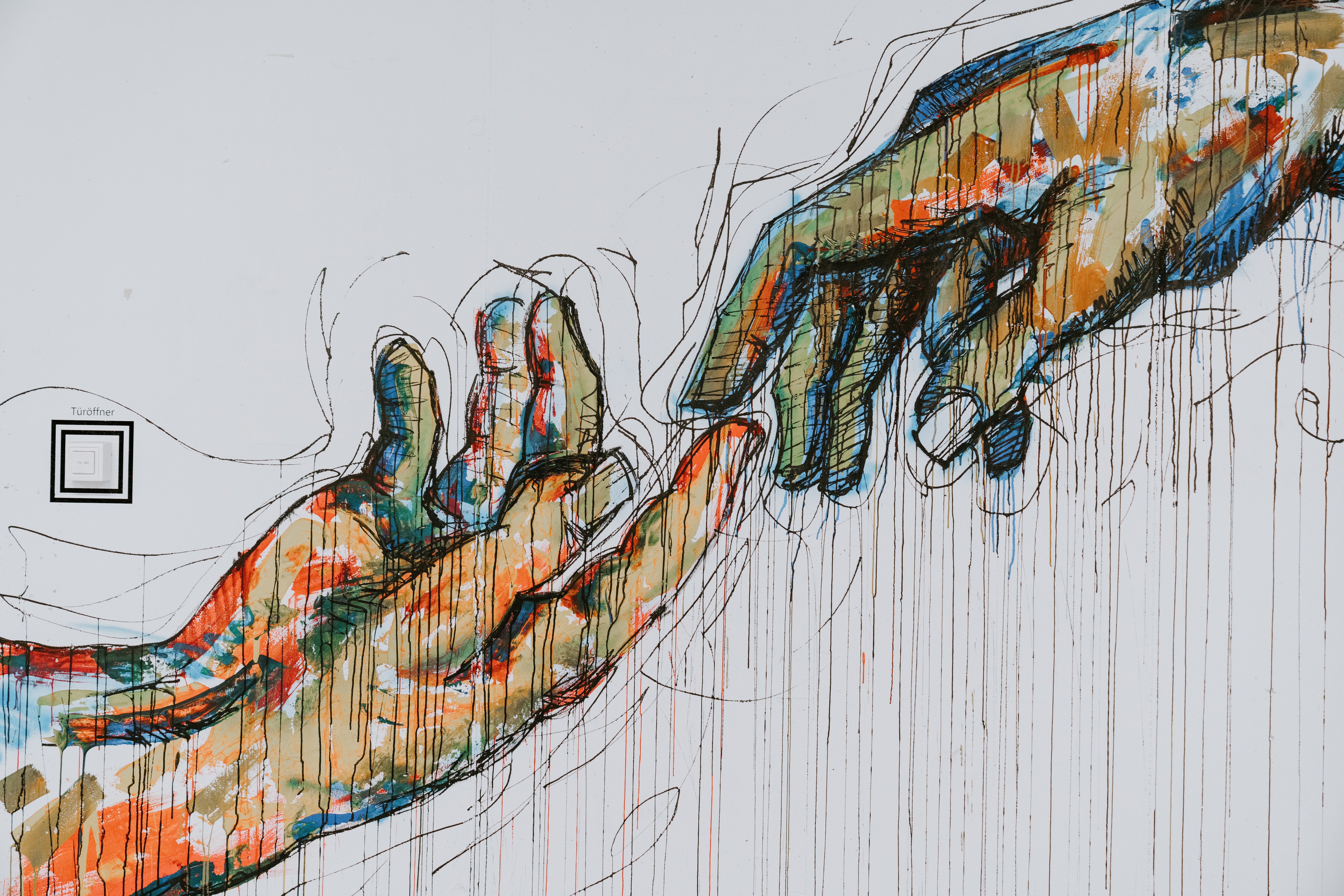
Source: Unsplash
The builder:
- is a server with the innate desire and ability to take care of people;
- is a highly engaging individual; believes that deep conversations with the client will expose opportunities;
- wants to get paid by their compensation plan, but is willing to balance longer term needs with the short term;
- drives the majority of their sales through repeat business from long term loyal clients;
- creates intimate relationships with clients trusting that the relationship will yield sales over the longer term;
- sells value at the highest price possible. Avoids commodity transactions where the sale goes to the lowest price supplier;
- focuses on obtaining client referrals to grow sales; doesn’t have to cold call;
- spends time trying to discover client hidden wants and desires - secrets - and employs this knowledge as a critical component in their sales proposition;
- is a recovery addict; doing whatever it takes to recover from a service mistake the organization made that caused client pain;
- takes the role of client champion inside their organization fighting for them regardless of the issue;
- has incredible listening skills which represent a heavy dimension of their personal brand;
- uses a customer report card regularly to gather customer feedback on their performance; follows up to ensure improvements are recognized;
- will lose a potential sale by recommending someone else’s product when they have a better solution to a client’s problem;
- is very involved with marketing in the new product development process; ensures that their client’s unmet needs are addressed;
- are viewed by their clients as partners; part of the client team.
Which approach do you think will build customer loyalty and distinguish you from your peers?
Cheers,
Roy
Check out my BE DiFFERENT or be dead Book Series
- Posted 11.23.15 at 05:56 am by Roy Osing
- Permalink
October 12, 2015
5 easy ways to clear the clutter in your way

Source: Pexels
5 easy ways you can clear the clutter in your way.
If you are trying to get through a door 25 feet away and there are 25 people in front of you all vying for position; how effective are you at achieving your goal?
If you are trying to calm your mind when you have monkey chatter and thousands of thoughts spinning around your head, can you achieve a meditative state?
If you have a new business plan you want to implement and there are conflicting messages in the workplace and internal roadblocks facing you will you be able to reach your goal?
Exactly.
Executing anything when there is clutter in your face is virtually impossible.
Effective execution requires that you cleanse the environment of clutter. Clutter that diffuses energy necessary to move ahead.
This is the clear-the-clutter process:
▪️Define 3 or 4 key tactics that must be achieved if you are to make progress on executing your strategy. This is not a grocery list of things that could be done; rather it’s a selection of the critical few things that serve as resource allocation criteria and as beacons of progress;
▪️inventory all communications programs in the organization. Examine every piece. Is it clearly aligned with and critical to understanding the strategy and what is needed to play your part? If “yes” keep it; if “no”, it’s clutter so dump it;
▪️Inventory all major projects; defer those no longer in line with the first point above;
▪️Spend copious time explaining the strategy to your frontline; ask them to identify roadblocks to implementation and do what they say;
▪️Appoint a “clutter chief”. Hold them accountable for clutter removal. Pay them on the results.
Cheers,
Roy
Check out my BE DiFFERENT or be dead Book Series
- Posted 10.12.15 at 07:36 am by Roy Osing
- Permalink
October 5, 2015
Why great salespeople are amazing because they really don’t sell

Source: Unsplash
Why great salespeople are amazing because they really don’t sell.
Seriously.
Selling is generally what pisses people off!!
The sales person descends on the unsuspecting customer, plummeting them with noise and pressure to buy what they are flogging.
Most sales people exist in the moment; driven to achieve short term product unit sales and revenue targets.
This scene gets repeated over and over with the customer either getting beaten into buying or running for cover.
The role of sales must change to meet the challenges of new markets and changing customer values.
The new customer wants someone to trust in business (in a time where the reputation of organizations is generally declining).
They want good experiences.
They want their problems solved; their life enhanced.
Satisfying wants and desires can’t be done by ‘in your face’ selling.
It can only be achieved by serving.
Sales needs to change, and quickly.
Cheers,
Roy
Check out my BE DiFFERENT or be dead Book Series
- Posted 10.5.15 at 06:45 am by Roy Osing
- Permalink