



Roy's Blog: Marketing
April 6, 2014
How your customers can become addicted to you in 5 simple ways
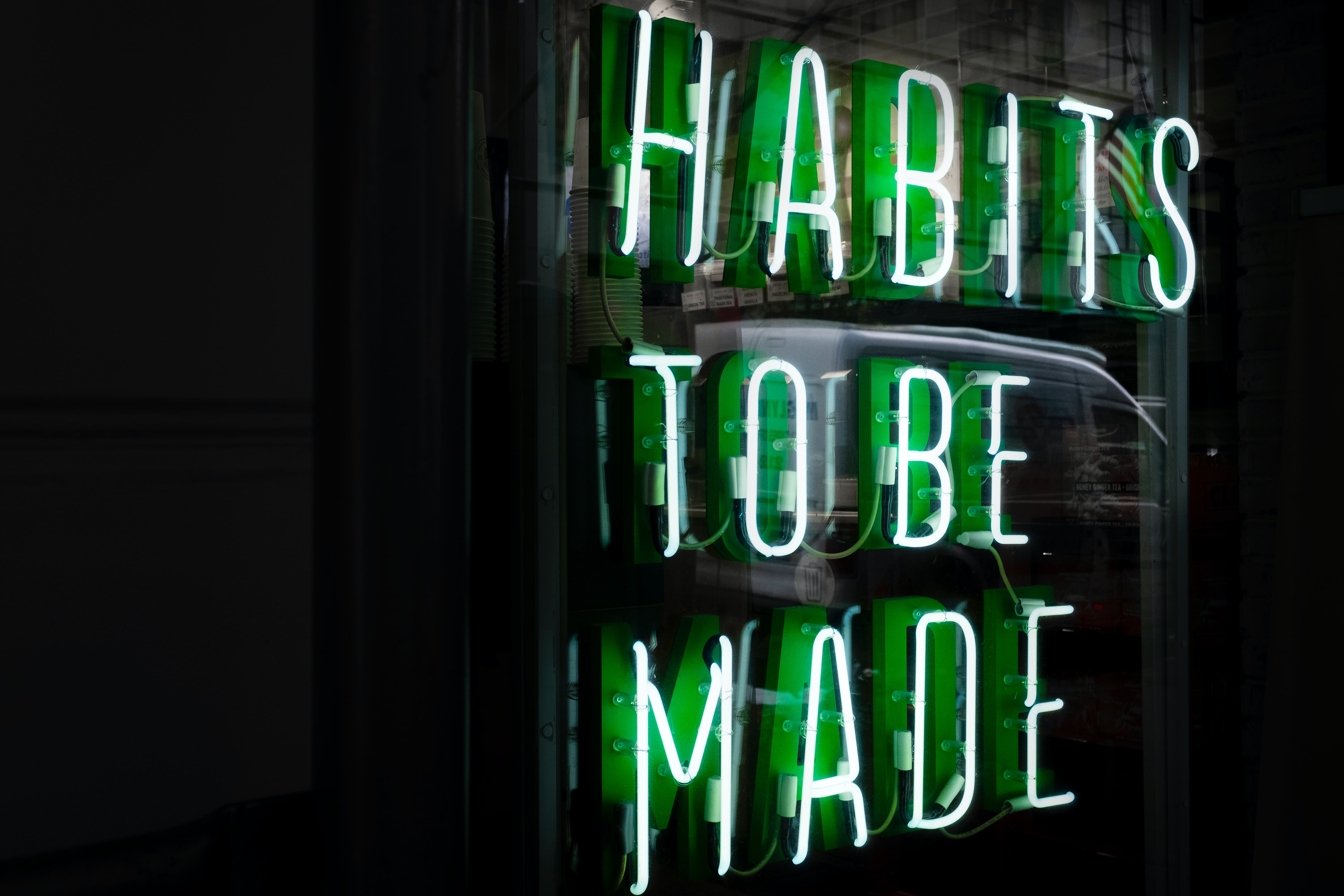
Source: Unsplash
How your customers can become addicted to you in 5 simple ways.
Addiction isn’t a casual interest or a take-it-or-leave it attitude.
When customers are addicted to a particular organization they are “all in”. They have a habit of dealing with the organization through thick and thin. It is that tough to kick. It’s like looking both ways before crossing the street. They just do it without consciously thinking about doing business with someone else.
Every organization covets the customer who will habitually buy from them.
The issue is, they aren’t just out there to be taken. There isn’t a tribe of addicts for the taking.
They have to be created.
And the problem today is that most organizations are so driven to make the sale, they don’t focus on doing what is necessary to turn the casual buyer into the raving fan with the habit.
Here are 5 things you can do to help your customers develop the habit for you:
1. Don’t focus on the sale.
If you do things right you will not only make the immediate transaction, you will earn a revenue stream for a long time to come.
This is all about changing the culture of the organization away from short term gratification to building the capability to earn in the long term. As long as quarterly earnings drive behaviour, the need to create addicts will take the back seat.
2. Recruit relationship-building sales people.
Look for demonstrated accomplishments of this competency. If you don’t have frontline folks leaning the right way, habits will not be formed.
3. Look at your front end systems.
Is it easy for a customer to enter your realm and get what they want? Is your web site easy to navigate? Can they reach a human being if they need to?
Do you force people through an IVR with a dozen questions to answer? Simplify your processes. Make them human friendly. People don’t give a damn about your internal issues!
4. Have a strategy when you screw a customer over (and you will).
Recovering from a service OOPS! has amazing implications when it comes to creating addictive behaviour from your customers. Fix it + SURPRISE ‘em is the formula that will turn a postal customer into an addict.
If you do it right they will forget that you screwed them over in the first place.
5. Declare a policy: we don’t care about our competitors! We care about our customers and believe that if we do a great job at serving them, we won’t have to worry about the hordes at our door.
The fact is, when you are worrying about what “the bad guys” are up to, you are nor concentrating on the experiences you have to create for your customers to turn them into addicts.
Cheers,
Roy
Check out my BE DiFFERENT or be dead Book Series
- Posted 4.6.14 at 03:10 am by Roy Osing
- Permalink
November 4, 2013
How much do you need to invest in your best customers?

Source: Pexels
Your most precious asset is the person who has been loyal to you for years.
Who cares about what you do.
Who pays their bills on time.
Who you can count on when the economy challenges your business.
Precious assets need to be leveraged to grow your business.
It’s the most cost effective way of spreading your word to potential customers.
The return on investing in a loyal customer to get a new customer is HUGE in comparison to traditional advertising methods.
Question is: are you making the most of the precious asset you have?
Here are some things to think about:
— do you have a list of your top 10 most loyal fans who have demonstrated their willingness to recommend you to others? You have to channel your efforts to the critical few.
— do you meet with them regularly and ask them for help?
— do you have a referral program customized for each of them? Remember no two fans are alike and will have different needs in order to refer you to their friends and associates.
— do you regularly update your fans on what’s going on in your business? If they don’t have current information, they won’t be able to “talk you up” to others.
— do you actively engage them by asking their advice in your business matters? People want to feel needed, and if they do they are more likely to step up and help you.
— do you remember their “specialness”? Birthdays, anniversaries, family names, recreation they love?
Your top 10 will produce high returns for you in terms if growing your business.
But you have to work for it.
Give and get.
Cheers,
Roy
Check out my BE DiFFERENT or be dead Book Series
- Posted 11.4.13 at 05:14 am by Roy Osing
- Permalink
August 19, 2013
Why the best thing marketers can do is study ‘ME’

Source: Pexels
Why the best thing marketers can do is study ‘ME’.
When the marketer studies ‘ME’, magic happens.
‘ME’ marketing will destroy traditional marketing; it’s all about the individual not the crowd.
Brilliant marketers get that ‘ME’ segments generate higher returns than market segments produced by traditional marketing.
The four bases of commonly prescribed market segmentation are demographics, psychographics, behavior and location (‘geographics’) and the marketing process is to develop programs targeted at potential customers with similar traits within a particular segment.
Segmentation studies are based on observations of population behavior; the characteristics of the masses (represented by the ‘average’ person in the population) determine the conclusions of the study.
Why are these four segments used as the prescription for marketing segmentation? Because this type of data on people is readily available to the marketer.
Census data provides demographic and location information, billing and web visitor tracking systems produce product usage information and standard market research studies ask for lifestyle preferences which people are generally ok with providing.
For a marketing program, individuals are ‘mapped’ into each of these segments and are assumed to be like everyone else in their segment in terms of their likelihood to be attracted to a particular marketing program targeted to the segment.
The marketer’s assumption is that each person in the segment ‘looks the same’ in terms of the segmentation variable chosen and because of this similarity will all exhibit the same buying propensity.

Source: Unsplash
I’ve always found this assumption to be a non-starter. Just because I’m a skier does not in any way suggest that other skiers would be interested in buying the same products as I do.
And just because I’m in the boomer demographic with a specific income in no way is a good predictor of what others with similar characteristics will be interested in buying.
In this approach, an ‘average’ target for a service might be ‘a male boomer with an annual income of between $60 - $100K who lives in Vancouver and who has an annual ski pass at Whistler’.
And the flaw is that there may actually be some people who do have the targets attributes and who would be interested in what is being offered, but there will also be many with these attributes who won’t be interested and who will not be interested in the offer.
Traditional segmentation produces hits and misses and the marketer hopes there are more of the former. But you can’t count on it.
There are two serious issues with traditional segmentation methodology; its underlying assumptions are flawed.
First, having segmentation variables prescribed with the simplifying assumption that people tend to make purchase decisions on the basis of their demographics and so on, is fallacious; people express their differences with their own buying triggers which can’t be prescribed up front.
And second, assuming that people who exhibit the same segment characteristics will make similar buying decisions is simply not true; there are many sub-clusters within any given segment that have their own buying motivations quite apart from those in the overall segment.
‘ME segmentation’ is different from the commonly-used methodology, and should be adopted by a marketing organization that wants to stand out and perform above their peers.
ME segmentation poses the research question to an individual person not the population.
ME segmentation is strategic
It is considered as a strategic exercise which asks the question “How should the market be segmented to expose as many opportunities as I can?” not how do I assign my customer base into the prescribed segments.
The prescribed segmentation variables such as demographics, location, usage and lifestyle are not automatically used; they are given mild attention only: the focus is on determining the appropriate variable that will unlock the growth key for the organization.
The objective is not to place people in the prescribed segments, but to discover the appropriate segmentation elements that will produce the best sales result.
For example, if a specific web application best appeals to a Gen-Z individual with an IOS device, lives in Tsawwassen BC, is a member of a family of 4, and has a household provider who is female, then this is the appropriate segmentation to use.

Source: Unsplash
It’s focus is on differences
Traditional segmentation seeks to define small numbers of customer groups that share similar characteristics, and these characteristics are broad and general in nature.
People who are over 65 years old who have right-of-centre political beliefs, women who live on the west coast who are pro abortion are examples of the segments that are produced by the traditional approach.
ME segmentation, on the other hand, is a process driven by the intent to find differences in customer clusters in order to expose as many customer clusters as possible.
Opportunities come from the differences between people NOT similarities among them.
And greater the number of segments that are defined, the more intelligence you have on each person in the cluster AND the better the ability to match a product, service or experience to their specific individual need.
It’s end game is on ‘the many’
As stated above, ME segmentation tries to define as many different customer clusters as possible in order to get closer to the individual with the belief that if you have a tight fit with an individual person, you have a better chance of selling them something than if the person’s desires are watered down by a larger group.
The probability of making a sale increases due to the fact that you are better able to match your offering with the more precise needs. wants and desires of the individuals in each cluster.
Person-research will yield many conclusions; one for each person you talk to.
And each conclusion will be valid unlike conclusions from population research which will be valid for some individuals (who just happen to be exactly identical to the population profile) and invalid for others (whose special unique characteristics don’t match the population profile.)
Better to have 100 different conclusions from 100 individual people rather than 1 conclusion based on the “average” person in a population of 100.
It’s never-ending
ME segmentation is a continuous process of going deeper and deeper into a cluster of customers. Obtaining more and more information on the individuals in the cluster.
The marketer needs to keep looking for differences until they are nose-to-nose with an individual because that’s when total understanding of people’s desires is achieved.
If there were one million customers, the result of the ME process would be one million segments of 1.
What are the implications of a million clusters of 1?
▪️you would be different as few undertake the journey;
▪️you would have more rich and deep knowledge on your customers than your competitors have;
▪️your sales potential would increase exponentially;
▪️you would build both share of market and customer share;
▪️customer loyalty would increase because you are better able to match your solutions to their needs and wants;
▪️you would be better able to survive unpredictable ’body blows’ you might suffer in an ever changing world because you are so tight with your customers.
All because you choose to put in place a marketing philosophy to treat segmentation as a continuous strategic learning down to the individual.
Keep segmenting your market until you are nose-to-nose with a person.

Source: Unsplash
The role of the ME marketer
Within the ‘ME’ context of segmenting markets down to ‘the nose’ of an individual and examining their needs and wants rather than treating markets as homogeneous groups, the ME marketer’s role is different than what marketers have done in the past.
The ME marketer:
— Is driven by individual people have to say, not by what is implied by large markets or populations, and puts the individual before the average needs of the crowd;
— Is ok with the possibility of creating a unique marketing plan and product or service solution for an individual;
— Drives IT to ‘mass-personalized’ serving systems capable of uniqueness delivered to thousands of customers;
— Reserves Customer Appreciation Day events for specific customers who have demonstrated their loyalty to the company for many years;
— Looks to the power of new technology to define the needs of individuals and to use the secrets discovered to create personalized solutions and not to flog their current product portfolio;
— Uses every tactic available to build long term relationships with people rather than flog products at them with a focus on making short term sales. They see AI as a way to create new experiences for people and not a productivity tool;
— Is a strong advocate for the customer inside their organization, ‘doing battle’ for them to protect their interests in their own bureaucracy;
— Does whatever it takes to try and eliminate any dumb rules in their organization that infuriate customers and threaten their loyalty.
Mass marketers are the dying breed of the profession, and it starts with the practice of segmentation.
Segmenting down to ‘the nose of a person’ enables a deep understanding of what people want and desire, and exposes opportunities to not only enhance marketing productivity but also to create sustaining long term value for the organization.
ME markets are superior to crowds.
Cheers,
Roy
Check out my BE DiFFERENT or be dead Book Series
- Posted 8.19.13 at 06:05 am by Roy Osing
- Permalink
March 25, 2013
7 important things that will make customers pay attention to you

Source: Pexels
7 important things that will make customers pay attention to you.
How do you keep your customers paying attention to you and what you have to say?
We are overloaded these days.
We are bombarded with too many messages flogging stuff to buy, events to attend and causes to support that after awhile nothing resonates with us. We don’t stir. We don’t react. We become numb.
The lines that distinguish one source from another get blurred. Everything blends into one big noise. Our Individual wants and desires are ignored. The Herd speaks with a common voice to everyone.
We turn our backs.
If we are getting desensitized to our environment, think about what we are doing to our customers. Do their eyes glaze over when we speak to them? Do they shut our “buy requests” out because they can’t relate to what we are saying?
Customer fatigue can and must be avoided if we want have people respond enthusiastically when we reach out to them. And if we want to give them meaning when they engage with us
Here are 7 steps to keep people focused on what you have to say.
▪️ Don’t speak to the crowd. Speak to ME. I am like no other. I’m not ‘average’. Unless your words address ME, specifically, they go in one ear and out the other.
▪️ Speak about the things that are important to ME. I’m not interested in listening to stuff that I don’t care about. And I’m less interested in stuff that appeals to others.
▪️ Speak to the problem you can solve for me or the value I will receive. I could care less about how it works.
▪️ Don’t insult me by thinking that I am only interested in price. If you pitch a lowest price claim to me, I will tune you out fast.
▪️ Your pitch must clearly state how you are different than the many others competing for my attention. I will respond to uniqueness; you are invisible to me if you are like all others.
▪️ Show me in words that you are socially responsible and that your support and kindness lines up with my ideals.
▪️ Prove to me that you believe in keeping humanity in your organization. That you care about engaging with me personally. Encourage me to speak with a real person - not a machine. Welcome my calls rather than siphon them off to a chunk of technology that is there to reduce your costs.
Do these things and I might just stick around, pay you and spread your word to others.
Cheers,
Roy
Check out my BE DiFFERENT or be dead Book Series
- Posted 3.25.13 at 09:45 am by Roy Osing
- Permalink