



Roy's Blog: Entrepreneurs
November 5, 2018
How a daring plan that looks great on paper can be a success

Source: Unsplash
How a daring plan that looks great on paper can be a success.
The “grand plan” is typically developed by trying to maximize the value created for shareholders. Among a number of options to consider; the one that, for example, produces — on paper — the greatest net present value (NPV) typically gets the nod. Revenues less expenses discounted by the cost of money generally controls the decision making outcome.
There are other factors, however, that should be given serious consideration in the chosen direction. A paper result is simply that; it depends completely on the assumptions being met when the plan is implemented.
If projected customer sales are achieved and if cost of sales targets are hit and if period expenses are controlled, the expected results are plan achieved.
A lot of if’s
The if’s are, of course, controlled by how employees behave as they try to execute the plan. If they behave exactly as defined in the plan, the expected results are delivered.
And you can pay yourself on the back for having a brilliant goal.
But how often does that happen? How often do people do what you expect them to?
I’ve never seen it in over 33 years as an executive leader.
People never behave the way you expect; if their needs, wants and desires are not incorporated into the grand plan, the plan is doomed to failure.
The paper planning exercise may be a meaningful beginning but it only describes a theoretical possibility and nothing more.
The question every single person asks is “How does the grand plan affect me?”
They rarely have difficulty understanding the need for the plan — decreasing market share requires pricing action; eroding margins required cost reductions; additional revenue requires entering new markets — but at the end of the day it all comes down to how they will be personally affected by it.
What does it mean to their job — will they still have one? Will they have to change location and move to another city? What specific impact will it have on their daily work conditions — will they have new hours or will they have a new work station?
A working draft
Given the very real concern employees have over change, it is absolutely critical for a leader to socialize their plan with the people who are expected to act on it and deliver. And position the plan as a working draft to people to show that you are open to wanting to share its intent and more importantly obtain their input on will it will work and if not, what has to change so that it will.
Surprisingly, you might discover that your plan is perceived to hurt the very people you need to support and implement it. It is an unattended consequence, of course, — no leader willingly introduces change to intentionally hurt their employees — but it is a tipping point that must be dealt with.
If people feel they are being put at risk they will shut down and do whatever they can to NOT execute it.
And it will fail notwithstanding its intent.
So, after various internal stakeholder teams have declared what must change, the plan must be revised PERIOD!
As a leader you really only have two choices: one, to NOT accept the input received and stay with the original plan — and not only fall short of the plan’s purpose but also turn off employees who believed that since you asked for their comments you would actually listen to them.
Or two, modify the plan as a compromise given the input provided — and achieve the results of your imperfect version of the plan.
I know that many leaders would say that their job is to define expected outcomes and then “hand it down” to the organization to do it.
It’s great in theory, but if people who have to pour their heart and soul into delivery don’t believe in it because they spot barriers to its success, why try and force it?
A worthless plan
Quite frankly I could care less about a plan that can’t be executed regardless how brilliant the planners think it is; it has zero value to any stakeholder.
I have seen plans to consolidate multiple call centers — back in the day when we believed them to be vital to our growth agenda and refused to outsource them to remote parts of the world where labour costs were lower — fail miserably because employees’ concerns were not addressed to their satisfaction.
In this case many people had to change work locations while others lost their role and had to be trained for other positions.
Little surprise that the consolidation plan was not fully supported; implementation fell short of expectations and customer satisfaction fell.
Of course there are times when, despite the fact that a plan is modified to minimize the adverse impacts it has on people, some individuals still get hurt.
And for “the greater good” the plan proceeds without unanimous support — it’s virtually impossible to get 100% buy-in on anything.
Honesty and support
In such instances the leader should:
— make as much information available on the plan as possible: what the change is and why the action is being taken;
— provide lifeline support for those individuals negatively impacted;
— prioritize training efforts for any people displaced by the plan;
— provide personal services to anyone deciding to exit the company.
Standout leaders aren’t completely infatuated with a plan to enhance the value of their organization; they are equally concerned with how the plan affects people.
Their challenge is to balance the needs of all stakeholders to optimize the benefits for all.
Cheers,
Roy
Check out my BE DiFFERENT or be dead book series
- Posted 11.5.18 at 03:41 am by Roy Osing
- Permalink
October 29, 2018
9 important reasons people should be concerned about ‘Cut the CRAP’

9 important reasons people should be concerned about ‘Cut the CRAP’.
The world around us is filled with CRAP.
CRAP describes the stuff that gets in the way of getting things done; obstructions — the grunge as Tom Peters refers to it — that impedes progress towards a stated goal.
In business, CRAP could be projects and programs that are no longer relevant given the new business plan developed by the organization.
For example, if the new marketing focus were shifted from consumers to businesses, customer communications and social media programs targeted at the consumer segment would fall into the CRAP category and could be scrapped or at least significantly reduced.
In our personal life, CRAP could be the distractions and red herring that cost us progress towards our ultimate career or life goals.
For example, if your career ambition were in business and you were tempted to take an extended vacation just after graduation, the vacation time you intend to take that could be spent on advancing your career could fit the CRAP definition.
Or chasing many potential opportunities rather than focusing on a selected few that were closely aligned with your desired end game is a CRAP activity.
CRAP is a critical ingredient in the progress equation and it gets relatively little attention as compared to the new stuff that should be done — doing new stuff is more sexy than eliminating old stuff.
CRAP is vital to our growth ambitions and should be talked about for these reasons.
1. Time is running out
There is insufficient time available to both take on new things and continue to do current things. Everyone has limited bandwidth and a sharp laser-like focus is essential to success.
The problem is that we are comfortable doing yesterday’s tasks and so we want to perpetuate them; the prospect of taking on something new is risky and uncomfortable.
2. We need to make room for ‘the new’
Old stuff needs to go and make room for new stuff; it’s the only way we can stay fresh and relevant given the changing times we are in. And we don’t have enough resources do do both the old AND the new.
Governments should heed this and stop throwing money at old programs — like the medical system — expecting that improvements will miraculously appear. There comes a time when you need to reinvent the old; blow it up and start with a clean sheet to create something new.
3. The right choices need to be made
People need to make the right choices. Parents constantly hound their kids about making healthy food choices, for example, and avoid stuff that is harmful to them.
Ironically, some of these parents go to their job the next day and continue to hold on to the comfortable ways of the past rather than shedding the ‘unhealthy’.

4. New people and new skills must be acquired
Organizations must constantly refresh themselves with people who possess the new skills and competencies necessary to survive and thrive in a new uncertain context. Releasing or retraining people who are busy doing CRAP is a good way to ensure a good flow of new employee skill sets.
5. Financial resources are limited
Financially, no one can afford to take on new stuff while at the same time perpetuating projects — however comfortable — that might have been necessary yesterday but not today.
There are no money pits with infinite resources available that enable this behaviour and it needs to stop.
6. Strong leaders are needed
The whole concept of cutting CRAP is a powerful lesson on leadership.
I would estimate that over 80% of leadership strategy teaching goes to topics such as these: how to develop new customer solutions, how to decide which new market segment represents the best growth potential and which new partner should be acquired to deliver new sales capabilities.
Not much time if any is devoted to the fact that stopping stuff is just as strategic as starting stuff, and leaders need to pay attention to this if their organizations are to be both effective and efficient.
7. We need to find a way to pay for new things
Cutting CRAP is an efficient way to fund new activities. Stop doing a project that doesn’t contribute to the way forward and cut the funding for it. Expenses are reduced and are available to reallocate to the incremental activities that must be undertaken.
As president of a data and internet organization, I was constantly asked for dollars that were not budgeted to fund new projects. My answer was always the same: “Stop doing something no longer needed given our new direction, achieve the savings and reallocate them to the new project. There are no added funds for you.”
Over time, these requests dwindled away and CRAP elimination behaviour took their place.
8. CRAP is cluttering the environment
CRAP is an environmental issue. Our business and personal landscapes are too cluttered; there is simply too much waste around us and we need to get better at recycling the old for the new
Let’s extend the conversation from landfills and pipelines to outdated systems in organizations and unproductive noise that clutters our personal lives.
9. We’re trapped in inertia
Inertia is a killer and CRAP is the genesis. It’s the force that propels us along a certain course and repels interventions that might change it. CRAP is the embodiment of inertia that must be overcome in order to achieve a different purpose.
Fighting inertia from the past is arguably THE most critical thing to overcome if we are to change.
If CRAP is not dealt with, we will be stuck in a world with no future.
Refresh. Renew. Regenerate.
Cheers,
Roy
Check out my BE DiFFERENT or be dead Book Series
- Posted 10.29.18 at 04:58 am by Roy Osing
- Permalink
October 22, 2018
Ideas come easy but can you really pull them off?

Source: Unsplash
Ideas come easy but can you really pull them off?
Take a time out some time and listen to what is said around you. It could be in a meeting at work, in a bistro having coffee with a friend or at a networking event with colleagues.
People talk about their intentions most of the time; what ideas they have to improve their, or their organization’s circumstances.
— “I want to be a marketing executive.”
— “I want to lose 30 pounds.”
— “We will create a product that solves the distracted driving problem in our roads.”
— “I want to travel the world.”
— “I will invent a product that will change the world.”
— “Our goal is to be #1 in the market for international pharmaceuticals.”
Ideas come easy
Ideas come easy; declaring what is intended (to make you happy, enhance your performance, build customer loyalty and achieve a rewarding career) is a straightforward task.
The far more difficult thing is to achieve what is intended (to BE happy, increase your performance by 50% and to be appointed to that VP position).
But despite the chasm between the idea and delivering the successful result, the focus today is all about ideas; they are given the priority to the point that an entire indudtry has been established to aid people in coming up with tools to aid in the “ideation” process.
Various tools such as brainstorming, storyboarding and mind mapping are promulgated in a logic framework to generate outside-the-box thinking.
Rewards seem to go to the brilliance of the idea and forget the most important piece.
Can you pull it off?
The ability to pull it off is the counter balance to the intellectual worth of the idea — it is the offset to an awesome notion that can’t be implemented.
An amazing idea that (on paper) has the potential to “change the world” in some way but can’t be pulled off is an idea with ZERO worth (other than the discovery that the great idea has no practical application). Theoretical possibilities sponsored by the intellect contribute nothing of value until they are pulled off.
“Affordable housing” in Vancouver is a notion that most everyone can subscribe to, but until the idea is quickly followed up with a plan that is successfully implemented, it is vapourware. And that is exactly what is happening in every major city in the world: the affordable housing aspiration is saluted, but little progress has been achieved.
So is achieving affordable housing a good idea? Yes and no. If you evaluate it in terms of whether it would deliver substantial societal benefits, it’s not only a good idea it’s an incredible one.
But if you judge the idea on its practical merits, I would say it’s not only a bad idea, it’s a dismal failure. It’s no more than an altruistic notion of what a great thing it would be if it could be achieved. But until someone figures out how to pull it off it’s a pipe dream that every politician and social interest group applauds but goes no further.
We need to change the way we think about success and value; real success doesn’t come from ideas themselves but in actions that have produced demonstrated benefits. But in many circles it’s easier to utter rhetoric and be a student of it because it requires no commitment to DO anything.
The pull-it-off factor
We need to start thinking of worth and value of a idea as a function of whether you can pull the idea off or not. So, that amazing idea with a small pull-it-off-factor isn’t as amazing as the not-so-amazing (imperfect) idea that can be pulled off with real benefits streaming out sooner rather than later.
Pull-it-off should rule the decision on whether or not an idea is worthy of pursuit, not the inherent brilliance of the idea. Resources — time, money and energy — should be applied to ideas that have a path in front of them that leads to achievement, not the need to consume more resources as time goes on.
What can you do with a low pull-it-off idea?
Chuck it
Discard the idea and run with another one that has both significant paper benefits and one where you can see the light at the end of the tunnel. And incrementally improve the idea along the way as more practical insight is determined about how it will work and what can be done to make it better.
You have to know when to cut your losses and pursue something else that creates value. Throwing money at an impossible task is a waste of resources and is just plain stupid.
Chunk it
Break the idea into discrete pieces and focus on one that CAN be accomplished and create value. Look for a chunk that is a small piece of the bigger puzzle you are trying to solve. And maybe, just maybe getting the small piece done will, inch by inch, lead you to your grand plan.
A nano-inch worth of progress is far better than spinning your wheels on the big play.
Morph it
Change — squeeze, bend, twist — the original idea into something that be delivered. It may not possess all the attributes as the original idea, but may retain some characteristics that do create value and are directionally consistent with your ultimate end game.
Note to self: no value is created when an idea can’t be pulled off.
Society pursues Innovation because of our quest for added meaning and value to our lives — more exciting ways to communicate, lower cost and easier transportation, environmentally safe resource development projects, higher quality entertainment and safer driving tools that protect lives.
But we have arrived at a point where we need things done to improve our collective lives; we don’t need a continuing rhetoric of what could (in some theoretical sense) be achieved.
Cheers,
Roy
Check out my BE DiFFERENT or be dead Book Series
- Posted 10.22.18 at 03:43 am by Roy Osing
- Permalink
September 24, 2018
Why being ‘the only one’ is the best competitive claim

Why being ‘the only one’ is the best competitive claim.
Perhaps you’ve got an incredible product portfolio built on an amazing technology platform and believe that the potential for revenue growth is staring you in the face.
The truth of the matter, however, is that if you can’t answer this question, your growth intentions will never be realized.
“Why should I do business with you and not your competition?” is the killer question faced by every organization.
In today’s noisy world with every organization shouting out why they should be chosen, the marketer needs to determine how to get their products, services and solutions noticed in the milieu. They need a competitive claim that is unique and stands apart from your competitors.
Unfortunately, however, competitive claims made by organizations today lack creativity, imagination and truth.
Copying pervades — I would give most organizations today a less than satisfactory rating in terms of how well they address this challenge.
The tendency of most is to go on a copying rampage where the priority is on replicating in some way what someone else is doing in terms of products, services, pricing, distribution and brand positioning. Other players are benchmarked on some capability and the copycat strategy unfolds.
Even a fast follower is a copycat; they just do it faster!
Copying doesn’t create uniqueness and differences; it proliferates sameness.
It dilutes any marginal differences among organizations that might exist and renders them all as look-alikes. And it lowers the bar for each competitor to achieve.
The usual clap trap — Most differentiation statements advocated by organizations and intended to convince us involve words like ‘best’, ‘number one’, ‘leader’, ‘fastest growing’, ‘most’ and ‘highest quality’ to assert their distinguishable characteristics vis-a-vis their competition.
These are common statements which add little to clarifying the clutter:
- We have the best sales team in the business;
- Our people strive to deliver the highest level of client service at all times;
- We offer the highest quality products;
- We have the most knowledgeable salespeople;
- We have been in business for over 30 years;
- We rank number one in client satisfaction;
- We are the preeminent sales organization in North America.
Unfortunately, these declarations add little understanding to help people select a company to do business with.
How exactly does having knowledgeable employees make an organization the right choice given a number of alternatives to choose from who will all claim the same thing? And who decided that an organization has the best customer service, and why should I believe them?
And why should I be impressed with any organization that ‘strives’ to deliver great service — I won’t give anyone my business who claims their special sauce is that they try hard.
These statements are confusing and have little credibility with their audience. They are generally vague and aspirational without proven substance.
A credible competitive claim needs to be simple and specific in terms of how an organization is different from the competitive herd.
It needs to address a high priority customer need (claiming to be unique on something a customer doesn’t care about isn’t productive) and it needs to be true (failing to consistently deliver will drive a customer elsewhere).
Most competitive claims rely on overused clap-trap to position themselves against their competitors
In response to the need for clarity in competitive claims, I created what I call ‘The ONLY Statement’ as the practical way to do it.
‘We are the only ones that….’ is the claim that will cut through the clutter and make it clear why you should be chosen among your competitors.
“We provide the ONLY permanent solution that prevents biohazard contaminants (such as used syringes) and all other debris from entering manholes.”
What Jerry said
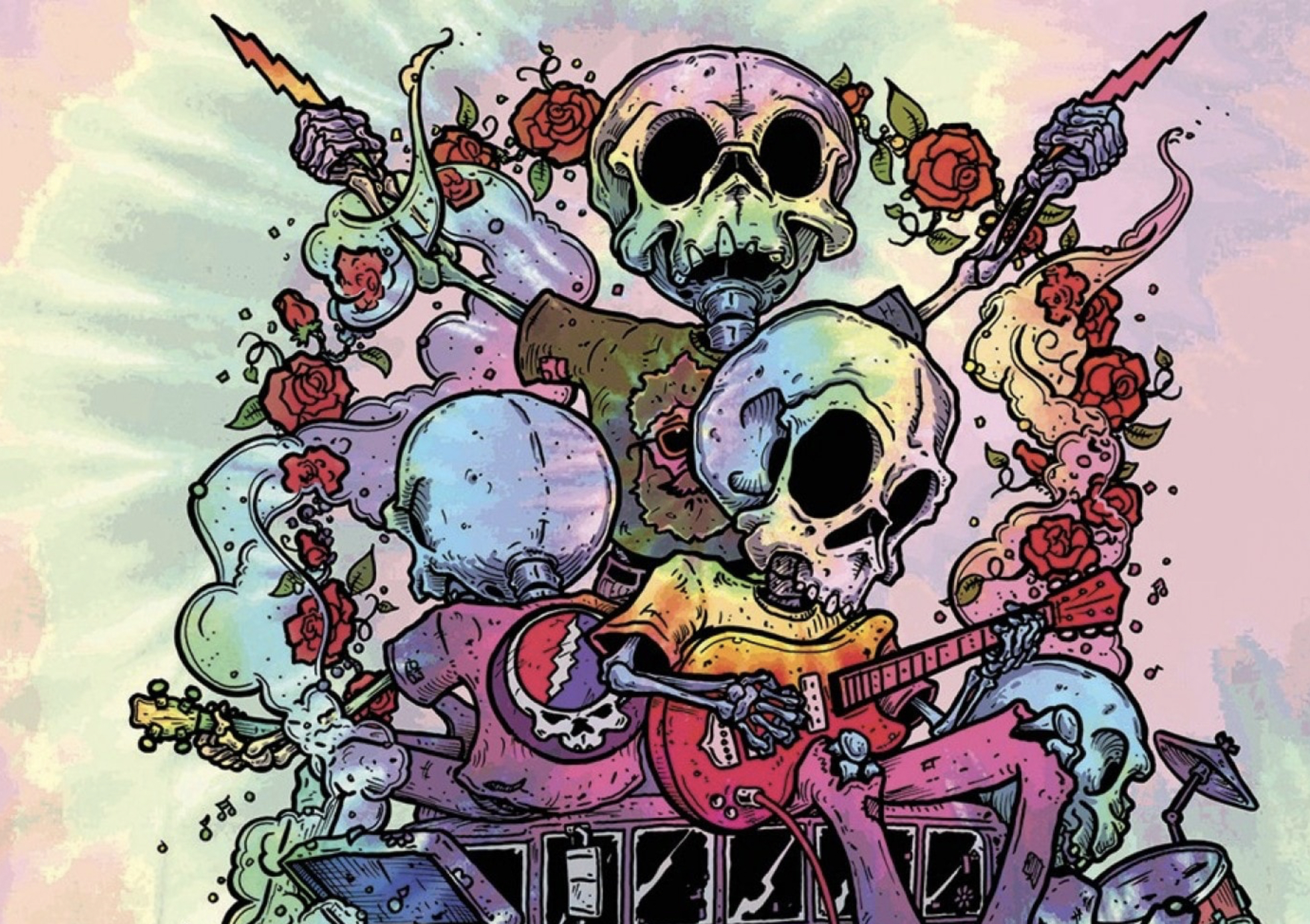
Jerry Garcia, former leader of the legendary rock band The Grateful Dead, nailed it: “You don’t want merely to be the best of the best. You want to be the only ones who do what you do.”
ONLY dispels the clap trap; here’s why:
Confidence — ONLY is bold; some might say arrogant. It’s audacious in the claim to be the one that owns a particular space and is prepared to show all to prove it.
This confident face of the organization, in and of itself, raises curiosity to find out what it’s all about. It’s not without its risks but well worth stepping out of your comfort area to say it.
Simplicity — ONLY is a simple expression which uses simple language. The low fog factor invites eyes to gaze on and process the thought articulated in it rather than struggle through what it means which is the case with the usual clap trap.
Clean form — ONLY relies on a binary view; the claim is either true or false. It exists or it doesn’t. It makes it very easy for the reader to assess both its relevance and its truth.
Emotional appeal — ONLY is built around what is relevant to the customer’s the organization has chosen to serve — what their target customer group cares about — therefore these specific people are warmed up to the competitive claim being made.
“We are the ONLY team that provides safety solutions anywhere, anytime that go beyond what customers ask to help build their business.”
This statement speaks volumes to those who could be in need on a moment’s notice and it reassures them that resources will be available to help them should the need arise.
Revealing shape — ONLY provides detail and clarity around what the solution does, to make it easy for the potential buyer to make an informed decision. It has the cutting edges and lines of specificity that attract followers.
“Unlike other distracted driving solutions that allow drivers to use their smartphone when driving, eBrake is the ONLY one that automatically locks a driver’s phone when motion is detected, but grants passengers unrestricted use.”
Proof — ONLY is easily measured by asking the frontline and customers whether the claim is true or not; the measurement process is simple.
In addition, the researcher can look up and compare other organizations and what they offer as a competitive claim and reach their own conclusions on ONLY’s efficacy.
Distinctiveness — ONLY is different. There is no other similar proven method of creating a claim of competitive advantage offered by strategy advisors in the consulting community.
It has a track record of success with many organizations I have had the pleasure of working with. No other advisor, consultant, academic or strategy pundit has a tool in their kitbag like ONLY but Roy — I am the ONLY one.
ONLY is a sound bite that punches above its weight. It’s small in frame and carries enormous impact.

Rules for ONLY — ONLY isn’t sexy through serendipity; it achieves sexiness by rigorously adhering to a set of rules to create it; here they are:
▪️ONLY must speak to the experiences and value you create for people not the products or services you want to push; it needs to be highly relevant and address the priorities that customers have expressed.
People want to buy things that help create memorable experiences for themselves or produce benefits that solve problems they have.
If an organization can craft their ONLY to address an overwhelming craving or desire their target customer has, a sustainable competitive advantage for the organization is within their grasp.
▪️Keep it brief. ONLY is a sound bite. It’s a nano-statement that shouldn’t require you to take a second breath. If it’s a narrative that consumes a page it’s not a viable claim and
▪️ONLY must talk to the specific customer group you are targeting and not the market in general. It’s really important that ONLY be as specific as possible which comes from addressing identifiable customers; market communication dilutes the claim which renders it incomprehensible and ineffective. Talk to customers rather than markets if you want your message to be acted on.
▪️Test your ONLY with customers and employees; it must be relevant — it satisfies a compelling want or desire customers have — and true — the organization delivers the capabilities promised by ONLY consistently day-in and day-out.
Claiming you are the ONLY one at something that your target customers don’t believe is deadly. They will tell everyone that you’re lying and that doesn’t turn out well.
▪️Consider your ONLY a draft. The reality is you won’t get it completely right the first time, so take your almost-there result and start working with it with your customer segments. Refine it as you go.
And stay alert for a response by a competitor who may suddenly come awake when they see your move.if this happens you may very well have to go back to the drawing board and make some changes.
“We are the ONLY First Aid Advocate that provides safety solutions anywhere, anytime.”
ONLY is a war-rallying-cry of sorts for your employees; it should get their juices flowing. It defines the hill you are claiming and dares the competition to climb it.
Your employees have to feel what it says and be able (with the help of the serving leader) to define exactly what it requires each and every one of them to do in order to deliver on it.
ONLY beats ‘best’; ONLY beats ‘#1’; ONLY beats ‘the leader in…’; ONLY is the clear winner if you want a sustainable competitive advantage.
‘The only one’ is the ONLY competitive claim that will provide a competitive advantage forever.
Cheers,
Roy
Check out my BE DiFFERENT or be dead Book Series
- Posted 9.24.18 at 03:23 am by Roy Osing
- Permalink